#mohammed-sami
#mohammed-sami
[ follow ]
#lebanon #literature #gaza #community #displacement #art #conflict #israel #sculpture #writing #persian-literature #poetry
SF LGBT
fromPinkNews | Latest lesbian, gay, bi and trans news | LGBTQ+ news
3 days agoBeyond 'fetish': Why queer women find sanctuary in M/M romance
Male/Male romances provide queer women a joyful, safe space for emotional connection and intimacy, free from societal expectations and anxieties about representation.
fromwww.aljazeera.com
1 week agoIsrael is trying to change Jerusalem's religious identity
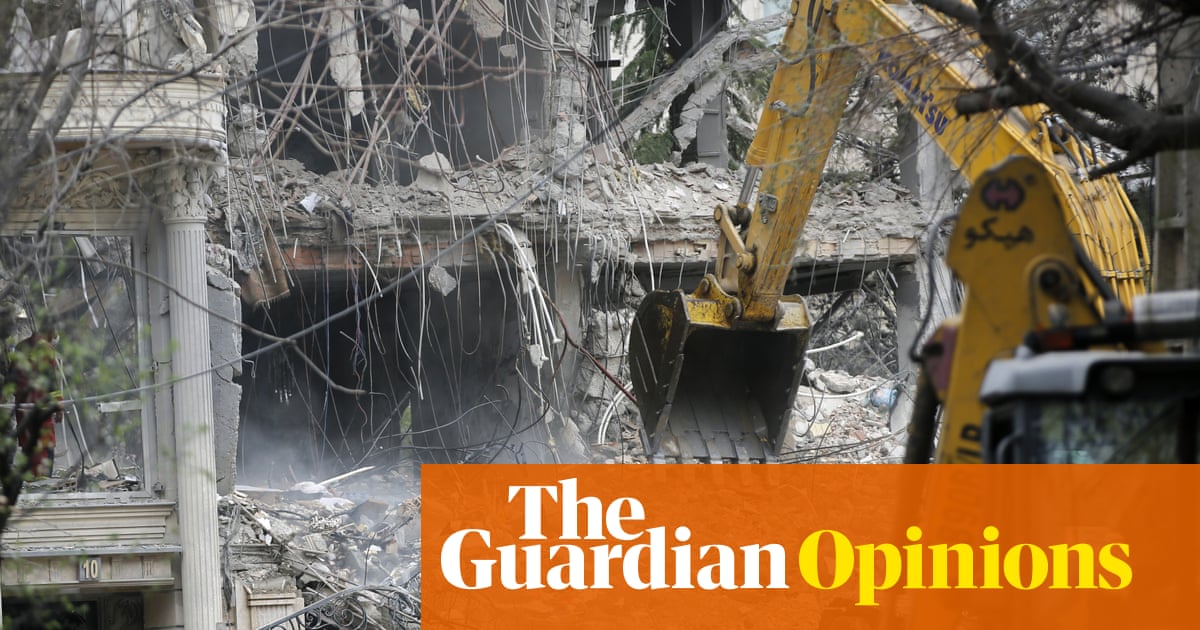
On Holy Saturday, as Palestinian Christians tried to reach the Church of the Holy Sepulchre, Israeli security forces started attacking and arresting them, demonstrating a clear violation of religious freedoms.
World politics

fromwww.aljazeera.com
1 month agoQuran echoes loudly as Palestinian reciters gather in Gaza
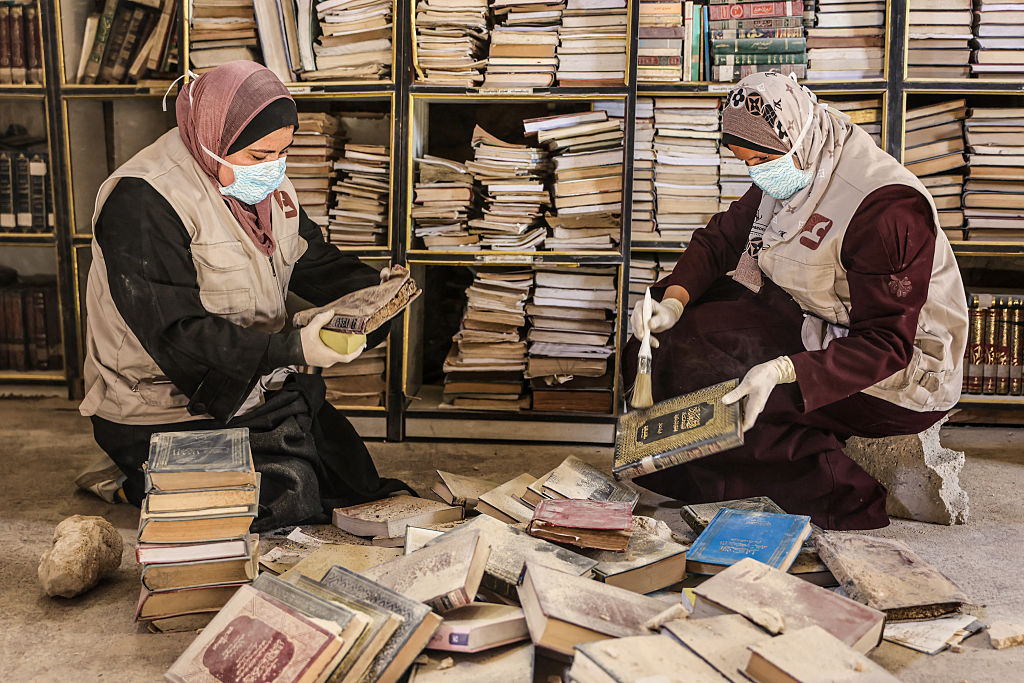
Two hundred and fifty-six Quran memorisers—Palestinians who have committed the entire holy book to memory—sat in the place while companions beside them listened attentively, following each word carefully to ensure the recitation remained flawless. The gathering, titled Safwat Al-Huffaz—The Elite of Quran Memorisers, has become a special collective way of observing Ramadan in Gaza.
World news
fromwww.archdaily.com
1 month agoPoetry Anthology of Light / P.M.A.Studio
This project involved the reconstruction of a dilapidated building located in Guangzhou's old town along Tongfu Xi Road, a historic street established in 1926. Once vibrant, this area has suffered from significant neglect over the years, with many buildings falling into disrepair, creating safety hazards that forced both residents and businesses to leave.
Renovation
fromHyperallergic
3 weeks agoLebanese Artist Ali Sbeity Reportedly Killed in Israeli Strike
Ali Sbeity painted vibrant portraits and landscapes of his rural hometown in Southern Lebanon, often sharing his works on his Facebook. He participated in numerous local arts exhibitions and created murals for schools in Beirut.
Arts
fromThe Art Newspaper - International art news and events
3 weeks agoTextiles weave tales of Palestine's rich but troubled history
Textiles are a window into the communities that created them, with every motif and line signalling a different memory, tradition or identity. Often seen as folk art, these pieces of embroidery and weaving bring together dozens of narrative threads, from Japan to South America. But nowhere is it more fraught with meaning than in Palestine.
Arts
Music
fromwww.theguardian.com
1 month agoMy family was threatened multiple times': Arab-American rockers Prostitute on confronting an Islamophobic US
Prostitute's Moe Kazra inhabits post-9/11 Arab vilification through industrial punk fusion, reclaiming dehumanizing stereotypes while exploring Dearborn's misrepresented Arab-majority community.
Music production
fromwww.theguardian.com
1 month agoSimo Cell and Abdullah Miniawy: Dying Is the Internet review | Ammar Kalia's global album of the month
Abdullah Miniawy and Simo Cell's album 'Dying Is the Internet' combines experimental electronic production with classical Arabic vocals to explore AI corruption and digital chaos through unpredictable, grid-breaking soundscapes.
fromHyperallergic
1 month agoWhen a Palestinian Artist Asserts Her Own Humanity
There is a scene in "Morgenkreis | Morning Circle" (2025), a 16-mm film by Berlin-based Palestinian artist Basma al-Sharif, that unfolds at the threshold of a daycare center. A young boy clings to his father, his fists locked into the fabric of his coat, his arms wrapped tightly around him. The father gently tries to pry himself free while a daycare worker crouches nearby, attempting to distract the child and coax him inside. It is an ordinary moment, one that anyone who has ever been a child - or cared for one - recognizes instantly, as well as the gut-wrenching feeling it provokes.
Arts
France news
fromwww.theguardian.com
2 months agoI felt betrayed, naked': did a prize-winning novelist steal a woman's life story?
The Goncourt prize win intensified tensions between France and Algeria, revealing political repression, Western Sahara disputes, and effects on publishing and cultural exchange.
fromwww.aljazeera.com
2 months agoSuper Saliha
The moving story of a Tunisian man who refuses to let cancer define his mother's life and turns her treatment into a celebration of love, joy and resilience. When Tunisian TV host Hassen becomes a full-time caregiver for his mother Saliha, dying of lung cancer, their home and hospital visits become the backdrop for an intimate family love story. This observational documentary follows them through birthday celebrations, 4am medication, difficult medical consultations and quiet, emotional moments together.
Film
fromHyperallergic
1 month agoFlying Back With the Birds to My Hometown of Tehran
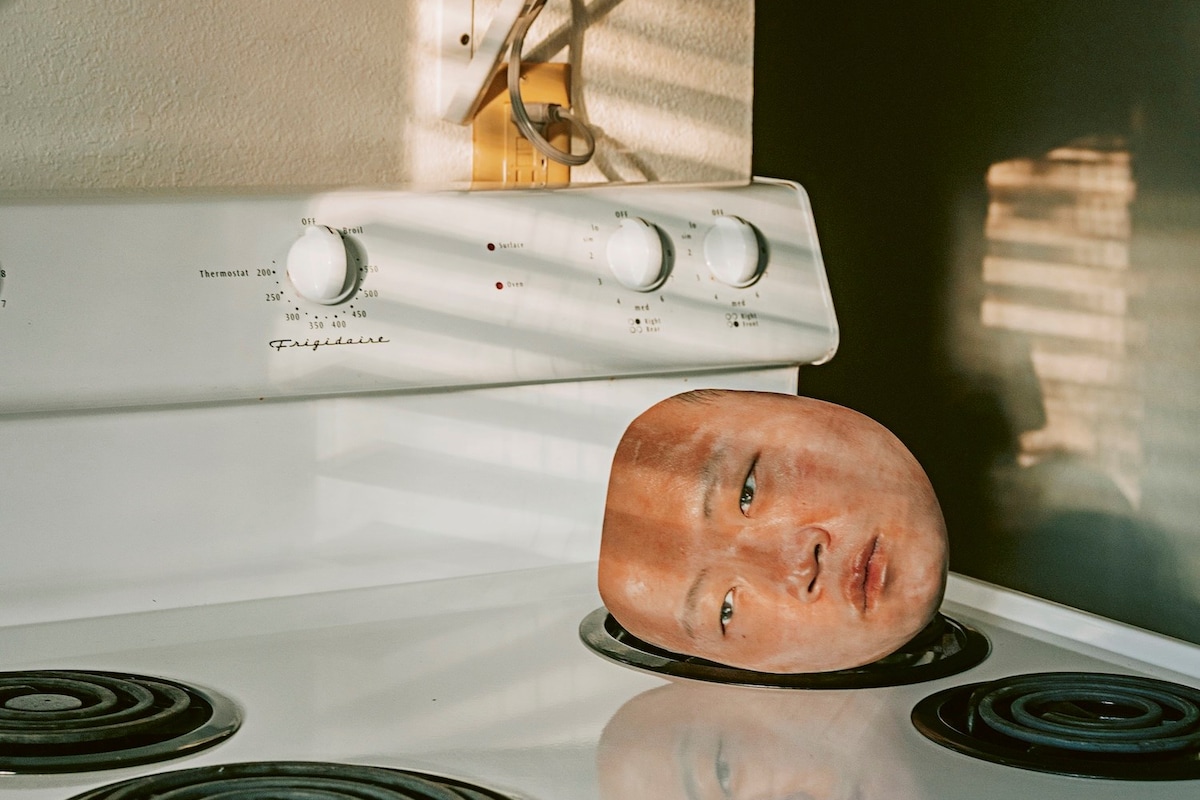
Distance does not soften the terror. It only deepens my helplessness. In moments like this, I realize that geography is not measured in miles, but in attachment. War rearranges distance. These days I find myself returning to "The Conference of the Birds," the 12th-century poem by Attar of Nishapur, seeking meaning through ancient wisdom about spiritual journeys and transformation.
Arts
Writing
fromKqed
1 month agoA Glimpse of Iran Through the Eyes of its Artists and Journalists
Iranian-American artists and writers explore diaspora, identity, and historical trauma through poetry, fiction, and documentary, examining the lasting impact of political upheaval and U.S. intervention on Iranian communities.
fromThe Atlantic
2 months agoOne of Our Own
For Lowell There are things which, said and true, are of this generation's past; of fighting freedom's battles and of taking off the mask- stories of the actions taken, to blot out the blights of sin, how heroes and the valorous fought their enemies within, Would we be traitors to our bugle, which beckons with its call? - They won freedom for their people but in fine print said: be damned.
US politics
fromThe Atlantic
1 month agoSalman Rushdie Doesn't Want to Be Your 'Free Speech Barbie'
When you've written 23 books, it's a little frustrating to be known not even for a book, but for something that happened to a book in 1989—when that was my fifth published book and this is my 23rd. Can we please talk about books? I keep trying to say.
Books
Film
fromwww.mercurynews.com
1 month agoSirat:' is not the movie you think it is it's better
Sirat is a sensory-driven film that transcends conventional thriller storytelling through hypnotic sound design, unexpected plot developments, and exploration of universal themes like faith, death, and redemption.
History
fromMedievalists.net
2 months agoNew Medieval Books: A Medieval Case for Islam's Superiority - Medievalists.net
An eighth-century Abbasid letter to the Byzantine emperor defends Islam, critiques Christian misunderstandings, and reflects Abbasid-Byzantine diplomacy and Baghdad's intellectual life.
fromwww.aljazeera.com
2 months agoJamal Elshayyal: inside the war for journalism's future
Director of Al Jazeera Digital News Jamal Elshayyal speaks to The Take on leading Al Jazeera's next era of journalism. At Web Summit Qatar, we hear from Jamal Elshayyal, Al Jazeera's new Director of Digital News Content, on forging his own path at the network and how those lessons will guide Al Jazeera through the AI age. In this episode: Jamal Elshayyal (@jamalelshayyal), Director, Al Jazeera Digital News Content Global Episode credits:
Media industry
fromThe Atlantic
1 month agoDark Humor and the Iranian Resistance
This targeting success surely owes much to advanced electronic surveillance and deep cyber penetration of Iran's weapons systems and infrastructure. But in this war, as in the 12-day war last year, Israel and the United States are obviously benefiting from intelligence from some Iranians themselves, who are willing to risk their lives to help bring down the Islamic Republic.
World politics
fromwww.aljazeera.com
2 months agoSara in Southern Lebanon
Sara in Southern Lebanon On the Ground Her video diary shares her two-year journey of escaping to Beirut, followed by the difficulties of trying to return home. This video diaries was produced in collaboration with the Global Reporting Centre. Video Duration 03 minutes 58 seconds 03:58 Video Duration 03 minutes 12 seconds 03:12 Video Duration 04 minutes 35 seconds 04:35 Video Duration 03 minutes 51 seconds 03:51
World news
US politics
fromwww.theguardian.com
2 months agoThis is Muslim New York: artists, thinkers and politicos on defining a new era for the city
Muslim creatives and intellectuals in New York City are rising, reshaping the cultural landscape and rebuking Islamophobia amid a renewed Palestinian-rights movement.
fromwww.aljazeera.com
1 month agoRamadan in Yemen's Aden: Optimism dimmed by tensions and shortages
After years of operating from exile, Yemen's Saudi-backed, UN-recognised cabinet is spending Ramadan in Aden, a move that has coincided with improvements in basic services and a renewed sense of relief. Yet that relief was overshadowed by the deadly confrontation between security forces and antigovernment protesters, in which at least one person was killed.
World news
fromHyperallergic
1 month agoAli Eyal's Forever War
I was nine years old, and I felt like I lost that childhood. I felt like I became a kid when I looked at a TV this morning. Burn that image into your mind, his mother told him, knowing the city would never be the same. It was 2003, and mere days later, the United States and its allies would launch their invasion of Iraq, raining airstrikes down on the city.
Arts
fromHyperallergic
2 months agoQueer Arab Artists on Their Own Terms
"The show is about giving the pen back to the writer, giving the paintbrush back to the artist, during this time of genocide," the Ridikkuluz told Hyperallergic in an interview at the gallery. "And when there's been so much censorship, these are artists that might not have been able to do this anywhere else."
Arts
Books
fromwww.npr.org
2 months agoPoet Rachel Eliza Griffiths says she won't let pain be 'the engine that drives the ship'
Rachel Eliza Griffiths experienced dissociative episodes and memory blackouts after her best friend's death and during subsequent trauma, and she chronicled these experiences in a memoir.
fromenglish.elpais.com
2 months agoKiran Desai, the author who disappeared for 20 years: I think of loneliness as sustenance, as shame and as political fear'
She moved before the pandemic, when gentrification with its huge skyscrapers and condominiums forced her out of Dumbo, Brooklyn. Between the kitchen and the upstairs room, in one corner of which lie part of the 5,000 pages of notes she took while writing it, Desai finished The Loneliness of Sonia and Sunny, the monumental, 19thcenturystyle novel she has spent nearly two decades on.
Books
fromwww.theguardian.com
2 months agoMost Indians don't read for pleasure so why does the country have 100 literature festivals?
Sounding amused, publisher Pramod Kapoor recalls the reaction of the Indian cricketing legend Bishen Singh Bedi when he learned Kapoor was printing 3,000 copies of his autobiography. Only 3,000? he protested. I fill stadiums with 50-60,000 people coming to see me play and you think that's all my book is going to sell? Kapoor, the founder of Roli Books, explains that Bedi's legions of admirers were unlikely to translate into book buyers. That was in 2021.
Books
fromHyperallergic
1 month agoEveryday Traces of NYC's SWANA Diaspora
Unlike virtually all other non-European ethnicities, SWANA - or Middle Eastern/North African (MENA), as used in the show - is grouped under "White" on the US census. It's not just the census, though. It's medical forms, college applications, just about anything with a check box for ethnicity. Efforts have been made to change this, with some success. More institutions are adding a separate category on forms - and one might appear on the 2030 census.
Arts
[ Load more ]