Public health
fromwww.aljazeera.com
4 hours agoAs fentanyl crisis evolves, experts say US is still behind the eight ball'
The Trump administration's policies and health program cuts jeopardize progress against fentanyl overdoses in the U.S.
The warm weather initiative began on March 30, according to a memo the Wu administration's Coordinated Response Team sent to the City Council on Monday. The CRT is an interdepartmental group that works to eliminate outdoor substance use and connect people suffering from addiction with treatment and recovery options.
Shredded paper is especially difficult to recycle, so many programs will not accept it. Shredding accelerates fiber shortening and lowers the paper grade from high-grade to mixed-grade. Mixed-grade paper is still recyclable, but it ends up baled and processed into products like paper towels and packing paper.
The seizure of 2,700 pounds of meth represents a substantial disruption to the supply chain operating within mountain and valley communities across the region. Eight people were arrested in conjunction with the bust, including one individual who was reportedly on the National Terrorist Watch List.
About 8 million Americans use CPAP machines every night for sleep apnea. Dealing with the electronics, plastic tubing, and silicone masks from these devices has created a major waste problem. In most places, CPAP machines are considered electronic waste, so throwing them in the trash is usually illegal. The compressor inside has circuit boards with lead, mercury, and cadmium, which can pollute soil and water if not handled properly.
The Trump administration is slowly dismantling the federal disaster management system that protects the nation from chemical catastrophes, such as fires and explosions at high-risk facilities. The US Environmental Protection Agency's Response Management Program (RMP) requires more than 12,500 high-risk facilities to develop protocols to prevent catastrophes, or limit fallout, and was largely designed to protect workers, first responders, and fence-line communities.
Never place batteries of any type in your curbside recycling bin. Batteries can damage recycling equipment and, if lithium batteries are mixed in, cause fires. Always use designated battery collection programs.
Local mushroom experts and enthusiasts have bemoaned the state's messaging around the poisonings as narrow and fear-based. Many would prefer to see an emphasis on education, rather than a prohibition on all foraging, and point out that touching, smelling and looking at mushrooms is safe. "There's a lot more nuance," said Debbie Viess, co-founder of the Bay Area Mycological Society. "It's much more important to steer people to places where they can educate themselves about the safety and the dangers of eating wild mushrooms."
The U.S. Food and Drug Administration is reportedly mulling whether more prescription drugs should be sold over the counter (OTC) at pharmacies. In an interview on Wednesday, FDA commissioner Martin Makary told CNBC that everything should be over the counter except drugs that are deemed unsafe or addictive or that require clinical monitoring. Makary said the agency is reviewing how it decides which drugs can be sold with or without a prescription from a health care practitioner.
Button cell batteries are the small, flat, round batteries found in watches, hearing aids, car key fobs, calculators, and medical devices. Although they are tiny, these batteries contain valuable materials that can be recovered and can harm the environment if not handled or disposed of correctly. The main challenge in recycling button cells is their small size and the difficulty of sorting them.
Lithium-ion (Li-ion) batteries are found in many devices we use every day, like smartphones, laptops, tablets, wireless earbuds, power tools, e-bikes, and electric vehicles. By 2023, there were more than 40 million electric vehicles on the road worldwide, and billions of portable electronics used Li-ion cells. These batteries are valuable for recycling, but they can be dangerous if not disposed of correctly.
Clean Harbors just locked in a $110 million contract for PFAS water filtration at Joint Base Pearl Harbor-Hickam. This isn't just another project win. It's validation of the company's end-to-end PFAS solution: lab analytics, water filtration, site remediation, and most critically, high-temperature incineration disposal.
Europe's supermarket shelves are packed with brands billing their plastic packaging as sustainable, but often only a fraction of the materials are truly recovered from waste, with the rest made from petroleum. Brands using plastic packaging from Kraft's Heinz Beanz to Mondelez's Philadelphia use materials made by the plastic manufacturing arm of the oil company Saudi Aramco. The Saudi state-owned holding opposes production cuts under the UN plastic treaty and is the world's largest corporate greenhouse-gas emitter (over 70m tonnes up to 2023).
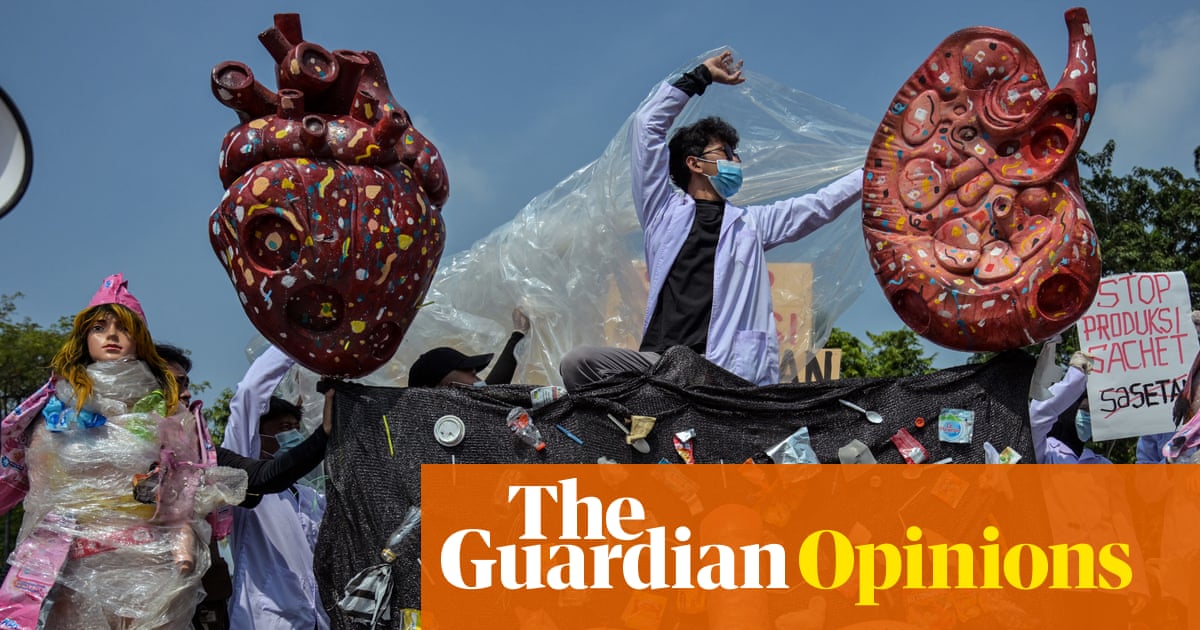
Plastic is everywhere. Inside the human body, in the depths of the ocean and the far reaches of the Arctic. Now a new study warns that, unless the world changes course, plastic could more than double its damage to human health within the next two decades. The culprit is not plastic litter in the environment or microplastics, but the emissions released across plastic's entire life cycle from fossil fuel extraction and manufacturing to transport, recycling and disposal.
Many cities have also banned polystyrene foam containers. While this movement is gaining ground, it still faces strong opposition. Each American uses about 365 single-use plastic bags every year. With a population of 330 million, this adds up quickly. Only about 9% of all plastic ever made has been recycled. The rest ends up in landfills, waterways, or breaks down into microplastics found in human blood, tap water, and table salt.