#predator-elite

[ follow ]
Books
fromPsychology Today
2 hours ago

Why Rick McIntyre Is the Go-To Guy for All Things Wolves

Rick McIntyre's memoir offers insights into his life with wolves and valuable lessons about wildlife relationships.
fromwww.scientificamerican.com
1 week ago

See these ziti-sized fish scale a 50-foot waterfall

During major floods, thousands of tiny fish convene at Luvilombo Falls in the upper Congo River Basin to undertake a peculiar vertical migration, described for the first time today in Scientific Reports.
OMG science
fromwww.scientificamerican.com
2 weeks ago

These snakes steal poison from their preyhere's how they know they have enough

Red-necked keelback snakes possess a potent toxin derived from the toads they consume, which can cause severe harm to predators like mongooses. The snakes store these toxins in specialized nuchal glands.
Pets
Agriculture
fromHigh Country News
3 weeks ago

Utah's new study aims to kill 'as many cougars as possible' - High Country News

Utah's aggressive mountain lion management involves paying hunters to kill them, raising concerns about its impact on local communities and wildlife.
Pets
fromwww.theguardian.com
2 weeks ago

Wily coyote? Urban canines take more risks compared with rural ones, study finds

Urban coyotes are less afraid of new stimuli and take more risks compared to rural coyotes, according to a study across multiple US sites.
fromMail Online
2 weeks ago

Sharks high on COCAINE are marauding the seas around the Bahamas

'They bite things to investigate and end up exposed to substances', lead author Natascha Wosnick told Science News.
OMG science
Roam Research
fromDefector
4 weeks ago

Even After Being Eaten, This Beetle Has Two Ways Out Alive | Defector

The Japanese water scavenger beetle Regimbartia attenuata survives passage through a frog's digestive system and exits alive within minutes to hours.
Psychology
fromwww.scientificamerican.com
3 weeks ago

These fish can tell when you're staring

Fish can perceive when they or their offspring are being watched and respond with increased aggression, demonstrating attention attribution abilities previously documented mainly in primates, birds, and domestic animals.
fromMail Online
2 weeks ago

Scientists explain why entire pack of wolves needed to be euthanised

The charity claims long-term separation was not a viable solution, as wolves' welfare is closely tied to living within a stable pack structure, and isolation can create further welfare concerns.
Pets
Environment
fromwww.scientificamerican.com
4 weeks ago

Crabs are cannibalizing one another with surprising rapacity in parts of the Chesapeake Bay

Blue crabs in Chesapeake Bay cannibalize each other at such high rates that they are their own primary predatory force, accounting for 97 percent of crab deaths and injuries over a 36-year study.
Science
fromNature
1 month ago

No such thing as a shark? Genomes shake up ocean predator's family tree

Sharks may not form a natural biological group; hexanchiformes might be more closely related to rays and skates than to other sharks, making sharks a paraphyletic group.
OMG science
fromMail Online
3 weeks ago

Venomous flying spiders the size of a human hand spreading across US

Joro spiders from Asia are rapidly spreading across the US through ballooning, with new populations expected to hatch in spring and expand their range significantly.
Independent films
fromArs Technica
1 month ago

Hunting for elusive "ghost elephants"

Ornithologist Steve Boyes searches for a rumored new elephant species in the Angolan Highlands in Werner Herzog's documentary Ghost Elephants, premiering on National Geographic and Disney+.
Pets
fromwww.scientificamerican.com
4 weeks ago

What would happen if snakes disappeared like in Zootopia 2? An investigation

Zootopia 2 defends snakes as misunderstood creatures while highlighting their critical ecological importance as mesopredators that control rodent populations and sustain food chains.
fromHigh Country News
1 month ago

Coyotes and cougars and rats, oh my! - High Country News

An unnamed tourist saw it and told Aidan Moore, who works for Alcatraz City Cruises. Moore told SFGATE that he was initially skeptical, but the guest's iPhone footage left little room for doubt. The video shows, not a sea lion or an otter, but an actual Canis latrans, doggedly dogpaddling, then clambering out of the water, noticeably shaky and struggling to settle tired paws on the craggy rocks.
California
Pets
fromwww.theguardian.com
4 weeks ago

I love vultures, mosquitoes and, yes, even wasps. This is why you should too | Jo Wimpenny

Humans hold irrational emotional biases toward animals; wasps deserve reconsideration as valuable pollinators and pest controllers despite negative perceptions.
Chicago Bears
fromCalifornia Post
1 month ago

Deadly apex predator being mulled for release in California after 100-year absence

California lawmakers are considering reintroducing grizzly bears through Senate Bill 1305, which would require a scientific assessment and consultation with Native American tribes about restoring the species extinct in the state for over a century.
Chicago Bears
fromHigh Country News
1 month ago

Can Alaska save caribou by killing bears? - High Country News

Alaska's Mulchatna caribou herd has collapsed from 200,000 animals in the 1990s to 12,000 in 2022, devastating Indigenous subsistence hunting and prompting controversial wildlife management interventions including hunting bans and aerial predator culling.
#de-extinction
fromwww.npr.org
1 month ago
OMG science

Colossal Biosciences breeds controversy while trying to revive mammoths

Colossal Biosciences uses gene-editing, cloning, and AI technologies to resurrect extinct species like woolly mammoths while developing tools to save endangered animals, though critics question the ethics and feasibility of de-extinction.
fromThe Conversation
2 months ago
Philosophy

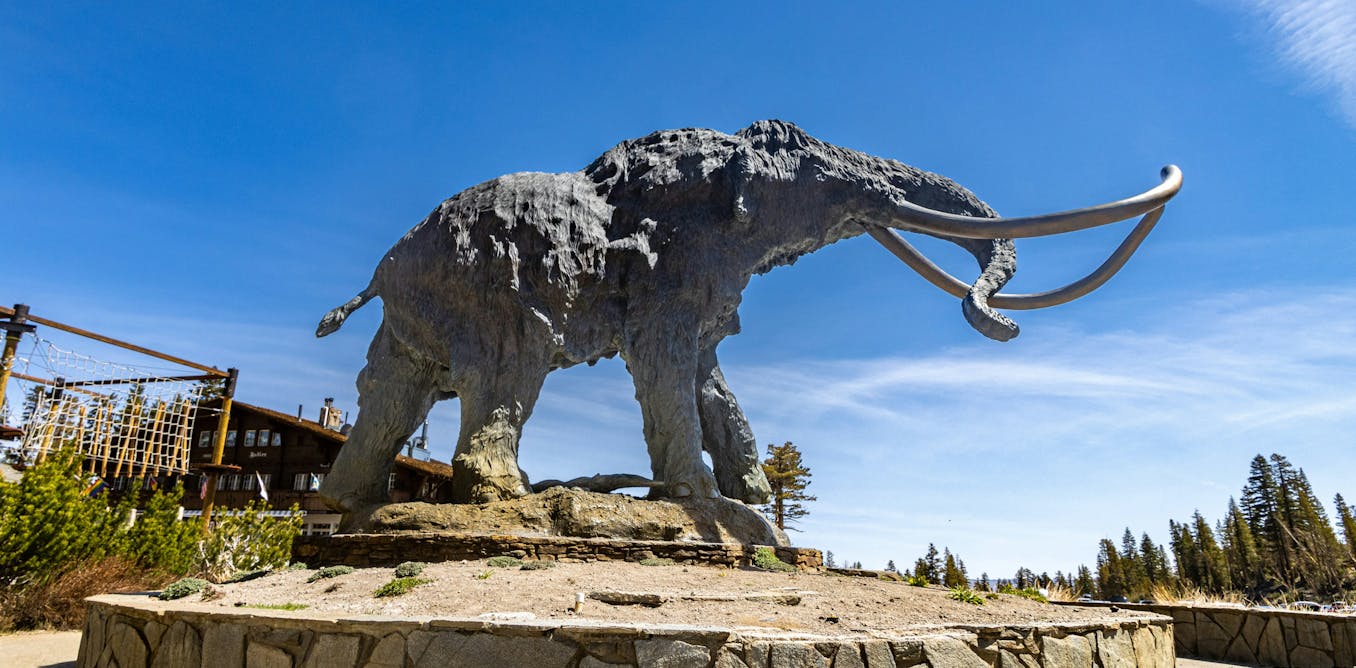
Some companies claim they can 'resurrect' species. Does that make people more comfortable with extinction?

People do not become more willing to accept extinctions simply because de-extinction technology exists, but communication about it must be careful.
OMG science
fromwww.npr.org
1 month ago

Colossal Biosciences breeds controversy while trying to revive mammoths

Colossal Biosciences uses gene-editing, cloning, and AI technologies to resurrect extinct species like woolly mammoths while developing tools to save endangered animals, though critics question the ethics and feasibility of de-extinction.
Science
fromwww.scientificamerican.com
1 month ago

The surprising scientific value of roadkill

Researchers use roadkill as a valuable scientific resource to study wildlife behavior, track species distribution, obtain specimens ethically, and discover new species across diverse research applications.
Philosophy
fromThe Conversation
1 month ago

The cost of casting animals as heroes and villains in conservation science

Hero-villain narratives in ecology oversimplify complex ecological stories and inappropriately impose human moral frameworks onto non-moral natural processes and species.
Environment
fromPsychology Today
2 months ago

Rewilding Rejects the We're-So-Special Exceptionalism

Rewilding requires rehabilitating human hearts, overcoming self-centeredness, and treating nature with compassion so ecosystems and nonhuman lives can flourish.
Science
fromKqed
6 months ago

Tiger Beetles Bite First, Ask Questions Never | KQED

Tiger beetles run at extreme speeds but use rapid stops and forward antennae to sense obstacles and capture prey with sickle-shaped mandibles.
fromThe Atlantic
1 month ago

How Many Wolves Is Enough?

The wolves arrived in May of last year, just days after Paul Roen had driven his cattle back up to their summer pasture in Northern California's Sierra Valley. He started finding the bleeding bodies of calves-some still alive, so badly paralyzed that they'd need to be shot. After weeks of this, Roen finally saw a kill himself. "One wolf grabbed a cow and spun her around, while another grabbed a calf," he told me. "He tore it into three pieces in 30 seconds."
Environment
fromwww.scientificamerican.com
2 months ago

What's scarier than a spider? A fake giant spider

What's scarier than a spider? A really big spider, of course. A newfound defensive tactic takes advantage of this idea: researchers documented spiders building giant spiderlike silhouettes on their webs to ward off predators. These decoys are an example of web decorations that some spiders are known to produce, often to prevent getting eaten, avoid bird strikes or attract prey.
Science
fromwww.theguardian.com
2 months ago

The Guardian view on risks from biodiversity collapse: warnings must be heeded before it's too late | Editorial

Originally due to be published in the autumn, the review appears to have had some sections removed. An earlier version is reported to have included warnings about the risks of eco-terrorism and the growing likelihood of war between China, India and Pakistan due to competition over a shrinking water supply from the Himalayas.
Environment
Science
fromInsideHook
2 months ago

Environmental Changes May Make Sharks Less Dangerous

Ocean acidification can corrode and degrade shark teeth, reducing serrations and root structures and threatening foraging efficiency, energy uptake, and elasmobranch fitness.
Environment
fromMail Online
2 months ago

Ominous warning for humanity as insects mysteriously 'fall silent'

Rapid global insect declines threaten pollination, food production, nutrient availability, and human health, signaling imminent ecological instability.
Science
fromDefector
1 month ago

Finally! An Ancient Fish That Understood Life's Terrors | Defector

Haikouichthys, an early Cambrian fish, possessed four eyes and lacked jaws, reflecting distinctive sensory and feeding adaptations among early vertebrates.
fromNature
2 months ago

Daily briefing: The battle over the identity of the first animals

Wooden objects carrying the marks of carving and use could be the oldest wooden tools ever found. Researchers dated the artefacts, found in what is now Greece, to 430,000 years ago - and suggest they might have been made by early Neanderthals or their ancestors, Homo heidelbergensis. A separate study describes 480,000-old flint-knapping tools made from antler and elephant bone, from what is now the United Kingdom.
Science
Science
fromNature
1 month ago

Parasitic wasps use tamed virus to castrate caterpillars

A parasitic wasp uses a domesticated virus to kill moth larvae testis cells, effectively castrating its hosts and benefiting wasp reproduction.
Science
fromKqed
8 months ago

The 4 Most Ruthless Ants We've Ever Filmed | KQED

Fire ants form body rafts during floods, using larvae with air-trapping hairs for buoyancy and increased defense while afloat.
[ Load more ]