#private-donor-influence
#private-donor-influence
[ follow ]
#philanthropy #wealth-inequality #campaign-finance #charitable-giving #fundraising #transparency #democracy
#philanthropy


Fundraising
fromNonprofit Quarterly | Civic News. Empowering Nonprofits. Advancing Justice.
1 week agoBridging Funders to the Front Lines: Pluralism and Greater Philanthropic Opportunity | Nonprofit Quarterly | Civic News. Empowering Nonprofits. Advancing Justice.
Movement-rooted philanthropic intermediaries are essential for addressing future challenges in the nonprofit sector and advancing equity.
Fundraising
fromNonprofit Quarterly | Civic News. Empowering Nonprofits. Advancing Justice.
3 weeks agoPhilanthropy's Drag Coefficient: When Process Costs More Than Failure | Nonprofit Quarterly | Civic News. Empowering Nonprofits. Advancing Justice.
Philanthropy is a financial loss with no return, burdened by excessive processes that consume resources meant for deployment.
Fundraising
fromNonprofit Quarterly | Civic News. Empowering Nonprofits. Advancing Justice.
1 week agoBridging Funders to the Front Lines: Pluralism and Greater Philanthropic Opportunity | Nonprofit Quarterly | Civic News. Empowering Nonprofits. Advancing Justice.
Movement-rooted philanthropic intermediaries are essential for addressing future challenges in the nonprofit sector and advancing equity.
Fundraising
fromNonprofit Quarterly | Civic News. Empowering Nonprofits. Advancing Justice.
3 weeks agoPhilanthropy's Drag Coefficient: When Process Costs More Than Failure | Nonprofit Quarterly | Civic News. Empowering Nonprofits. Advancing Justice.
Philanthropy is a financial loss with no return, burdened by excessive processes that consume resources meant for deployment.


Non-profit organizations
fromNonprofit Quarterly | Civic News. Empowering Nonprofits. Advancing Justice.
5 days agoThe Gatekeepers: For-Profit Platforms, Nonprofit Power, and the Risks to Charitable Giving | Nonprofit Quarterly | Civic News. Empowering Nonprofits. Advancing Justice.
The growing reliance on for-profit intermediaries in charitable giving creates a power imbalance that can harm nonprofits and their missions.
Social justice
fromNonprofit Quarterly | Civic News. Empowering Nonprofits. Advancing Justice.
4 days agoHow Unity May Tear Us Apart | Nonprofit Quarterly | Civic News. Empowering Nonprofits. Advancing Justice.
Polarization is a top concern in the U.S., and the concept of unity varies significantly among people, potentially leading to harmful interpretations.
fromIntelligencer
3 days agoMamdani Has Mightily Pissed Off One of NYC's Richest People
"It is shameful that he used Ken's name as the example of those who supposedly aren't carrying their fair share of the burdens associated with New York City's often costly and wasteful spending," Beeson said. "In doing so, the mayor has once again manifested the ignorance and disdain of the elite political class towards those who have been consistently committed to building one of the greatest cities in the world."
NYC real estate


fromInside Higher Ed | Higher Education News, Events and Jobs
4 days agoChapel Hill Keeps Refusing to Release $1.2M Report on SCiLL
The university said it selected the international law firm K&L Gates last summer to review 'allegations and concerns' regarding the school. Over more than seven months, the review team analyzed hundreds of thousands of documents and interviewed dozens of people.
Higher education
Agriculture
fromNonprofit Quarterly | Civic News. Empowering Nonprofits. Advancing Justice.
5 days agoA Vision of Food Justice, Collective Care, and Safety | Nonprofit Quarterly | Civic News. Empowering Nonprofits. Advancing Justice.
Food and medicine are interconnected, yet food policy often separates them, impacting access and equity in food justice.
#democracy
Social justice
fromNonprofit Quarterly | Civic News. Empowering Nonprofits. Advancing Justice.
5 days agoPresent at Our Nation's Founding-but Excluded from Its Promise | Nonprofit Quarterly | Civic News. Empowering Nonprofits. Advancing Justice.
The true expansion of democracy in America involves recognizing the contributions and rights of marginalized groups historically excluded from its promises.
Left-wing politics
fromNonprofit Quarterly | Civic News. Empowering Nonprofits. Advancing Justice.
4 weeks agoHow to Undermine Authoritarian Control: On Empowering Parallel Institutions | Nonprofit Quarterly | Civic News. Empowering Nonprofits. Advancing Justice.
Civil society must demonstrate the necessity of democratic institutions and social services to protect them from dismantling efforts by ultra-elites.
Fundraising
fromwww.theguardian.com
4 days agoPrivate secretary of billionaire philanthropist Judith Neilson charged with fraud over $1m luxury purchases
Annalouise Spence has been charged with 68 counts of fraud for allegedly misusing a business credit card to make over $1 million in unauthorized purchases.
Non-profit organizations
fromNonprofit Quarterly | Civic News. Empowering Nonprofits. Advancing Justice.
6 days agoFaster Than Authoritarianism: Rapid Response as a Frontline Strategy for Democracy Defense | Nonprofit Quarterly | Civic News. Empowering Nonprofits. Advancing Justice.
Rapid response is essential for effective movement building and defending democracy against authoritarian strategies.
Social justice
fromNonprofit Quarterly | Civic News. Empowering Nonprofits. Advancing Justice.
1 week agoOlder Adults and Volunteerism: A Vital Social Justice Issue | Nonprofit Quarterly | Civic News. Empowering Nonprofits. Advancing Justice.
Volunteers, especially seniors, play a crucial role in nonprofit impact and should be viewed as agents of change rather than burdens on resources.
Non-profit organizations
fromNonprofit Quarterly | Civic News. Empowering Nonprofits. Advancing Justice.
1 week agoWhy Americans Give: New Research Finds 5 Distinct Profiles for Generosity | Nonprofit Quarterly | Civic News. Empowering Nonprofits. Advancing Justice.
Generosity in the U.S. is diverse and varies by individual motivations and demographics, contrary to the belief that it has eroded.
fromEntrepreneur
1 week agoWhy Passion Isn't Enough to Scale a Nonprofit
Most nonprofits begin with passion, and for good reason. A founder identifies a critical need and brings together a team that cares deeply enough to act. That kind of energy is what makes the early days possible. It drives long hours, resourceful problem-solving and a deep commitment to impact.
Non-profit organizations
Media industry
fromNonprofit Quarterly | Civic News. Empowering Nonprofits. Advancing Justice.
3 weeks agoPolitics in an Attention Economy | Nonprofit Quarterly | Civic News. Empowering Nonprofits. Advancing Justice.
Candidates must be cultural figures to succeed in today's American politics, navigating an attention economy shaped by algorithms.
Fundraising
fromNonprofit Quarterly | Civic News. Empowering Nonprofits. Advancing Justice.
1 week agoWhat If I Freeze with a Major Donor Ask? | Nonprofit Quarterly | Civic News. Empowering Nonprofits. Advancing Justice.
Silence after making a major gift ask is often the hardest part for fundraisers, leading to self-negotiation and smaller donations.
Non-profit organizations
fromNonprofit Quarterly | Civic News. Empowering Nonprofits. Advancing Justice.
2 weeks agoThe Meaningful Reset: Designing Nonprofits to Survive Board-Staff Conflict | Nonprofit Quarterly | Civic News. Empowering Nonprofits. Advancing Justice.
Nonprofit organizations face unique challenges due to emotional investment, leading to conflicts that require careful analysis and intentional resolution.
Non-profit organizations
fromNonprofit Quarterly | Civic News. Empowering Nonprofits. Advancing Justice.
2 weeks agoDemocracy Needs You: 5 Steps Nonprofits Can Take to Support Free and Fair Elections | Nonprofit Quarterly | Civic News. Empowering Nonprofits. Advancing Justice.
Voting is essential for democracy, and nonprofits play a crucial role in promoting voter participation and countering misinformation.
#giving-pledge
Fundraising
fromTechCrunch
1 month agoThe billionaires made a promise -- now some want out | TechCrunch
The Giving Pledge, launched by Buffett and Gates in 2010 to encourage billionaire philanthropy, has dramatically declined in participation and effectiveness despite massive wealth concentration globally.
#nonprofit-leadership


Non-profit organizations
fromNonprofit Quarterly | Civic News. Empowering Nonprofits. Advancing Justice.
3 weeks agoHow Dissolving Your Nonprofit Can Strengthen the Sector | Nonprofit Quarterly | Civic News. Empowering Nonprofits. Advancing Justice.
Nonprofit leaders must sometimes choose to dissolve organizations intentionally rather than forcing survival in a weakened state.
Non-profit organizations
fromNonprofit Quarterly | Civic News. Empowering Nonprofits. Advancing Justice.
3 weeks agoAI in the Nonprofit Sector Is a Question of Governance, Not Just Technology | Nonprofit Quarterly | Civic News. Empowering Nonprofits. Advancing Justice.
Nonprofits face a critical choice in shaping AI governance or risk external control over its implementation and impact.
Mission District
fromsfist.com
1 month agoGroup Filmed Paying $5 Per Signature at Sixth and Mission on Pro-Billionaire Petitions
California Secretary of State investigates alleged ballot initiative petition fraud in San Francisco involving paid signature collectors using false voter identities from outside the Bay Area.
US politics
fromEsquire
1 month agoAre You One of Those Weirdos Who Wants More Money in Politics? Move to West Virginia!
West Virginia passed legislation obscuring employer information from political donations over $250, ostensibly for harassment protection but effectively shielding corporate political influence from public scrutiny.
Fundraising
fromNonprofit Quarterly | Civic News. Empowering Nonprofits. Advancing Justice.
3 weeks agoUsing AI for Fundraising Still Requires Human Strategy | Nonprofit Quarterly | Civic News. Empowering Nonprofits. Advancing Justice.
AI should support strategy in nonprofit fundraising, not replace the essential human elements of trust and relationship building.
Social justice
fromwww.theguardian.com
1 month agoI work with human trafficking survivors. Rich men like Bill Gates can do more to make amends for their Epstein ties | Bridgette Carr
Wealthy individuals' apologies for associating with Epstein are necessary but insufficient without accountability and action to address the systemic exploitation they enabled through their power and resources.
fromHarvard Business Review
1 month agoTreat Nonprofits as Strategic Partners, Not Just Philanthropic Recipients
Most for-profit companies still confine nonprofit relationships to corporate philanthropy. Donations flow through foundations, annual reports highlight community contributions, and nonprofit engagement is framed as evidence of corporate responsibility.
Non-profit organizations
Left-wing politics
fromwww.theguardian.com
1 month agoAmerica needs a movement to curb billionaires' power | Steven Greenhouse
Over 900 US billionaires wield excessive influence over elections, economy, government policies, and media, threatening democracy and economic fairness, requiring urgent grassroots action to curb their power.
US Elections
fromNonprofit Quarterly | Civic News. Empowering Nonprofits. Advancing Justice.
2 months agoFunders Need to Get Dollars Out the Door for 2026 Midterms | Nonprofit Quarterly | Civic News. Empowering Nonprofits. Advancing Justice.
Early, reliable philanthropic funding is essential to support nonprofits safeguarding election integrity, reducing barriers, and combating misinformation ahead of the 2026 midterms.
Higher education
fromNature
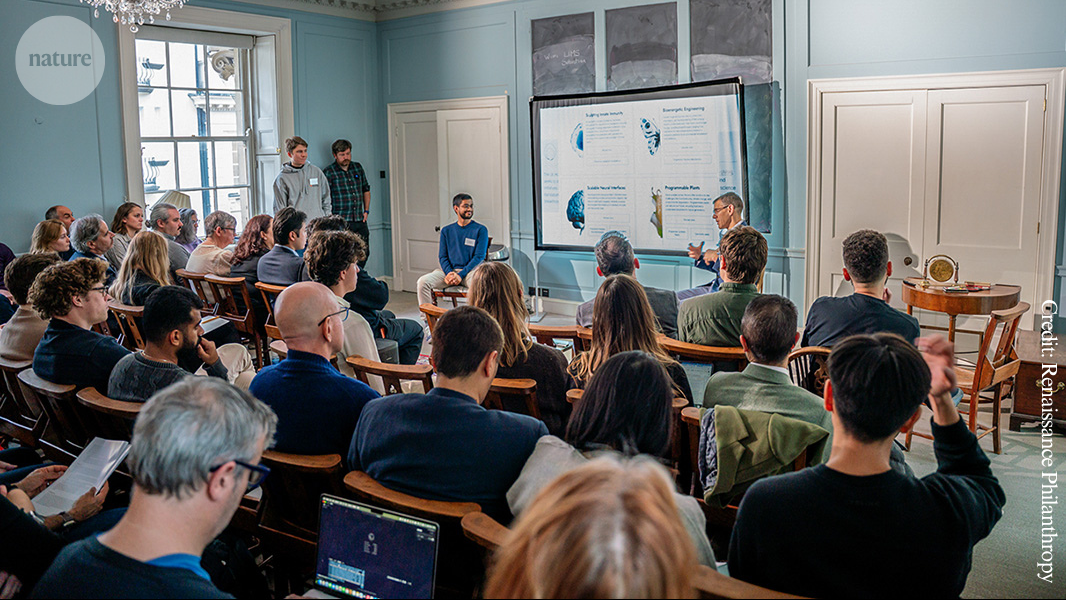
1 month agoThe Epstein scandal is a wake-up call - new rules are needed on links with rich donors
Academic institutions failed to implement proper oversight of faculty donor relationships, allowing Jeffrey Epstein to influence research despite having no scientific expertise and a criminal history.
Non-profit organizations
fromNonprofit Quarterly | Civic News. Empowering Nonprofits. Advancing Justice.
1 month agoDisability Inclusion Isn't "Special Needs"-It's Smart Philanthropy | Nonprofit Quarterly | Civic News. Empowering Nonprofits. Advancing Justice.
Cuts to special education oversight threaten funding and services for millions of children with disabilities, risking progress in disability inclusion.
fromNonprofit Quarterly | Civic News. Empowering Nonprofits. Advancing Justice.
2 months agoPhilanthropy Must Defend the Right to Bear Witness | Nonprofit Quarterly | Civic News. Empowering Nonprofits. Advancing Justice.
"Are you okay?" These were Alex Pretti's last words, said to a woman after ICE agents had tackled and pepper-sprayed her. Videos from bystanders show Pretti holding up a phone, attempting to document what was happening before he himself was pepper-sprayed, wrestled to the ground, and killed by those officers. He lost his life not for committing violence, but for documenting it, and stepping in to protect someone facing it.
US politics
Left-wing politics
fromWIRED
1 month agoThis Is the Next Wave of Political Fundraising
Content creators are increasingly leveraging their platforms for direct political fundraising, raising tens of thousands of dollars in single streams and establishing organized coalitions to convert followers into donors for campaigns and causes.
fromNonprofit Quarterly | Civic News. Empowering Nonprofits. Advancing Justice.
2 months agoThis Is Not a Retreat | Nonprofit Quarterly | Civic News. Empowering Nonprofits. Advancing Justice.
The change in the administration's tactics in Minneapolis is not a retreat. Instead, they are regrouping and planning another mode of attack, with the hopes that their repression might be met with resistance that is easier to control and contain. People who garner their relevancy and power through the dehumanization and oppression of others will do whatever it takes to cling to their soulless sense of self.
US politics
Fundraising
fromwww.theguardian.com
1 month agoThe Guardian view on falling donations to charity: rising living costs are part of the problem, but not all of it | Editorial
UK charitable donations fell from 15.4 billion to 14 billion, marking the first overall drop since 2021, with fewer donors giving smaller amounts despite high-profile fundraising campaigns.
fromwww.theguardian.com
2 months agoReaders reply: what would be the most socially useful way to spend a billion dollars?
I've always thought it would be good to acquire an old warehouse in every town throughout the land and convert it into low-rent community workspaces for artists, local charities and small businesses getting off the ground. A kind of people's WeWork. What would others do with a humungous, but not unlimited, pile of dosh to benefit society? Roland Freeman, West Yorkshire Send new questions to nq@theguardian.com.
Left-wing politics
US politics
fromNonprofit Quarterly | Civic News. Empowering Nonprofits. Advancing Justice.
2 months agoThe Long-Term Futures Work of Building a Better Democracy | Nonprofit Quarterly | Civic News. Empowering Nonprofits. Advancing Justice.
Sustained long-term strategies and expanded democracy-focused infrastructure are required to address rising attacks and root causes beyond short-term responses.
Fundraising
fromFortune
1 month agoPeter Thiel is actively convincing billionaires to abandon The Giving Pledge - and it's working | Fortune
Peter Thiel actively discourages wealthy individuals from honoring The Giving Pledge commitments, claiming the philanthropic initiative has lost momentum and relevance among billionaires.
US politics
fromSan Jose Spotlight
2 months agoMountain View nonprofit forgoes federal funding on principle - San Jose Spotlight
Community Services Agency in Mountain View declined Community Development Block Grant funding to avoid enforcing immigration checks and bans on gender ideology and abortion referrals.
US politics
fromSilicon Canals
2 months agoThe $10 million question: When billionaires pick your senator - Silicon Canals
A $10 million donation from Elon Musk to Nate Morris demonstrates billionaire influence shaping Republican politics and elevating anti‑establishment candidates in post‑McConnell Kentucky.
fromNonprofit Quarterly | Civic News. Empowering Nonprofits. Advancing Justice.
2 months agoBalancing Transparency and Timeliness in Organizational Decision-Making | Nonprofit Quarterly | Civic News. Empowering Nonprofits. Advancing Justice.
Dear Transparency-Committed Reader, You're not alone. So many of us want decision-making to reflect our collective values (like transparency, care, and shared power), but it's hard to actually put those values into practice. That gap between what we believe and how we decide can be frustrating. And getting stuck in the process is a common concern I hear from groups. I am happy to share, though, that decision-making doesn't have to be a nightmare.
Fundraising
fromwww.theguardian.com
2 months agoA mixed blessing': crowdfunding has changed the way we give, but is it fair and effective?
Within hours of the Bondi beach terror attack, the money had already begun to pour in. As images of the tragedy flooded social media, people from around the world donated tens of thousands of dollars to the victims, their families and first responders. Passing the hat around the neighbourhood or the local pub has always been a staple response in times of crisis. But today, that instinct to open your wallet has been exponentially supercharged via a digital simulacrum: online crowdfunding platforms.
Fundraising
Fundraising
fromNonprofit Quarterly | Civic News. Empowering Nonprofits. Advancing Justice.
1 month agoInformation as Civic Infrastructure-and How Philanthropy Can Support the Ecosystem | Nonprofit Quarterly | Civic News. Empowering Nonprofits. Advancing Justice.
Philanthropy should prioritize funding the information ecosystem as foundational infrastructure, since well-designed programs fail without reliable, trusted information enabling public understanding and collective decision-making.
[ Load more ]