#private-equity
#private-equity
[ follow ]
Business intelligence
fromAlleyWatch
1 week agoQualitate Raises $7M to Deliver Expert Intelligence in Days Instead of Weeks at One-Third the Cost
Qualitate offers an AI-native platform that transforms investment research by conducting thousands of expert discussions monthly, providing timely and cost-effective insights.

fromTechzine Global
2 weeks agoCommvault Considers Sale Following Interest from Thoma Bravo
Commvault focuses on data protection and recovery in the event of cyberattacks, ransomware, and system failures for both enterprise environments and cloud providers. Its clients include 3M, Sony, and Hilton.
Venture
fromwww.housingwire.com
1 month agoProposal would ease path for riskier 401(k) investments
U.S. Secretary of Labor Lori Chavez-DeRemer stated that the proposed rule aims to fulfill President Trump's promise for a new golden age by fostering a retirement system that allows more Americans to retire with dignity.
Retirement
fromAxios
1 month agoPrivate equity's next step into 401(k)s
"I'm surprised by how neutral the rule was, when you think about the massive amount of lobbying there's been around it. It doesn't say certain assets are good or bad. Instead, it really focuses on making a rules-based framework instead of a litigation-based one."
Intellectual property law
fromInc
1 month agoCreate & Cultivate Founder Jaclyn Johnson Opens Up About the Hidden Costs of Scaling Too Fast
Few founders get to revisit the decisions they made when they first scaled their company the way Jaclyn Johnson did. Johnson bootstrapped Create & Cultivate from a side project in 2012 into a multi-million-dollar media and events platform for ambitious women, then sold a majority stake to private equity in 2021 in a deal valued at about $22 million. Three years later, after watching the company struggle under new ownership, she did something far rarer: She bought it back.
Startup companies
Business
from24/7 Wall St.
1 month agoPrivate equity stocks down 30-40% in three months, bigger worry than geopolitical risk
Private equity and private credit stocks have declined 30-40% in three months despite strong fundamentals, driven by sentiment and macro concerns rather than earnings deterioration.
Media industry
fromBusiness Insider
1 month agoParamount ally RedBird says using Middle East money to help buy Warner Bros. could be a good idea
Paramount may use $24 billion from Gulf state sovereign wealth funds for its Warner Bros. Discovery acquisition, with RedBird Capital Partners suggesting foreign investment would benefit the deal.
Venture
from24/7 Wall St.
1 month agoNvidia CEO Jensen Huang: $100B OpenAI Deal 'Probably Not in the Cards'
Nvidia CEO Jensen Huang announced the company will invest $30 billion in OpenAI, not the previously discussed $100 billion, citing OpenAI's upcoming IPO as the deadline for private investment opportunities.
Venture
fromSilicon Canals
2 months agoOpenAI closes $10 billion funding round as valuation surpasses most Fortune 500 companies - Silicon Canals
OpenAI's $300 billion valuation from its latest funding round makes it one of the most valuable private companies ever, surpassing most Fortune 500 companies despite generating $12.7 billion in annualized revenue.
East Bay real estate
fromwww.mercurynews.com
2 months agoSlatten Ranch Shopping Center lands Florida buyer
Sterling Organization, a Florida-based private equity firm, purchased Slatten Ranch Shopping Center in Antioch for $31 million, signaling continued investor interest in regional retail properties despite market challenges.


Venture
fromFortune
2 months agoExclusive: AI financial platform Rowspace raises $50 million round led by Sequoia to help investment firms take on messy data | Fortune
Rowspace, an AI platform founded by Michael Manapat and Yibo Ling, enables financial firms to leverage proprietary data for competitive advantage by integrating fragmented information sources.
UK news
fromLondon Business News | Londonlovesbusiness.com
2 months agoLondon private equity deals fall in 2025 amid market uncertainty - London Business News | Londonlovesbusiness.com
Private equity investment activity in London fell in 2025 to 779 transactions, an 11% decline, with bolt-ons dominant and exits reduced to 115.
fromThe Mercury News
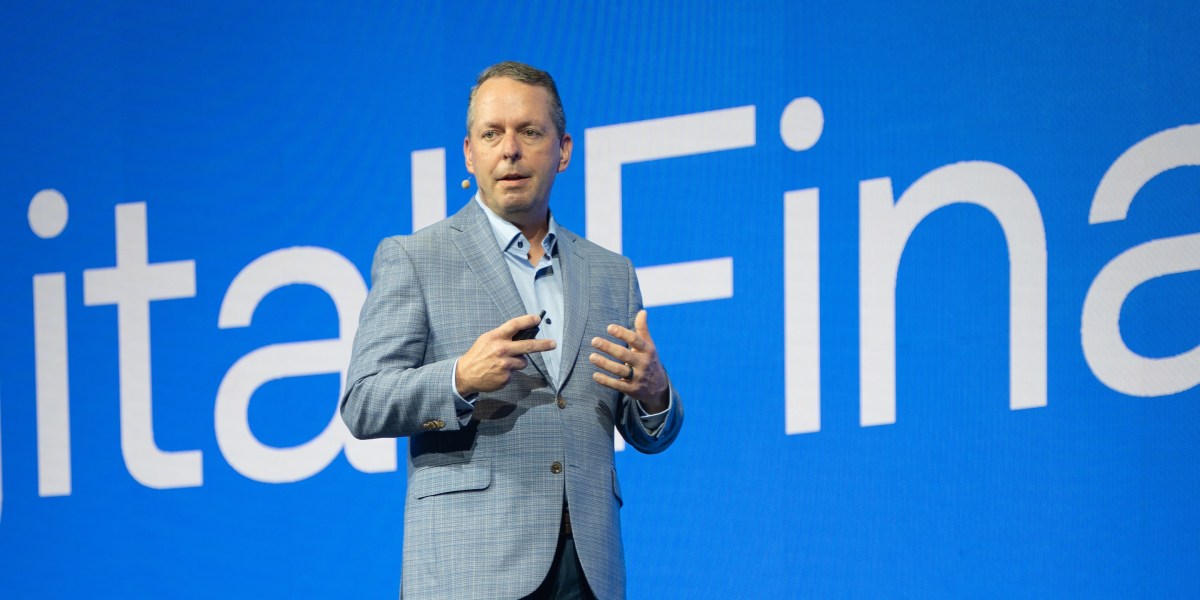
2 months ago49ers Hall of Famer Steve Young's HGGC raises new $3.2 billion fund, beating target
"You had all these geopolitical tensions, and you had this flight to quality with private equity," said Lawson, HGGC's chief executive officer. "The opportunity set for many investors has shifted to what we call mid-cap or middle-market businesses."
Fundraising
fromLondon Business News | Londonlovesbusiness.com
2 months agoVery on the brink: Carlyle bails out debt stricken retailer - London Business News | Londonlovesbusiness.com
Private equity giant Carlyle has thrown a £150m lifeline to online retailer Very - just as mounting debt threatens to sink the company. Sources say the refinancing deal will keep Very afloat, giving breathing space to a business grappling with sky-high borrowing costs, fierce competition, and a cash-strapped consumer market. An insider commented: "Without this deal, Very could have faced serious trouble. Carlyle is betting big to save its investment - the stakes couldn't be higher."
E-Commerce
Fundraising
fromFortune
2 months agoBlackstone mogul warned of 'urgent need' for AI preparedness-Now he's turning his $48 billion fortune into a top philanthropic foundation | Fortune
Stephen Schwarzman plans to expand his foundation into a top-10 philanthropy focused on AI and education, transferring a substantial majority of his fortune.
Business
fromLondon Business News | Londonlovesbusiness.com
2 months agoArboris Capital Limited launches its CapGain platform - London Business News | Londonlovesbusiness.com
CapGain® is a DFSA-regulated, technology-driven DIFC platform enabling Professional Clients and Market Counterparties to evaluate and access private equity, private credit, and infrastructure opportunities.
fromTechCrunch
2 months agoBlackstone backs Neysa in up to $1.2B financing as India pushes to build domestic AI infrastructure | TechCrunch
Blackstone and co-investors, including Teachers' Venture Growth, TVS Capital, 360 ONE Assets, and Nexus Venture Partners, have agreed to invest up to $600 million of primary equity in Neysa, giving Blackstone a majority stake, Blackstone and Neysa told TechCrunch. The Mumbai-headquartered startup also plans to raise an additional $600 million in debt financing as it expands GPU capacity, a sharp increase from the $50 million it had raised previously.
Fundraising


fromBusiness Matters
2 months agoWho Is Buying UK Shops in 2025
New research from BusinessesForSale.com states that big companies may buy multiple shops that have the potential to be financially profitable. And in some cases, they may be willing to invest in one established shop. These buyers include private equity firms, and these groups may be seeking to improve shops through operational overhauls. Often, private equity firms are aiming to see high rental income and shop growth within a set timeframe. They'll look for business sales in the UK that can meet their financial goals.
Business

fromBusiness Insider
2 months agoWhy dessert chains boom, bust, and get replaced by the next sweet thing
The cupcake boom, a twenty-year dessert trend that once captivated the nation, ended with a thunk. However, America's sweet tooth doesn't retire - it just hunts for its next obsession. When all ofSprinkles' stores abruptly closed at the end of 2025, a curtain dropped on an era. Not because the dessert chain, cofounded by pastry chef and entrepreneur Candace Nelson in 2005, was the biggest, but because it was the name-brand symbol of the nation's cupcake years.
Food & drink
Public health
fromNonprofit Quarterly | Civic News. Empowering Nonprofits. Advancing Justice.
2 months agoIf Nonprofit Nursing Homes Outperform Private Equity, Can Policy Catch Up? | Nonprofit Quarterly | Civic News. Empowering Nonprofits. Advancing Justice.
Profit-driven ownership coupled with pervasive ageist ideology causes increased nursing home mortality and systemic neglect in US eldercare, producing devastating outcomes.
fromAbove the Law
2 months agoJob Of The Month: Brand New, Ultra Rare Partnership Opportunity - Above the Law
A long-time client has asked Kinney to help identify a private equity/finance attorney to join as a partner in the firm's lucrative group. No book required. The client is a top Am Law firm.
Law
fromHarvard Business Review
2 months agoThe Management Practices That Make Employee Ownership Pay Off
U.S. worker engagement has stagnated for decades, with more than two-thirds of workers feeling detached or disengaged. To reverse the trend, many executives have strived to build an "ownership culture," hoping personal responsibility will drive productivity. Yet most omit the most vital ingredient, actual ownership. We spent the past four years studying companies that committed to this missing piece, extending equity to all employees.
Business
fromEntrepreneur
3 months agoHow AI Will Help Decide the Way Private Equity Firms Invest
Data science and artificial intelligence are fundamentally redefining what constitutes skill in investment management, shifting the sources of sustainable competitive advantage in ways most firms have yet to comprehend. This is not about automating existing workflows. It is about reconceptualizing which analytical tasks can be systematized and which genuinely require human judgment, then rebuilding investment processes around that distinction. Firms that fail to recognize this depth are not simply adopting tools more slowly. They are misunderstanding the nature of the change itself.
Venture
Music production
fromEngadget
3 months agoNative Instruments enters into insolvency proceedings, leaving its future uncertain
Native Instruments has entered preliminary insolvency proceedings with an administrator appointed to restructure or sell assets, leaving employees and product futures uncertain.

Real estate
fromSocial Media Explorer
3 months agoShaher Moh'd Ali Awartani Abu Dhabi: A Visionary Leader Driving Sustainable Growth Across Sectors - Social Media Explorer
Shaher Moh'd Ali Awartani Abu Dhabi advances Abu Dhabi's infrastructure and investment through disciplined, diversified, sustainable projects across construction, private equity, and hospitality.
fromEngadget
3 months agoVimeo lays off most of its staff just months after being bought by private equity firm
"Yesterday, following Vimeo's recent acquisition by a private equity firm, I learned that I, along with a large portion of the company, was impacted by layoffs," wrote the company's former vice president of Global Brand & Creative, Dave Brown. He is referring to a firm called Bending Spoons that bought Vimeo for $1.38 billion in the latter half of 2025.
Tech industry
Fundraising
fromLondon Business News | Londonlovesbusiness.com
3 months agoThe rise of private equity allocations and the implications for fund managers - London Business News | Londonlovesbusiness.com
Large private-market deals increasingly involve co-investments across sizes, with sovereign wealth funds and family offices boosting private equity allocations, changing execution and opportunities for managers.
fromTruthout
3 months agoTrump's "Homes for People" Plan Distracts From Failing Policies, Experts Say
That messaging, which resonated with swing voters frustrated with inflation, helped propel Trump back into the White House. Nearly a year into his term, Trump's approval ratings have hit new lows as he calls the continuing affordability crisis a "Democrat hoax." Now, as the president is attempting to deliver a positive economic message ahead of the midterms, he's turned his eye to the costliest necessity - and one of the most complicated: housing.
US politics
fromNonprofit Quarterly | Civic News. Empowering Nonprofits. Advancing Justice.
3 months agoBlue-State Pensions Are Subsidizing the Billionaire Takeover: This Must Stop! | Nonprofit Quarterly | Civic News. Empowering Nonprofits. Advancing Justice.
The truth about this money: It is invested with some of the worst actors engineering the current takeover. That includes private equity firms, venture capitalists, and asset managers-the most powerful corporations in the world and the billionaires that run them. Many of these people are actively supporting the Trump administration; most are doing little to nothing to oppose it. And all oversee millions, if not billions, of dollars in worker and community capital.
US politics
fromSemafor
3 months agoExclusive: Blackstone invests $100M in elite marketing tech firm
A marketing technology firm that seeks to influence C-suite executives, policymakers, and other important people is getting a major infusion of cash from one of the world's biggest investors. Applecart received a $100 million investment from the private equity giant Blackstone last year, two people familiar with the situation first told Semafor, in a fundraising round that would value the New York-based data company at around $500 million.
Marketing tech
Fundraising
fromLondon Business News | Londonlovesbusiness.com
3 months agoUK business leaders show renewed appetite for risk as confidence returns - London Business News | Londonlovesbusiness.com
47% of UK business leaders report higher risk appetite, reflecting growing optimism and strong private-equity interest despite persistent cost pressures.
fromFortune
3 months agoCrystal Ball: Where venture capital and private equity are headed in 2026 | Fortune
As I was wading through the waters of all our predictions, readers painted a picture of possibilities and pressure in the private markets. AI, on one hand, is a force multiplier-on the other, it will be unevenly impactful and the losses as the industry consolidates will be staggering. Liquidity, meanwhile, is making a comeback, albeit with a new normal. Velocity is increasing, but so is fragility.
Venture
fromTelecompetitor
3 months agoAcquisition by private equity completed; WOW! is now private
BOCA RATON, Fla.- Dec. 31, 2025 - DigitalBridge Group, Inc. ("DigitalBridge" or the "Company") (NYSE: DBRG), a leading global alternative asset manager dedicated to investing in digital infrastructure, and Crestview Partners ("Crestview"), a leading private equity firm, today announced that affiliated investment funds have completed their previously announced take-private acquisition of WideOpenWest, Inc. ("WOW!"), a top provider of fiber-broadband internet services and advanced connectivity solutions in the United States.
Fundraising
fromEd Zitron's Where's Your Ed At
4 months agoThe Enshittifinancial Crisis
There is an echoing melancholy to this era, as we watch the end of Silicon Valley's hypergrowth era, the horrifying result of 15+ years of steering the tech industry away from solving actual problems in pursuit of eternal growth. Everything is more expensive, and every tech product has gotten worse, all so that every company can "do AI,"
Venture


Artificial intelligence
fromAdExchanger
4 months agoThe Pivot To Ecommerce Hits A Wall; Salesforce Walks Back Its Agentic AI Pitch | AdExchanger
Niche publishers shifted toward content-to-commerce models while Salesforce reframed Agentforce toward rule-based automation to reduce generative AI randomness.
fromwww.housingwire.com
4 months agoThe Loan Store doubles wholesale mortgage volume in 2025
Caliber Home Loans, which was sold to the parent of Newrez for $1.675 billion in 2021. Caliber made us fall in love with mortgage banking. It feels like when you create a great culture of people that are aligned, have a clear direction and guidance from the leadership team, you can do special things, Pendleton said in an interview with HousingWire. When we lost that alignment at the top, that's when things started to shift.
Real estate
[ Load more ]