#reserve-re-equipment
#reserve-re-equipment
[ follow ]
#defense-spending #military-technology #military-spending #national-security #nato #china #defense #defense-budget
#defense-spending


Business
from24/7 Wall St.
1 month ago3 Defense Stocks Built for the New Era of National Security Spending
Defense spending is shifting structurally, with investors identifying companies positioned to capture the next decade of growth through diversified funds, nuclear propulsion specialists, and emerging defense technology providers.
Business
from24/7 Wall St.
1 month ago3 Defense Stocks Built for the New Era of National Security Spending
Defense spending is shifting structurally, with investors identifying companies positioned to capture the next decade of growth through diversified funds, nuclear propulsion specialists, and emerging defense technology providers.

Artificial intelligence
fromFortune
2 days agoA retired general's warning: America can't fight the AI arms race on tech it doesn't control | Fortune
The U.S. faces a critical AI arms race affecting military power and national security, highlighted by the Anthropic-Pentagon standoff over AI usage control.

fromwww.businessinsider.com
2 weeks agoThe US is burning through expensive missiles. DARPA is looking for cheaper ones that can be built in days, not months.
"To accelerate current weapons development timelines, DARPA is considering an alternative development paradigm to increase the nation's magazine depth and breadth."
World news
Washington DC
fromFast Company
1 month agoThe Defense Department's end-of-year spending spree included over $60k on Herman Miller chairs
The Department of Defense spent a record $93 billion in September on a fiscal year-end spending spree, including $60,719 on Herman Miller furniture, reflecting a systemic use-it-or-lose-it budgeting practice.
fromenglish.elpais.com
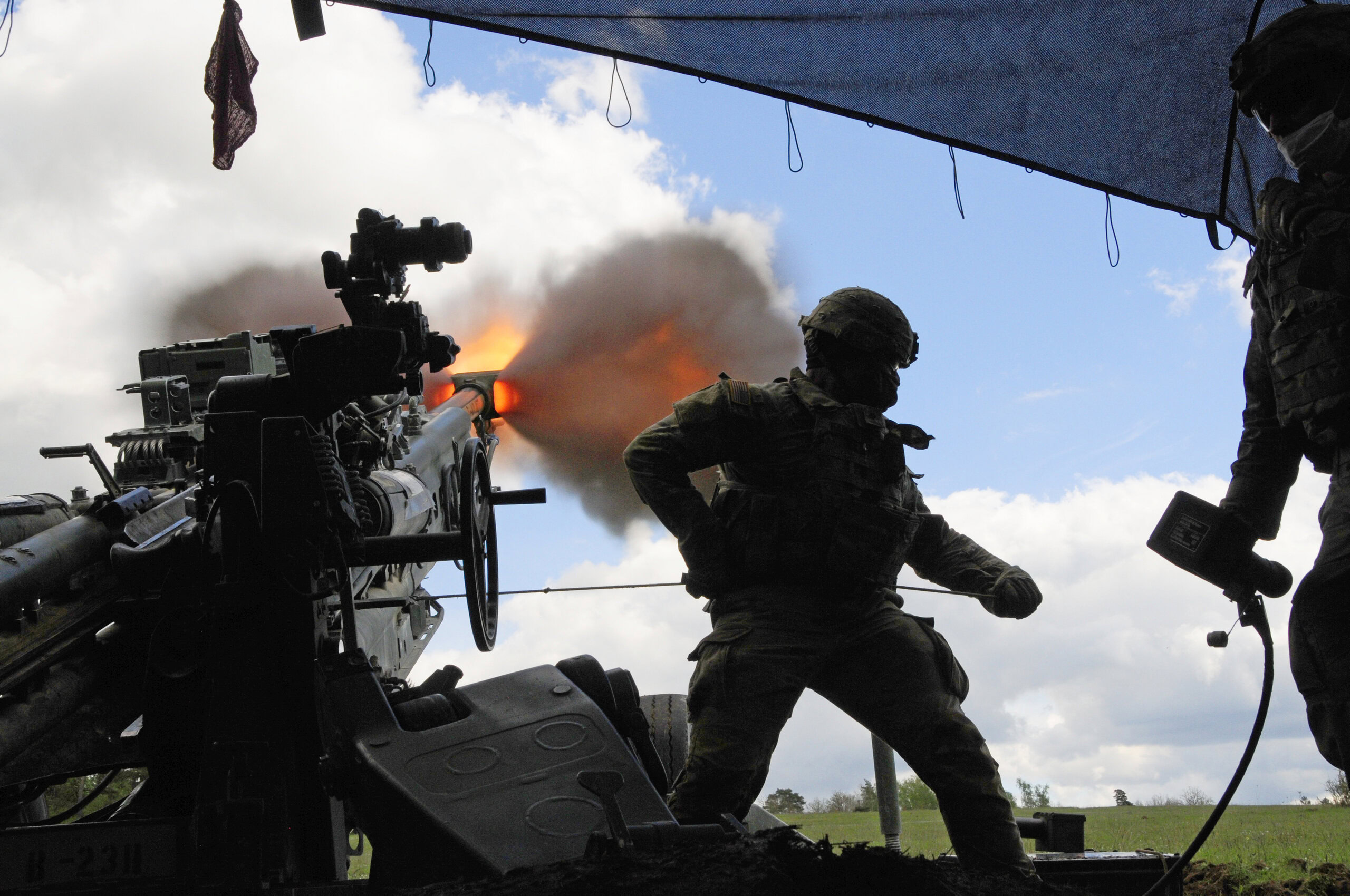
1 month agoDoes the United States have enough munition for a prolonged war?
We've got no shortage of munitions. Our stockpiles of defensive and offensive weapons allow us to sustain this campaign as long as we need. Iran is hoping that we cannot sustain this, which is a really bad miscalculation.
US politics
#ai-regulation

Artificial intelligence
fromThe Verge
1 month agoThe Pentagon formally labels Anthropic a supply-chain risk
The Defense Department formally designated Anthropic a 'supply-chain risk,' barring defense contractors from using Claude AI in government work over disputes regarding autonomous weapons and mass surveillance policies.
Artificial intelligence
fromThe Verge
1 month agoThe Pentagon formally labels Anthropic a supply-chain risk
The Defense Department formally designated Anthropic a 'supply-chain risk,' barring defense contractors from using Claude AI in government work over disputes regarding autonomous weapons and mass surveillance policies.
from24/7 Wall St.
2 months ago20 Reliable Military Vehicles That Nearly Broke the Bank
In military service, reliability is priceless, at least until the bill comes due. Some vehicles earned legendary status because they rarely failed in combat and delivered results under pressure. The problem was what it took to keep them that way. Heavy fuel use, maintenance-intensive systems, specialized parts, and recovery demands typically followed these platforms wherever they deployed. Here, 24/7 Wall St. is taking a closer look at reliable military vehicles that were logistically expensive.
History
from24/7 Wall St.
1 month agoThe Defense Stock You've Never Heard Of: Why MP Materials Is a Buy
China accounts for roughly 90% of global NdPr production, yet even there, most of that output comes from just 2 hard rock mines and refineries. Outside China, only Mountain Pass and Australia's Mount Weld operate at meaningful scale. That structural scarcity is MP's most durable competitive advantage.
Business
fromInfoWorld
2 months agoStop treating force multiplication as a side gig. Make it intentional
Lead without authority. You may not have direct reports, yet you shape architecture, quality and the roadmap. Your leverage comes from artifacts, reviews and clear standards, not from title.I started by publishing a lightweight architecture template and a rollout checklist that the team could copy. That reduced ambiguity during design and cut review cycles by nearly 30 percent
DevOps
fromTechCrunch
2 months agoIntegrate raises $17M to move defense project management into the 21st century | TechCrunch
John Conafay, a veteran of the US Air Force, has spent most of his career leading business development at public and private aerospace companies, including Spire, Astranis, and ABL Space Systems. At each company, Conafay ran into the same software hurdle: collaborating on government contracts was a logistical mess that forced his teams and their federal counterparts to rely on a tedious back-and-forth of PDFs and Excel files.
Tech industry
fromwww.bbc.com
1 month agoAnthropic labelled a supply chain risk by Pentagon
From the very beginning, this has been about one fundamental principle: the military being able to use technology for all lawful purposes. The military will not allow a vendor to insert itself into the chain of command by restricting the lawful use of a critical capability and put our warfighters at risk.
Artificial intelligence
fromwww.dw.com
2 months agoGermany's Bundeswehr goes on military spending spree
Germany's military, the Bundeswehr, is currently on a spending spree: it has more than 108 billion ($129 billion) at its disposal this year a gigantic, unprecedented sum. This is being financed both by the official federal budget and special funds, for which the state is taking out loans. This money is intended to make the Bundeswehr, which has been subject to decades of cutbacks, more powerful and modern. There is also time pressure.
Germany news
fromBusiness Insider
2 months agoKeeping top combat aircraft flying is expected to only get more expensive
The cost for the US and other militaries to keep newer combat aircraft ready to fly is going to soar in the coming years, a new report on sustainment trends argues. A new report from the American consulting firm Oliver Wyman projects global military aircraft spending over the next decade, including an annual sustainment cost growth of 1.1% through 2036. That's a pace roughly 11 times faster than the previous decade.
World news
fromBusiness Matters
2 months agoSmall defence firms to get easier access to MoD contracts under new growth unit
Small British defence companies are set to gain easier access to Ministry of Defence contracts after the government launched a dedicated unit to simplify procurement and boost spending with smaller suppliers. The Ministry of Defence has unveiled the Defence Office for Small Business Growth, a new service designed to cut through what ministers describe as labyrinthine procurement processes that have historically shut small and medium-sized enterprises (SMEs) out of the defence market.
UK news
fromBusiness Insider
1 month agoThere's a new US Army office 'getting in the dirt' with soldiers and trying to quickly turn their ideas into real battlefield tech
Number one is speed takes priority over perfection. We can iterate to get to operational capability. And the second is that early soldier feedback is critical in order to make sure we're getting the right technology for the future fight, and then we want to be able to prove the demand signal before we spend big dollars on programs.
US news
fromBusiness Insider
2 months agoUS Army hopes AI can slash troops' paperwork burden
The US Army's biggest AI gamble may not be on autonomous weapons, but instead whether Silicon Valley software can tackle the service's most tedious and, more often than not, grueling administrative jobs. Think less uncrewed aircraft and more behind-the-scenes tasks like recruiting, equipment maintenance, and endless gear inventories. Through a mix of new tools, redesigned workflows, and data integration, logisticians
Artificial intelligence
World news
fromBusiness Insider
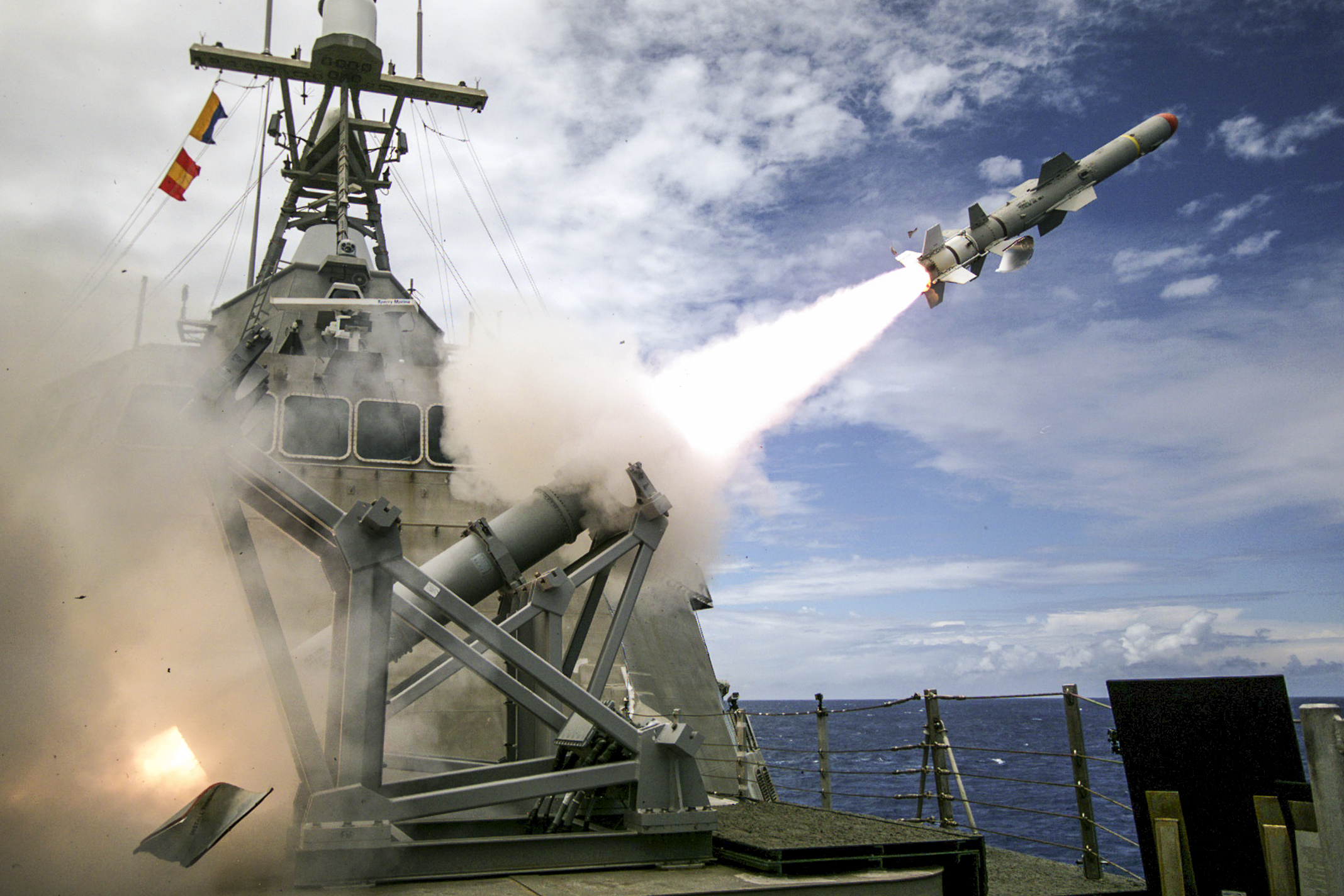
1 month agoThe US burned through more of its limited Tomahawk stockpile in strikes on Iran. It might need them in a war with China.
US Navy Tomahawk missile strikes on Iran deplete limited stockpiles needed for potential conflicts with China, prompting Pentagon efforts to increase annual production to over 1,000 missiles.
US politics
fromNextgov.com
1 month agoThe diminished state of Defense IT acquisition and how to fix it
DOD IT programs fail to deliver on time and budget over 80% of the time due to systemic conflicts of interest, weak accountability, and unchanged oversight structures despite decades of reform efforts.
from24/7 Wall St.
3 months agoHow Precision Sniper Technology Reduced the Need for Massed Infantry
Infantry once relied on numbers to solve uncertainty. When soldiers could not see or hit targets precisely, the answer was more troops and more fire. Sniper technologies quietly overturned that logic. By extending range, improving accuracy, and increasing awareness, they allowed small teams to dominate space once controlled only by massed formations. Precision replaced presence, and patience became a battlefield advantage. Here, 24/7 Wall St. is taking a look at the sniper technologies that totally changed the game.
Science
fromNextgov.com
2 months agoDOD's AI acceleration strategy
According to the Secretary of Defense Pete Hegseth's memorandum on the Strategy, this AI-first status is to be achieved through four broad aims: Incentivizing internal DOD experimentation with AI models. Identifying and eliminating bureaucratic obstacles in the way of model integration. Focusing the U.S.'s military investment to shore up the U.S.'s "asymmetric advantages" in areas including AI computing, model innovation, entrepreneurial dynamism, capital markets, and operational data.
Artificial intelligence
fromThe Atlantic
2 months agoWhatever This Is, It Is Not Strategy
But logistical consistency, like coherence and gravitas, does not characterize the new NDS. It is a document that supposedly nests within the National Security Strategy, explaining at greater length the implications of overall policy for the armed forces. The 2026 version does not do that. Rather, it restates some of the basic priorities of the Trump administration but for the most part confines itself to flattery of the president, insults, and bombast.
US politics
fromwww.aljazeera.com
2 months agoWhat is the US strategic minerals stockpile?
United States President Donald Trump has announced the launch of a strategic minerals stockpile. The stockpile, called Project Vault, was announced on Monday. It will combine $2bn of private capital with a $10bn loan from the US Export-Import Bank. list of 4 itemsend of list It is the latest move by the White House to invest in rare-earth minerals needed in the production of key goods, including semiconductor chips, smartphones and electric car batteries.
US politics
US politics
fromNextgov.com
1 month agoIt would take the Pentagon months to replace Anthropic's AI tools: sources
The Pentagon threatens to blacklist Anthropic's Claude AI if the company refuses to remove restrictions on mass surveillance and autonomous weapons use, potentially delaying military access to advanced AI tools for months.
[ Load more ]