#defense-technology
#defense-technology
[ follow ]
#venture-capital #ukraine #drones #government-contracts #anduril #autonomous-weapons #ai-governance #ai-ethics
fromFortune
3 hours agoRussian spies are more aggressively trying to steal Western technology as sanctions add to mounting problems for Putin's wartime economy | Fortune
Moscow's agents are building fake companies, recruiting middlemen and deploying cyber spies and hackers who are gathering information that could also be used to attack key infrastructure, they said.
Europe politics

fromIntelligencer
2 days agoThe Degenerates of the Drone Stock Bubble
Late last summer, the founders of a small company in Ukraine that made software to manage swarms of drones were weighing whether to work with Erik Prince, the founder of the mercenary firm Blackwater. "Erik Prince is fucking cruising around telling everybody that he's going to take them big time and he's best friends with Trump and Hegseth and all these people and he wants to invest," recalled an individual who spoke with the founders and advised them against collaboration. "You're bringing in a guy who's going to bring about the downfall of your company."
Venture
from24/7 Wall St.
3 days agoNATO Defense Spending Just Hit Record Highs and After Tracking This Sector These 3 ETFs Are the Cleanest Plays on the Multi Year Trend
NATO's defense ministers committed to spending at least 2.5% of GDP on defense, with Poland, the Baltics, and Greece already running above 4%, and the alliance has set a target of 5% of GDP on defense spending by 2035. In 2025, all 32 NATO allies met or exceeded the 2% target for the first time, compared with only three in 2014.
Europe politics
fromwww.theverge.com
4 days agoAI warfare is already here
The mood in the room, Marijan recalls, suddenly turned apprehensive. The most frightening part wasn't the premise it was that the Pentagon was already developing a version of this technology. That meeting was the first one held after the start of Project Maven, a US Department of Defense initiative using AI to analyze drone surveillance footage. And by late 2017, Maven had a major tech company on board: Google.
Artificial intelligence
from24/7 Wall St.
1 week agoDrone Maker Ondas Is On a Spending Spree. Here Are All 6 Companies It Has Acquired in 2026
CEO Eric Brock told investors the strategy is to "build Ondas into a scaled global operating platform for unmanned and autonomous systems, serving defense, security, industrial and critical infrastructure markets." The market is paying attention: shares are up 972.04% over the past year, lifting the market cap to $5.26 billion.
Venture

fromwww.mediaite.com
2 weeks agoF*ck You, You Go!' Joe Rogan Sounds Off on Call to Bring Back the Draft
Palantir Technologies and CEO Alex Karp released a 22-point manifesto in April, arguing that national service should be mandatory. The call comes amid Palantir's push for AI-powered weaponry and closer ties between Silicon Valley and the U.S. defense sector, Fortune reported. I don't understand why anybody would wanna support that, Rogan continued. That sounds crazy. Especially after this Iran war where everybody's like, Why the f*ck are we in Iran?' And if you signed up for that? That sounds nuts.
Right-wing politics
Business
from24/7 Wall St.
2 weeks agoPalantir Insiders Are Selling 9 Shares for Every 1 They Buy. Here Is the Defense Stock Smart Money Is Buying Instead
Palantir’s valuation relies on sustained high growth, while AeroVironment offers faster growth at a lower multiple and may present a better risk-reward setup.
fromWIRED
2 weeks agoDHS Plans Experiment Running 'Reconnaissance' Drones Along the US-Canada Border
The US Department of Homeland Security, in collaboration with the Defense Research and Development Canada, is looking to send autonomous drones and vehicles along the US-Canada border this fall, testing which products can stream surveillance video and sensor data between the two countries using commercial 5G networks.
Washington DC



Artificial intelligence
fromFortune
2 weeks agoI helped build the Pentagon's AI transformation. Corporate America is making every mistake we almost made | Fortune
AI adoption lags because organizations treat it as experiments instead of transforming workflows, and integration—not model quality—drives competitive advantage.
fromYanko Design - Modern Industrial Design News
3 weeks agoJames Bond-inspired Scubacraft SC3 turns your underwater adventure fantasy into reality - Yanko Design
Unlike many fictional gadgets seen in Bond movies, the SC3 was not a movie prop designed solely for visual appeal. It was engineered as a real-world concept capable of operating both on the water's surface and beneath it. The project reportedly attracted interest from the UK Special Boat Service and even DARPA because of its unconventional capabilities and military-style versatility before eventually making its way into the Bond universe.
Cars
Venture
fromFortune
3 weeks agoBrian Schimpf has been quietly running Anduril since its earliest days. And once he's talking, he has a lot to say | Fortune
Autonomous solar surveillance towers were built in a remote desert setting, reflecting an engineering-driven, dry-humored approach that later scaled into major defense traction.
Russo-Ukrainian War
fromTNW | Insider
3 weeks agoUFORCE, Ukraine's first defence tech unicorn, has conducted 150,000 combat missions as unmanned warfare goes commercial
UFORCE, a Ukrainian-British defense startup, has achieved a billion-dollar valuation and conducted over 150,000 combat missions using unmanned systems.
Russo-Ukrainian War
fromwww.businessinsider.com
1 month agoRussia's new cruise missile is full of Western-made parts, Ukrainian intel says
Russia's new cruise missile incorporates Western-sourced components, highlighting challenges in sanctions enforcement and technology access for its defense industry.
European startups
fromFortune
2 months agoWill Anduril founder Palmer Luckey's insistence on deferring to U.S. interests scare off the allies he wants to arm? | Fortune
Palmer Luckey supports selling weapons to North Korea if requested by the U.S., reflecting his stance on arms makers as extensions of government policy.

Russo-Ukrainian War
fromwww.theguardian.com
2 months agoUkraine war briefing: Zelenskyy wants new system to control Ukraine drone sales
Zelenskyy established government controls over Ukrainian drone sales to foreign buyers and reprimanded a manufacturer for unauthorized interceptor sales, while the US seeks Ukrainian drone defense technology amid Middle East tensions.
#military-ai
Artificial intelligence
fromFast Company
2 months agoAI is being used in war, but it can't replace human judgment. Here's why
The U.S. military uses AI systems like Claude and Palantir's Maven for real-time targeting, but success depends on decades of infrastructure investment, skilled personnel, and human decision-making rather than autonomous machines.

Artificial intelligence
fromFast Company
2 months agoAI is being used in war, but it can't replace human judgment. Here's why
The U.S. military uses AI systems like Claude and Palantir's Maven for real-time targeting, but success depends on decades of infrastructure investment, skilled personnel, and human decision-making rather than autonomous machines.
from24/7 Wall St.
2 months agoKeyBanc Flags AeroVironment (AVAV) as Top Iran Conflict Winner
KeyBanc lowered its price target to $295 from $330 and kept its Overweight rating after adjusting estimates post-earnings. The firm attributes the target reduction to recent changes to the SCAR program and timing in contract awards. Despite the revision, KeyBanc's broader conviction on AeroVironment is unchanged: the firm maintains that AeroVironment is positioned to capitalize on the proliferation of UAS/cUAS and increased government spending in defense and space-related programs.
Venture
World politics
fromwww.theguardian.com
2 months agoPutin will be smiling': Ukraine struggles as US focus moves to Iran
Iran's conflict with Israel and the US creates complex implications for Ukraine, offering both defense technology opportunities and potential resource competition while shifting international attention from Ukraine's war.
#ai-governance



Artificial intelligence
fromTheregister
2 months agoOpenA says Pentagon set 'scary precedent' binning Anthropic
OpenAI signed a deal with the Department of War allowing classified AI use while maintaining three ethical red lines: no mass surveillance, no autonomous weapons direction, and no high-stakes automated decisions.
Artificial intelligence
fromwww.scientificamerican.com
2 months agoWhy replacing Anthropic at the Pentagon could take months
The Pentagon designated Anthropic a supply chain risk and is removing Claude from classified networks within six months due to disputes over AI safety restrictions versus military control demands.
Venture
fromTechCrunch
2 months agoHardware testing startup Nominal hits $1B valuation, raises $155M in 10 months | TechCrunch
Nominal raised $80M Series B extension at $1B valuation led by Founders Fund, following $75M Series B from Sequoia, to expand hardware testing software beyond defense into industrial sectors.
fromFortune
2 months agoCan Anthropic's CFO sell Wall Street on an AI firm Washington calls a 'risk'? | Fortune
Anthropic sought explicit contractual restrictions to prevent its AI from being used for mass domestic surveillance or fully autonomous weapons. The Pentagon, in contrast, insisted it must be able to deploy contractor technology for any lawful purpose. Negotiations broke down, the Department of Defense moved to terminate the contract, and it designated Anthropic a supply chain risk, effectively restricting many government agencies and defense contractors from working with the company.
Venture
Artificial intelligence
fromwww.theguardian.com
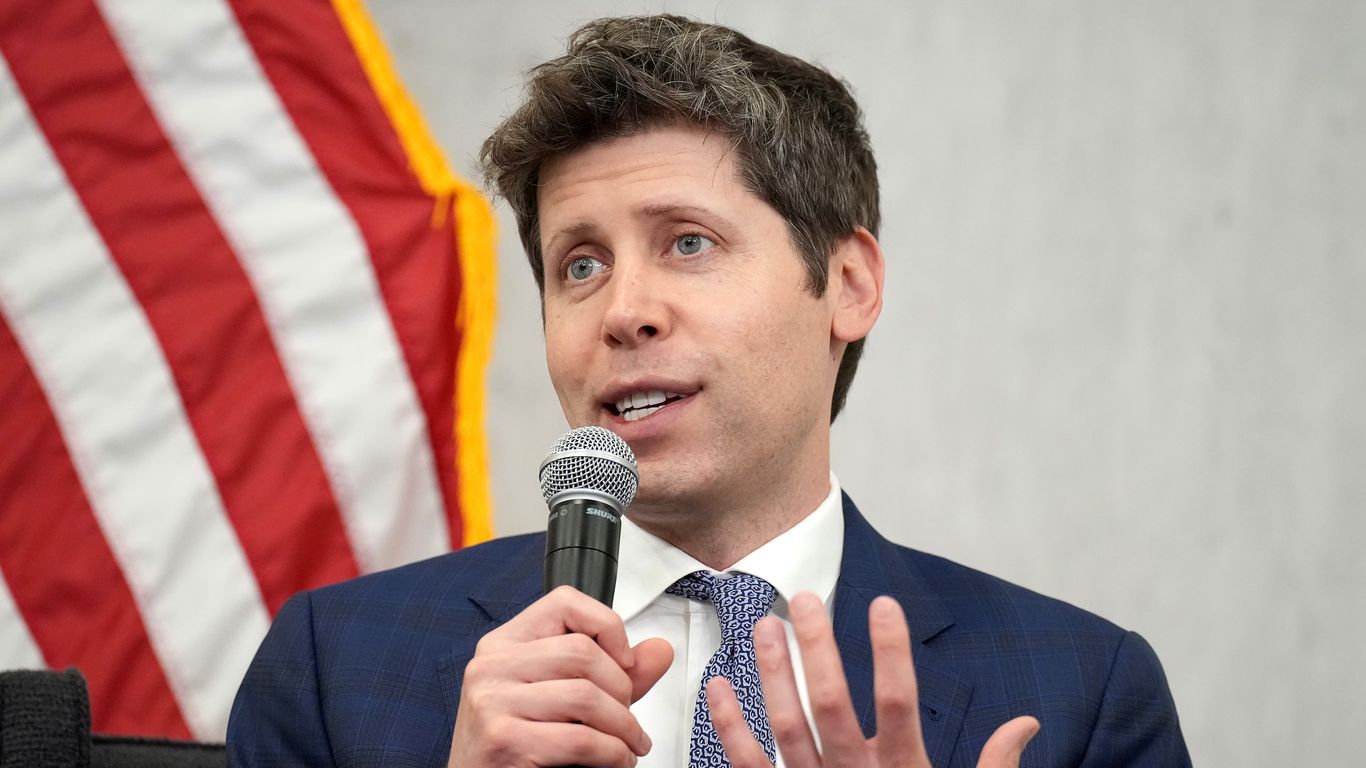
2 months agoSam Altman admits OpenAI can't control Pentagon's use of AI
OpenAI's CEO Sam Altman stated the company does not control how the Pentagon uses its AI products in military operations, amid scrutiny over military AI deployment and ethical concerns from employees.
fromBusiness Insider
2 months agoPalantir wants its old employees back: 'The shire is calling'
If you have ever considered returning to Palantir, this is the week to do it. The world is demanding every last unit of creative energy we can muster. If you return, you will be on a plane day one and committing code that matters within hours of getting your...
Careers
Artificial intelligence
fromFortune
2 months agoTrump's strike on Iran and the new breed of AI wars means bombs can drop faster than the speed of thought | Fortune
AI systems are accelerating military targeting and decision-making processes, compressing the time from target identification to strike execution, fundamentally changing modern warfare operations.
Artificial intelligence
fromNextgov.com
2 months agoAgencies begin to shed Anthropic contracts following Trump's directive
Multiple federal agencies are phasing out Anthropic tools following President Trump's directive, citing national security concerns over the company's refusal to support certain defense applications.
from24/7 Wall St.
2 months agoLive Earnings Analysis: BigBear.AI Reports After the Bell
The DoD's free GenAI.mil platform is the biggest overhang on the Ask Sage thesis. BigBear paid $250M for that acquisition, and if government agencies can get similar functionality for free, the return on that deal shrinks fast. Management needs to draw a clear line between what Ask Sage offers and what GenAI.mil does not.
Business
fromTechRepublic
2 months agoElon Musk's xAI Signs Deal to Bring Grok Into Classified Military Systems
xAI agreed to that 'all lawful use' standard, a move that paved the way for the deal while other tech giants were still caught in negotiations. This allows Grok to be used in high-stakes environments, including weapons development and intelligence analysis.
Artificial intelligence

fromWIRED
3 months agoCode Metal Raises $125 Million to Rewrite the Defense Industry's Code With AI
Code Metal, a Boston-based startup that uses AI to write code and translate it into other programming languages, just closed a $125 million Series B funding round from new and existing investors. The news comes just a few months after the startup raised $36 million in series A financing led by Accel. Code Metal is part of a new wave of startups aiming to modernize the tech industry by using AI to generate code and translate it across programming languages.
Venture
Careers
fromBusiness Insider
4 months agoAfter the reveal of Sikorsky's pilotless Black Hawk, European rival Leonardo just flew its new uncrewed helicopter design
Leonardo's Proteus completed a maiden flight as a full-size autonomous helicopter demonstrator intended for trials, experimentation, and testing alongside crewed platforms.
Miscellaneous
fromLondon Business News | Londonlovesbusiness.com
4 months agoPutin is losing troops faster than he can recruit as 90,000 lost in three months - London Business News | Londonlovesbusiness.com
Ukraine reports over 90,000 Russian troops killed or severely wounded, massive equipment losses, and plans to strengthen defense through technological and drone advancements.
fromThe Cipher Brief
5 months agoA Bold 2025 National Security Strategy
OPINION - Out with a "rules-based international order" and in with "U.S. core national interests", according to the U.S. National Security Strategy (NSS) of 2025. The NSS was not well-received by many of the 32 members of the North Atlantic Treaty Organization (NATO). Indeed, saying good-bye to the U.S. as the guarantor of global order will be difficult for many of our allies and partners, who will be expected to contribute more to their own defense and security.
World news
from24/7 Wall St.
5 months agoIsrael vs. Iran: Which Military Power Has the Upper Hand?
Tensions between Israel and Iran have heavily influenced Middle Eastern politics for decades. Both nations have invested greatly in military strength, advanced technology, and regional influence. As their rivalry continues to play out through conflicts, cyber operations, and strategic acts, questions often arise about which country holds the upper hand. Israel is known for its cutting-edge defense systems, well trained forces, and close ties with Western powers,
World news
Artificial intelligence
fromFortune
6 months agoAmazon CTO Werner Vogels just released his 2026 tech predictions | Fortune
2026 will see companion robots reduce loneliness, polymath developers thrive, urgent quantum-safe security, defense tech diffuse to civilians, and widespread personalized learning.
fromFast Company
7 months agoDefense tech is booming. But we're still missing the basics
Top talent, ambitious founders, and serious capital are flooding into a mission that matters, delivering products and solutions that will send us to the moon, deploy unimaginably capable unmanned aerial devices, and redefine what's possible in modern warfare. It's an exciting moment-one full of possibility and potential. But here's the problem: while everyone is focused on the moonshots, we're overlooking the foundation.
Venture
World politics
fromPrivacy International
8 months agoBlurring the Line: How Militarisation of Tech is Reshaping our Town Squares
Military priorities increasingly drive technology development, blurring lines between defense and civilian tech and enabling state and corporate control of public infrastructure.
fromBusiness Insider
8 months agoPalmer Luckey says founders should look beyond the Bay Area to avoid hiring 'mercenary-minded' tech workers
Palmer Luckey says he learned the hard way that relying on Silicon Valley talent can be a trap. The founder of Oculus VR and Anduril Industries recalled how, after Facebook (now Meta) acquired Oculus in 2014, his other company's hiring funnel narrowed almost exclusively to Bay Area engineers. Many, he said, were "very mercenary-minded" and more interested in résumé building than mission.
Startup companies
[ Load more ]