History
fromwww.dw.com
2 days agoTeen discovers first ancient Greek artifact found in Berlin
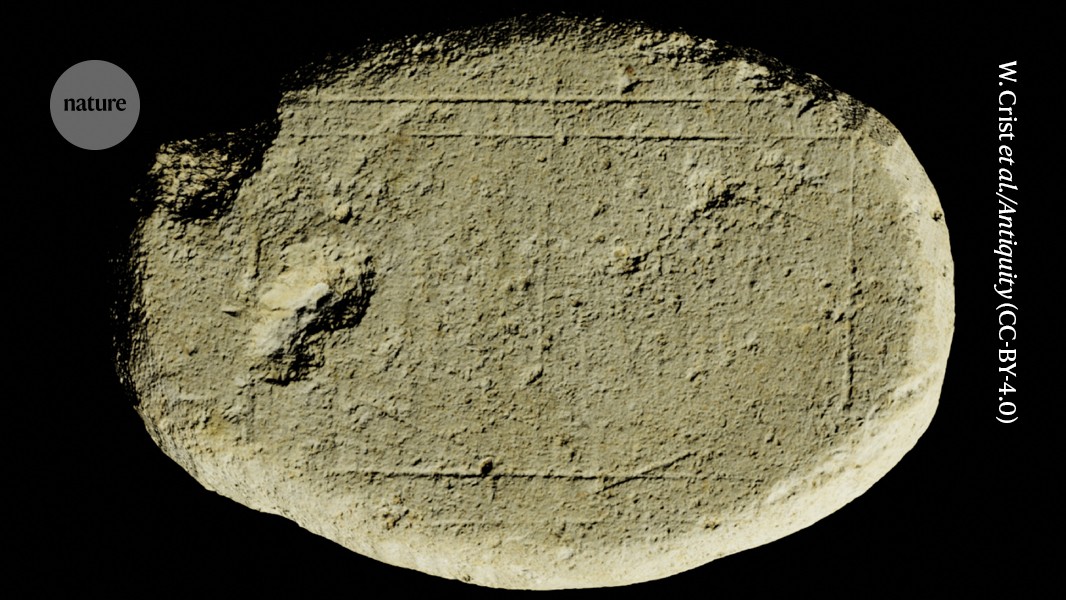
A 13-year-old discovered a rare ancient Greek coin from Troy in Berlin, revealing potential links between ancient Greece and northern Europe.
"[The project] has finally restored the perception of the monument's original size and floor level," architect Stefano Boeri said in a statement. "It also offers the public the opportunity to approach its walls and imagine the rhythm and sequence of the ambulatories and arches, now lost. It's a respectful and useful project that completes research carried out by the archaeologists of the Colosseum Archaeological Park."
Pastor Josh Howerton, leading Lakepointe Church, stated, 'The gospels tell us Jesus was taken outside the city walls to be crucified. This fits. It's within walking distance.' He emphasized the geographical context of the crucifixion.
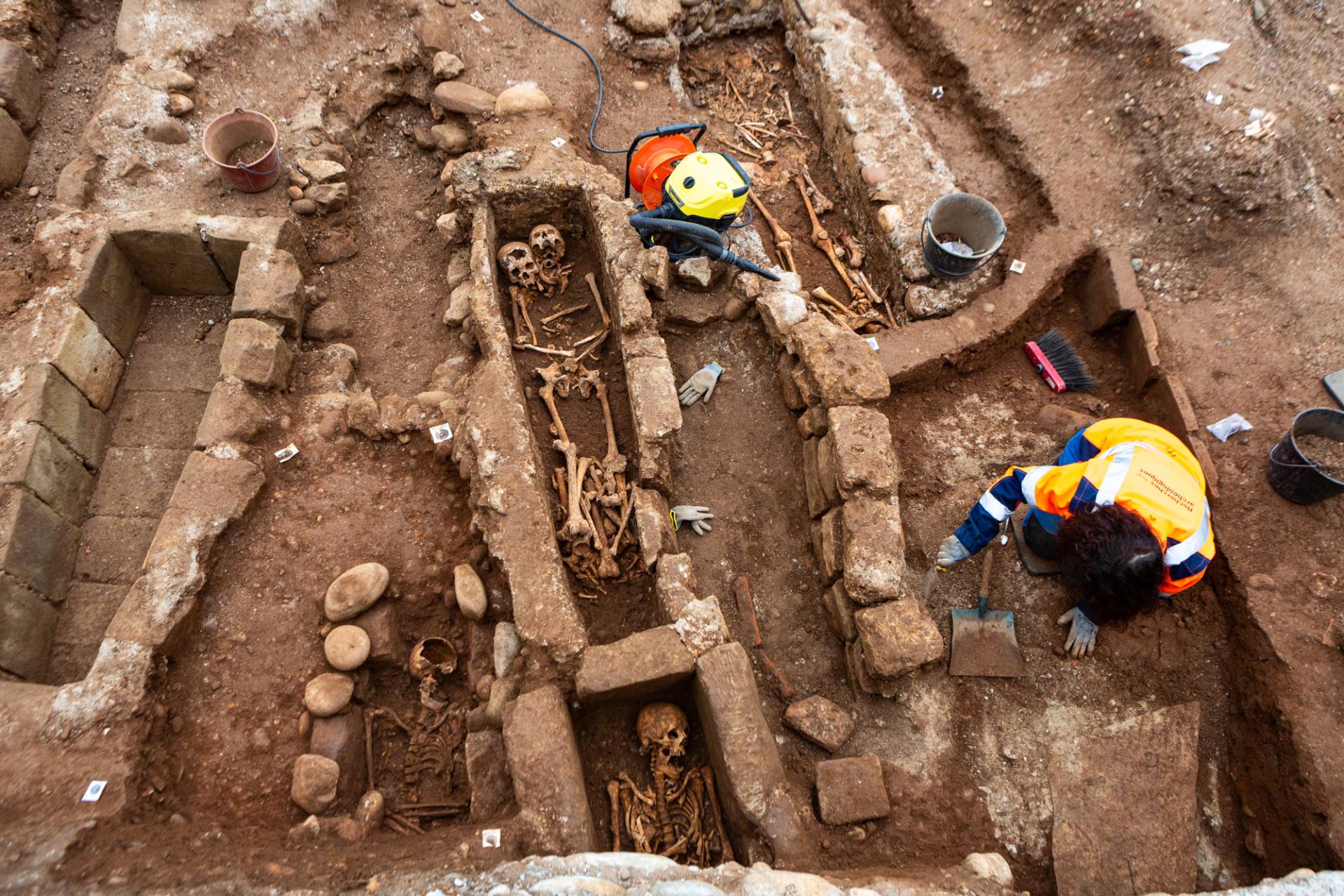
Similar to four others unearthed nearby earlier this month, it is sitting upright at the bottom of a one-metre-wide pit. The skeleton's hands are resting in its lap. Like the others, its back is against the eastern wall, its face directed westward.
The drinks scene here has undergone something of a Renaissance, with the number and variety of options across the city blossoming. Of course, there are still the old school stalwarts that adhere to the traditional Italian idea of a bar-envision the quintessential all-day café-bar where you might stand at the counter for a cappuccino in the morning, grab a quick panino at lunchtime, or linger over an aperitivo after work.
Five tombs of Gauls buried in a seated position have been discovered in central Dijon. Similar to four others unearthed nearby earlier this month, it is sitting upright at the bottom of a one-metre-wide pit. The skeleton's hands are resting in its lap. Like the others, its back is against the eastern wall, its gaze directed westward.
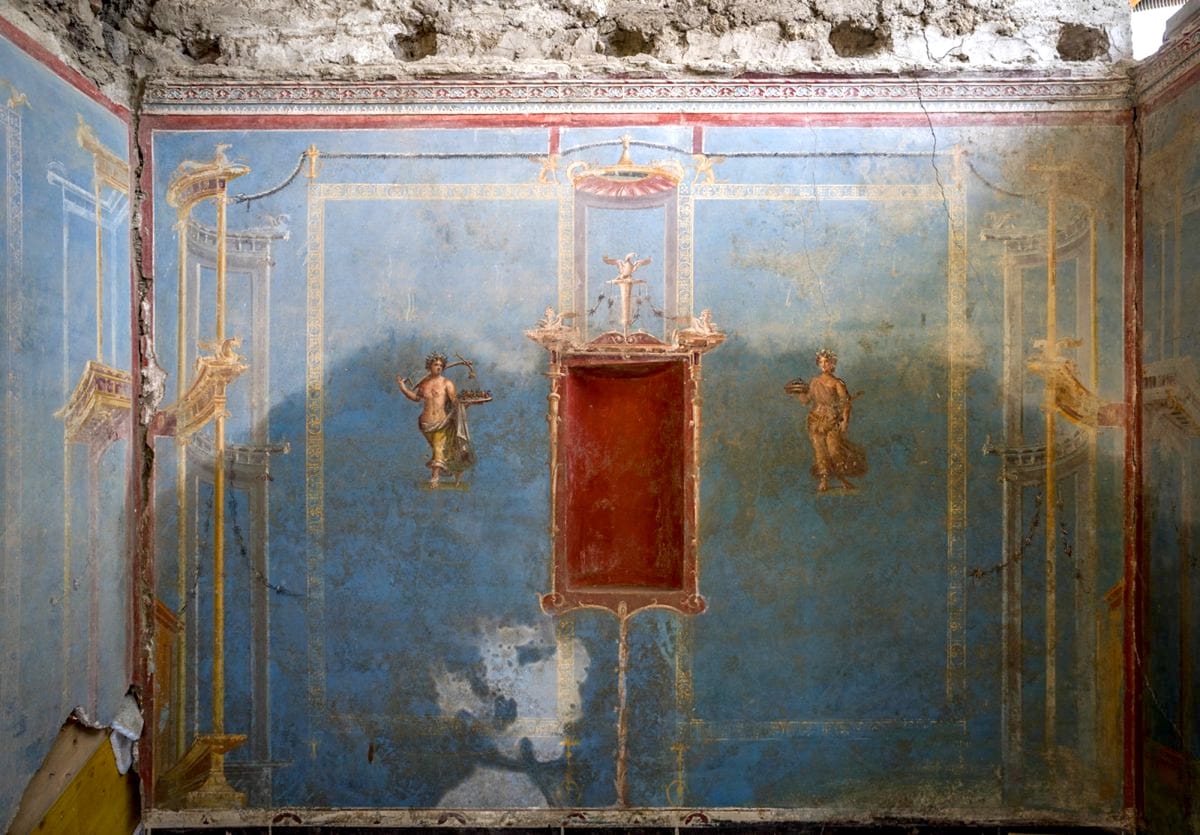
At least that's the mood director Gianfranco Rosi evokes in his mesmerizing documentary Pompei: Below the Clouds, which won a Special Jury Prize at the Venice Film Festival last year and is finally being released theatrically in the U.S., ahead of a March 27 streaming premiere on Mubi. The apocalypse Rosi presents is not just the legendary one that destroyed the ancient Roman town of the film's title but an ongoing one that encompasses the calamities of our modern era as well as the rejuvenation that sometimes accompanies destruction.
What makes this canopy special isn't just that it uses 3D printing technology, though that's certainly impressive. It's the way the designers thought about the entire system. Rather than simply throwing a roof over the tombs and calling it a day, they created what's essentially a climate-control system disguised as architecture. The canopy features a double-layer envelope that does way more than keep rain off ancient stone. Built into this roof are ventilation and air extraction components that actively regulate temperature and humidity.
Berat is a UNESCO World Heritage Site because of its unique historic downtown characterized by 18th and 19th century Ottoman structures and urban design, but human presence in the area goes back to the 4th/3rd millennium B.C. and there is evidence of an urban settlement in Berat defined by defensive walls dating to the 7th-6th century B.C.
The excavation ultimately unearthed 34 burials, 15 of them belonging to children between two and ten years old when they died. The graves are clustered in groups, probably reflecting family nuclei. Most the grave types are earthen pits covered with roof tiles angled against each other.
The coffins are elaborately painted in vivid polychrome. They were stacked in layers and carefully arranged so the 22 coffins fit into the constricted space. They were placed in 10 horizontal rows and the lids separated from the body of the coffin to maximize the limited space. There are no personal names on most of the coffins, but there are titles. The most common title found in the coffin is Singer of Amun or Chantress of Amun.
Both of the cyst graves feature funerary markers reused as building material. One of them contains the partially preserved tombstone of Legio I Italica centurion Gaius Valerius Verecundus was engraved with a wreath of which only traces remain and an inscription that describes him as having been heavily pressed by fate.
Two exceptionally rare and beautifully carved Mithraic altars found in Inveresk, East Lothian, Scotland, are going on display for the first time. They are not just the only Roman altars ever found in Scotland, but are among the finest examples of Roman sculpture in Roman Britain. They are also uniquely early in date, having been made in 140s A.D. during Antoninus Pius' reoccupation of southern Scotland, whereas most other archaeological materials related to the worship of Mithras in Britannia date to the 3rd century.
The remains of a monumental hall belonging to a 4th-century episcopal palace have been discovered at Ostia Antica, Rome's ancient port town. The base of the structure is eight by 20 meters (ca. 26 by 65 feet) and the walls were an estimated eight meters high. This is an extraordinarily large space, and it was richly decorated with mosaic floors and marble panels.
The team identified multiple buildings aligned roughly west-east, in several sizes, ranging from about 8 × 7 metres to 14 × 8 metres. Within these structures are rectangular halls-some interpreted as spaces for worship-alongside smaller rooms that may have served devotional or practical functions for the monks. Excavators also noted evidence of plastered wall surfaces and tiled floors, as well as architectural features such as entrances and surviving supports, including beams.

:max_bytes(150000):strip_icc()/TAL-header-aventine-hill-terrace-rome-ROMEHIDDENGEMS0126-642afc06aef6450098a63077ff43df8f.jpg)