#self-checkout
#self-checkout
[ follow ]
Business intelligence
fromFood & Beverage Magazine
2 days agoLeveraging Digital Tools for Restaurant Success: A Guide for Foodservice Professionals - Food & Beverage Magazine
Embracing technology and data analytics is essential for enhancing operations and guest experiences in the food and beverage industry.



fromTasting Table
2 weeks agoCostco's Automated Pay Stations Are Here - And Fans Are Underwhelmed - Tasting Table
The way Costco's automated pay stations work is that members stand in line and a Costco employee scans the person's membership card and all of the items in their cart. When the member reaches the self-serve payment kiosk, they scan their membership card and pay. The system eliminates the conveyor belt and any interaction with a cashier.
E-Commerce
Food & drink
fromFood & Beverage Magazine
4 weeks agoHarnessing Technology and Trends in the Foodservice Industry: A Guide for Professionals - Food & Beverage Magazine
Technological advancements and changing consumer preferences drive evolution in the foodservice and beverage industry, necessitating adaptation for success.

fromdzone.com
2 months agoManaging Changing Hardware/Peripherals in a Robust POS
Retail point-of-sale systems today offer a wide range of options for peripherals and hardware. Their technical specifications play a major role in selection, and big retailers often choose multiple vendors to reduce a single point of failure. This gives them an advantage to negotiate price or support as well. Technically, these peripherals also require updating with new models and may have new feature sets. This necessitates the redevelopment of point-of-sale applications, increasing development costs.
Information security
Artificial intelligence
fromwww.theguardian.com
1 month agoRetailers want delightfully human' AI to do your shopping, but will the chatbots go rogue?
Retailers plan to deploy sophisticated AI shopping assistants, but current chatbots struggle with balancing relatable personalities while avoiding errors and customer frustration.
Marketing tech
fromwww.independent.co.uk
1 month agoIlluminating blind spots in store strategy execution
Consumer goods brands require real-time retail intelligence and visibility of in-store execution to compete effectively, as legacy tools fail to provide actionable data needed for optimal product placement, pricing, and promotion management.
UX design
fromSilicon Canals
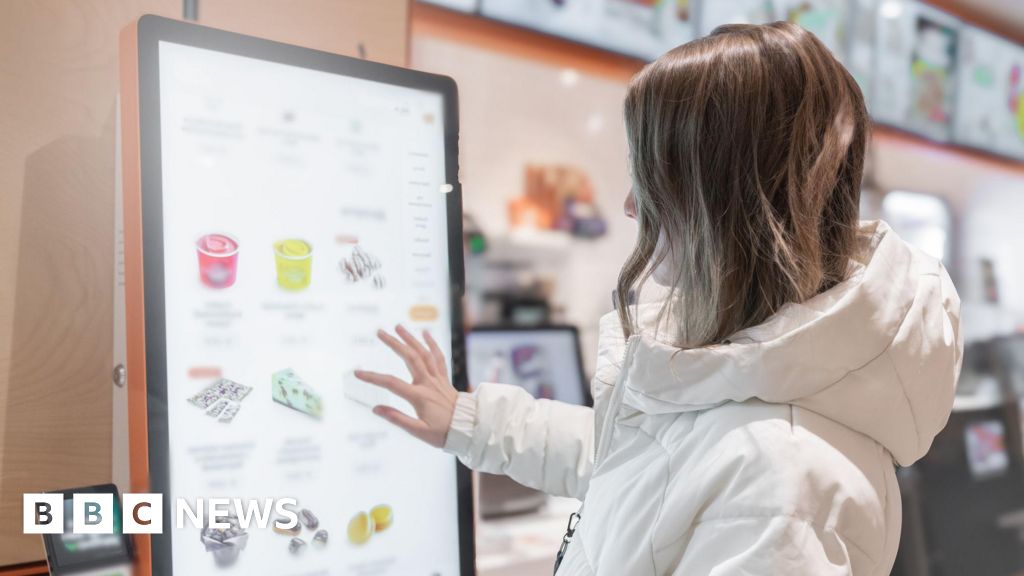
2 months ago8 things people do at self-checkouts that immediately reveal they grew up before technology - Silicon Canals
Different generations interact with self-checkout machines differently: older users read instructions carefully and proceed cautiously, while younger users tap quickly and risk selection errors.


fromThe Verge
1 month agoSamsung's Digital Home Key lets you use your phone as your key
The new feature, called Digital Home Key, will live inside Samsung Wallet and is powered by the Aliro smart home standard. The new standard uses near-field communication (NFC) for its tap-to-unlock technology. It also supports ultra-wideband (UWB), giving users the ability to unlock their door as they approach and without pulling out their phone.
Mobile UX
Real estate
fromwww.housingwire.com
2 months agoSmart servicing: Why purpose-built software pays off
Retaining mortgage servicing rights while selling loans provides steady revenue and stronger borrower relationships, but requires dedicated mortgage servicing software to avoid hidden operational costs.
fromSilicon Canals
2 months agoPsychology says people who organize their groceries on the checkout belt a certain way reveal these 8 personality traits cashiers notice immediately - Silicon Canals
I used to think I was overthinking it until I interviewed a longtime cashier who told me something fascinating: "I can tell you everything about a person just by watching them unload their cart for thirty seconds." That conversation sent me down a research rabbit hole about what our everyday behaviors reveal about us. Turns out, psychologists have been studying these micro-behaviors for years, and the way we organize our groceries at checkout is surprisingly revealing.
Psychology


Miscellaneous
fromIrish Independent
2 months agoEstimated 500,000 in accidental payments made at 'tipping terminals'
Consumers frequently tip but feel pressured by digital payment methods; regulators urge clearer opt-out options, separation of tipping terminals, and transparent communication of service charges.


fromZacks
2 months agoPardon Our Interruption
As you were browsing something about your browser made us think you were a bot. There are a few reasons this might happen: You've disabled JavaScript in your web browser. You're a power user moving through this website with super-human speed. You've disabled cookies in your web browser. A third-party browser plugin, such as Ghostery or NoScript, is preventing JavaScript from running. Additional information is available in this support article.
#universal-commerce-protocol
E-Commerce
fromSearch Engine Roundtable
1 month agoUniversal Commerce Protocol Get New Additions Including Cart & Catalog
Google's Universal Commerce Protocol adds optional cart, catalog, and identity linking capabilities to enable agents to complete purchases directly across the web without traditional storefronts.

E-Commerce
fromSearch Engine Roundtable
1 month agoUniversal Commerce Protocol Get New Additions Including Cart & Catalog
Google's Universal Commerce Protocol adds optional cart, catalog, and identity linking capabilities to enable agents to complete purchases directly across the web without traditional storefronts.
fromFuturism
2 months agoVending Machine Run by Claude More of a Disaster Than Previously Known
Claude - or "Claudius," as its vending persona was known, but we'll stick to the former for the sake of clarity - had pretty much free reign to accomplish its goal. It was allowed to research products, set prices, and even contact outside distributors, with a team of humans at the AI safety firm Andon Labs handling the physical tasks like restocking. Meanwhile, it also fielded requests from employees in a Slack channel, who asked for everything from chocolate drinks to the street drug methamphetamine to broadswords.
Artificial intelligence
fromwww.housingwire.com
2 months agobevri.ai unveils AI-powered POS platform
According to the company, the Bevri POS is designed to complete the 1003 loan application, collect and validate income and asset documentation, run Desktop Underwriter and Loan Product Advisor findings for Fannie Mae and Freddie Mac, and generate underwriting outcomes earlier in the process. The system also aims to reduce repetitive data entry through autonomous task execution. The company also said the platform continuously evaluates next steps in a loan file, resolving gaps and surfacing insights for loan officers.
Artificial intelligence
fromFuturism
1 month agoAI Is Destroying Grocery Supply Chains
Whole Foods shelves sit empty after a data breach shut down its wholesale distributor. Meat packers working for JBS Foods are paralyzed as an $11 million ransomware attack takes out their processing facilities. Some 2.2 million workers at Stop & Shop and Hannaford have their personal data exposed as the result of a cyberattack on parent company Ahold Delhaize USA. These scenarios, straight from a William Gibson novel, are becoming increasingly common in supply chains across the world.
Food & drink
#ai-commerce-integration

E-Commerce
fromDigiday
1 month agoShopify says purchases are coming 'inside ChatGPT' through agentic storefronts as OpenAI retreats on Instant Checkout
Shopify merchants' products will become discoverable and purchasable in ChatGPT through agentic storefronts, with checkout redirecting to merchants' own storefronts rather than completing purchases directly in the chatbot.
E-Commerce
fromDigiday
1 month agoShopify says purchases are coming 'inside ChatGPT' through agentic storefronts as OpenAI retreats on Instant Checkout
Shopify merchants' products will become discoverable and purchasable in ChatGPT through agentic storefronts, with checkout redirecting to merchants' own storefronts rather than completing purchases directly in the chatbot.
Business intelligence
fromFast Company
1 month agoThe rise of "always-on" accounting for rental businesses
Always-on accounting systems continuously capture financial activity, automatically organize data, and provide real-time insights, replacing periodic review models across industries, particularly in rental housing.
#ai-in-fast-food

Marketing tech
fromThe Mercury News
1 month agoBurger King is testing AI headsets that will know if employees say 'welcome' or 'thank you'
Burger King is testing AI-powered headsets called Patty in 500 U.S. restaurants to manage operations, track inventory, provide recipe guidance, and monitor customer service interactions.
Marketing tech
fromThe Mercury News
1 month agoBurger King is testing AI headsets that will know if employees say 'welcome' or 'thank you'
Burger King is testing AI-powered headsets called Patty in 500 U.S. restaurants to manage operations, track inventory, provide recipe guidance, and monitor customer service interactions.
fromFast Company
2 months agoElectronic shelf labels mean grocery stores can now change their prices anytime they want, in seconds
Perusing the grocery aisle in the Westside Market on 23rd Street in Manhattan, you might not even notice the screens. They look just like paper price labels and, alongside a bar code, use a handwriting-style font we've come to associate with a certain merchant folksiness. They're not particularly bright or showy. The only clues that they're not ordinary sticky shelf labels are a barely distinguishable light bulb and, on some, a small QR code.
Marketing tech
E-Commerce
fromTasting Table
1 month agoCostco Vs Sam's Club Self-Checkout: Which Chain Provides A Better Experience? - Tasting Table
Sam's Club offers a superior self-checkout experience compared to Costco, featuring a convenient Scan & Go mobile app option that allows customers to scan items while shopping and avoid checkout lines.
fromTasting Table
2 months agoThe Self-Checkout Gripe We Have With Publix - Tasting Table
Folks have griped on Reddit that their locations do not offer self-checkout options (though many report that their locations haven't undergone any recent remodels). Others have shared frustration with Publix's existing self-checkout system, which they claim only offers a small bagging area, and when they move their full bags off the scale, it flags the employee - effectively wasting both the customer's and the employee's time.
E-Commerce
fromLondon Business News | Londonlovesbusiness.com
2 months agoHow EPOS systems are enhancing customer experiences in retail
Retail is no longer just about buying and selling products; it is about the experience. In a world where online shopping offers instant gratification, physical stores face the challenge of providing something the internet cannot: a personal, tactile, and efficient service. The checkout counter has traditionally been a point of friction, with long queues, slow card machines, and impersonal interactions. However, the modern Electronic Point of Sale (EPOS) system has completely reshaped this dynamic.
E-Commerce
fromForbes
2 months agoHow To Take Advantage Of Technology In CPG Marketing
Statistics from the 2025 holiday shopping season clearly show that AI is playing a huge role in how people shop. But new research from retail payment platform Adyen found that many consumers are ready for AI to become their personal shopper. Just over half-51%-said they're open to letting AI take over the entire shopping process, including making final purchases. Millennials are the most willing to let agents do their shopping, with nearly three in five saying they are ready for such a shift.
E-Commerce
E-Commerce
fromwww.restaurantdive.com
2 months agoWhat's blocking your direct orders? 5 guest experience gaps to fix
Eliminating friction is critical for restaurants to shift customers from third-party marketplaces to direct ordering, increasing margins, owning guest data, and delivering curated experiences.
fromAdExchanger
2 months agoWizard Commerce Launches An AI Shopping Agent To Make Magic of Ecommerce Madness | AdExchanger
But most shopping AI agents are firmly attached to one particular LLM or retailer, like ChatGPT and Perplexity's new shopping response flows that guide their own shopping-related queries. And then there's agentic shopper pups: Walmart's Sparky and Amazon's Rufus, which are meant to help customers shop across their retail footprints. What people need is an independent agent that peers across retailers and is entirely focused on ecommerce services.
E-Commerce
[ Load more ]