#server-npus
#server-npus
[ follow ]
#ai-infrastructure #nvidia #ai #broadcom #intel #ai-models #anthropic #ai-agents #google #ai-chips #turboquant
#ai-infrastructure

DevOps
fromMedium
1 day agoThe AI Infrastructure Stack in 2026: Companies Building the Future of AI
AI infrastructure companies are transforming the deployment and scaling of artificial intelligence into full production systems with essential governance and observability.
fromComputerWeekly.com
1 month agoArtificial intelligence
HPE taps Nvidia to transform distributed AI factories into intelligent AI grid | Computer Weekly
HPE launches AI Grid infrastructure powered by Nvidia GPUs to enable distributed, low-latency AI inference at edge locations for real-time applications across retail, manufacturing, healthcare, and telecommunications.
Artificial intelligence
fromComputerWeekly.com
1 month agoHPE taps Nvidia to transform distributed AI factories into intelligent AI grid | Computer Weekly
HPE launches AI Grid infrastructure powered by Nvidia GPUs to enable distributed, low-latency AI inference at edge locations for real-time applications across retail, manufacturing, healthcare, and telecommunications.





Tech industry
fromTNW | Artificial-Intelligence
2 days agoGoogle in talks with Marvell Technology to build new AI inference chips alongside Broadcom TPU programme
Google is collaborating with Marvell Technology to develop new AI chips, enhancing its custom silicon supply chain for inference processing.
Productivity
fromSilicon Canals
3 days agoI let AI plan my workdays down to the minute for a week - the shock wasn't my output, it was realizing how much of my old schedule had been performance - Silicon Canals
Using ChatGPT to manage a calendar revealed that much of the scheduled time was performance rather than productive work.
fromTechzine Global
17 hours agoSnowflake Intelligence and Cortex Code become the agentic AI control layer
"Snowflake gives customers one place to bring their data together, connect the systems they rely on, and turn AI into something that actually helps teams get work done," says Baris Gultekin, VP of AI at Snowflake.
Artificial intelligence




Tech industry
fromTheregister
1 month agoA closer look at Nvidia's Groq-powered LPX rack systems
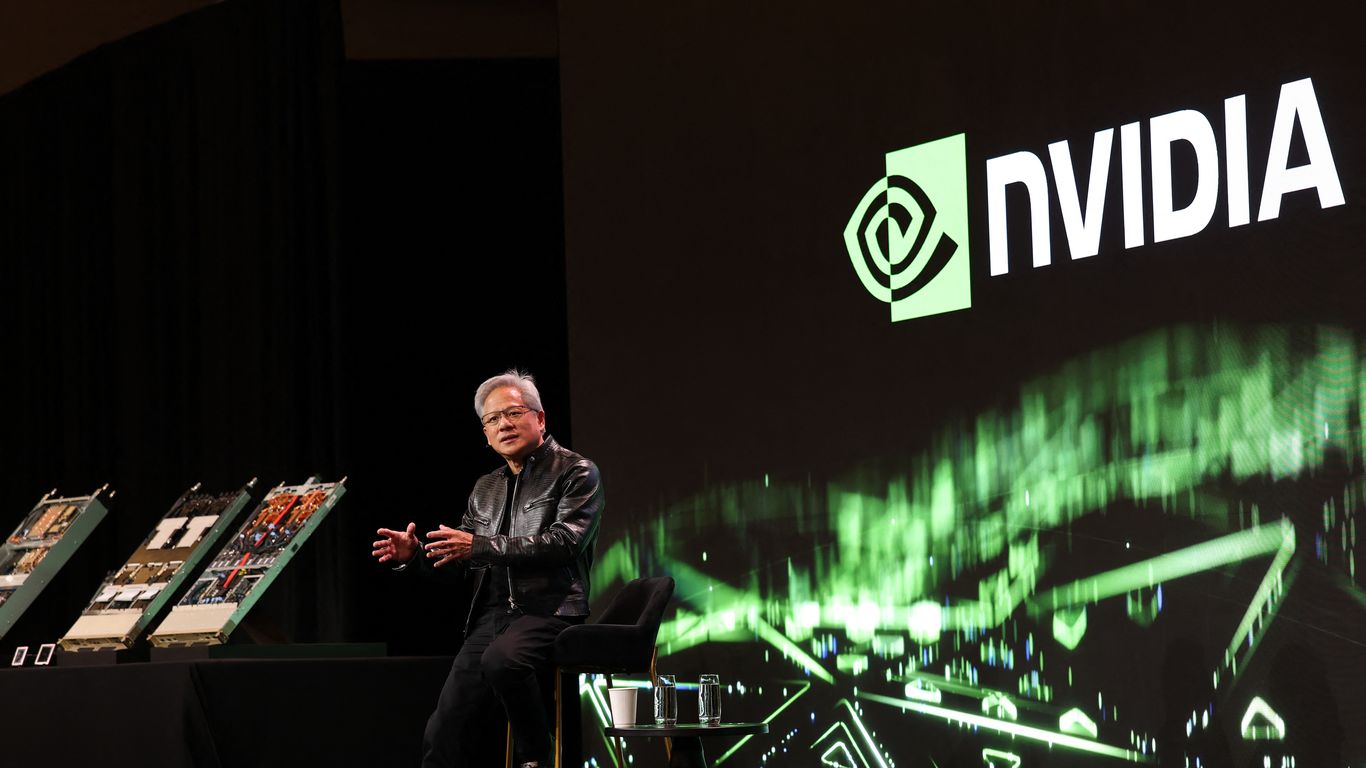
Nvidia acquired Groq for $20 billion primarily to accelerate time-to-market for SRAM-heavy inference chips rather than develop the technology independently, enabling faster token generation for AI reasoning workloads.

Data science
fromTechRepublic
1 month agoInside the Gas Engine Strategy Powering AI's Next Wave
Gas reciprocating engines are emerging as a critical power solution for AI data centers, with manufacturers like Caterpillar securing multi-gigawatt orders to meet demand that exceeds grid and turbine capacity.
Artificial intelligence
fromTechCrunch
1 month agoNiv-AI exits stealth to wring more power performance out of GPUs | TechCrunch
AI data centers waste significant power due to GPU demand surges, forcing operators to throttle performance by up to 30%, prompting startups like Niv-AI to develop precision power management solutions.
Artificial intelligence
fromInfoWorld
1 month agoNvidia launches Nemotron 3 Super to power enterprise AI agents
Nemotron 3 Super's hybrid architecture combining Mamba and Transformer technologies enables enterprises to run complex AI agents more efficiently with lower costs and faster execution on existing infrastructure.
fromTheregister
2 months agoIntel greets memory apocalypse with Xeon workstation CPUs
The Xeon 600 lineup spans the gamut between 12 and 86 performance cores (no cut-down efficiency cores here), with support for between four and eight channels of DDR5 and 80 to 128 lanes of PCIe 5.0 connectivity. Compared to its aging W-3500-series chips, Intel is claiming a 9 percent uplift in single threaded workloads and up to 61 percent higher performance in multithreaded jobs, thanks in no small part to an additional 22 processor cores this generation.
Tech industry
fromTechzine Global
1 month agoMeta shifts to AI inference with its future chips
Four generations, MTIA 300, 400, 450, and 500, have been produced within less than two years, with several already in production and others scheduled for mass deployment in 2026 and 2027. The quick pace is deliberate. Rather than betting on a single chip generation and waiting years for results, Meta has adopted a roughly six-month cadence per generation, using modular chiplet architecture to enable incremental upgrades without replacing entire rack systems.
Artificial intelligence


Artificial intelligence
from24/7 Wall St.
1 month agoNVIDIA Cements Its Role as the Backbone of AI Infrastructure
NVIDIA's networking revenue grew 162% year-over-year to $8.2 billion, nearly tripling GPU growth, signaling a shift from chip seller to integrated infrastructure provider selling complete AI data center systems.
fromTechCrunch
2 months agoQuadric rides the shift from cloud AI to on-device inference - and it's paying off | TechCrunch
The company, which is based in San Francisco and has an office in Pune, India, is targeting up to $35 million this year as it builds a royalty-driven on-device AI business. That growth has buoyed the company, which now has post-money valuation of between $270 million and $300 million, up from around $100 million in its 2022 Series B, Kheterpal said.
Artificial intelligence
fromInfoQ
2 months agoNVIDIA Dynamo Planner Brings SLO-Driven Automation to Multi-Node LLM Inference
The new capabilities center on two integrated components: the Dynamo Planner Profiler and the SLO-based Dynamo Planner. These tools work together to solve the "rate matching" challenge in disaggregated serving. The teams use this term when they split inference workloads. They separate prefill operations, which process the input context, from decode operations that generate output tokens. These tasks run on different GPU pools. Without the right tools, teams spend a lot of time determining the optimal GPU allocation for these phases.
Artificial intelligence
[ Load more ]