#siemens-partnership
#siemens-partnership
[ follow ]
fromwww.cbc.ca
1 day agoStellantis, Microsoft sign 5-year partnership for AI push | CBC News
Through our collaboration with Microsoft, we are accelerating our AI momentum across the enterprise, focusing on over 100 AI initiatives that cover product development, predictive maintenance, and the faster rollout of digital features.
European startups


#enterprise-ai
Artificial intelligence
fromFortune
1 month agoWhy Europe can lead in trusted, industrialized AI | Fortune
Europe can lead the enterprise AI revolution by leveraging trusted AI, proprietary data, and regulatory rigor to unlock multi-trillion-dollar economic opportunities through decision velocity rather than incremental productivity gains.
fromSpiegel
3 days ago(S+) Defense in Orbit: Germany Goes Big in the Military Space Race
The German military also uses this airborne communications hub, which allows command staff and soldiers deployed abroad to communicate across continents. The information they share is classified, strictly confidential.
Germany news
fromTNW | Investors-Funding
4 days agoEurope's most important industrial decarbonisation project gets a lifeline
Stegra has agreed in principle on €1.4 billion in new financing to complete the construction of what would be the world's first large-scale green steel plant, located in Boden in northern Sweden.
Fundraising
#ai-adoption
Artificial intelligence
fromFast Company
2 days agoFrom legacy processes to AI-native work
Integrating AI into organizations requires a new orchestration model that balances technology with human roles and behaviors.

London startup
fromLondon Business News | Londonlovesbusiness.com
2 days agoHow digital technology is making road freight operations more efficient - London Business News | Londonlovesbusiness.com
Digital technologies enhance operational efficiency and transparency in UK logistics, addressing rising costs and customer expectations.
fromSustainable Bus
2 days agoBerlin's BUS2BUS 2026 gathers 40 buses with focus on electrification and minibuses - Sustainable Bus
The event features approximately 40 vehicles alongside a conference program addressing topics such as autonomous driving, on-demand transport and operational concepts, including a Sustainable Bus session on intercity bus electrification.
Alternative transportation
London startup
fromComputerWeekly.com
5 days agoDatacentre developers tout benefits to local communities, but do they deliver? | Computer Weekly
Datacentre developments are causing challenges for local businesses, raising concerns about energy consumption and community impact despite potential local benefits.
#agentic-ai
Artificial intelligence
fromMedium
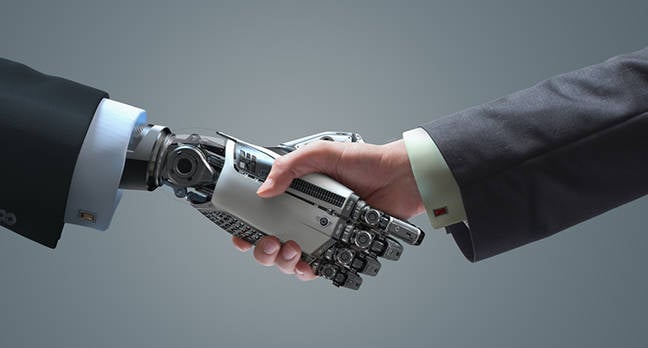
1 month agoFrom Dumb Devices to Digital Teammates: How Agentic AI is Revolutionizing the Internet of Things
Agentic AI transforms IoT from obedient automation into intelligent systems that anticipate needs, reason through problems, and take initiative rather than simply following programmed commands.
Artificial intelligence
fromMedium
1 month agoFrom Dumb Devices to Digital Teammates: How Agentic AI is Revolutionizing the Internet of Things
Agentic AI transforms IoT from obedient automation into intelligent systems that anticipate needs, reason through problems, and take initiative rather than simply following programmed commands.

European startups
fromFortune
1 month agoEurope's second chance on AI: building an opportunity in factories, labs, and the real economy | Fortune
Europe's scientific talent, industrial strength, and multi-sector ecosystems position it to lead the next AI innovation wave focused on robotics, manufacturing, chemistry, and healthcare rather than large language models.
fromwww.dw.com
1 month ago'Made in EU' proposals put forward to boost manufacturing
The IAA covers several key sectors, including steel, cement, aluminum, cars and innovative technologies, such as batteries, solar, wind and nuclear. The new rules would set a minimum requirement for projects using public funds. For example, aluminum sector projects would require 25% of the aluminum to be produced in the EU and with low-carbon technologies. For cement, the equivalent rate would be 5%.
Europe politics
fromDevOps.com
2 months agoHow AI Is Expanding Who Gets to Build Infrastructure - DevOps.com
Baron traces the origin story back to his time building high-scale systems at Instana (which exited to IBM in 2020), where the reality of "always-on" platforms made one thing obvious: the tooling we rely on is often too low-level, too rigid, and too disconnected from real-world use cases. That gap has only widened as environments have exploded in complexity-more cloud providers, more managed services, more hybrid setups, more internal APIs, and "gillions" of tools stitched together into brittle workflows.
Software development
Gadgets
fromComputerWeekly.com
2 months agoDirect-to-device connectivity set to underpin next generation of industrial IoT | Computer Weekly
Ubiquitous satellite direct-to-device (D2D) connectivity will drive rapid, near-term mass adoption in industrial IoT across agriculture, mining, energy, transport and utilities.
fromMarTech
1 month agoSee how leaders bridge the engagement divide by attending 'Engage with SAP Online' | MarTech
From the customer's perspective it felt like dealing with multiple companies wearing the same logo. Marketing sends a "We miss you!" email the day after a frustrating support call. Sales doesn't know the customer has already watched a demo. In-store purchase history is invisible to the ecommerce team. No continuity. No memory. No relationship.
Marketing tech
fromwww.dw.com
1 month agoGermany weighs China risks in new trade era
"In the era of great powers, our freedom is no longer a given. It is under threat," said German Chancellor Friedrich Merz at the opening of the Munich Security Conference earlier in February. Merz explicitly mentioned China. "China has the ambition to shape global affairs, laying the foundations for this over many years with strategic patience. In the foreseeable future, Beijing could draw level with the US in terms of military might. China is systematically exploiting the dependencies of others, reinterpreting the international order on its own terms," he said.
Miscellaneous
fromwww.theguardian.com
2 months agoThe Guardian view on a Made in Europe' industrial strategy: an idea whose time has come | Editorial
Given the daunting nature of the challenges they face in the era of Donald Trump, it is perhaps understandable that European politicians should wish to get away from it all. This week, in what is being billed as a leaders' retreat, a remote castle in the Belgian countryside has been selected for an EU summit on competitiveness. The pastoral setting may soothe the spirits of attending heads of state; but it belies the urgency of the debate they need to have.
Europe politics
fromBusiness Insider
1 month agoElon Musk warns Tesla employees over future of German megafactory ahead of union election
Things certainly get harder if there are outside organizations who are pushing Tesla in the wrong direction. It's difficult to say that then we would expand, if we had outside organizations who were making things very difficult. We're not going to shut down the factory, but we wouldn't expand it either.
Germany news
European startups
fromComputerWeekly.com
1 month agoNeura Robotics accelerates next-generation physical AI | Computer Weekly
Neura Robotics and Qualcomm Technologies partner to advance intelligent robots for safe human-robot collaboration through edge AI integration and production-ready deployment at scale.
Artificial intelligence
fromFortune
1 month agoWorried about AI job cuts? It might be time to move to Europe, where companies are planning to hiring more-not less-workers thanks to AI | Fortune
AI-adopting companies are more likely to hire than cut jobs, with AI-intensive firms growing headcounts about 4% more than non-adopters.
fromTNW | Eu
2 months agoMunich 2026: A security conference where tech isn't an afterthought
The 62nd Munich Security Conference opened on 13 February 2026 in Munich, Germany, and this year's gathering feels different from past editions. For decades, Munich was about jets, troops, and treaties. Today, cyber and AI are no longer peripheral; they are part of the architecture of security itself. Cyber risks, digital infrastructure, and emerging technologies like AI now sit alongside tanks and treaties on the agenda as European leaders try to make sense of a world where digital threats and geopolitical tensions are deeply intertwined.
Miscellaneous
European startups
fromTNW | Deep-Tech
1 month agoEurope's Deep-Tech Paradox
Europe has sufficient capital but lacks legal frameworks and expertise to direct investment toward SciTech startups, which are essential for long-term competitiveness despite Sweden's unicorn success being concentrated in B2C ventures.
fromComputerworld
2 months agoGermany greenlights the EU AI Act, triggering countdown for enterprise compliance
"With this law, we are implementing European requirements in a maximally innovation-friendly way and creating lean AI supervision with a clear focus on the needs of the economy," Federal Digital Minister Karsten Wildberger said in a statement.
Artificial intelligence
[ Load more ]