DevOps
fromInfoQ
1 day agoAWS Announces General Availability of DevOps Agent for Automated Incident Investigation
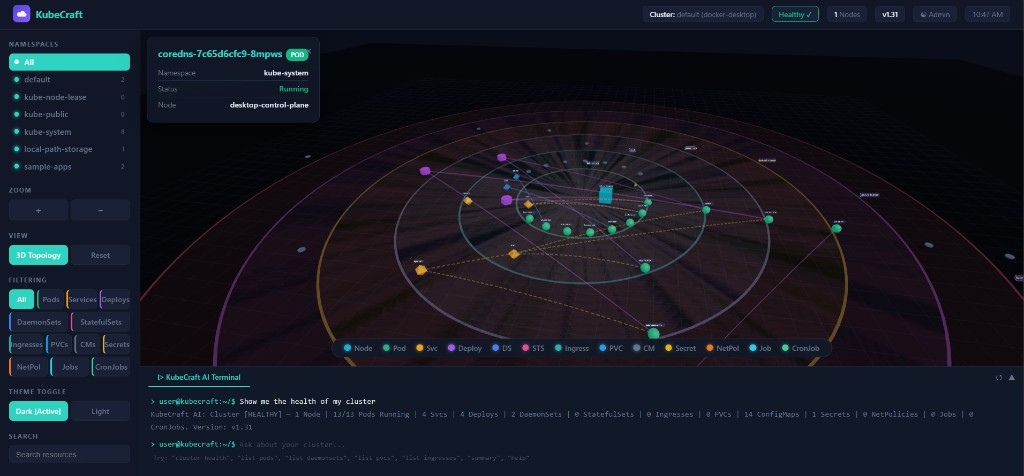
AWS has launched DevOps Agent, an AI-powered assistant for troubleshooting and automating tasks in AWS environments.
The most dangerous assumption in quality engineering right now is that you can validate an autonomous testing agent the same way you validated a deterministic application. When your systems can reason, adapt, and make decisions on their own, that linear validation model collapses.
In order to use agents or in order to use AI in IT operations, all of your systems need to be interconnected and what interconnects all of your systems is an automation platform. Interconnecting systems is only a piece of the puzzle though. There is also some well-founded concern about the autonomous AI systems we are moving towards. AI agents may make decisions and inferences, but enterprises remain hesitant to allow direct execution on production systems.
Almost a quarter of those surveyed said they had experienced a container-related security incident in the past year. The bottleneck is rarely in detecting vulnerabilities, but mainly in what happens next. Weeks or months can pass between the discovery of a problem and the actual implementation of a solution. During that period, applications continued to run with known risks, making organizations vulnerable, reports The Register.
Industry professionals are realizing what's coming next, and it's well captured in a recent LinkedIn thread that says AI is moving on from being just a helper to a full-fledged co-developer - generating code, automating testing, managing whole workflows and even taking charge of every part of the CI/CD pipeline. Put simply, AI is transforming DevOps into a living ecosystem, one driven by close collaboration between human judgment and machine intelligence.
For years, reliability discussions have focused on uptime and whether a service met its internal SLO. However, as systems become more distributed, reliant on complex internet stacks, and integrated with AI, this binary perspective is no longer sufficient. Reliability now encompasses digital experience, speed, and business impact. For the second year in a row, The SRE Report highlights this shift.
Manual database deployment means longer release times. Database specialists have to spend several working days prior to release writing and testing scripts which in itself leads to prolonged deployment cycles and less time for testing. As a result, applications are not released on time and customers are not receiving the latest updates and bug fixes. Manual work inevitably results in errors, which cause problems and bottlenecks.
The real cost of poor observability isn't just downtime; it's lost trust, wasted engineering hours, and the strain of constant firefighting. But most teams are still working across fragmented monitoring tools, juggling endless alerts, dashboards, and escalation systems that barely talk to one another, which acts like chaos disguised as control. The result is alert storms without context, slow incident response times, and engineers burned out from reacting instead of improving.
The main advantage of going the Multi-Cloud way is that organizations can "put their eggs in different baskets" and be more versatile in their approach to how they do things. For example, they can mix it up and opt for a cloud-based Platform-as-a-Service (PaaS) solution when it comes to the database, while going the Software-as-a-Service (SaaS) route for their application endeavors.