#solar-industry
#solar-industry
[ follow ]
#renewable-energy #solar-energy #solar-power #data-centers #electric-vehicles #clean-energy #fossil-fuels






fromFortune
1 hour agoData centers now account for half of all new U.S. electricity use, just as Americans start to sour on AI | Fortune
Data centers accounted for around 50% of all electricity demand growth in the U.S. last year, according to the IEA, far surpassing the rise in electricity usage in the residential, industrial, and transport sectors.
Environment
fromTechCrunch
5 days agoExclusive: This energy startup's bet on 100-year-old grid tech is paying off | TechCrunch
"We were considering multiple forms of capital when we started. It just felt like the opportunity is so large that venture capital gives us the opportunity to take those risks upfront and have the possibility to generate an outsized return."
Venture

fromWIRED
5 days agoThe US Government Will Ask Data Centers How Much Power They Use
"Americans deserve to know how much energy data centers are sucking up and what that's doing to their utility bills. The EIA's mandatory survey is an important first step towards holding data centers accountable, but people are hurting right now."
Environment
fromEarth911
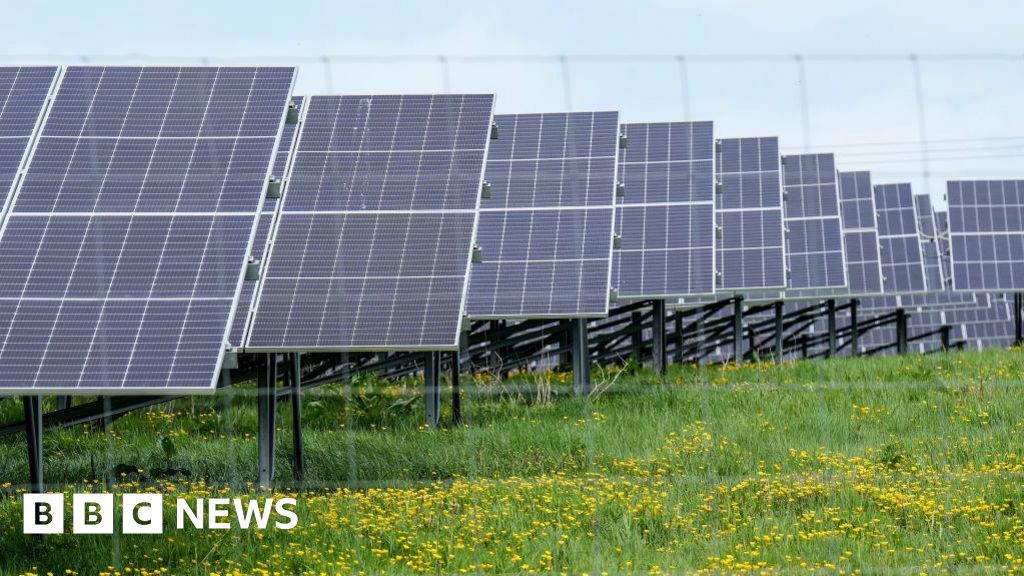
1 month agoShould You Go Solar In 2026?
The most consequential shift for anyone considering rooftop solar in 2026 is the expiration of Section 25D, the Residential Clean Energy Credit. That 30% credit, which was worth up to $9,000 on a $30,000 system, is no longer available for home solar installations. The One Big Beautiful Bill, signed July 4, 2025, accelerated the phase-out that the Inflation Reduction Act had originally extended through 2034.
SF real estate
fromwww.theguardian.com
1 month agoHow Pakistan's people-led solar boom is easing impact of Middle East energy crisis
People who could afford to do it at that time realised that it was much cheaper and cost-effective and better for them in the long run to do a one-time investment in rooftop solar as opposed to keep paying high electricity bills from a grid that is also unreliable, said Nabiya Imran, an associate at Renewables First, a Pakistani thinktank.
World news
US news
fromwww.npr.org
1 month agoEasy-to-use solar panels are coming, but utilities are trying to delay them
Plug-in solar panels that connect to standard outlets are gaining traction in the U.S. as a cost-effective alternative to traditional rooftop solar, though utility opposition based on safety concerns is slowing legislative adoption.
NYC startup
from24/7 Wall St.
1 month agoSolar Shares Shine: SolarEdge Stock Heads 10% Higher, Enphase Energy and SunRun Rally 6%
SolarEdge, Enphase Energy, and Sunrun stocks surge on sector-wide relief rally, with SolarEdge leading due to demonstrated turnaround with revenue growth, positive operating cash flow, and expanding margins.
fromTechCrunch
1 month agoGoogle and Tesla think we're managing the electrical grid all wrong | TechCrunch
The group points out, correctly, that the grid is designed for brief bursts of high demand; most of the time there's lots of capacity that goes unused. Utilize thinks that should change. The group argues that smarter ways to use that capacity already exist. Utilize name checks a number of those solutions, including battery storage, demand response, and virtual power plants, all of which have emerged en masse over the last decade, but remain under utilized.
Toronto startup
Science
fromSFGATE
1 month agoExperts skeptical this California startup can turn night into day
A Los Angeles startup plans to deploy thousands of satellites with large mirrors to reflect sunlight onto Earth at night for commercial illumination, but scientists warn of severe ecological and environmental consequences.
fromwww.npr.org
1 month agoTax credits for solar panels are available, but the catch is you can't own them
With these arrangements sometimes called subscriptions or power purchase agreements (PPAs), a third party owns the panels and leases them back to the homeowner. But last summer, President Trump signed legislation that ended federal tax incentives that had cut at least 30% off the price of purchased panels. Similar incentives for leased panels remain.
US news
Toronto startup
fromThe Atlantic
1 month agoTesla's Secret Weapon Is a Giant Metal Box
Tesla is pivoting from selling cars to manufacturing robots and robotaxis, with the Cybercab driverless vehicle and Optimus humanoid robot as centerpieces, though both face significant legal, technical, and safety challenges.
fromZDNET
2 months agoI discovered a little-known way to power your home during an outage - here's how
While the abrupt end to your home chef experience is inconvenient, the bigger issue is that your gas furnace still needs electricity to run, and it's supposed to drop into the 20s overnight. Now imagine that while everyone else is rifling through their junk drawer for flashlights and batteries,
Gadgets
US news
fromwww.npr.org
1 month agoWhy farmers in California are backing a giant solar farm
A 200-square-mile solar farm in California's San Joaquin Valley would generate 21,000 megawatts of power, with farmers supporting the project as an alternative use for land lacking sufficient water for crop production.
Alternative transportation
fromHigh Country News
1 month agoWhy Western states are pushing for plug-in solar - High Country News
Plug-in solar panels, common in Germany, are gaining legislative support across 27 U.S. states to enable affordable household solar energy generation without regulatory barriers.
fromFast Company
2 months agoWhy your electric bill is so high-and what could bring down rates
In a Berkeley National Lab report published last year that looked at trends in electric rates from 2019 to 2024, researchers found that states that had the biggest growth in electricity demand-from customers like data centers-actually saw costs go down. That's because the electricity market isn't just about supply and demand; it's expensive to maintain equipment, and if costs can be spread out among more customers, everyone pays less.
Environment
fromCity Limits
2 months agoOpinion: For Affordable Clean Energy at Home, New York Needs Solar ASAP
We can keep tethering ourselves to volatile geopolitics, to fossil fuel prices we'll never control, and to an energy system built on instability and extraction-or we can choose the alternative that's right in front of us: harnessing the sun here at home on our own rooftops. By rapidly accelerating local solar in New York, we can build power right here in our communities, beyond the reach of coups, cartels, and commodity shocks.
Environment
fromwww.berkeleyside.org
2 months agoNew laws make heat pump installers a hot commodity
The updated Building Emissions Saving Ordinance (BESO) requires sellers of single family homes or duplexes to complete at least six credits worth of upgrades before final sale or pay $2,500 to the city, which is then funneled to the buyer upon completion of the upgrades. For many sellers, installing a heat pump is the easiest and most efficient way to earn all six credits in one fell swoop, while also significantly increasing the appeal of the property, notes Grimsich, CEO of 1-888-Heat-Pumps.
Environment
[ Load more ]