#songwriting
#songwriting
[ follow ]
#music #music-industry #pop-music #indie-rock #taylor-swift #rb #country-music #music-production #live-performance
#pop-music


Music
fromBustle
3 hours agoOlivia Rodrigo Changed Her New Album After Her Rumored Split
The album’s songs are arranged as a chronological love story split into two emotional sides: “girl so in love” and “you seem pretty sad.”
Songwriting was used to process feelings, and sadness reshaped the final tracklist toward breakup themes.
#music


Los Angeles
fromPinkNews | Latest lesbian, gay, bi and trans news | LGBTQ+ news
2 months agoSasha Allen on Adore Delano, label drama and defying transphobes
Sasha Allen wrote 'What It Feels Like' about his partner Adore Delano while lovesick during her five-week absence, capturing the indescribable emotion of falling in love through cinematic storytelling rather than direct emotional description.
fromIrish Independent
9 hours agoHow a 'disturbing' absurdist novel inspired Barcelona-based Wexford songwriter's hypnotic new single
“The song fell out of me almost immediately after finishing The Music of Chance. It's a novel which I really loved,” he says. “It's a tale of travelling across the US, random encounters, and the absurdity of having to repay a poker debt by building a wall for two eccentric millionaires called Flower and Stone. It felt like something out of Beckett or Camus.”
Music
fromwww.theguardian.com
2 days agoPower Ballad review Nick Jonas and Paul Rudd star in terrific comedy of bromance and betrayal
Power Ballad is about making it and dreaming big, about every busker never giving up on hopes of one day being mega. But as so often with Carney, it's about something else, usually left unacknowledged in movies about music or any sort of showbusiness: the terrible binary of success and failure. For every star there is an invisible army of losers, the sad cases who used to be the star's home town friends or early collaborators and have a lifelong task ahead of them coming to terms with not making it.
Film
.jpg)

#music-production
NYC music
fromConsequence
4 days agoLinda Perry Says Green Day's Billie Joe Armstrong is 'a Little Pussy' for Dropping Her as American Idiot Follow-Up Producer
Green Day backed out of an agreement to have Linda Perry produce their next record after backlash tied to her being a woman and producing pop artists.
fromPitchfork
1 week agoCar Seat Headrest Rerecord Teens of Denial for Its 10th Anniversary
The character of Joe, Toledo explains, was an homage to Daniel Johnston, who used the name in several songs "as a sort of joke, a stand-in for himself." He goes on, "I started thinking-who is Joe? And how do the songs, in the way they're sequenced on the album, reflect what he's going through? As I started asking this question, a story emerged with startling wholeness and clarity, like finding the foundations of an ancient city while digging in my backyard."
Music
fromEast Bay Express | Oakland, Berkeley & Alameda
1 week agoSan Francisco's lucky break turns heartbreak into a debut album
“I like to be silly,” she said. “I also wanted an artist name that felt lucky. I'm a Sagittarius rising, which means my chart is ruled by Jupiter, the planet of luck. When I started making music, I was anxious all the time. The name helped me feel confident enough to keep pursuing it. I also like the work of bell hooks, a feminist writer and social critic, who uses lowercase to decenter identity and challenge hierarchy.”
Music production
fromPitchfork
1 week agoJesca Hoop: Long Wave Home
Hoop looks out an airplane window and sees a whirling vortex the size of a stadium. Is it a body of water? A crop circle? No-as the plane descends, the scene comes into focus: thousands of men, women, and children, spinning "like thread around a spool," terror on their faces, trampling those who lose their footing. The uncanny vision is made even eerier when Hoop spots her late mother dragging her five children through the human tide.
London music
Portland
fromOregon ArtsWatch * Arts & Culture News
2 weeks agoJulian Saporiti finds music and stories in Oregon's forests and natural history * Oregon ArtsWatch
A conversation about writing songs for trees led Julian Saporiti to study arboretum science, record tree sounds, and transform his songwriting into a forest-centered project.
London music
fromwww.theguardian.com
2 weeks agoAI isn't going to have any beneficial influence on humans': Beth Orton on creativity, craft and the inspirational power of David Bowie
Singing ability emerged through experimental theatre, leading to mentorship and songwriting driven by inspiration, with melody, words, and chords often forming together.
fromwww.theguardian.com
2 weeks agoUsing his Terminator voice, Arnie said: Your song. Give it to me. Now': Bad to the Bone's creation and aftermath
I said: Man, we'd better hurry up and write an original song with a catchy intro or, five years from now, people will go, Oh yeah, George Thorogood wasn't he good at playing Chuck Berry or something?' Bad to the Bone is a male fantasy. Let's face it: every guy wants to be bad. We were raised on Hollywood movies and all those tough guys, like Bernardo from West Side Story, or Howlin' Wolf we opened for him in 1974 and he had a ferocious reputation.
Music
fromwww.theguardian.com
3 weeks agoAna Roxanne: Poem 1 review | Safi Bugel's experimental album of the month
For the first time, we hear Roxanne's lovely, wispy voice in lucid detail, as she contemplates loss and desire over slow and stripped-back compositions. The album artwork for Poem 1. Photograph: Lyric Shen The record opens with a collection of mournful ballads which draw more on pop songwriting than Roxanne's usual amorphous style. Her yearning is tangible in the simple yet evocative lyrics, but also beyond: the tense vibrato of the strings in The Age of Innocence; the sustained keys in Keepsake.
Music production


fromwww.theguardian.com
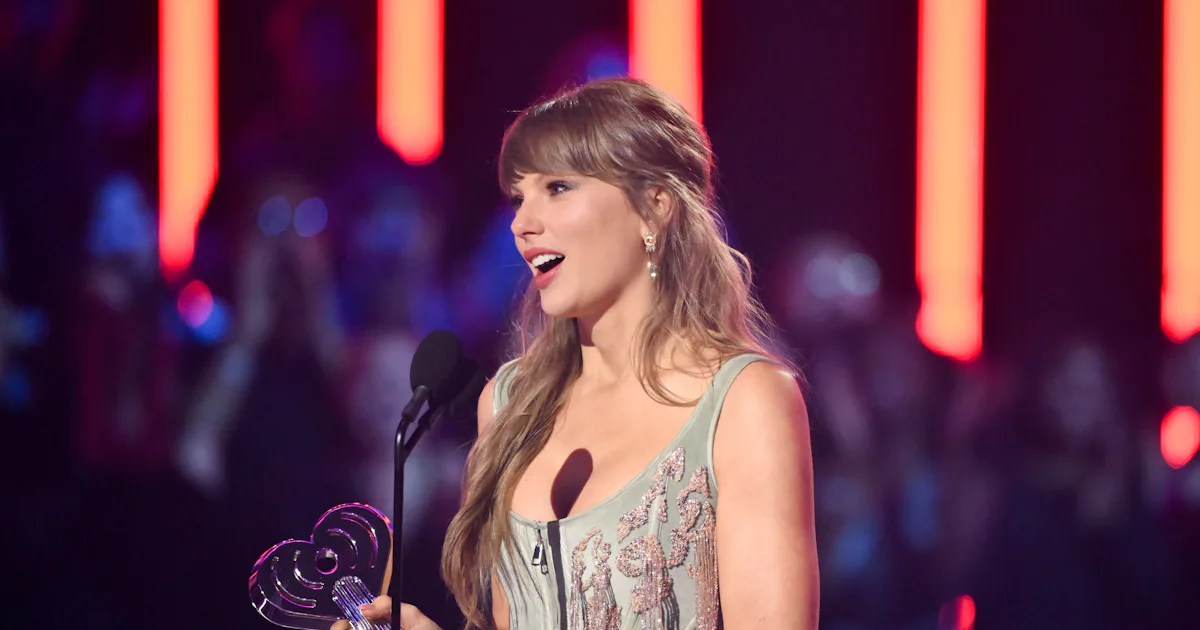
1 month agoDave Mason, co-founder of Traffic who had a star-studded solo career, dies aged 79
Dave Mason lived a remarkable life devoted to the music and the people he loved. He was a frontman who wrote and performed some of Traffic's biggest hits, but who hopped in and out of the lineup.
London music
fromwww.nytimes.com
1 month agoVideo: Kacey Musgraves Returns, Cheeky as Ever
Kacey Musgraves is back with her latest single, Dry Spell, which is full of horny double entendres and signals a return to her earlier, humorous style. The song features a parched guitar sound that evokes a sense of desperation, calling out for attention. It is co-written by a hall of fame lineup of songwriters, showcasing a lyrical wit that fans have missed in her recent work.
Music

Music
fromwww.theguardian.com
2 months agoBruce Springsteen, Kate Moss and Johnny Depp to appear on all-star Shane MacGowan tribute album
Bruce Springsteen celebrates Shane MacGowan's songwriting as timeless and historically significant, placing him among music's greatest artists, while an all-star covers album featuring Springsteen, Kate Moss, and Johnny Depp is announced.
Writing
fromConsequence
2 months agoJack White Clarifies Taylor Swift Comments: "I Don't Find it Interesting for ME to Write About MYSELF"
Jack White clarified that his comments about lyric writing were personal preferences, not criticism of Taylor Swift, emphasizing he finds autobiographical songwriting uninteresting for his own work.
Music
fromBrooklynVegan
3 months agoBV Interviews: Big Thief's Buck Meek talks finding joy & breaking rules on his great new album 'The Mirror'
Buck Meek intentionally broke creative rules, leaning into fears to write candid songs on The Mirror, producing cathartic, hopeful rock infused with ambient textures.


fromwww.npr.org
3 months agoHow the West was won: K-pop's great assimilation gambit
She watched her peers get called up for groups like SHINee and f(x), but her own debut never came. When Kim, now known professionally as Ejae, was finally dropped by the agency in 2015, the explanation she got was simple: This was a business. As she recently told the Philippine media network ABS-CBN, "SM has a very specific vision and sonic sound and I just didn't really fit that."
US news
fromMetro Silicon Valley | Silicon Valley's Leading Weekly
4 months agoPokey LaFarge in Menlo Park | Metro Silicon Valley | Silicon Valley's Leading Weekly
Originally from Illinois and now based in Maine, where he has lived for the past four years, Pokey LaFarge brings a lived-in perspective to American roots music. Drawing from early jazz, blues, swing and folk traditions, his songwriting balances warmth, rhythm and emotional clarity without slipping into nostalgia for its own sake. Over the years, LaFarge has grown into a confident bandleader, known for performances that feel loose but intentional, with space for both musicianship and connection.
Music
fromBrooklynVegan
4 months agoBV Interview: The Cribs talk 'Selling a Vibe,' surviving, brotherly love & more
"I feel like we were a different band than we were pre-pandemic," says Ryan Jarman, who along with his brothers Gary and Ross lead long-running UK band The Cribs, who just released their ninth album, Selling a Vibe. "It's been like six years since we recorded a record. We weren't sure what we were going to do. We weren't entirely sure how the band was going to move forward.
Music
[ Load more ]