#state-budget
#state-budget
[ follow ]
#new-york #kathy-hochul #tax-policy #new-york-politics #gavin-newsom #bay-area-transit #california #mental-health
#new-york


NYC parents
fromwww.amny.com
11 months agoInflation refund checks will come to millions of New Yorkers this fall
New Yorkers will receive up to $400 rebate checks to address inflation concerns.
NYC politics
fromwww.nytimes.com
11 months agoWhen Taxpayers Fund Shows Like Blue Bloods' and S.N.L.,' Does It Pay Off?
New Yorkers contribute significantly to film and TV production incentives, raising questions about the returns on these investments.
Gov. Hochul plans to double film subsidies, igniting debate on economic efficacy of such tax credits.
NYC politics
fromNew York Post
11 months agoExclusive | Senate GOPers push back on $10M taxpayer-funded Tish James 'slush fund' that could pay her legal bills
Senate Republicans oppose a $10 million fund in the New York budget that may cover Attorney General Tish James' legal fees.
Concerns revolve around the misappropriation of taxpayer dollars for private legal matters.
NYC politics
fromwww.nytimes.com
11 months agoWhen Taxpayers Fund Shows Like Blue Bloods' and S.N.L.,' Does It Pay Off?
New Yorkers contribute significantly to film and TV production incentives, raising questions about the returns on these investments.
Gov. Hochul plans to double film subsidies, igniting debate on economic efficacy of such tax credits.
fromCity Limits
1 month agoWhat NY State's Budget Proposals Include to Fight Hunger-And What's Left Out
"While all three proposals include important investments in food access and safety-net programs, there remains a meaningful gap between the scale of need and the resources currently proposed-particularly as federal SNAP support declines and eligibility restrictions tighten," acknowledged Assemblywoman Maritza Davila, Chair of the Social Services Committee, via email.
SF politics
fromChalkbeat
1 month agoTop architect of NYC class size law open to giving Mamdani more time to comply
Mayor Mamdani has been very clear he wants to reduce class sizes in accordance with the mandate. But both he and the chancellor have suggested that more time and more money may be needed. It would not be unreasonable for the city to commit to a 70%, 80%, 90%, and then 100% timetable.
Miscellaneous
fromFingerlakes1.com
1 month agoState lawmakers pushes for more CHIPS road funding | Fingerlakes1.com
In the governor's proposed budget, $648 million is allocated for CHIPS to be divided among every town and the 62 counties in the state, while $4.5 billion is proposed for downstate transit and the New York City subway system.
Fundraising


#transit-funding


Mission District
fromwww.mercurynews.com
1 month agoCould the $590 million transit bailout impact San Jose's BART extension? One state legislator thinks so
A $590 million Bay Area transit bailout risks delaying San Jose's BART extension by tapping into capital project funding, though supporters argue repayment mechanisms protect future allocations.

fromOregon ArtsWatch * Arts & Culture News
2 months agoArts and culture supporters urged to lobby for funding at 2026 Oregon Legislature * Oregon ArtsWatch
The day after Whitelaw testified, the state economist said that Oregon now has about $300 million more to spend than previously expected. The new revenue forecast does not mean the budget is in the black, however. There are new demands for the available dollars, including $600 million in upgrades to the Moda Center to retain the Portland Trail Blazers, a recently announced $50 million shortfall in Portland Public School funding,
Arts
fromSan Jose Spotlight
2 months agoUrbanowski: The arts need more investment from the state - San Jose Spotlight
Artists make California vibrant, innovative and culturally rich, yet our state ranks 35th nationally in per capita arts funding. When the state budget allocates just 53 cents per person to the arts, it's clear how little we're investing in the creative workers who shape the state's identity and economy. California's artists are delivering extraordinary value with minimal investment. Imagine what a stronger commitment to the arts could do for our communities, our economy and our future.
Arts
fromwww.amny.com
3 months agoHochul presents $260B executive budget without taxes on the rich as Mamdani insists the city needs one to fix its finances amNewYork
The governor's budget proposal, the first step in hammering out a new spending deal with the state Legislature by April 1, includes plans to provide free childcare to children aged two and over in New York City and children aged four and up throughout the rest of New York State, pledging $4.5 billion to expand free childcare statewide. That investment represents a $1.7 billion increase compared to the 2025 state budget.
New York Islanders
fromNieman Lab
3 months agoCalifornia Gov. Gavin Newsom plans no new local journalism funding despite $175 million funding deal with Google
California Gov. Gavin Newsom's budget proposal includes no money for a fund formed last year to boost the state's local newsrooms, casting doubt on whether a heralded effort to help California journalists will amount to anything and how serious Newsom is about supporting the struggling industry. It's a significant walkback from an August 2024 deal between state leaders and Google in which they agreed to jointly spend $175 million over five years to fund local journalism.
California
California
fromLos Angeles Times
3 months agoIn San Francisco, Newsom rails again proposed billionaire tax, vows to protect homeless Californians
California seeks to protect wealthy business leaders and unhoused residents while opposing a proposed 5% one-time wealth tax on billionaires to raise $100 billion.
California
fromLos Angeles Times
3 months agoNewsom's budget includes $200M to make up for Trump's canceled EV rebates, among other climate items
California will allocate $200 million in point-of-sale rebates to replace federal EV tax credits and restore incentives lost after federal cuts to EV benefits.
fromwww.housingwire.com
3 months agoTennessee proposes full property tax reimbursement for seniors
According to the proposal, the cost of the program would equal approximately 3% of Tennessee's annual state budget. It could be funded by the state's recurring surplus estimated at $1.5 billion to $2.5 billion per year. Mitchell asserted that Tennessee has the fiscal capacity to support the initiative without cutting existing services or raising taxes. The money is there. The question is priority, he said.
US politics
California
fromLos Angeles Times
3 months agoThis California political leader wants federal immigration reform. First, she has to survive Trump
California's Latino communities face increased fear and vulnerability due to intensified federal immigration raids, deportations, and potential policy cuts under the Trump administration.
fromWyoming Public Media
4 months agoBudget hearings day 3: tech upgrades, employee wages and more
When we first started as appropriators a little over a year ago or almost a year ago, we did the long term forecast and at that time, four years out, education funding and school foundation program looked to be about $686 million in the hole in the red. And we're looking at where we're at today with [public school funding] recalibration and increased expenditures, not increasing revenues, and now we're looking at a four year out forecast being $800 million in the hole,
US politics
California
fromKqed
6 months agoCalifornia Needs a New Approach to Wildfire Planning, Experts Say. Cost Is an Issue | KQED
California vetoed a bill to fast-track strategic wildfire planning because of projected unbudgeted costs, prompting regulators to pursue Zone 0 rules and alternate risk-modeling paths.
fromFortune
7 months agoAlaskans get money every year from the state's oil wealth fund. But the latest dividend check is the smallest since 2000 | Fortune
The truck that arrived ahead of schedule at Allyssa Canoy's home in Fairbanks brought enough heating fuel for the frigid winter months ahead - and a surprise bill for $2,600. Canoy and her two sons have checks arriving that will cover that expense and leave some money for the boys, too. Starting Thursday, Alaska plans to begin distributing to residents their annual dividend derived from the state's $83 billion oil wealth fund, a sort of bonus that Alaskans get for living in the state.
US news

fromMission Local
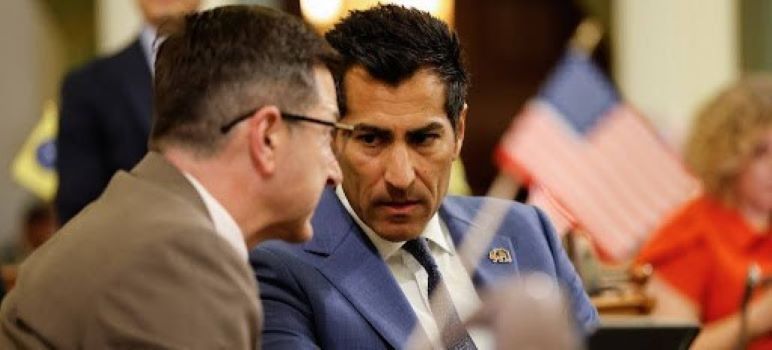
7 months agoGavin Newsom transformed himself into an internet meme. It's running for president.
There is a natural tendency to peer backward through rose-colored glasses. Yes, the world was burning and falling apart in 1968, too. But the news came with the Chronicle in the morning and the Examiner in the afternoon. In the evening, when Walter Cronkite told you " And that's the way it is," that's the way it was. That isn't the way it is anymore.
US politics


fromStreetsblog
7 months agoEmergency Rally: Advocates Demand Gov. Newsom 'Fund Transit Now' - Streetsblog San Francisco
With just days remaining until the end of the legislative session, the Governor's Department of Finance informed lawmakers it will not be finalizing a critical bridge loan to prevent serious service cuts to BART, Muni, AC Transit, and other Bay Area public transit operators next year. Not authorizing the loan now could lead to quick service cuts by major Bay Area transit systems. Senators Scott Wiener (D-San Francisco) and Jesse Arreguin (D-Oakland) have been working for months to try to finalize loan terms.
California
fromStreetsblog
7 months agoCall to Action: Tell Governor Newsom (Again) to Support Transit - Streetsblog San Francisco
Thanks to the hard work of advocates, a $750 million loan was put into the state budget so that Muni, BART, Caltrain, and AC Transit can continue to fund operations. The idea is to give these agencies a way to bridge their funding shortfalls until a regional measure can go before the voters next year. However, now that loan is in jeopardy.
California


[ Load more ]