#state-hunting-laws
#state-hunting-laws
[ follow ]
fromPortland Mercury
4 days agoEthics Commission Dismisses Complaints Over Peacocks' Legal Representation - Portland Mercury
In this case, there was no information found in the preliminary review to suggest that... Councilors used or attempted to use their official position to obtain a private financial gain or avoid a financial detriment that was only available to them but for their official position.
Portland

fromRealagriculture
4 days agoConsultation opens on draft Beef Cattle Code of Practice
The public comment period is an important opportunity for producers across Canada to review the draft Code and provide feedback on how it applies to their operations. Producer perspectives from across the country help ensure the Code reflects the diversity of Canadian beef production systems and remains practical for producers who raise cattle.
Online Community Development


#endangered-species-act

SF politics
fromFortune
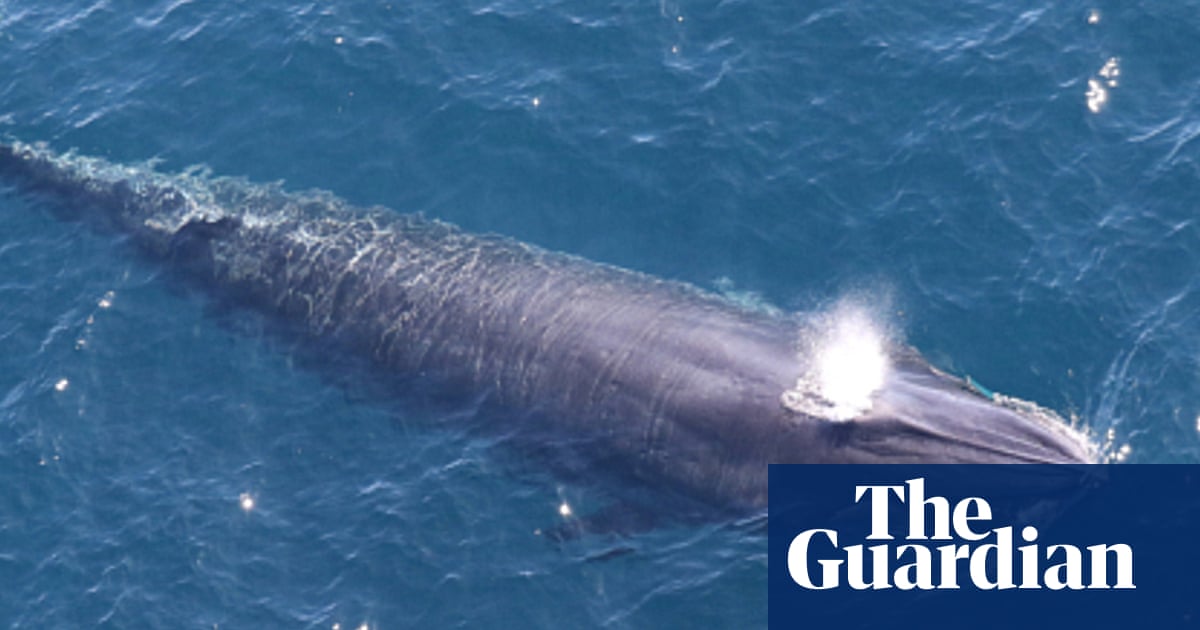
2 weeks agoWashington's 'God Squad' assembles to debate the fate of a rare endangered whale and drilling in the Gulf of Mexico | Fortune
A U.S. panel is considering exempting Gulf oil drilling from the Endangered Species Act, raising concerns for marine life and a rare whale species.
Environment
fromABC7 San Francisco
1 month agoTrump proposals will weaken and limit protection by Endangered Species Act, environmentalists say
Trump administration proposals would restrict the Endangered Species Act by narrowing harm definitions to exclude habitat protection, potentially reducing wildlife protection effectiveness by 99%.
fromwww.theguardian.com
3 weeks agoShooting restricted for six British wild birds to halt population decline
The new rules would restrict the shooting of species including the distinctive woodcock, and the striking pintail, goldeneye and pochard ducks, all of which are classed as under threat and have seen their populations fall sharply in recent years.
UK news
fromBoston.com
1 month agoHealey pushes to get rid of Sunday hunting ban
"One of the funky things about Massachusetts is we have these 'blue laws' that go back to the Puritan times. Now, we've been able to overcome some of them through history. We stopped burning women at the stake and we allowed people to drink alcohol. But, we still have a Sunday ban on hunting. It doesn't make any sense," the governor said Thursday during a press conference.
Boston
fromwww.amny.com
1 month agoNYS bill sparks birds or burglars' debate: Mandate to shut outdoor lights to help wildlife raises safety concerns
Light pollution, or the excessive or poor use of artificial light at night, is one of the most pervasive forms of environmental alteration caused by humans. Light pollution has many negative impacts, including the disruption of the natural patterns of wildlife, wasted energy and increased output of carbon dioxide and greenhouse gases.
New York City
fromwww.cbc.ca
1 month agoOntario to consolidate 36 conservation authorities into 9 | CBC News
Ontario will consolidate its 36 conservation authorities into nine across the province. Environment Minister Todd McCarthy says there will be no job losses as a result. He says the province listened to feedback after several town halls and 14,000 comments on its plan, which initially proposed having seven conservation authorities.
Canada news
fromThe Nation
1 month agoNatural Man
The former US senator from Wisconsin, who served for almost two decades as one of the chamber's most ardent advocates for climate action, publicly rebuked Trump's January 7 withdrawal of the United States from the United Nations Framework Convention on Climate Change (UNFCCC): 'Nothing in the Constitution grants the president any such power.'
Environment
fromHigh Country News
1 month agoCoyotes and cougars and rats, oh my! - High Country News
An unnamed tourist saw it and told Aidan Moore, who works for Alcatraz City Cruises. Moore told SFGATE that he was initially skeptical, but the guest's iPhone footage left little room for doubt. The video shows, not a sea lion or an otter, but an actual Canis latrans, doggedly dogpaddling, then clambering out of the water, noticeably shaky and struggling to settle tired paws on the craggy rocks.
California
fromThe Local France
2 months agoFrance loosens rules on allowing farmers to shoot wolves
Once hunted to extinction in France, wolves began crossing over from Italy after gaining protected status under the 1979 Bern Convention. But they have been killing more livestock, too, with 12,000 farm animals lost last year, according to preliminary figures. Under current rules, farmers can only shoot wolves if they attack animals inside a protected enclosure -- a restriction centrist President Emmanuel Macron's government said would now be relaxed.
France news
Public health
fromWashingtonian - The website that Washington lives by.
2 months agoA Canadian Province is Winning the War on Rats. What Can DC Learn? - Washingtonian
Sustained, centralized, and enforced rat control programs like Alberta's, not political rhetoric, produce near-eradication and offer practical models for Washington, D.C.'s persistent rat problem.
fromThe Mercury News
1 month agoLetters: Climate rule revocation coincides with woeful parks nominee
The only interest he has in our parks is the money he can make from them. Case in point is how Socha, as an executive for the hospitality company Delaware North, sued the NPS for $51 million for the naming rights to Yosemite National Park, Ahwahnee, Wawona, etc., claiming they were the company's intellectual property. Twenty-two years as concessionaire entitles them to own and profit from the names? How absurd and disrespectful.
US politics
fromwww.scientificamerican.com
1 month agoThe surprising science behind why daylight saving time is good for wildlife
Animals' risk of becoming roadkill depends on several factors, including how many vehicles are on the road, how many animals are on the road, and how animals and human drivers behave, explains Tom Langen, a professor of biology at Clarkson University, who studies animal-vehicle collisions. DST can minimize these collisions, however.
Pets
Chicago Bears
fromCalifornia Post
1 month agoDeadly apex predator being mulled for release in California after 100-year absence
California lawmakers are considering reintroducing grizzly bears through Senate Bill 1305, which would require a scientific assessment and consultation with Native American tribes about restoring the species extinct in the state for over a century.
Chicago Bears
fromHigh Country News
1 month agoCan Alaska save caribou by killing bears? - High Country News
Alaska's Mulchatna caribou herd has collapsed from 200,000 animals in the 1990s to 12,000 in 2022, devastating Indigenous subsistence hunting and prompting controversial wildlife management interventions including hunting bans and aerial predator culling.
fromHigh Country News
1 month agoIt's time to rethink how we care for our public lands and waters - High Country News
Wildlife populations are in decline. Recreation sites are crowded and often underfunded. Wildfires are larger, more destructive and harder to control. Climate change is reshaping natural systems, from ocean fisheries to mountain snowpacks, faster than institutions can respond. At the same time, communities are being asked to host new energy projects, transmission lines and mineral development - often without clear processes, adequate resources or trust that decisions are being made in the public interest.
Environment
fromThe Atlantic
2 months agoHow Many Wolves Is Enough?
The wolves arrived in May of last year, just days after Paul Roen had driven his cattle back up to their summer pasture in Northern California's Sierra Valley. He started finding the bleeding bodies of calves-some still alive, so badly paralyzed that they'd need to be shot. After weeks of this, Roen finally saw a kill himself. "One wolf grabbed a cow and spun her around, while another grabbed a calf," he told me. "He tore it into three pieces in 30 seconds."
Environment
fromHigh Country News
2 months agoThe nation's trails are disappearing - High Country News
Many of them were built for purposes that no longer exist - cattle drives, mining prospecting, early U.S. Forest Service fire patrols - while others were packed by the footprints of the Chumash people well before the colonization of North America. Sections of trail cling to steep slopes that seem to barely resist gravity, shedding soil and stone with each winter storm.
Environment
fromwww.dw.com
2 months agoThe business of saving nature
The world spends 30 times more money destroying nature than protecting it. That's according to a new report from the United Nations Environment Programme (UNEP) that exposes a massive gulf between so-called "harmful investments" and financing that promotes nature preservation. The global environment agency's latest "State of Finance for Nature" (SNF) report is calling to phase out the US$7.3 trillion (6.2 trillion) in global investments that damage nature including into high-emissions energy infrastructure and manufacturing, for example.
Environment
[ Load more ]