#unaids-and-unitaid
#unaids-and-unitaid
[ follow ]
#public-health #hiv #global-health #hivaids #pepfar #who-withdrawal #reproductive-rights #humanitarian-crisis


fromwww.theguardian.com
3 days agoCan you stop malaria crossing borders? One nation's bid to wipe out the disease
The freezer is filled with blue-lidded tubes of cows' blood, ready to be defrosted and used to feed the colony of mosquitoes. Nombuso Princess Bhembe tends the mosquitoes at Eswatini's national insectary, part of the southern African country's push to eliminate malaria.
Coronavirus


fromBusiness Matters
6 days agoEU must take bold tobacco control stand amid industry's latest influence campaign
The EESC warns against 'excessive increases' on the grounds that they could fuel illicit trade, thereby recycling one of the tobacco industry's oldest false narratives arguments against stronger regulation.
Europe politics
fromenglish.elpais.com
1 week agoCuba's medical missions accused of modern slavery'
The IACHR expresses its concern regarding the working conditions faced by some Cuban workers participating in medical missions, highlighting complaints of unfair compensation and excessively long working hours.
Healthcare




NYC LGBT
fromSan Francisco Bay Times
3 weeks agoProtest Held in Washington, D.C., by the Save HIV Funding Campaign - San Francisco Bay Times
Long-term HIV survivors and advocates protested funding instability in HIV prevention and care, highlighting risks to vulnerable communities and public health infrastructure.
fromenglish.elpais.com
2 weeks agoFollowing the initial trials in Africa of the groundbreaking drug that could put an end to AIDS
On that sunny March morning, in a small health center in Lobamba, a rural area of Eswatini, this 32-year-old sex worker has just become one of the first people in the world to receive lenacapavir, a drug that, administered twice a year, offers nearly 100% protection against HIV.
Medicine
fromwww.npr.org
4 weeks agoInside a rare lab that's blazing a bold trail as it hunts for new drugs
Kelly Chibale describes the drug discovery process as a fairy-tale quest, stating, 'It doesn't mean that there aren't surprises or miracles. They do happen, but you have to kiss many frogs before you meet the prince.' This metaphor illustrates the challenges and unpredictability in finding effective medicines.
US news
fromwww.aljazeera.com
2 weeks agoMinerals for aid: Are new US health deals exploiting' African countries?
In late 2025, the United States shocked the world by suspending global health aid, leading experts to predict 700,000 additional deaths annually, primarily among children. This prompted the US to propose unusual bilateral health agreements with developing countries, which have drawn criticism for being exploitative.
Public health


fromTruthout
1 month agoStates Tighten HIV Drug Assistance, Raising Access Concerns
Congress has kept key drug assistance funding at $900.3 million annually since 2014. New enrollments for state programs jumped 30% from 2022 to 2024, in part because states cut off pandemic-era Medicaid assistance. As of January, at least 18 states have pulled back their Ryan White AIDS Drug Assistance Programs, known as ADAPs, in some way.
NYC LGBT
US politics
fromwww.theguardian.com
1 month agoRising anger over lop-sided' and immoral' US health funding pacts with African countries
African countries are rejecting US bilateral health agreements as exploitative, with demands for biological resources, data sharing, and mineral access violating national sovereignty.
Non-profit organizations
fromJezebel
1 month agoJohn Oliver unpacks how cuts to USAID put everyone at risk
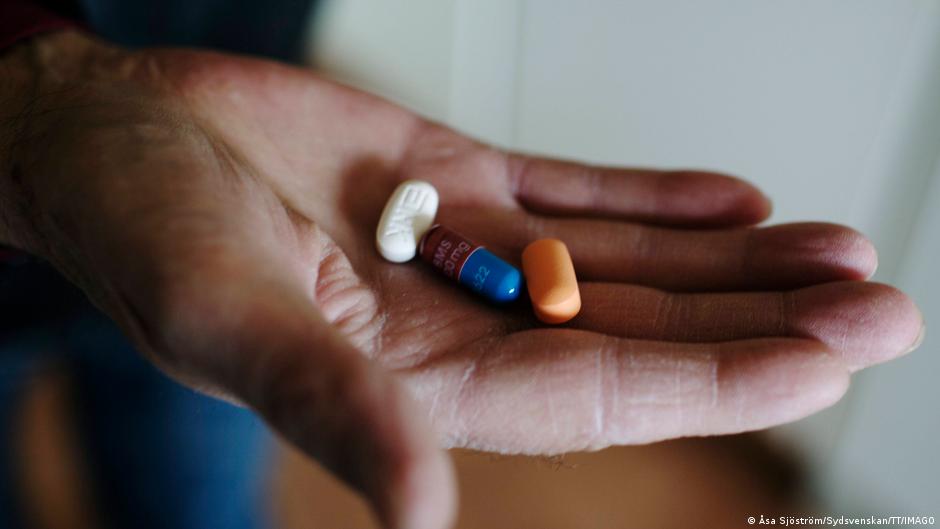
USAID cuts by the Trump administration and DOGE have caused immediate deaths globally, including HIV medication access loss, while destroying decades of expertise and institutional capacity needed for future aid delivery.
#public-health-policy
Public health
fromNebraska Examiner
1 month ago3 states and New York City join global disease response network * Nebraska Examiner
State and local public health departments in California, Illinois, New York, and New York City independently joined WHO's Global Outbreak Alert and Response Network after the U.S. federal government withdrew from the WHO.
Public health
fromNebraska Examiner
1 month ago3 states and New York City join global disease response network * Nebraska Examiner
State and local public health departments in California, Illinois, New York, and New York City independently joined WHO's Global Outbreak Alert and Response Network after the U.S. federal government withdrew from the WHO.
US politics
fromwww.theguardian.com
1 month agoUS accused of shameless exploitation' over proposed Zambian health aid deal
The US health financing agreement with Zambia contains exploitative terms including 10-year data access and mineral industry concessions, worse than deals with 16 other African countries.
fromNature
2 months agoHow to rescue the aid industry: focus on conflict prevention, not just relief
In 2025, the administration of US President Donald Trump ordered the US Agency for International Development to be closed; this year, it withdrew the country from 66 international organizations. Other Western nations that are plagued with high levels of debt and pressure to prioritize domestic challenges have slashed their foreign aid, too. According to projections, official development assistance dropped by 9-17% in 2025, amounting to some US$55 billion.
World news
fromwww.independent.co.uk
2 months agoNearly 23 million extra deaths worldwide by 2030 as aid cuts bite, study says
From reproductive rights to climate change to Big Tech, The Independent is on the ground when the story is developing. Whether it's investigating the financials of Elon Musk's pro-Trump PAC or producing our latest documentary, 'The A Word', which shines a light on the American women fighting for reproductive rights, we know how important it is to parse out the facts from the messaging. At such a critical moment in US history, we need reporters on the ground.
US politics
Public health
fromAdvocate.com
1 month agoBudget cuts and ignorance of history are racing us towards another HIV & AIDS epidemic
The Trump administration is cutting HIV/AIDS funding across CDC, research, state grants, and global programs, threatening decades of progress against a disease that devastated communities in the 1980s.
fromwww.independent.co.uk
2 months agoEnding the AIDS crisis is within reach but the UK has to not cut key funding
From reproductive rights to climate change to Big Tech, The Independent is on the ground when the story is developing. Whether it's investigating the financials of Elon Musk's pro-Trump PAC or producing our latest documentary, 'The A Word', which shines a light on the American women fighting for reproductive rights, we know how important it is to parse out the facts from the messaging.
Public health
fromwww.independent.co.uk
2 months agoGovernment protecting HIV funding could be important success story' for UK
Your donation allows us to keep sending journalists to speak to both sides of the story. The Independent is trusted by Americans across the entire political spectrum. And unlike many other quality news outlets, we choose not to lock Americans out of our reporting and analysis with paywalls. We believe quality journalism should be available to everyone, paid for by those who can afford it.Your support makes all the difference.
Public health
fromNature
2 months agoAfrican countries must take control of health policy
There is little doubt that this is what African countries need if they are serious about universal health coverage - ensuring that every member of their populations has access to this fundamental human right. But such an approach has never been implemented in Africa. Some of the reasons for this are outlined in a report on health financing by the Africa Centres for Disease Control and Prevention (Africa CDC), the continent's public-health agency based in Addis Ababa, published last week (see go.nature.com/3o9wxfc).
Public health
fromwww.theguardian.com
2 months agoAid cuts could cause 22m avoidable deaths by 2030, study finds
Aid cuts could lead to more than 22 million avoidable deaths by 2030, including 5.4 million children under five, according to the most comprehensive modelling to date. In the past two decades there have been dramatic falls in the number of young children dying from infectious diseases, driven by aid directed to the developing world, researchers wrote in the Lancet Global Health. But that progress was at risk of reversal because of abrupt budget cuts by donor countries, including the US and the UK.
Public health


fromwww.theguardian.com
1 month agoInfluencers, misinformation and aid cuts: the fight to halt polio in Malawi
The effort in Malawi, one of the world's poorest countries and badly hit by the aid cuts, has seen an astonishing 1.3 million children already vaccinated against the disease in just four days after emergency supplies were airlifted in by the World Health Organization (WHO) just over a week ago. Malawi declared the outbreak after the virus was detected in two environmental samples taken from two sewage plants in Blantyre, the country's second-largest city and where the only known victim lives.
Public health
Public health
fromTruthout
1 month agoPublic Health Agencies Struggle to Keep Up With Rising Tuberculosis Cases
Tuberculosis cases and containment costs are rising nationwide, with Johnson County, Iowa experiencing a tripling of latent infections and costs surging from $17,000 to $65,000 annually, while state funding for contact tracing has been withdrawn.
[ Load more ]