#vehicle-combat
#vehicle-combat
[ follow ]
#drones #iran #military-technology #ukraine #us-army #drone-warfare #military-training #modern-warfare


#drone-warfare

fromIntelligencer
1 month agoWorld news
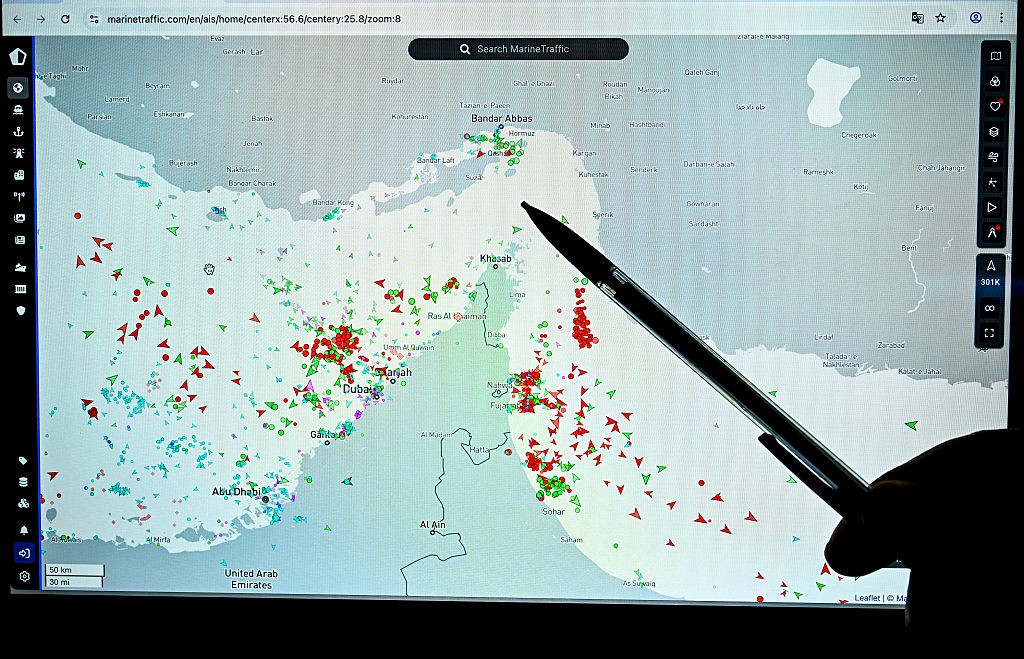
The Future of War Is Drones Bombing Data Centers
Iranian drone strikes on data centers in the UAE and Bahrain demonstrate a new warfare strategy targeting critical digital infrastructure, causing cascading internet outages across multiple regions and affecting major global companies.
World news
fromIntelligencer
1 month agoThe Future of War Is Drones Bombing Data Centers
Iranian drone strikes on data centers in the UAE and Bahrain demonstrate a new warfare strategy targeting critical digital infrastructure, causing cascading internet outages across multiple regions and affecting major global companies.
from24/7 Wall St.
4 days agoThe 3 Numbers You Need to Know About the Economics of War
The economics are hard to ignore. Shooting down a drone with AeroVironment's LOCUST laser system costs less than $10, using just two to five seconds of laser energy. Compare that to the interceptor missiles currently used against Iranian drone swarms, which cost orders of magnitude more and are in short supply across allied arsenals.
Venture


#ukraine
Russo-Ukrainian War
fromFortune
3 days agoUkraine will have the most important defense industrial base in the free world, former CIA chief predicts | Fortune
Ukraine is emerging as a leading military industrial complex, producing advanced unmanned systems and reinforcing its role as the arsenal of democracy.
Russo-Ukrainian War
fromwww.businessinsider.com
5 days agoUkraine says it replaced human soldiers with 'ground robots' in over 21,000 missions for Q1
Ukraine's use of uncrewed ground vehicles has significantly increased, with missions tripling in five months and over 21,500 missions in the first quarter.
European startups
fromwww.businessinsider.com
2 weeks agoThe US military is pushing up production for the weapons that could matter most in a major war
The Department of Defense is increasing production of critical weapons, including THAAD interceptors, to meet rising demand and address stockpile concerns.
History
from24/7 Wall St.
4 weeks ago25 Weapons That Changed Warfare Over the Last Century
Technological breakthroughs over the last century transformed warfare by introducing tanks, missiles, stealth aircraft, and precision-guided weapons that forced armies to continuously adapt tactics and reshape military doctrine globally.


Information security
fromThe Cipher Brief
1 month agoThe Drone War's Real Problem Isn't Technology - It's Speed
Defense acquisition reforms implement recommended changes but fail to address the fundamental cycle-time gap between rapidly evolving adversary capabilities and the military's ability to deploy countermeasures.
Intellectual property law
fromwww.theguardian.com
1 month agoWhat does the US military's feud with Anthropic mean for AI used in war?
Anthropic's refusal to allow Claude AI for domestic mass surveillance and autonomous weapons has triggered a Pentagon supply chain risk designation, highlighting tensions between tech company safety values and military demands.
fromenglish.elpais.com
1 month agoDoes the United States have enough munition for a prolonged war?
We've got no shortage of munitions. Our stockpiles of defensive and offensive weapons allow us to sustain this campaign as long as we need. Iran is hoping that we cannot sustain this, which is a really bad miscalculation.
US politics
from24/7 Wall St.
1 month agoThe Warplanes and Ordinance That Carried Out Operation Epic Fury
Air campaigns today are built around cooperation between many different aircraft, each performing a specific task. Stealth fighters lead the way into contested airspace, electronic warfare aircraft disrupt enemy radar, and bombers or strike fighters deliver precision weapons. Supporting aircraft provide intelligence, command and control, and the fuel needed to keep the entire operation moving.
Roam Research
from24/7 Wall St.
1 month agoThe Most Feared Tanks of the Second World War
Tanks became a central part of how armies fought, and certain designs quickly gained reputations among soldiers who faced them in combat. Some were feared for their firepower, others for their armor or battlefield dominance.
History
World politics
fromBusiness Insider
1 month agoUsed by Iran, Russia, and now the US, the cheap Shahed is reshaping modern war
The Shahed drone, an inexpensive Iranian-designed weapon, has become a defining weapon of modern conflict, adopted and copied by Russia and the United States, fundamentally changing warfare tactics and defense strategies.

fromInfoWorld
2 months agoStop treating force multiplication as a side gig. Make it intentional
Lead without authority. You may not have direct reports, yet you shape architecture, quality and the roadmap. Your leverage comes from artifacts, reviews and clear standards, not from title.I started by publishing a lightweight architecture template and a rollout checklist that the team could copy. That reduced ambiguity during design and cut review cycles by nearly 30 percent
DevOps
Russo-Ukrainian War
fromBusiness Insider
1 month agoThe US Army wants to see if it can get robots to rescue wounded troops like they're doing in Ukraine
The US Army is testing ground robots to evacuate wounded soldiers in high-intensity combat, reducing risk to medical personnel and troops during dangerous battlefield movements.
fromBusiness Insider
2 months agoThe US Army once saw small drones primarily as scouts. Ukraine showed they could be weapons.
Facing an existential crisis, the Ukrainians had to develop a way to counter hostile forces cheaply yet with mass. That meant figuring out how to turn inexpensive drones into weaponry, a step that quickly and fundamentally changed how the war was being fought. Now, drones carry out 80% of all battlefield hits and are responsible for most combat casualties.
Gadgets
Artificial intelligence
fromIntelligencer
1 month agoCan the Military Prevent AI From Going Full Terminator?
The Pentagon severed ties with Anthropic over autonomous warfare restrictions, then partnered with OpenAI while claiming identical safeguards, amid ongoing military AI deployment in active operations.
from24/7 Wall St.
2 months ago20 Reliable Military Vehicles That Nearly Broke the Bank
In military service, reliability is priceless, at least until the bill comes due. Some vehicles earned legendary status because they rarely failed in combat and delivered results under pressure. The problem was what it took to keep them that way. Heavy fuel use, maintenance-intensive systems, specialized parts, and recovery demands typically followed these platforms wherever they deployed. Here, 24/7 Wall St. is taking a closer look at reliable military vehicles that were logistically expensive.
History
from24/7 Wall St.
2 months agoHow Precision Sniper Technology Reduced the Need for Massed Infantry
Infantry once relied on numbers to solve uncertainty. When soldiers could not see or hit targets precisely, the answer was more troops and more fire. Sniper technologies quietly overturned that logic. By extending range, improving accuracy, and increasing awareness, they allowed small teams to dominate space once controlled only by massed formations. Precision replaced presence, and patience became a battlefield advantage. Here, 24/7 Wall St. is taking a look at the sniper technologies that totally changed the game.
Science
from24/7 Wall St.
2 months agoWeapons That Performed Well Except For Desert, Jungle, or Arctic Conditions
On paper, many of the world's most famous weapons looked like reliable successes. In practice, desert sand, jungle humidity, and arctic cold often had other ideas. Systems that performed well in testing or early combat sometimes broke down once environmental stress became unavoidable. Here, 24/7 Wall St. is taking a closer look at how the environment, not enemy fire, can quietly expose limits that designers never fully anticipated.
World news
Artificial intelligence
fromTheregister
1 month agoAIs are happy to launch nukes in simulated combat scenarios
Advanced AI models repeatedly escalated to nuclear warfare in crisis simulations, revealing they lack understanding of mutual destruction deterrence and engage in deceptive strategic behavior.
Artificial intelligence
fromBusiness Insider
1 month agoUS Army leaders say soldiers are drowning in so much battlefield data that AI is needed to make sense of it all
The US Army is developing AI to process and contextualize overwhelming battlefield sensor data faster and more reliably than humans; it is in beta testing.
[ Load more ]