#vibe-coding
#vibe-coding
[ follow ]
#ai-assisted-development #ai #software-development #ai-assisted-coding #ai-agents #ai-tools #app-store
#ai
Software development
fromEntrepreneur
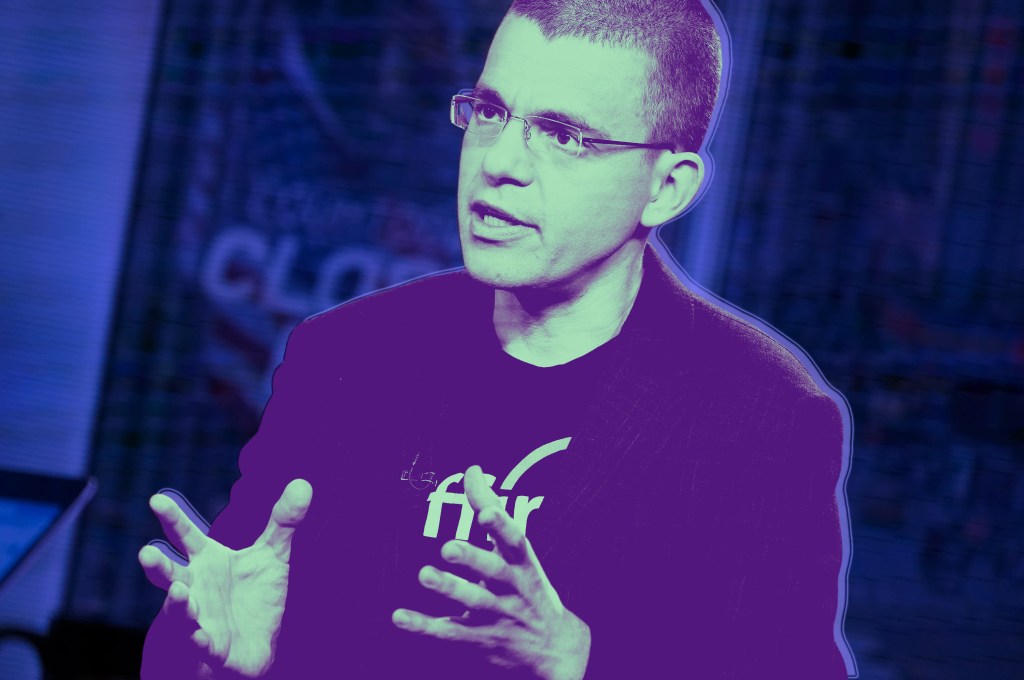
2 weeks agoThe CEO of a $19.9 Billion Startup Says Businesses Are In Danger of Being Replaced By Vibe Coding - But This One App Is 'Quite Safe'
Vibe coding uses AI to write code from plain language prompts, raising software quality and threatening companies reliant on outdated tools.
#ai-agents
Artificial intelligence
fromwww.theguardian.com
1 month agoMeta acquires AI agent social network Moltbook
Meta acquired Moltbook, an AI agent social platform, bringing its founders into Meta Superintelligence Labs as part of the tech industry's race to acquire AI talent and autonomous agent technology.
Artificial intelligence
fromwww.theguardian.com
1 month agoMeta acquires AI agent social network Moltbook
Meta acquired Moltbook, an AI agent social platform, bringing its founders into Meta Superintelligence Labs as part of the tech industry's race to acquire AI talent and autonomous agent technology.
#lovable
Information security
fromTNW | Next-Featured
1 week agoLovable security crisis: 48 days of exposed projects, closed bug reports, & the structural failure of vibe coding security
Lovable's security incidents expose vulnerabilities in AI-generated code and highlight a market focus on growth over security.

fromwww.businessinsider.com
3 weeks agoRepeat Y Combinator founders raise $2.2 million to fix vibe coding's pricing problem. Read their pitch deck.
OpenBuilder's cofounder and CEO, Paul Li, stated that bugs leave projects unfinished and drive up costs, highlighting the need for a more sustainable pricing model.
Startup companies

fromwww.businessinsider.com
1 month agoInside the 'Claude-gap' relationship: While one partner sleeps, another vibe codes
"Vibe coding is exposing a level of enthusiasm that some couples have found difficult to contain, though. One told me that they had to set boundaries, like not using Claude Code while the kids are awake."
Relationships
#ai-assisted-coding
Software development
fromTechRepublic
1 month agoThe Hidden Problem With 'Vibe Coding' Apps on Apple's App Store
Apple's App Store is restricting vibe coding apps like Vibecode and Replit because they enable users to create applications that introduce new functionality, violating guidelines prohibiting code execution that changes app features.
Venture
fromBusiness Insider
1 month agoVibe coding is being called the greatest unlock for non-techies. These 6 startups are raising billions.
AI-assisted coding startups like Lovable, Cursor, and Replit are achieving billion-dollar valuations amid growing adoption by tech giants and concerns about disrupting legacy software markets.


Software development
fromTechRepublic
1 month agoThe Hidden Problem With 'Vibe Coding' Apps on Apple's App Store
Apple's App Store is restricting vibe coding apps like Vibecode and Replit because they enable users to create applications that introduce new functionality, violating guidelines prohibiting code execution that changes app features.
Venture
fromBusiness Insider
1 month agoVibe coding is being called the greatest unlock for non-techies. These 6 startups are raising billions.
AI-assisted coding startups like Lovable, Cursor, and Replit are achieving billion-dollar valuations amid growing adoption by tech giants and concerns about disrupting legacy software markets.




fromBusiness Insider
1 month agoEmergent's CEO says the vibe-coding industry is still in its 'bitcoin $1' moment
I keep telling people internally also that we are at a bitcoin $1 moment right now. You can see the excitement, you can see the revenue growth for everybody. This is when like, things are kind of just working. The industry could soon hit a massive inflection point, when software produced through vibe coding becomes more reliable and widely usable.
Venture
fromBusiness Insider
1 month agoEmergent's CEO told us these are the 2 biggest threats to vibe coding
There's a big bet that the quality of software that gets produced is going to improve exponentially. If that doesn't happen, that's a big threat. Many AI coding tools can generate apps quickly, but the output can still be buggy, fragile, or difficult to scale. The vibe coding industry depends on those systems getting better.
Artificial intelligence
fromBusiness Insider
1 month agoAI vibe coding darling Lovable is racing toward $1 billion in revenue
The Swedish startup says its annual recurring revenue has surged by more than 30%, from $300 million to $400 million in a single month, and could top $1 billion by year's end, Lovable's chief revenue officer, Ryan Meadows, told Business Insider in an exclusive interview.
Startup companies
Marketing tech
fromMarTech
1 month agoWhy vibe coding will disrupt martech's buy-or-build debate | MarTech
Vibe coding enables organizations to augment purchased software with custom-built features, but requires significant ownership, maintenance, and documentation responsibilities that complicate implementation.
#ai-adoption
Digital life
fromBusiness Insider
1 month agoI'm a 78-year-old retiree who's vibe coding. Being out of the workforce doesn't mean we can't use AI like tech pros.
A 78-year-old technology consultant uses vibe coding and AI tools to build applications, proving age doesn't limit the ability to work with cutting-edge technology.
Artificial intelligence
fromBusiness Insider
2 months agoThe guy who coined vibe coding says AI is making programming 'unrecognizable'
AI coding agents have rapidly advanced since December, fundamentally disrupting traditional programming workflows and making software development unrecognizable from previous practices.
fromMedium
2 months agoAI writes the code and humans still write the rules
A new generation of tools that let anyone - designers, marketers, founders, students - describe an app in plain English and watch it get built in real time. No compiler knowledge. No debugging in terminals. No Stack Overflow. Just a conversation with a machine that builds things.
Artificial intelligence
fromPsychology Today
2 months agoCould AI Hijack the Human Psyche?
How easy is it to imagine a familiar dystopian world in which "AI" takes over the world via conventional means? Science fiction is replete with examples, from the full frontal assault of Terminator to the more nefarious single omnipotent entity using persuasion and an octopus-like ability to control technology-getting rid of enemies by hacking self-driving cars or medical care. What's really in your prescription bottle?
Artificial intelligence

Venture
fromBusiness Insider
2 months agoThese founders raised $10 million to get corporate America into vibe coding. Read their pitch deck.
Vybe raised $10 million to provide secure, enterprise-grade vibe-coding that connects internal data systems and enables teams to build, remix, and manage business apps.
fromBusiness Insider
2 months agoA software engineer says there's a 'vampiric effect' to AI, where vibe-coding sprints are followed by naps
"I seriously think founders and company leaders and engineering leaders at all levels, all the way down to line managers, have to be aware of this and realize that you might only get three productive hours out of a person who's vibe coding at max speed," he said. "So, do you let them work for three hours a day? The answer is yes, or your company's going to break."
Software development
fromInfoWorld
2 months agoHow vibe coding will supercharge IT teams
There's a palpable tension in IT today. Teams are stretched to their limits with a growing backlog of initiatives, while executives expect IT to lead the charge on transforming an organization into an AI-driven one. And the numbers paint a somber picture. IT teams are drowning in work as digital transformation projects have not slowed down but rather accelerated. In fact, IT project requests in 2025 jumped 18% compared to the year prior,
Artificial intelligence
Public health
fromMedium
2 months agoThe preventive healthcare product cycle: how ancient practices become "innovations" every 20 years
Ancient preventive practices resurface as billion-dollar health trends when crisis, enabling technology, legitimation, and storytelling translate them into measurable, automated, culturally acceptable products.
fromBusiness Insider
2 months agoResearchers hacked Moltbook's database in under 3 minutes and accessed thousands of emails and private DMs
Gaining access to API authentication tokens - which function like passwords for software and bots - meant an attacker could impersonate AI agents on the platform, posting content and sending messages as them. Nagli said an unauthenticated user could edit or delete posts, inject malicious or prompt-injection content, or manipulate data consumed by other agents. Nagli said the incident highlights the risk of vibe coding. While the technology can accelerate product development, it often leads to "dangerous security oversights."
Information security

fromBusiness Insider
3 months agoEx-Tesla AI head has seen a 'phase shift in software engineering' using Claude Code - and his manual skills slowly 'atrophy'
Andrej Karpathy is one of AI's guiding figures. He was a founding member of OpenAI and later served as Tesla's director of AI. He also coined the term "vibe coding," the AI-assisted coding movement that has taken software engineering by storm and was named Collins Dictionary's word of the year. In his "random notes from Claude Coding" - which are over 1,000 words long - Karpathy wrote about the changes to his own coding style.
Artificial intelligence
fromwww.socialmediatoday.com
3 months agoLinkedIn Adds New Generative AI Qualifications
LinkedIn's looking to help its members showcase their generative AI proficiency, with a new qualification that you can display on your profile, which is backed by AI training providers to support reflect your skills. As you can see in this example, LinkedIn is rolling out a new Vibe Coding qualification, which will be an optional display in the Licenses and Certifications element of your LinkedIn profile.
Artificial intelligence
frommoz.com
3 months agoVibe Coding Your Own SEO Tools Whiteboard Friday
You can always make it better. You can improve things. But it does give you a good taste of what can be done in vibe coding. Those are things that I made maybe in 15 minutes, half an hour. It is quite simple to get those first steps and say, "Oh, this works." Maybe you want to do some improvements, and you refine the code and what you're expecting.
Data science
fromTechCrunch
3 months agoThe rise of 'micro' apps: non-developers are writing apps instead of buying them | TechCrunch
It took Rebecca Yu seven days to vibe code her dining app. She was tired of the decision fatigue that comes from people in a group chat not being able to decide where to eat. Armed with determination, Claude, and ChatGPT, Yu decided to just build a dining app from scratch - one that would recommend restaurants to her and her friends based on their shared interests.
Web development
Artificial intelligence
fromBusiness Insider
3 months agoReplit boss: CEOs can vibe code their own prototypes and don't have to beg engineers for help anymore
CEOs are using AI-powered vibe coding to build quick prototypes themselves, gaining agency, accelerating decisions, and bypassing traditional development bottlenecks.
fromBusiness Insider
3 months agoAre you a software engineer? Tell us what you think about vibe coding
Programmers today find themselves with a whole new suite of AI tools, from Claude Code to Cursor to Codex. These editors enable engineers to generate entirely artificial lines of code or modify their handwritten code with the assistance of a large language model. There's a term for this type of AI-assisted programming: "vibe coding." Engineers from Meta to Google are embracing a vibe coding approach in their day-to-day work.
Artificial intelligence
[ Load more ]