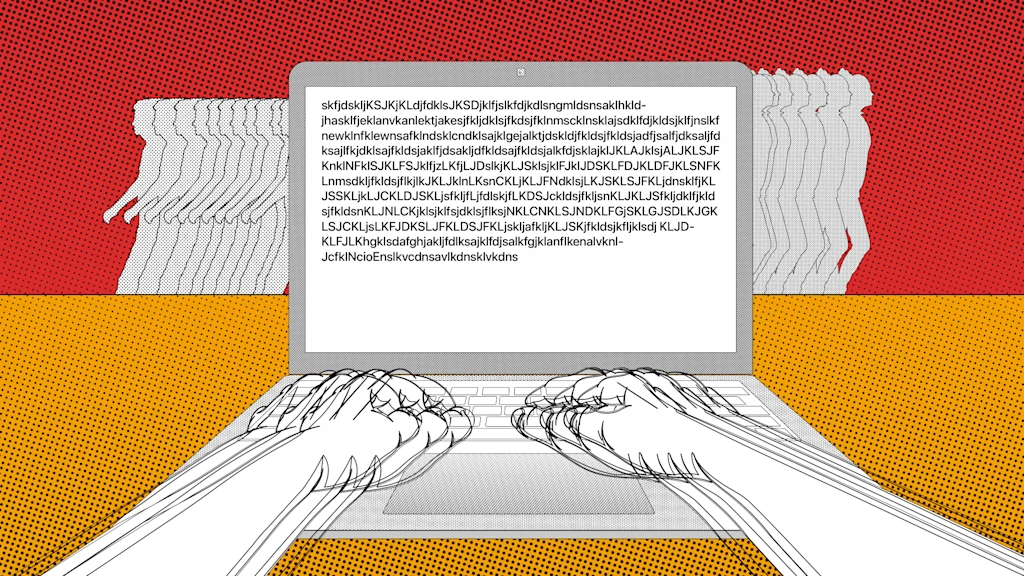
Severance's premise mirrors a real workplace trend where employees mentally disconnect from repetitive jobs and adopt task-masking to appear busy. Task-masking includes behaviors such as rushing with laptops, faking urgent calls, or purposeless typing while avoiding substantive work. More than a third of U.K. workers admit to faking productivity, and the behavior reduces meaningful progress, hinders promotions, and erodes leader confidence. Fear of constant responsiveness and strict time-tracking fuels task-masking; when employees feel pressured to answer instant messages immediately, rates of fake productivity rise sharply. Leaders should clarify values and measure outcomes instead of face time.
"In the real world, employees don't have a mental switch to flip, but they've found subtler, and potentially more insidious, ways to disengage. The latest trend, dubbed "task-masking," has taken over Instagram and TikTok. It's all about looking busy without actually being productive: charging around the office with a laptop, pretending to be on an urgent call, or typing furiously with no real purpose. According to recent research, more than a third of U.K. workers admit to faking productivity."
"Task-masking isn't born of laziness or lack of ambition—it's a fear-based response to productivity pressure and "always-on" work cultures. Research from Workhuman found that strict time-tracking exacerbates the problem: When workers strongly agree they are expected to respond immediately to Slack, Teams, or other instant messages, the rate of fake productivity shoots up to 51%. To free employees from the sense that their time card matters most, leaders should clarify what the company truly values."
Read at Fast Company
Unable to calculate read time
Collection
[
|
...
]