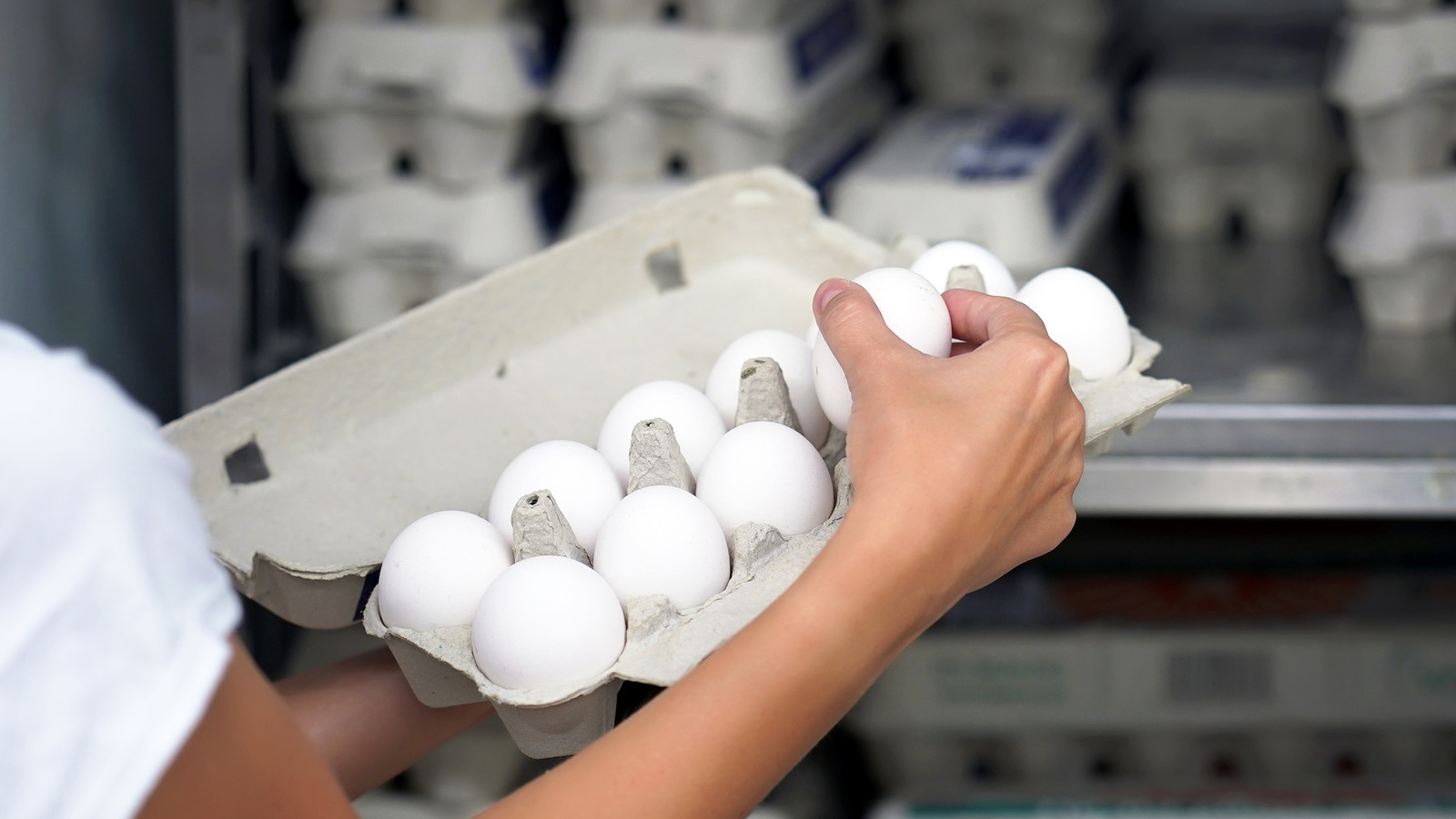
"In the United States, eggs are usually packed within a week of being laid, but they can legally be sold for 30 days after that packing date. This is called the Julian date, and it's shown by three numbers that represent consecutive days of the year - starting with 001 for January 1."
"Storing your eggs in the coldest part of your refrigerator will help slow bacterial growth and keep them fresher, longer. So while there's nothing wrong with an older egg - in fact, you should actually use older eggs when making hard-boiled eggs - freshness is certainly important when it comes to certain recipes or techniques."
"If it's super-duper fresh, it'll sink and lie flat. Very old eggs float because they've started to decompose and give off gases. Though that sounds unappealing, it's far better than cracking open an old egg and getting hit with that unmistakable rotten smell."
In the U.S., eggs are packed within a week of being laid and can be sold for 30 days after packing, indicated by the Julian date. The sell-by date can be up to four weeks from the packing date. Eggs may be two months old by the time they reach consumers, which is acceptable. Storing eggs in the coldest part of the refrigerator helps maintain freshness. Testing egg freshness can be done using the float test in water, where fresh eggs sink and older eggs float due to gas buildup.
Read at Tasting Table
Unable to calculate read time
Collection
[
|
...
]