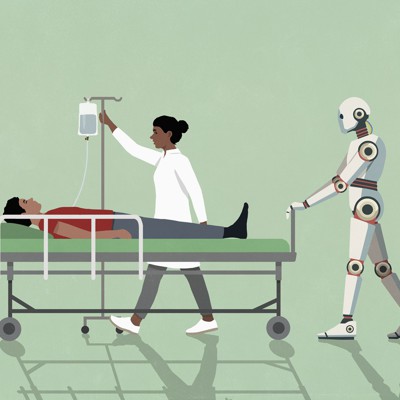
"So we have an administration priority - and all of you probably have the same - which is that we would love to have our staff working the top of their license, doing what they need to do, what they're trained to do, not schlepping things around. And what we realized when we started talking to people in VA is that a lot of workforce shortages were leading to people that shouldn't be doing these kind of simple tasks that we have."
"The conventional thinking about using robots is that they tackle 'the three Ds': jobs that are dull, dirty or dangerous. All of those areas are present in hospital settings, with robots also providing an opportunity to address other problems, like chronic understaffing."
"Of the 90 facilities that responded to the request, 65 of them reported local uses of the advanced tech. In total, these sites reported 121 deployed uses of robots. Of those, 37 uses were delivery robots, while 35 were used for pharmaceutical mixing and packaging and another 31 were used for facility cleaning."
The Department of Veterans Affairs has begun implementing robotic technologies across its medical facilities to automate routine tasks and address chronic understaffing challenges. A data collection effort revealed that 65 of 90 VA facilities reported using robots, with 121 total deployed applications. These robots primarily handle delivery of medical supplies and meals, pharmaceutical mixing and packaging, and facility cleaning. VA leadership emphasizes that robots address the "three Ds"—dull, dirty, and dangerous tasks—while freeing clinical staff to work at the top of their licenses. Although benefits have been mixed, frontline providers and VA personnel have expressed support for expanded adoption of these assistive technologies.
#healthcare-robotics #veterans-affairs #workforce-automation #hospital-operations #clinical-efficiency
Read at Nextgov.com
Unable to calculate read time
Collection
[
|
...
]