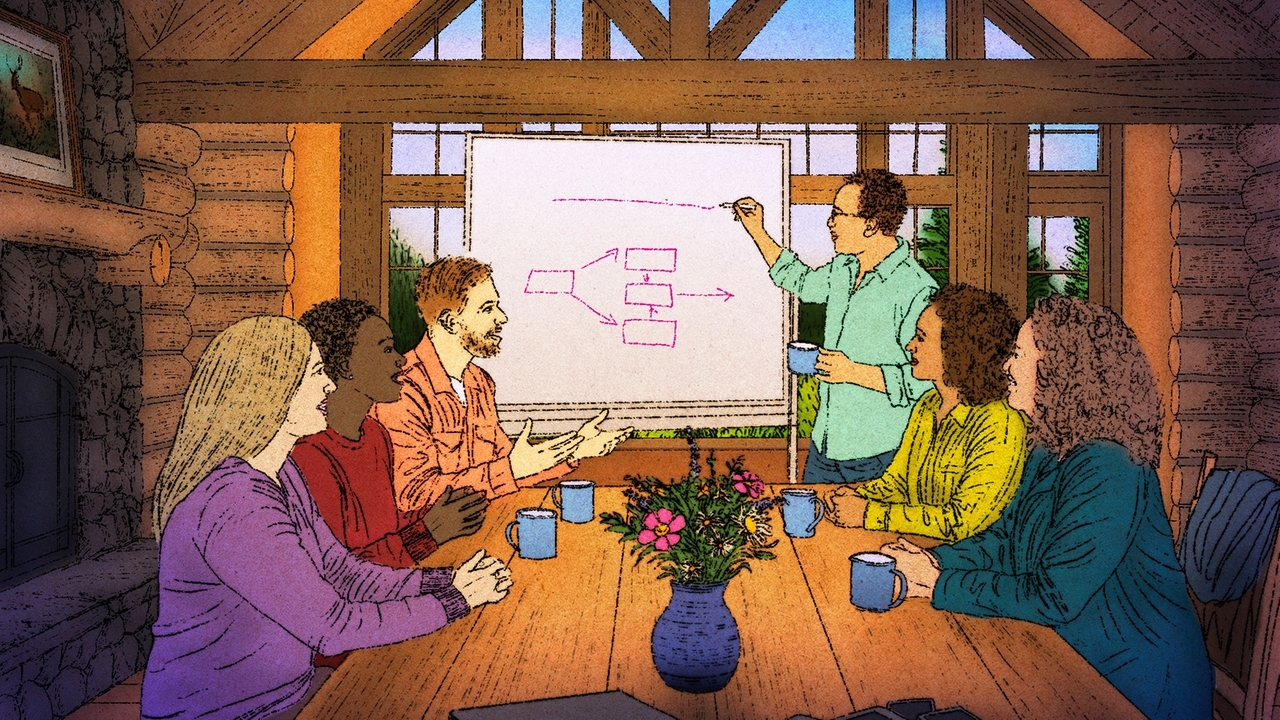
"We are explicitly not hybrid. We think this is the worst of all worlds, where employees suffer through long commutes only to sit on Zoom because most of our colleagues are distributed. We really believed in this creation of an even playing field. The rules of that are, largely, individual work is done remotely by everyone, but we still come together in person at least quarterly for strategy setting, connection, team building and bonding."
"The pandemic tested our assumption that we have to be in person in order to be productive. Allowing employees to work from anywhere helps Dropbox retain talent, said Rosenwasser, who leads the cloud storage provider's human resources teams. Over time, the company refined scheduling practices, meeting protocols and employee well-being programs to better meet the needs of its distributed workforce, she said."
"It's especially important to us to maintain this posture as so many other companies across many, many industries are mandating return to office. Rosenwasser reflected on the ways Dropbox thrives with remote workers and creates in-person events to build community."
Many companies ended remote work arrangements started during the coronavirus pandemic, but Dropbox will not return workers to offices. Dropbox adopted a virtual-first staffing model in 2020 and met financial goals while keeping remote work as the norm for most employees. The company maintains that productivity does not require being in person and that remote work helps retain talent. Dropbox refined scheduling practices, meeting protocols, and employee well-being programs to support a distributed workforce. Dropbox also avoids a hybrid approach, aiming for individual remote work with periodic in-person gatherings at least quarterly for strategy setting, connection, team building, and bonding. Flexibility and agency are treated as key currencies of modern work.
Read at Newsday
Unable to calculate read time
Collection
[
|
...
]