"A full decade after SpaceX pioneered reusable rocketry with the first-ever successful landing of its Falcon 9 booster, the rest of the world is finally catching up. The revolutionary value of rapid, reusable transportation to orbit is indisputable, evinced by SpaceX's overwhelming dominance of space launch services and its profitableand disruptivemegaconstellation of Starlink broadband satellites, which now constitute the vast majority of spacecraft in low-Earth orbit."
"But until very recently, replicating the company's success had proved elusive: Only one other company, the U.S. aerospace firm Blue Origin, has landed a first-stage boosterthat of its New Glenn rocket. And so far Blue Origin has only managed that feat once, in a flight on November 13. Soon, New Glenn should be providing much of the heavy lifting involved in launching satellites for a Starlink competitor, Amazon's Kuiper megaconstellation (recently rebranded as Amazon Leo)."
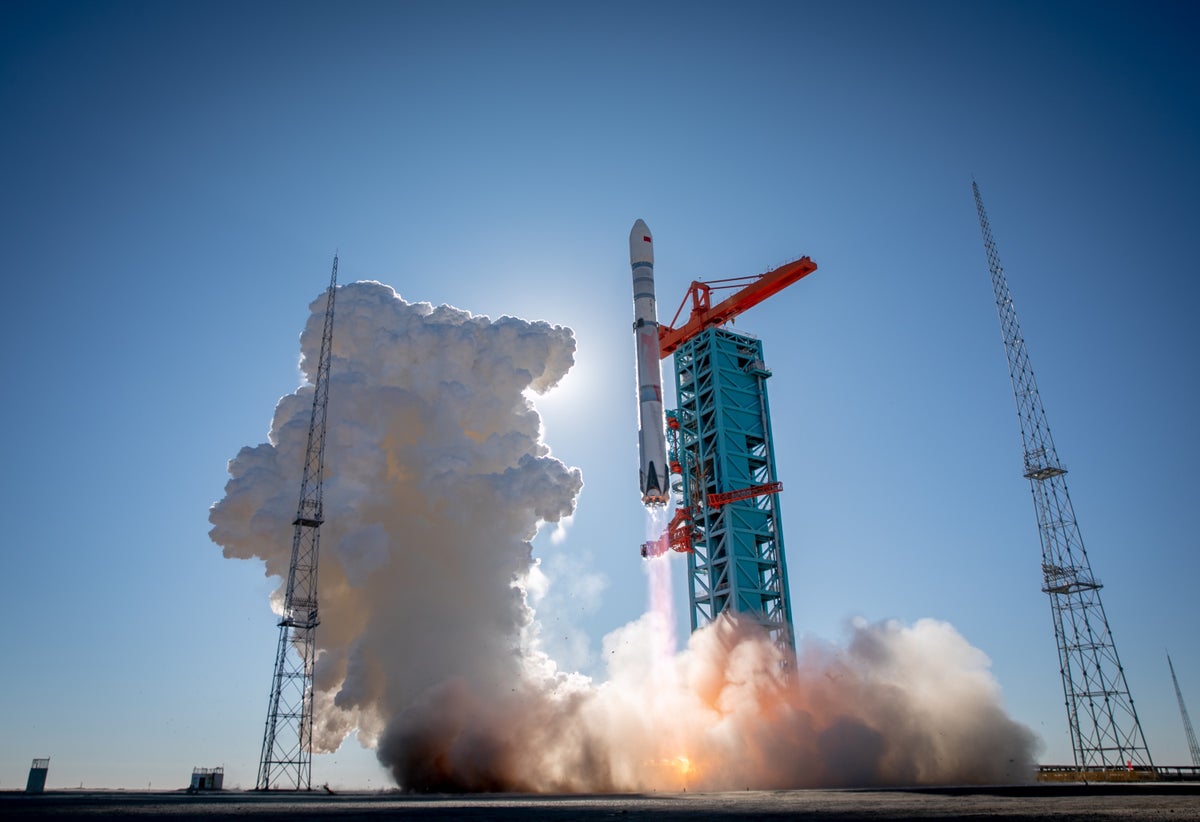
"On December 3 the first Zhuque-3 rocket from Chinese commercial company LandSpace launched from the Jiuquan Satellite Launch Center in the Gobi Desert in an inaugural flight meant to test the 66-meter vehicle's partial reusability. About eight minutes after liftoff, once the booster had propelled the rocket's second stage toward orbit and endured a scorching atmospheric reentry, it attempted a descent onto a landing pad, located some 390 kilometers away from Jiuquan."
A full decade after SpaceX pioneered reusable rocketry with the first successful Falcon 9 booster landing, other nations and companies are beginning to replicate the capability. SpaceX's rapid, reusable transportation model underpins its market dominance and the Starlink megaconstellation, which constitutes the majority of low-Earth-orbit spacecraft. Blue Origin has achieved a single New Glenn first-stage landing and aims to support Amazon's Kuiper (Amazon Leo) constellation. Chinese commercial firm LandSpace tested partial reusability with the Zhuque-3 launch, but the returning booster exploded and crashed after atmospheric reentry during a landing attempt. The effort shows both progress and continuing technical challenges.
Read at www.scientificamerican.com
Unable to calculate read time
Collection
[
|
...
]