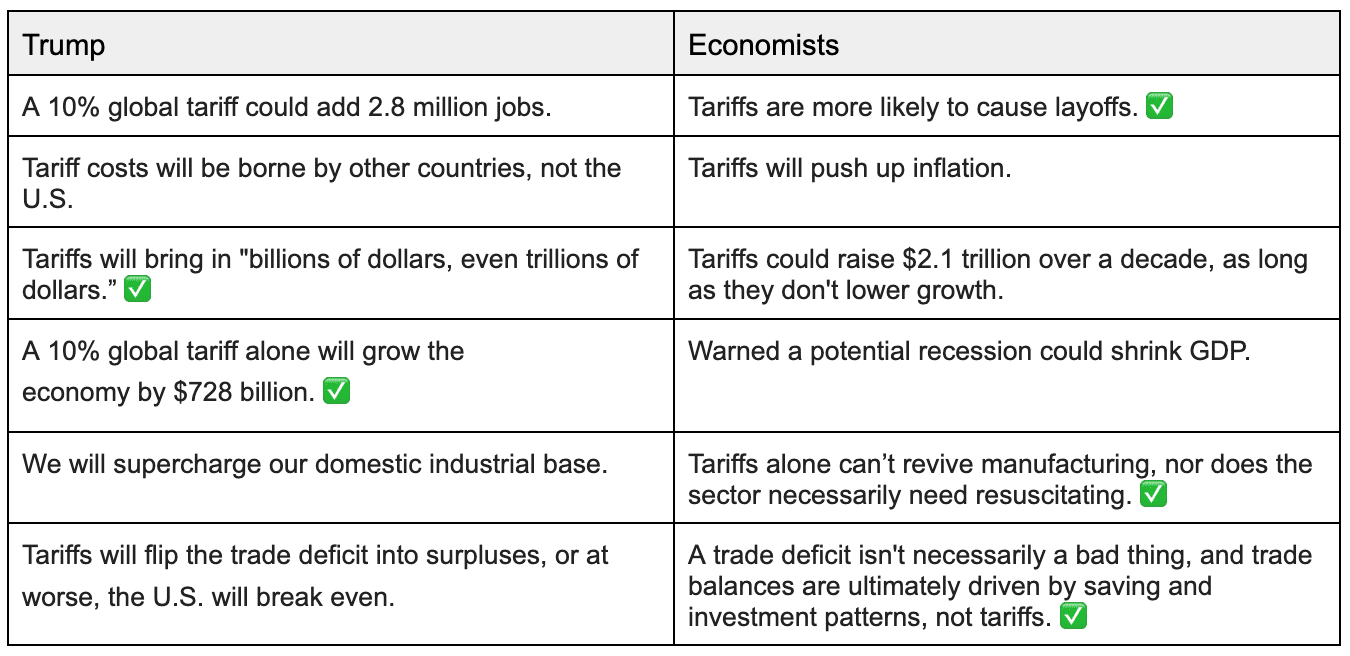
"Tariffs swiftly hit Americans' wallets as major retailers from Macy's to Best Buy raised prices in response to the duties. "The magnitude and speed at which these prices are coming to us is somewhat unprecedented in history," Walmart Chief Financial Officer John David Rainey told The Wall Street Journal in May. But the worst inflation fears haven't come to pass. Inflation has for months hovered around 3%-higher than the Federal Reserve's 2% target, though still lower than many economists' expectations."
"Another factor at play: Trump's repeated policy shifts on tariffs. Many companies have said they want to see where tariffs will ultimately settle before introducing more price changes."
Tariff measures caused rapid price increases at major retailers, producing immediate effects on consumer wallets. Corporate executives described the speed and magnitude of those price moves as historically unusual. Despite those price responses, headline inflation stabilized near 3%, above the Federal Reserve's 2% target but below some earlier forecasts. Several dynamics restrained inflation's growth: rollback of the largest tariffs, firms delaying additional price changes while awaiting final policy outcomes and legal rulings, and data-indexing choices that can understate later price spikes in particular product categories.
Read at emptywheel
Unable to calculate read time
Collection
[
|
...
]