#abdul-abdulmalik
#abdul-abdulmalik
[ follow ]
#contemporary-art #african-diaspora #art #afrobeat #cultural-heritage #rock-and-roll-hall-of-fame #music-history
#african-diaspora


Social justice
fromCN Traveller
1 month ago"Black excellence is everywhere, Black connection is not": Inside the event designed to connect, unite and inspire Black thinkers
The Diaspora Salon in Marrakech convenes African and diaspora intellectuals, artists, and entrepreneurs to discuss culture, power, and economic futures across multiple disciplines.

fromwww.theguardian.com
4 weeks agoBlack music is not a subculture it is the engine': Why the Mobo awards matter more than ever, 30 years on
Kanya King stated, 'Black music shapes what we listen to, how we speak, how we dress, how we tell our stories and I guess it's defined as Britain's cultural identity but structurally and institutionally is still often treated as m.'
London music
US news
fromThe Washington Post
1 month agoSculptor Thaddeus Mosley, who found international fame in his 90s, is dead
Thaddeus Mosley, a self-taught artist who died at 99, created acclaimed abstract wood sculptures using salvaged materials and hand tools, achieving recognition primarily in Pittsburgh despite his seven-decade career.
Miscellaneous
fromdesignboom | architecture & design magazine
1 month agoinspired by the japanese engawa, a new installation opens at accra's limbo museum
Limbo Museum in Accra opens an architectural installation reinterpreting the Japanese engawa concept using woven structures from salvaged billboard material within an unfinished concrete frame.
fromKqed
1 month agoHow the Blues Brought Raphael Saadiq to the Oscars
Well, I don't think with blues I could get around it. It was in my house since I can remember, you know. My mother's from Monroe, Louisiana. My dad is from somewhere in Texas. And between the both of them, it was a lot of blues in the house. I had a stepdad, too, who was even more into blues. So I couldn't get away from it. And I loved it from the first time I heard it.
Music
fromHyperallergic
4 weeks agoLebanese Artist Ali Sbeity Reportedly Killed in Israeli Strike
Ali Sbeity painted vibrant portraits and landscapes of his rural hometown in Southern Lebanon, often sharing his works on his Facebook. He participated in numerous local arts exhibitions and created murals for schools in Beirut.
Arts
fromenglish.elpais.com
1 month agoRhythms that cross the borders of Africa
Oumy is a leading figure in contemporary Senegalese music. Her style, which blends hip-hop, African R&B and global pop, makes her one of the most exciting artists on the country's urban scene. Beyond her music career, she has also been involved in social projects within her community, participating in cultural festivals and campaigns related to the environment and equality.
Music production
Fashion & style
fromKALTBLUT Magazine
2 months agoBackstage at Orange Culture Fall/Winter 2026 - Backyards of Memory - KALTBLUT Magazine
Orange Culture's FW26 'Backyards of Memory' revisits childhood nostalgia through gender-fluid, sculptural designs that honor memory, warmth, and resilience after loss.
Arts
fromThe Art Newspaper - International art news and events
1 month agoGullah artist Sam Doyle's narrative portraits stand out Outsider Art Fair in New York
Sam Doyle's paintings at the Outsider Art Fair showcase his unique cultural narratives and artistic style, reflecting Gullah heritage and significant historical figures.
fromHigh Country News
2 months agoHow community organizers are amplifying Oregon's Black music history - High Country News
When Norman Sylvester was 12, long before he garnered the nickname "The Boogie Cat" or shared a stage with B.B. King, he boarded a train in Louisiana and headed west, toward the distant city of Portland, Oregon. He'd lived all his life in the rural South, eating wild muscadine grapes from his family's farm, fishing in the bayou and churning butter at the kitchen table to the tune of his grandmother's gospel singing.
Social justice

fromHyperallergic
1 month agoWhen a Palestinian Artist Asserts Her Own Humanity
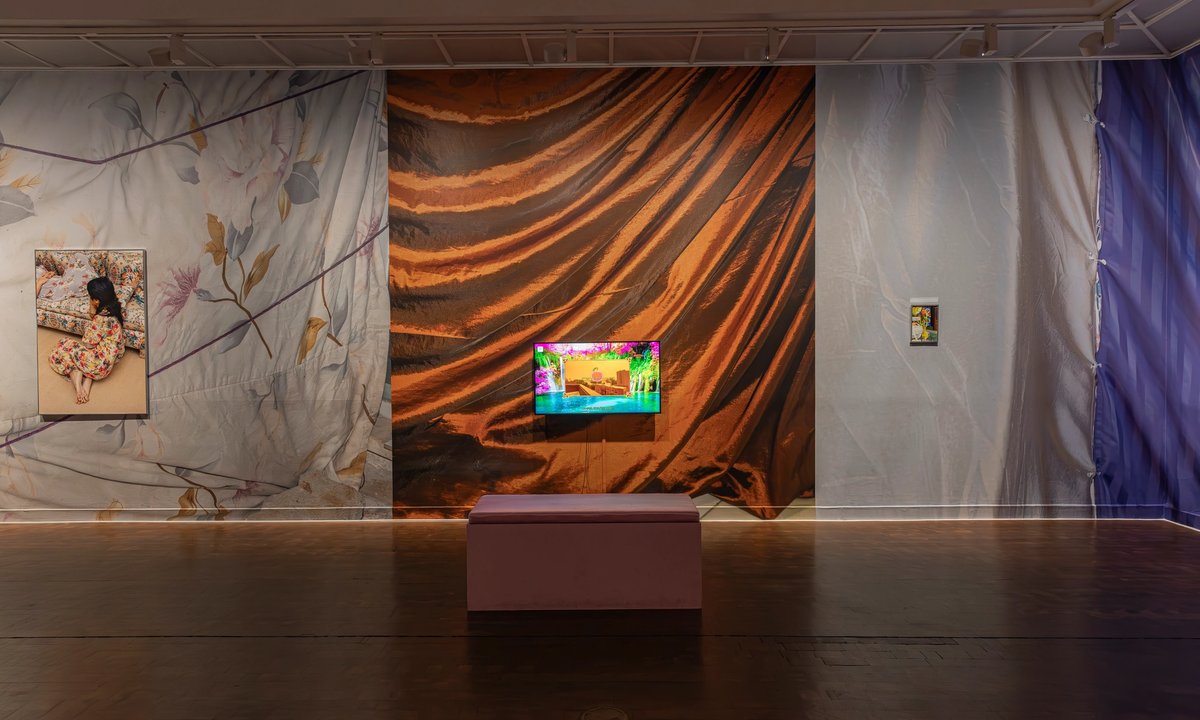
There is a scene in "Morgenkreis | Morning Circle" (2025), a 16-mm film by Berlin-based Palestinian artist Basma al-Sharif, that unfolds at the threshold of a daycare center. A young boy clings to his father, his fists locked into the fabric of his coat, his arms wrapped tightly around him. The father gently tries to pry himself free while a daycare worker crouches nearby, attempting to distract the child and coax him inside. It is an ordinary moment, one that anyone who has ever been a child - or cared for one - recognizes instantly, as well as the gut-wrenching feeling it provokes.
Arts
Music
fromBrooklynVegan
1 month agoAngelique Kidjo announces new LP ft. Pharrell, Nile Rodgers, more, shares "Fall on Me" ft. PJ Morton
Afro-pop legend Angélique Kidjo releases Hope!!, a guest-filled album dedicated to her late mother, featuring Pharrell Williams, Ayra Starr, Nile Rodgers, Davido, and others, aimed at restoring joy and hope to listeners.
Arts
fromColossal
1 month agoMirrors, Iron, and Stone Conjure Ancestral Healing in Olayami Dabls' Detroit Museum
Olayami Dabls founded MBAD African Bead Museum to present African culture through ancestral creation and spiritual healing, rejecting European colonial perspectives in African American historical representation.
fromArtnet News
1 month agoLudovic Nkoth on Painting the 'Emotional Texture of Everyday Scenarios'
Stars under the border began with a simple image of people resting together in an open field, but that idea quickly expanded into something more complex, both visually and formally. I kept thinking about aspiration: how it persists beneath systems that try to define or limit us. The title suggests this tension. Stars suggest hope or possibilities existing in an endless veil of darkness, while a border implies a sense of limitation and separation.
Arts
fromHyperallergic
2 months agoA Somali-American Artist Speaks Out
Amid the savagery of the Trump administration's crackdown on immigration - culminating in the killing of Renee Nicole MacklinGood - everyday Americans have shown incredible courage in pushing back against ICE's takeover of their cities. Joining them today are several Minnesotaart institutions that will close their doors to protest against the cruel treatment of their neighbors. You can read all about that today, plus a moving personal essay by Ifrah Mansour, a Somali-American artist based in Minnesota.
Arts
fromHyperallergic
2 months agoThe African Diaspora Pictures Itself
Walking through Ideas of Africa: Portraiture and Political Imaginationat the Museum of Modern Art, I noticed that the exhibition didn't have definite sections or texts, and the wall labels abstained from naming the nationalities of the photographers. It was an invigorating experience to be in a show that eschews geographic boundaries set up by Western nations, as well as rejects a cause-and-effect narrative that centers Western colonialism as a framework for understanding African aesthetic production.
Arts
fromColossal
2 months agoAmoako Boafo Weaves His Portraiture into an Architectural Replica of His Accra Studio
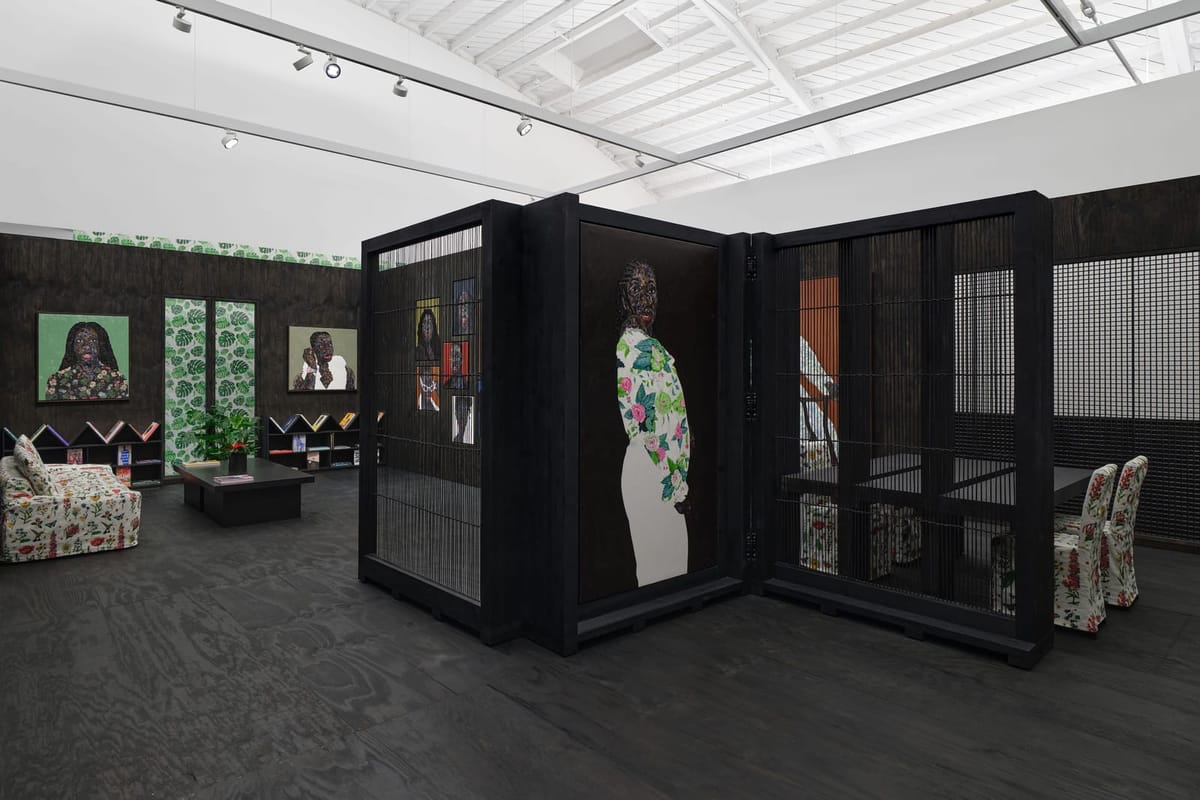
Although this truism is typically offered as a negative, it can also be read as a positive that provides comfort and stability amid new environments. In I Bring Home with Me, Ghanaian artist Amoako Boafo recreates his Accra studio in an architectural reproduction within Roberts Projects ' Los Angeles gallery. Boafo is known for his stylized portraiture of Black people, whose skin the artist renders in swirling gestures made with his fingers.
Arts
fromColossal
2 months agoTraditional African Baskets and Pottery Meet Pop Culture in Donte K. Hayes' Sculptures
Redolent of African basketry, hairstyles, headwear, and pottery, Donté K. Hayes ' abstract ceramic sculptures may be interpreted as poetic vessels, even though they lack traditional openings. While we easily associate clay pots and round woven forms with ideas related to storage, protection, and even spiritual significance, they also nod to the human head as a holder-a kind of receptacle for culture, language, personal expression, and dreams.
Arts
fromHyperallergic
1 month agoKoyo Kouoh's Final Show
Each artist functions almost as a musical key signature of their own, which together 'refuse the orchestral bombast and goose-step military marches and come alive in the quiet tones, the lower frequencies.' That description comes from Rasha Salti, one of the exhibition advisors who spoke at yesterday's announcement of the roster. It's an apt invitation to think of curation as an act of composition, with Kouoh's vision singing at every turn.
Arts
fromColossal
1 month agoRendered in Handmade Pigments, Rupy C. Tut's Warriors March Toward Belonging
The privilege of belonging and being seen as a part of a place, without needing explanations, is not available to my characters, who are finding ways to navigate and battle that out-of-place-ness. If the environment is meant to assuage, then the character's bodysuit is chaotic distress. Similarly, if the bodysuit is meant to pacify the narrative of the character's purpose, then the environment is lurking with dangers and chaotic, unsafe possibilities nearby.
Arts
fromHyperallergic
2 months agoQueer Arab Artists on Their Own Terms
"The show is about giving the pen back to the writer, giving the paintbrush back to the artist, during this time of genocide," the Ridikkuluz told Hyperallergic in an interview at the gallery. "And when there's been so much censorship, these are artists that might not have been able to do this anywhere else."
Arts
fromHyperallergic
1 month agoDavid Driskell's Gifts to Black Art
Driskell started collecting in 1955 after taking a position as an art professor at Talladega College. As he explained in a 2017 lecture at the Whitney Museum of American Art, he put aside a small budget for art each year from his beginning salary of $3,000.
Arts
Arts
fromThe Art Newspaper - International art news and events
2 months agoMore than 600 works by Afro-Brazilian artists returned to Brazil
A voluntary repatriation returned 666 Afro-Brazilian works from Detroit to Muncab in Salvador, marking Brazil's largest cultural repatriation and a symbolic act of reparation.
fromThe Art Newspaper - International art news and events
1 month ago'If a work is meant to be mine, there's always time': Mashonda Tifrere on the art she collects and why
While taking a break from her musical career, Tifrere founded the nonprofit organisations ArtLeadHER and Art Genesis in 2016. ArtLeadHER provides visual-arts education and exhibition opportunities to women and teenage girls, while Art Genesis helps organise shows for emerging and underrepresented artists.
Arts
Arts
fromThe Art Newspaper - International art news and events
2 months agoAfrican LGBTQ+ art at the Smithsonian, the Iran crisis, Louise Nevelson at Pompidou Metz-podcast
Here: Pride and Belonging in African Art at the Smithsonian showcases LGBTQ+ artists from Africa and its diaspora, with a related book forthcoming.
[ Load more ]