#accessibility-errors
#accessibility-errors
[ follow ]
#accessibility #user-experience #web-accessibility #ai #web-development #inclusive-design #css #technology




#adobe-captivate
Web development
fromeLearning
1 month agoCommon mistakes to avoid when using Web objects in Adobe Captivate - eLearning
Web objects in Adobe Captivate embed multimedia content directly into courses, but common mistakes like using HTTP instead of HTTPS and failing to adjust embed code dimensions cause broken content and poor user experience.
#accessibility
Marketing tech
fromDigiday
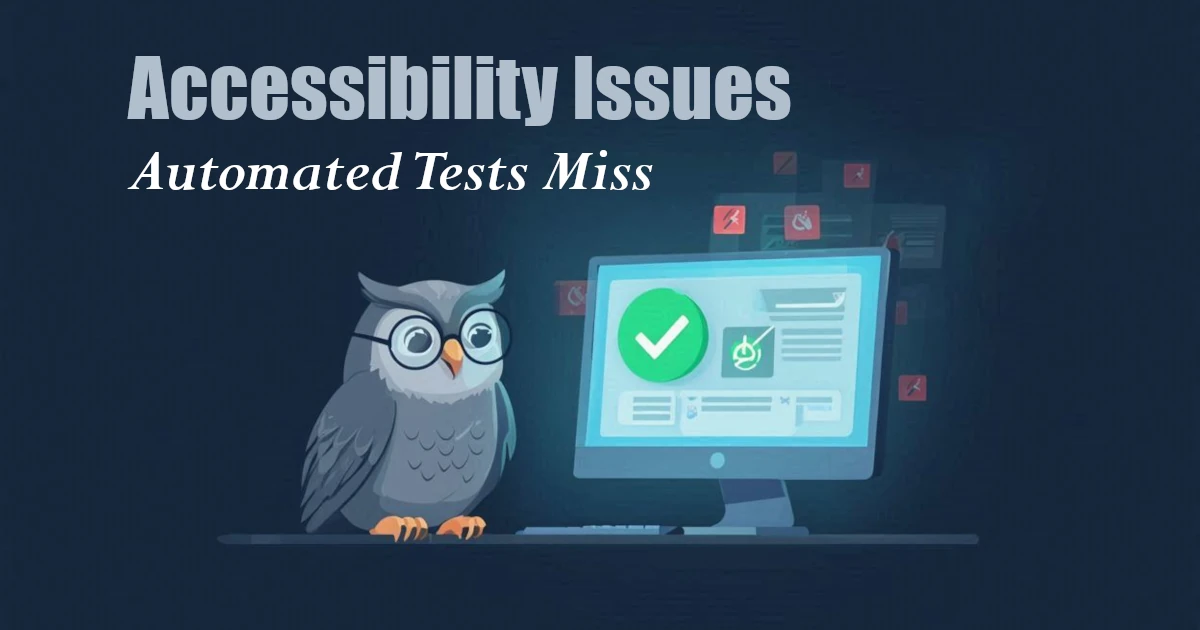
1 week agoWhile AI is building the web faster than ever, accessibility can't be left behind
AI has accelerated marketing processes, but speed can compromise accessibility, impacting customer experience and conversion rates for people with disabilities.

UX design
fromMedium
1 week agoThe invisible layer of UX most designers ignore
Designers must prioritize screen reader compatibility to ensure accessibility, as users rely on spoken content rather than visual elements.



fromwww.bbc.com
1 month agoFlats for the blind could be sold to developer
When I moved in here it truly was my last resort. Since living here I feel like I have the same independent life that my friends have and I just don't want to lose that. The guide dog run is probably the most important thing for me. It's a safe and confined area where I feel comfortable taking my dog out, especially at night.
London politics
fromMedium
1 month agoHow to Prevent Claude Code from Creating Generic Web Designs (5 Proven Tips)
If you ask Claude to generate a web page for you, there is a high chance you will get a very generic output. The page serves a functional purpose, but it's not very appealing. You can see that this design clearly serves the functional purpose, but doesn't look very appealing.
Web development
fromCSS-Tricks
1 month agoAn Exploit ... in CSS?! | CSS-Tricks
Google credits security researcher Shaheen Fazim with reporting the exploit to Google. The dude's LinkedIn says he's a professional bug hunter, and I'd say he deserves the highest possible bug bounty for finding something that a government agency is saying "in CSS in Google Chrome before 145.0.7632.75 allowed a remote attacker to execute arbitrary code inside a sandbox via a crafted HTML page."
Information security
fromFast Company
2 months agoThese plain-text websites will simplify your internet experience
Here's the sad truth about sports score apps: Most of them aren't all that interested in actually telling you the score. After all, where's the money in providing straightforward information like that? The modern sports score app has to do more. It must bombard you with banner ads and betting odds, implore you to create an account and opt into notifications, sell you some tickets, and show some videos to keep engagement up. The scores themselves are an afterthought.
Digital life
fromHarvard Business Review
2 months agoHow Designing with Disability in Mind Sparks Innovation
In 2003, when plumbing fixtures industry veteran Rob Buete first encountered the "walk-in tub" made by a startup called Safety Tub, he burst out laughing. A bathtub with a door? It seemed like a joke, or at best a clunky contraption for frail seniors who couldn't step over a regular tub. Kinya Seto is the CEO of LIXIL, the global manufacturer of pioneering water and housing products, including brands such as GROHE, American Standard, INAX, and Tostem.
Marketing
Web development
fromwww.jqueryscript.net
1 month agoWeekly Web Design & Development News: Collective #647
Week 11 2026 development roundup features OpenPencil AI design editor, Eldora UI components, muJS navigation library, pdfcraft browser PDF toolkit, GPT-5.4, Gemini 3.1 Flash-Lite, Navigation API baseline status, and updated Top 10 resource lists.
fromSitePoint Forums | Web Development & Design Community
4 weeks agoWhat matters most for user engagement: performance or UI?
Performance is a critical factor in user engagement, where even minor delays in loading can deter users. A clean and simple user interface also contributes significantly to user retention.
UX design
fromMedium
2 months agoThe blind spots of inclusive AI
Algorithms can now transcribe meetings in real time, translate across languages instantly, summarise dense reports in seconds, and generate content tailored to different reading levels. For many users, these are not just productivity gains. They are meaningful improvements in access, sometimes the difference between participating fully and struggling quietly on the margins. Voice interfaces reduce reliance on complex forms. Automated captions support participation in live conversations. Generative tools can rephrase technical or academic language into something clearer and more digestible.
Artificial intelligence
fromdbushell.com
1 month agoEverything you never wanted to know about visually-hidden
Ana proposed the following: Is this enough in 2026? As an occasional purveyor of the visually-hidden class myself, the question wriggled its way into my brain. I felt compelled to investigate the whole ordeal. Spoiler: I do not have a satisfactory yes-or-no answer, but I do have a wall of text!
UX design
UX design
fromSmashing Magazine
1 month agoNow Shipping: Accessible UX Research, A New Smashing Book By Michele Williams - Smashing Magazine
Accessible UX Research by Michele Williams provides comprehensive guidance on conducting inclusive user research that incorporates assistive technology, disability considerations, and accessibility throughout the entire design process.
fromMedium
3 months agoClarity or Conformity? Rethinking the Rules of Content Design
In Andor, I got chills when Mon Mothma warns the senate of a chilling truth: When we let noise, conformity, or fear dominate, we lose sight of what matters. We risk allowing the loudest voices, often the safest, the most predictable, to drown out individuality, identity, and truth. To me, this line... This line echoes a growing tension I feel in content design.
UX design
fromSmashing Magazine
2 months agoDesigning For Agentic AI: Practical UX Patterns For Control, Consent, And Accountability - Smashing Magazine
Autonomy is an output of a technical system. Trustworthiness is an output of a design process. Here are concrete design patterns, operational frameworks, and organizational practices for building agentic systems that are not only powerful but also transparent, controllable, and trustworthy. In the first part of this series, we established the fundamental shift from generative to agentic artificial intelligence. We explored why this leap from suggesting to acting demands a new psychological and methodological toolkit for UX researchers, product managers, and leaders.
UX design
[ Load more ]