#australian-treasuries
#australian-treasuries
[ follow ]
#inflation #interest-rates #federal-reserve #monetary-policy #bank-of-england #treasury-yields #economic-policy


#uk-economy


UK politics
fromLondon Business News | Londonlovesbusiness.com
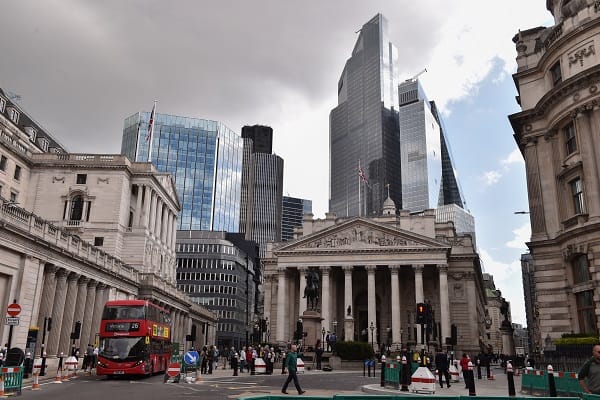
22 hours agoBritons overwhelmingly back economic growth but doubt it will benefit them - London Business News | Londonlovesbusiness.com
Public support for economic growth in the UK is high, but skepticism about personal benefits persists among citizens.

Retirement
fromFortune
5 days agoU.S. government is spending $88 billion a month in interest on national debt, equal to its spending on both defense and education combined | Fortune
The U.S. national debt exceeds $39 trillion, with interest payments reaching $529 billion in the first half of the fiscal year.
fromIrish Independent
18 hours agoGovernment backs sale of PTSB for 1.6bn
"BAWAG and Permanent TSB Group Holdings plc (PTSB) have agreed today, with the support of the Minister for Finance of Ireland who holds approximately 57.5pc of the shares in PTSB, the terms of a cash offer by BAWAG which has been recommended by PTSB's board of directors."
UK politics
fromFortune
6 days agoU.S. had a national debt 'home run' in its grasp, says Jamie Dimon-the government did nothing with it, and now its best option is crisis management | Fortune
"The best way to deal with the problem is to actually deal with the problem, to acknowledge it, to work on it," Dimon stated, emphasizing the urgency of addressing the national debt.
US politics
Retirement
fromLondon Business News | Londonlovesbusiness.com
1 week agoEvery time you borrow from a bank, you're paying more than you think - London Business News | Londonlovesbusiness.com
Opportunity cost in loans includes lost potential earnings from repayment dollars, not just the interest rate paid.
fromFortune
3 weeks ago300 years of wars show they are 'always disaster times' for holders of government debt because of inflation and financial repression | Fortune
"The historical evidence reveals a striking pattern: government bonds have repeatedly generated substantial real losses during these extreme episodes. They have even underperformed equities and real estates which are traditionally regarded as risky assets."
World politics
#uk-interest-rates

UK news
fromLondon Business News | Londonlovesbusiness.com
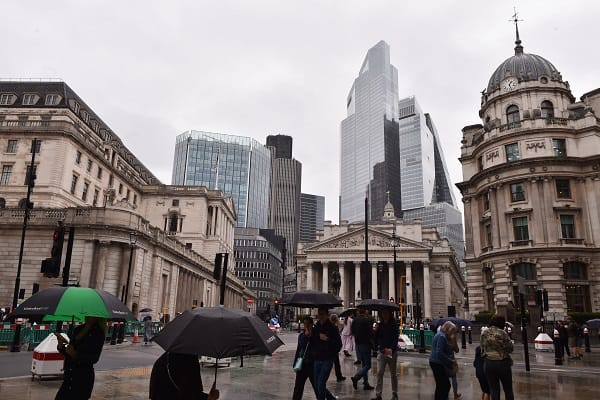
3 weeks agoUK rates: Savers, investors should act now in higher-for-longer era - London Business News | Londonlovesbusiness.com
UK interest rates will likely remain elevated longer than expected due to renewed inflation threats from energy prices and geopolitical tensions, requiring savers and investors to adjust their financial strategies accordingly.

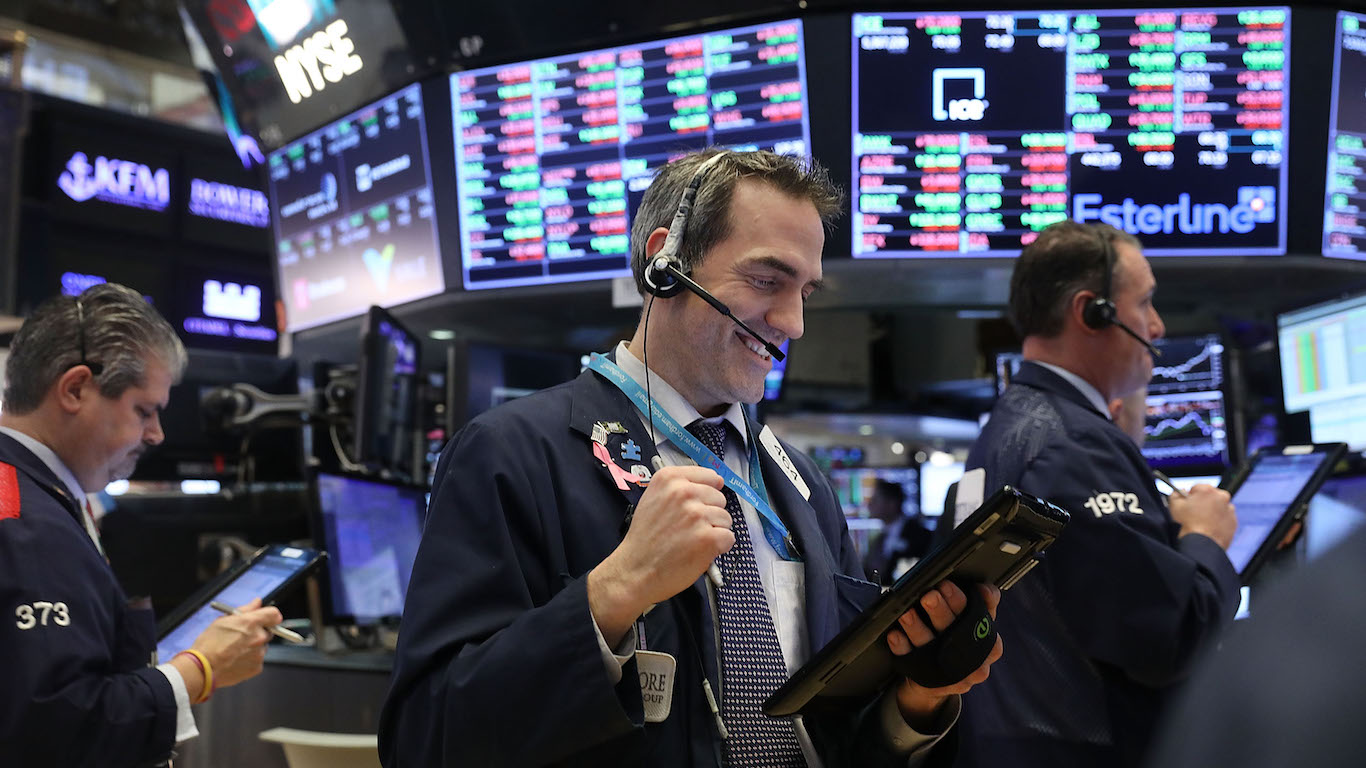
Business intelligence
from24/7 Wall St.
1 month agoThe 4 ETFs To Buy Before The Fed Lowers Rates And Shoots Them Higher
The Federal Reserve paused rate cuts in January 2026 after three cuts, creating market uncertainty that underprices assets benefiting from future cuts, with four ETFs positioned to capitalize on eventual rate reductions.
US news
fromwww.independent.co.uk
1 month agoAre interest rates set to go up? How the Middle East conflict could hit your finances
Middle East conflict threatens UK financial stability through rising energy prices, potentially triggering inflation increases and Bank of England interest rate hikes that affect mortgages and savings.
Business
fromSilicon Canals
3 weeks agoGold crossed $5,300 the same week three central banks quietly dumped $47B in US Treasuries. That's not coincidence - it's coordination - Silicon Canals
Gold's price surge is driven by strategic positioning of central banks, not just fear, as they reduce US Treasury holdings amid geopolitical tensions.
UK news
fromLondon Business News | Londonlovesbusiness.com
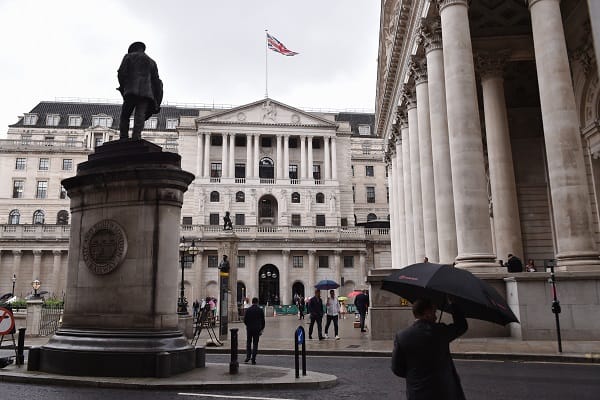
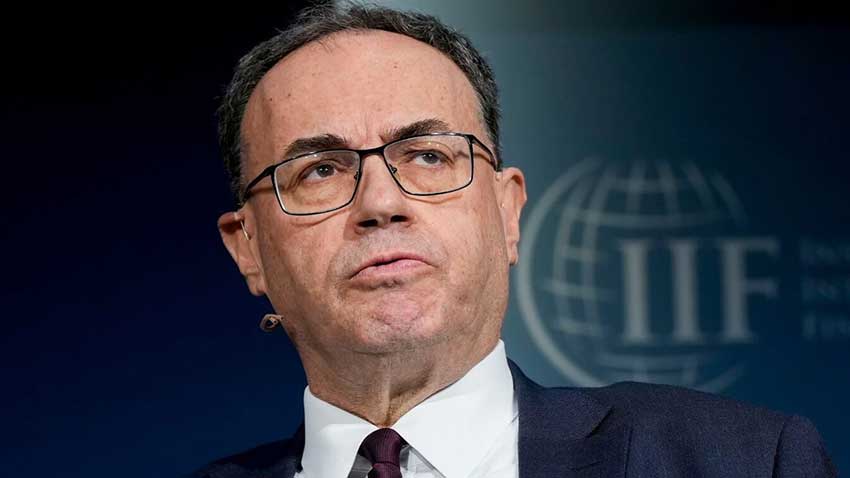
3 weeks agoBank of England holds base rate amid Middle East war - London Business News | Londonlovesbusiness.com
The Bank of England held the base interest rate at 3.75% due to Middle East conflict uncertainty and rising energy prices threatening inflation expectations.
Intellectual property law
fromFortune
1 month agoFinance leaders divided on using potential tariff refunds-just 18% would fully roll back price hikes | Fortune
Corporate executives remain divided on tariff refund strategies and are reluctant to reduce prices despite potential cost relief from Supreme Court rulings.
Business
fromLondon Business News | Londonlovesbusiness.com
3 weeks agoUS dollar stable after Fed decision and stronger yields - London Business News | Londonlovesbusiness.com
The dollar strengthens near 100 as the Fed maintains a cautious stance, while Treasury yields rise on reduced rate cut expectations amid higher inflation projections and Middle East tensions driving oil prices up.
Business
fromLondon Business News | Londonlovesbusiness.com
3 weeks agoWhere is the US Dollar Index heading amid rising bond yields? - London Business News | Londonlovesbusiness.com
The US Dollar Index strengthens due to Federal Reserve's hawkish stance, elevated Treasury yields, and geopolitical tensions, with limited rate cuts expected through 2027.
UK news
fromLondon Business News | Londonlovesbusiness.com
1 month agoExpectations for UK interest rate cuts shift dramatically - London Business News | Londonlovesbusiness.com
Geopolitical tensions are pushing markets toward higher interest rates and oil prices, benefiting energy and defence sectors while shifting investment away from growth stocks.
from24/7 Wall St.
1 month agoInterest Rates Are Heading Down - These 3 Stocks Win Big When They Do
In my view, interest rates are more likely than not going to head lower over the course of 2026 and into 2027. I'm not saying we're due for a pandemic-like selloff, but I do think that weakness in the labor market is likely more protracted than the government data suggest. As such, I do think the makeup of the Federal Reserve, and which way many of its presidents and voting members lean (toward providing support for the labor market over battling inflation) could lead to much faster rate cuts than many think.
Retirement
Business
fromFortune
4 weeks agoU.S. debt is competing with a record supply of corporate bonds, which is pushing up the cost of federal borrowing just as war spending piles up | Fortune
Record corporate bond issuance driven by AI capital expenditure and geopolitical factors is increasing Treasury yields and raising borrowing costs for the federal government.
Business
fromFortune
4 weeks agoA 'debt spiral,' before a fiscal crisis: interest on the national debt will be growing faster than GDP in just 5 years, think tank warns | Fortune
By 2031, U.S. federal debt interest rates will exceed economic growth rates, triggering a self-reinforcing debt spiral where deficits cause debt to grow indefinitely.
US news
fromLondon Business News | Londonlovesbusiness.com
1 month agoDollar Relatively Stable Amid Economic Uncertainty - London Business News | Londonlovesbusiness.com
The dollar remains stable within a consolidation range, with its direction dependent on monetary policy expectations, labor market data, and inflation trends.
UK politics
fromLondon Business News | Londonlovesbusiness.com
1 month agoThere is 'little sign that the government's economic plan is working' - London Business News | Londonlovesbusiness.com
The government's economic plan shows deteriorating growth forecasts and rising unemployment, with energy price surges threatening interest rates and fiscal targets despite marginal improvements in fiscal headroom.
Miscellaneous
fromLondon Business News | Londonlovesbusiness.com
2 months agoIt is a 'near certainty' interest rates will be held - London Business News | Londonlovesbusiness.com
The MPC is expected to hold Bank Rate at 3.75% to prevent inflation rising further while maintaining focus on economic growth.
fromwww.theguardian.com
1 month agoBoring or bust: Reeves aims to project calm competence in spring budget
Like [Keir] Starmer, the chancellor is also fighting for her political life whether because the prime minister himself falls, or chooses to move his chancellor in a reset reshuffle. Against that backdrop, Reeves hopes to project calm and competence next week, after a tumultuous 18 months.
UK politics
Business
fromLondon Business News | Londonlovesbusiness.com
1 month agoGold prices between oil pressures and Fed expectations - London Business News | Londonlovesbusiness.com
Gold prices fell below $5,100 per ounce due to rising oil prices triggering inflation concerns that shifted expectations for higher U.S. interest rates, reducing gold's appeal relative to yield-bearing assets.

UK politics
fromwww.theguardian.com
1 month agoTell us: how are your finances looking ahead of the Spring Forecast?
Chancellor Rachel Reeves will deliver the Spring Forecast to parliament next Tuesday, providing economic forecasts and the UK's financial position without major tax or spending announcements.
fromwww.theguardian.com
2 months agoUK government borrowing falls to 11.6bn in December
Public sector net borrowing the difference between spending and income was 11.6bn last month, the Office for National Statistics said, compared with 18.7bn in the same month a year earlier. Economists polled by Reuters had expected borrowing to be 13bn in December. The figure is closely watched by the City as it shows how much the government is borrowing to finance its spending plans and whether it is exceeding its target for the year.
UK politics
fromLondon Business News | Londonlovesbusiness.com
2 months agoYen weakens further after BoJ holds rates - London Business News | Londonlovesbusiness.com
The USD/JPY pair surged to a nine-day peak of 158.86 following the Bank of Japan's (BoJ) first policy decision of 2026, with the momentum accelerating sharply during Governor Kazuo Ueda's post-meeting press conference. The pair later saw a missive flush toward 157.308. While the central bank technically stood pat, the market's read of the event was one of a hawkish hold, as the divergence between official rhetoric and the surging Japanese Government Bond (JGB) yields forced a frantic repricing of the yen's path.
World news
UK politics
fromLondon Business News | Londonlovesbusiness.com
2 months agoPublic finances fragile but the road to economic recovery is appearing - London Business News | Londonlovesbusiness.com
UK public borrowing fell to about £11.5bn in December, signalling improving fiscal control, easing spending pressures, and a gradually more predictable fiscal outlook.

fromLondon Business News | Londonlovesbusiness.com
2 months agoDollar struggle and monetary policy shape the next phase - London Business News | Londonlovesbusiness.com
The resilience of gold above $4,800 per ounce at this stage reflects a delicate and complex balance between traditional supporting factors and emerging pressures-one that cannot be superficially interpreted or reduced to the movement of the dollar alone. It is true that the U.S. dollar's retreat from its recent peaks, after failing to sustain its recovery momentum from a four-year low, provided gold with a short-term breather and attracted some buyers.
Business
fromFortune
2 months agoBonds 101: What investors need to know about the 'shock absorber of the portfolio' | Fortune
Many investors regard bonds as the frumpier cousins to stocks. Their prices rarely pop or plummet. They usually deliver a lower return, and-aside from a glamorous cameo in the 1980s thriller Die Hard-they are not part of popular culture in the same way as, say, GameStop or Tesla shares. They are, though, a critical part of any well-managed portfolio, and with the stock market looking particularly frothy, this may be more true than ever.
Business
[ Load more ]