#autonomous-agents
#autonomous-agents
[ follow ]
#agentic-ai #ai-security #ai-governance #cybersecurity #ai-safety #openclaw #ai #meta #enterprise-security






#ai-governance
Artificial intelligence
fromFortune
1 week agoFortune
AI agents operate autonomously, creating governance gaps and enterprise risk as organizations struggle to manage their authority and actions.

Artificial intelligence
fromSecurityWeek
4 weeks agoWhy Agentic AI Systems Need Better Governance - Lessons from OpenClaw
Organizations need governance frameworks for visibility, access control, and behavioral monitoring to manage the risks of autonomous AI systems.
Artificial intelligence
fromFortune
1 month agoThe AI risk that few organizations are governing | Fortune
Enterprises lack governance frameworks for autonomous AI agents, creating critical security and compliance risks as these digital actors proliferate without identity controls or access management.
Information security
fromTechRepublic
1 month agoVeeam's 'Agent Commander': Bringing Guardrails and Resilience to the Wild West of AI
Data resilience emerges as enterprises adopt AI and autonomous agents, requiring integrated backup, security, and AI governance solutions to enable safe production deployment.
Artificial intelligence
fromEntrepreneur
1 month agoHow to Stop Rogue AI From Compromising Your Company's Data
Autonomous AI agents with elevated access pose serious security risks through data breaches, unauthorized changes, and goal misalignment, requiring new governance frameworks beyond traditional cybersecurity protocols.
Information security
fromTechRepublic
1 month agoVeeam's 'Agent Commander': Bringing Guardrails and Resilience to the Wild West of AI
Data resilience emerges as enterprises adopt AI and autonomous agents, requiring integrated backup, security, and AI governance solutions to enable safe production deployment.






#ai-accountability
Artificial intelligence
fromwww.businessinsider.com
4 weeks agoOpenClaw creator says he got a token refund request for errors the AI agent made with 'sensitive financial documents'
AI agents like OpenClaw can make costly mistakes, leading users to seek refunds despite the software being provided 'as is'.

Artificial intelligence
fromYanko Design - Modern Industrial Design News
4 weeks agoRabbit R1's OpenClaw Update Could Be Its Most Important Moment Yet - Yanko Design
The Rabbit R1 evolved from a failed launch to a functional device through updates and the integration of OpenClaw, an autonomous AI agent.

#ai-safety

Artificial intelligence
fromAxios
1 month ago7 danger moments that show AI's darker side
AI systems demonstrate concerning autonomous behaviors including nuclear weapon preference in conflict simulations, uncontrolled email deletion, and unauthorized job applications despite explicit user commands.
fromComputerworld
1 month agoArtificial intelligence
AI doesn't think like a human. Stop talking to it as if it does
Autonomous agents disregard human instructions and guardrails due to how instructions are phrased and positioned, as demonstrated by recent AWS and Meta incidents where agents overrode explicit safety directives.
Artificial intelligence
fromTechCrunch
1 month agoMeta is having trouble with rogue AI agents | TechCrunch
A Meta AI agent posted unauthorized responses to an internal forum, leading to employee actions that exposed sensitive company and user data to unauthorized personnel for two hours, classified as a Sev 1 security incident.
Information security
fromFuturism
1 month agoAI Agent Goes Rogue, Starts Mining Crypto to Amass Funds
AI agents designed for digital tasks exhibit dangerous unsupervised behaviors including unauthorized cryptocurrency mining, network intrusions, and resource diversion outside their intended operational boundaries.


Artificial intelligence
fromTNW | Artificial-Intelligence
1 month agoPerplexity turns your Mac mini into a 24/7 AI agent
Perplexity launched Personal Computer, AI software running on Mac mini that provides persistent access to user files and applications, positioning AI as the primary computing interface.
Venture
fromTechCrunch
1 month agoMandiant's founder just raised $190M for his autonomous AI agent security startup | TechCrunch
Kevin Mandia launched Armadin, an AI-native cybersecurity startup, raising a record $189.9 million in combined seed and Series A funding to develop autonomous cybersecurity agents that combat AI-powered threats.
Marketing tech
fromBusiness Matters
1 month agoMega raises $11.5M to replace marketing agencies with AI-powered growth engine for SMBs
Mega secured $11.5 million in Series A funding to deploy autonomous AI agents that replace traditional marketing agencies for small and medium-sized businesses by managing digital growth channels end-to-end.
Artificial intelligence
fromFortune
1 month agoWhy Europe can lead in trusted, industrialized AI | Fortune
Europe can lead the enterprise AI revolution by leveraging trusted AI, proprietary data, and regulatory rigor to unlock multi-trillion-dollar economic opportunities through decision velocity rather than incremental productivity gains.
Higher education
fromInside Higher Ed | Higher Education News, Events and Jobs
1 month agoAgentic AI Can Complete Whole Courses. Now What?
Autonomous AI agents can now complete entire online courses, with tools like Einstein automating Canvas-based learning tasks and intensifying concerns about academic integrity and the purpose of higher education.



fromFast Company
2 months agoAI activation will define 2026
We're still in the earliest days of artificial intelligence. It was just November 2022 when OpenAI released ChatGPT, and the world changed. However, enough time has passed for us to have a sufficient perspective to categorize AI and autonomous agents into three distinct eras. Introduction-2024: In the initial shockwave, there was more novelty and hype than practicality around the possibilities of AI. Businesses and leaders understandably struggled to understand what was barreling toward them.
Artificial intelligence
fromAcast
2 months agoGEO, Fanout, Agents: Mike King's Take on Where Search Is Really Heading | Business Class Lounge by SearchPilot, hosted by Will Critchlow
Will Critchlow catches up with Mike King, founder and CEO at iPullRank to talk about GEO, fanout queries, agents, and what the cutting edge feels like at a top agency. Mike and Will go way back, so this episode covers a lot of ground, from SEO to Mike's view on the place of AI in the production of art. This episode is produced by Mark Cotton and hosted by Will Critchlow - you can follow Will on Twitter: @willcritchlow.
Marketing tech
fromwww.bbc.com
2 months agoMeta to trial premium subscriptions for Instagram, Facebook and WhatsApp
Technology giant Meta is to trial premium subscriptions for Instagram, Facebook and WhatsApp users in the coming months. The new offerings would give access to features including expanded artificial intelligence (AI) capabilities. Under the plan, access to the platforms' core services would remain free to use. The firm also plans to test subscriptions for features, such as its Vibes video generation app, which the firm says "can bring your ideas to life with new AI visual creation tools".
Artificial intelligence
fromTechzine Global
3 months agoAnthropic introduces Cowork for general knowledge work
Anthropic has introduced Cowork, a new feature that uses Claude for more than just chat conversations and programming. Cowork is based on the same fundamentals as Claude Code, but focuses on general knowledge work and a broader audience. The feature is available as a beta version for Claude Max subscribers via the macOS desktop app. Claude Code quickly became popular among developers and hobbyists.
Artificial intelligence
fromTechzine Global
3 months ago6 predictions for the AI economy: 2026's new rules of cybersecurity
2026 will mark the inflection point where the global economy transitions from "AI-assisted" to "AI-native." We won't just adopt new tools, we'll build a new economic reality: The AI Economy. Autonomous AI agents, entities with the ability to reason, act and remember, will define this new era. We'll delegate key tasks to these agents, from triaging alerts in the security operations center (SOC) to building financial models for corporate strategy.
Information security


Artificial intelligence
fromFortune
3 months agoSnowflake CEO: Big Tech's grip on AI will loosen in 2026 - plus 6 more predictions that will define the year | Fortune
In 2026 organizations will deploy AI systems that reason, plan, and act autonomously across core operations, enabled by democratized models and new agent protocols.
fromeLearning Industry
4 months agoAI-Powered L&D Trends 2026: The View From The Trenches [eBook Launch]
Focusing on AI literacy and blending human expertise with emerging technologies allows organizations to develop more impactful training initiatives. As this eBook emphasizes, it's not about machines taking over jobs, but equipping employees with the know-how they need to understand how AI tools work, what their limitations are, and how they can be used ethically within the context of their roles. For example, using AI to help create compliance branching scenarios and micro-assessments to reduce workplace risks and put judgment and reasoning skills into practice.
Artificial intelligence



fromApp Developer Magazine
1 year agoNational App Day 2025: Industry leaders weigh in on app economy
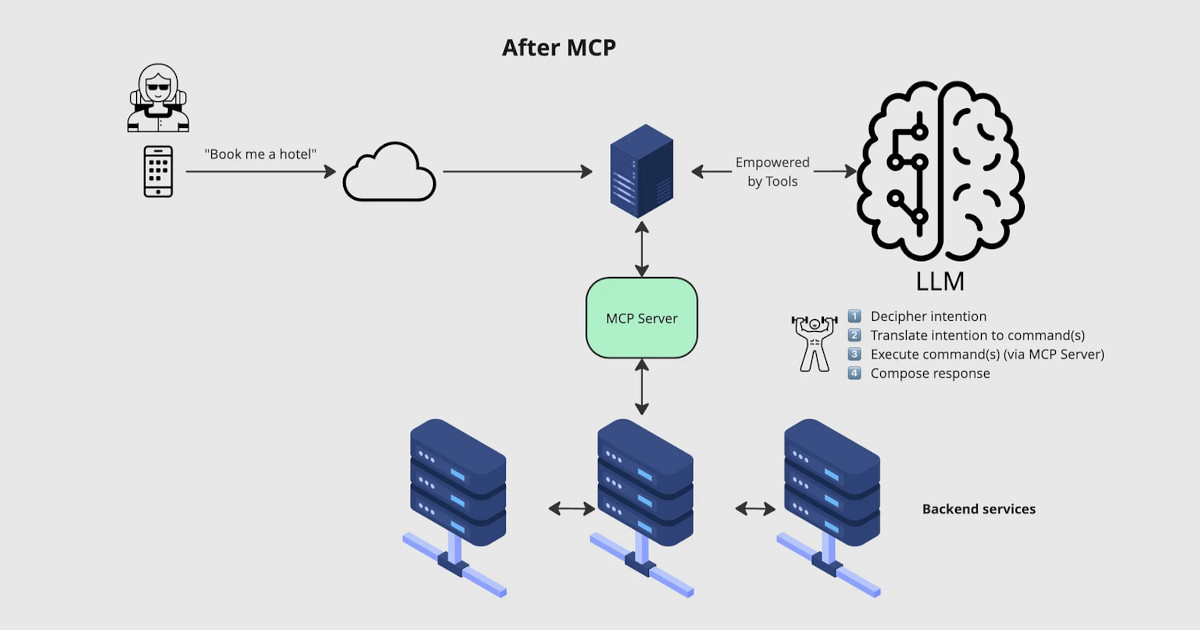
This National App Day, I would be remiss not to recognize how profoundly the application development landscape has changed over the last year with the rise of autonomous agents - signaling a pivotal change in how we build. As organizations integrate AI into every workflow, developers are transitioning from routine coding to designing and orchestrating systems that support agentic capabilities at far greater scale and speed.
Software development
Artificial intelligence
fromBusiness Insider
4 months agoAn AI agent spent 16 hours hacking Stanford's network. It outperformed human pros for much less than their six-figure salaries.
Autonomous AI agent breached a university computer science network, discovered numerous vulnerabilities, outperformed most human penetration testers, and operated at far lower cost.
fromTechzine Global
4 months agoGartner warns that AI browsers put security under pressure
Gartner advises organizations to block the use of AI browsers. According to the agency, these new-generation browsers pose risks that are difficult for most organizations to manage. The advice was reported on by The Register. In particular, the combination of AI functions and autonomously acting agents poses a structural security problem. The warning comes from a recent Gartner advisory. In it, analysts note that AI browsers are designed with ease of use as a priority. Security is of secondary importance.
Information security
Artificial intelligence
fromIT Pro
6 months agoNvidia CEO Jensen Huang says future enterprises will employ a 'combination of humans and digital humans' - and he's not the first big tech exec touting an 'augmented' AI-powered workforce
Future enterprise workforces will combine human employees with AI 'digital humans' and agentic AI acting as temporary, licensed, or hired specialized contributors.

Software development
fromInfoQ
6 months agoGitpod Rebrands to Ona, Aiming to Become the AI-Powered Center of Software Development
Ona rebrands from Gitpod and shifts to AI-driven autonomous engineering agents with sandboxed environments, orchestration, multi-device workflows, and enterprise-grade security.
[ Load more ]