#bioinspired-adhesives
#bioinspired-adhesives
[ follow ]
#biomimicry #sustainable-materials #sustainable-design #circular-economy #sustainability #innovation
#biomimicry
Design
fromYanko Design - Modern Industrial Design News
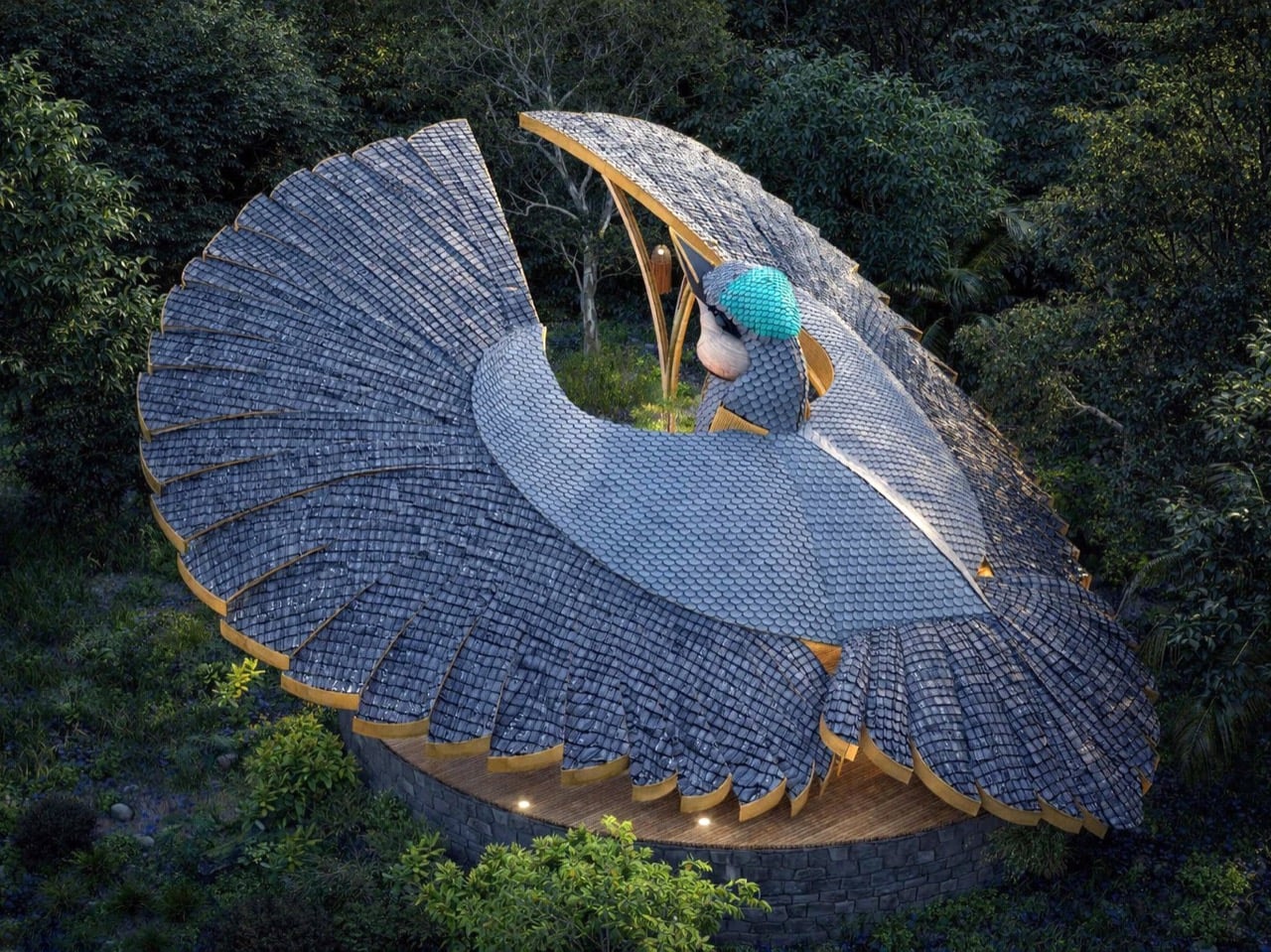
3 weeks agoBiomimetic Architecture Reaches New Heights With This Bird-of-Paradise Yoga Space - Yanko Design
Thilina Liyanage's architecture translates animal gestures into functional designs, exemplified by the Rifle Bird Yogashala inspired by the Victoria's riflebird's courtship display.
fromdesignboom | architecture & design magazine
1 month agoexplore WINT design lab's regenerative futures where humans connect with their bodies
WINT Design Lab envisions regenerative futures through devices and biotextiles that allow humans to connect with their bodies more and free themselves from fossil materials that harm them and the environment.
Wearables
fromBusiness Matters
1 month agoHow to Select the Right Industrial Adhesive for Manufacturing
Industrial adhesives play a key role in modern assembly because they help manufacturers create secure connections while maintaining efficient production. When used correctly, they can improve product quality, support cleaner assembly, and contribute to more consistent manufacturing outcomes.
Angular
fromdesignboom | architecture & design magazine
1 month agostretchable robotic fingers for surgery decomposes in soil and becomes fertilizer
The body of the robotic fingers is built from polyglycerol sebacate, a synthetic elastomer made from glycerol and sebacic acid. Glycerol is a byproduct of biodiesel production while sebacic acid is derived from castor oil, and both of them are plant-based. Polyglycerol sebacate is safe since it is already used in medical implants because the body can absorb it without a toxic response.
Science
Design
fromArchDaily
1 month agoRethinking Architecture at the Scale of Planetary Systems
Contemporary architecture operates within interconnected technological systems—energy networks, data infrastructures, and global logistics—that fundamentally shape what can be built, its affordability, performance, and waste production.
fromAeon
2 months agoIn solarpunk cities of the future, tech follows nature's lead | Aeon Essays
In Indra's Net of pearls and jewels, every gem reflects every other, a shimmering image of interdependence. This ancient Vedic metaphor for connection across the cosmos also illuminates what the environmental philosopher Glenn Albrecht first proposed in 2014as 'theSymbiocene': the era after the Anthropocene, in which human technologies take their cues from living systems and work in partnership rather than through dominance.
Philosophy
Design
fromYanko Design - Modern Industrial Design News
1 month agoThis Bio-mimicking Safari Deck Is Designed to Look Exactly Like a Rhino - Yanko Design
Thilina Liyanage designs a rhino-shaped wildlife observation deck that merges biomimetic architecture with functional safari infrastructure, creating a viewing platform whose form reflects the landscape and animals it observes.
fromwww.npr.org
2 months ago'E-bike for your feet': How bionic sneakers could change human mobility
The system, tested in prototype form by NPR at the company's headquarters, consists of fairly standard-looking sneakers with a carbon fiber plate running through the soles. These sneakers are attached at the back to close-fitting, 3D-printed titanium leg shells that cinch to the calves. The battery-powered contraptions, containing complex motors, sensors and circuitry, weigh a couple of pounds and look like something out of Terminator or RoboCop.
US news
fromWIRED
2 months agoWe Strapped on Exoskeletons and Raced. There's One Clear Winner
An exoskeleton is a relatively new class of wearable device designed to enhance, support, or assist human movement, strength, posture, or even physical activity. The main piece goes around your waist like a belt, and from it, a pair of hinged, mechanized splints extend down over the hips to strap onto each thigh, where they provide some robotic assistance to normal movements like walking, running, or squatting.

Design
fromArchDaily
1 month agoFacing the Age of Robots? Material Innovation in Architectural Structures
Robotic technology in construction extends beyond automation and cost reduction to fundamentally reshape architectural design, material experimentation, and construction methodologies through collaborative human-robot workflows.
Environment
fromYanko Design - Modern Industrial Design News
2 months agoThis Invasive Weed Now Builds What It Once Destroyed - Yanko Design
A pavilion at Delhi's Sunder Nursery is built from upcycled invasive lantana, converting an ecological problem into a living, sacred-grove–inspired architectural installation.
Design
fromYanko Design - Modern Industrial Design News
2 months ago5 Biomimicry-based Architectural Designs That Copy Nature's Best Ideas - Yanko Design
Design in the Amazon embraces layered, adaptive systems prioritizing resilient materials, natural ventilation, and environmental harmony to create comfortable, low-impact interiors and products.
Design
fromdesignboom | architecture & design magazine
1 month agocompostable bicycle seat takes shape as mycelium grows around the wooden saddle
Myco Seat uses mycelium networks grown through agricultural waste to create a compostable, functional bicycle seat with a wooden saddle designed using computational mapping.
fromFast Company
2 months agoThese designers made a sustainable new building material from corn
This corn-based construction material was made by Manufactura, a Mexican sustainable materials company, and it imagines a second life for waste from the most widely produced grain in the world. The project started as an invitation by chef Jorge Armando, the founder of catering brand Taco Kween Berlin, to find ways he could reintegrate waste generated by his taqueria into architecture. A team led by designer Dinorah Schulte created corncretl during a residency last year in Massa Lombarda, Italy.
Science
fromdesignboom | architecture & design magazine
2 months agorecontextualizing human hair waste as potential raw material for design
This research-based design project by Laura Oliveira investigates discarded as a potential raw material for sustainable design applications. Human hair is produced continuously and in large quantities through everyday grooming practices, yet it is almost always treated as waste once separated from the body and typically disposed of in landfills. Despite its material properties, strength, flexibility, and durability as a keratin-based protein fiber, its remains uncommon within design and research contexts.
Design
[ Load more ]