#controller-hardware
#controller-hardware
[ follow ]
#robotics



Artificial intelligence
fromTechCrunch
2 days agoPhysical Intelligence, a hot robotics startup, says its new robot brain can figure out tasks it was never taught | TechCrunch
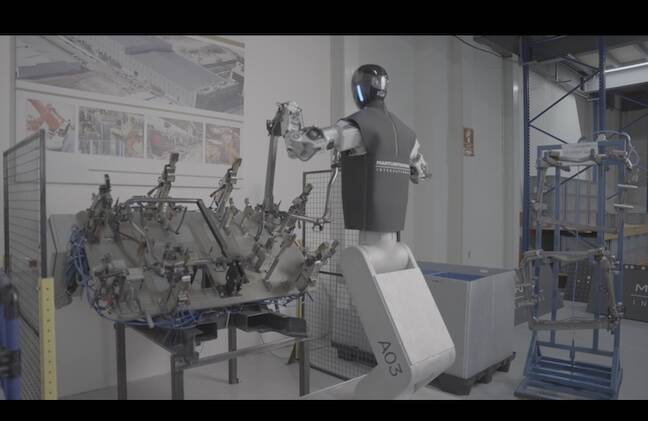
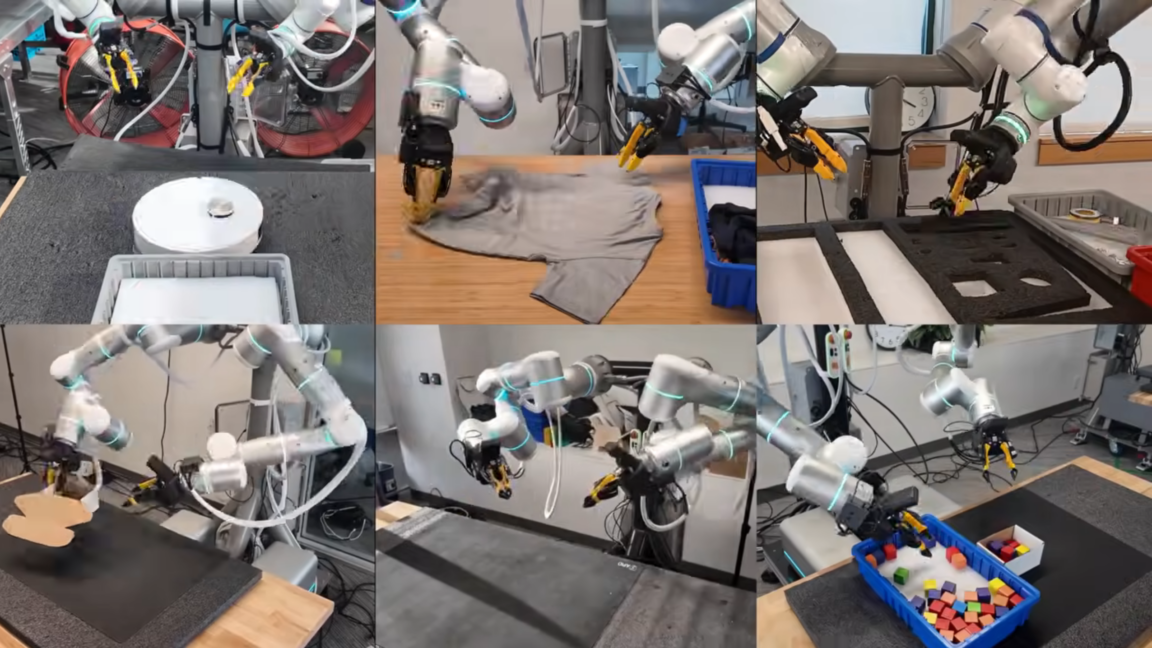
Physical Intelligence's π0.7 model enables robots to perform unfamiliar tasks through compositional generalization, marking a significant advancement in robotic AI capabilities.
Gadgets
fromYanko Design - Modern Industrial Design News
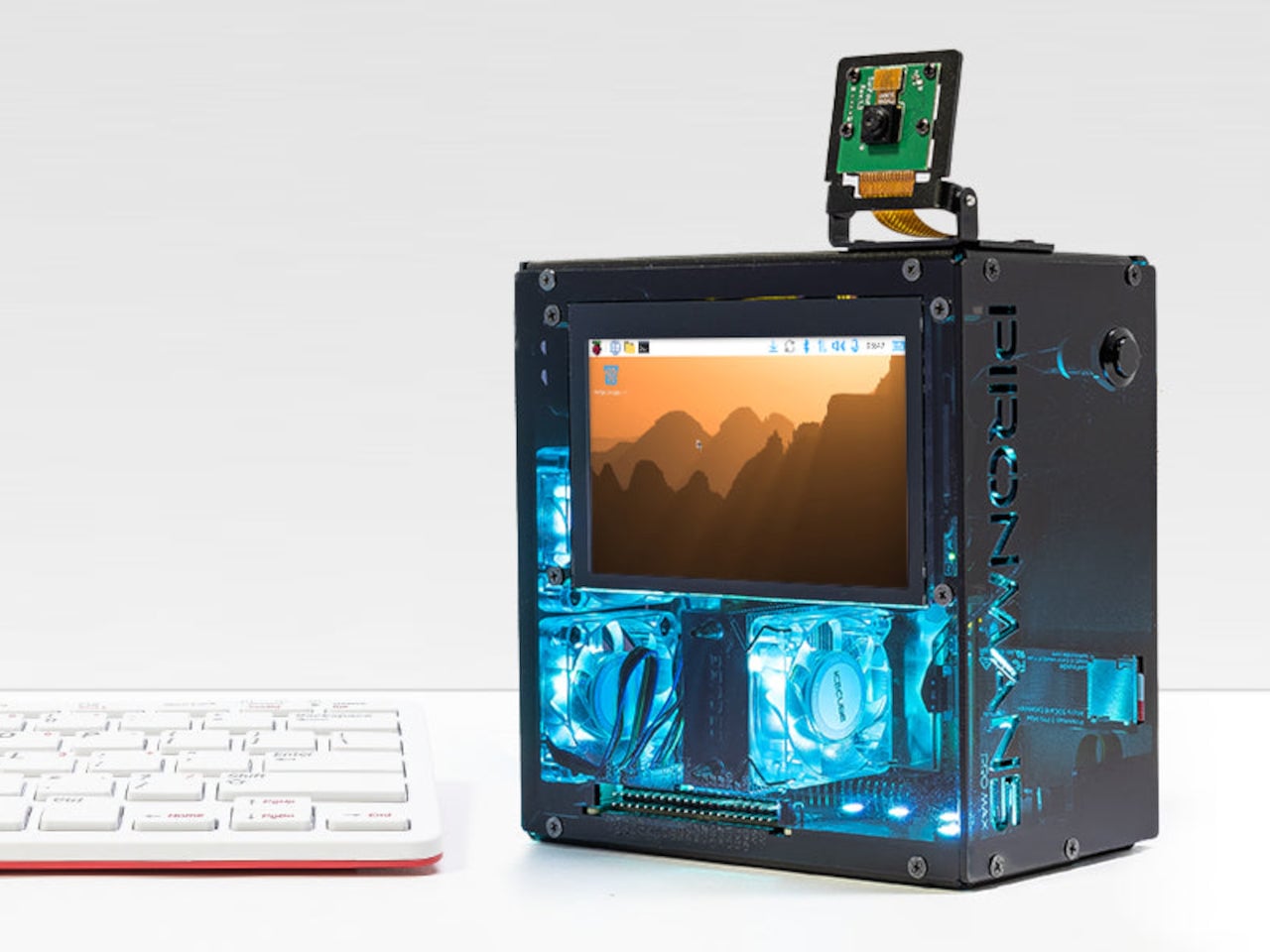
3 days agoZimaBoard 2 Review: The Home Server You Don't Have to Hide Anymore - Yanko Design
ZimaBoard 2 is a compact, aesthetically pleasing home server that combines functionality with design, suitable for various roles like NAS and media server.





Gadgets
fromYanko Design - Modern Industrial Design News
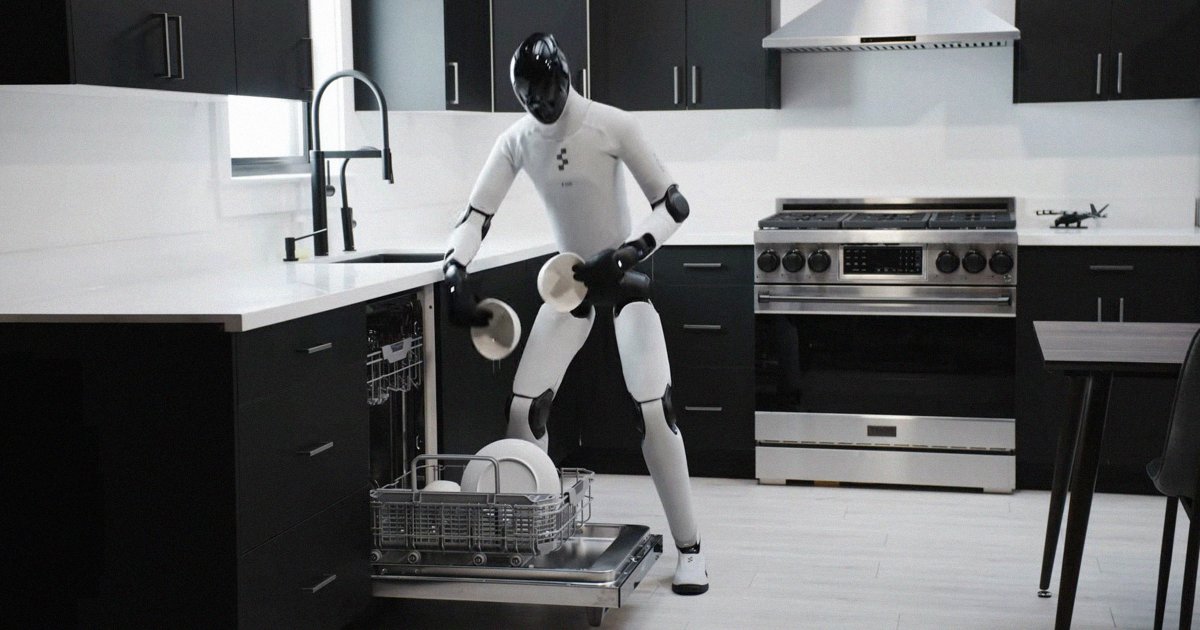
5 days agoWaveshare Built a $149 Handheld That Runs Full Linux Without the Laptop - Yanko Design
Waveshare's PocketTerm35 offers a ready-to-use handheld Linux terminal experience, integrating essential components for usability without assembly hassles.


fromZDNET
2 weeks agoMy two Raspberry Pi boards cost as much as a laptop now - and AI is to blame
RAM prices are skyrocketing, driving up the cost of products that rely heavily on memory. The price of Raspberry Pi boards has now soared to the point where two 16GB Raspberry Pi 5 boards will cost you as much as a new laptop.
Gadgets
fromTNW | Deep-Tech
1 month agoUniversal Robots and Scale AI launch the UR AI Trainer
Our customers, ranging from large enterprises to AI research labs, are no longer just asking for AI features. They need a way to collect high-fidelity, synchronized robot and vision data to train AI models on the same robots they intend to deploy. Our AI Trainer is the industry's first direct lab-to-factory solution for AI model training.
Data science
fromGSMArena.com
1 month agoArduino Ventuno Q announced with powerful CPU and GPU, 40 TOPS of AI performance too
The new Arduino Ventuno Q is a very different beast. For one, it's powered by the Dragonwing IQ-8275 chipset. This contains an 8-core Kryo CPU (2x Gold Prime at 2.35GHz + 2x Gold at 2.1GHz + 4x Silver at 1.95GHz) and an Adreno 623. The Ventuno Q offers up to 16GB of RAM and up to 64GB of eMMC storage plus an M.2 NVMe Gen 4 connector for SSDs.
Mobile UX
Artificial intelligence
fromMedium
1 month agoFrom Dumb Devices to Digital Teammates: How Agentic AI is Revolutionizing the Internet of Things
Agentic AI transforms IoT from obedient automation into intelligent systems that anticipate needs, reason through problems, and take initiative rather than simply following programmed commands.
fromdzone.com
2 months agoManaging Changing Hardware/Peripherals in a Robust POS
Retail point-of-sale systems today offer a wide range of options for peripherals and hardware. Their technical specifications play a major role in selection, and big retailers often choose multiple vendors to reduce a single point of failure. This gives them an advantage to negotiate price or support as well. Technically, these peripherals also require updating with new models and may have new feature sets. This necessitates the redevelopment of point-of-sale applications, increasing development costs.
Information security
fromMedium
2 months agoCreating a smart home automation with Home Assistant and Scala fs2.
After some investigation, I found that Home Assistant has an integration with Node-RED - a graphical tool for manipulating data and event streams. It could probably satisfy most of my needs. But from time to time I remember that I'm a professional software developer, working with event streams for many years, and for this kind of problem there's nothing better than math (and Scala's type system, which supports it very well).
Software development
fromMedium
2 months agoBuilding a Smart Home Automation with Home Assistant and Scala FS2-Part 2: Service Lifecycle and...
PF4J expects that your plugin code has a class that extends org.pf4j.Plugin interface. And for running and stopping the plugin, methods start() and stop() of this interface will be called. But our service is expected to have completely pure logic - without any side effects - we need to bring these two worlds together - Java impure plugins start/stop and Scala pure logic.
Software development
fromThe Atlantic
2 months agoSmart Homes Are Terrible
All of the appliances and systems are brand-new: the HVAC, the lighting, the entertainment. Touch screens of various shapes and sizes control this, that, and the other. Rows of programmable buttons sit where traditional light switches would normally be. The kitchen even has outlets designed to rise up from the countertop when you need them, and slide away when you don't.
Gadgets
fromZDNET
3 months agoYour smart plug is seriously underutilized: 7 ways I've programmed mine to automate my home
Maria Diaz/ZDNET Remember The Clapper? The plug-in staple may have made for a catchy jingle in the 1980s, but it could also be considered as a primitive ancestor of today's smart plug -- that is, if you can say anything from a few decades ago is primitive. Smart plugs offer greater convenience than The Clapper ever did, letting you control your devices from an app on your phone, your voice, or a schedule.
Gadgets
fromKotaku
2 months agoNew Anbernic Smart Controller Contains Heartbeat Sensor
The RG GO1, which doesn't have a price or specific release date yet, features a 2.5-inch IPS LCD screen in the center of the controller. This can be used for various tasks, including reprogramming buttons and turning on rapid fire settings. The just-revealed controller also includes heartbeat sensors in the grips. Why? Anbernic says it will let you "monitor your well-being during intense sessions."
Gadgets
Gadgets
fromYanko Design - Modern Industrial Design News
1 month agoArduino's $61 Matter Bundle Lets You Build Smart Home Devices That Work With Apple, Google, and Amazon - Yanko Design
Arduino's Matter Discovery Bundle enables DIY smart home device creation at $61.04, solving platform fragmentation by providing universal connectivity to Apple HomeKit, Google Home, Amazon Alexa, and Home Assistant.
fromWIRED
1 month agoThis Gadget Lets You Play Game Boy Games on a Laptop-If You Have the Cartridge
The Game Boy family of handheld consoles was groundbreaking, making gaming more accessible to millions worldwide. Nintendo's portables beat off technologically superior competition from the likes of Sega's Game Gear and Atari's Lynx. They became home to foundational moments for the medium, from what is still arguably the definitive version of Tetris to the birth of Pokémon. Yet with the iconic gray monolith launching in 1989, it's now pushing 40-and playing those important classics gets tougher every year.
Gadgets
fromTheregister
2 months agoMicrosoft manager releases magic smoke from a Raspberry Pi
Steve Syfuhs, a Principal Engineering Manager at the Windows behemoth, managed to release the magic smoke from a Raspberry Pi 5 in five minutes, he says. Outside his day job dealing with authentication, Syfuhs is not averse to a bit of tinkering. He's not alone. Microsoft has more than its fair share of curious people, keen to poke hardware to see what it does.
Gadgets
[ Load more ]