#curiosity

[ follow ]
Retirement
fromSilicon Canals
1 day ago

Psychology says the secret to a good retirement isn't wealth or health or even relationships - it's having at least one thing you're still in the middle of, still becoming, still learning how to do - Silicon Canals

Retirement fulfillment stems from ongoing pursuits and curiosity, not just financial security or traditional metrics of success.
Psychology
fromPsychology Today
3 days ago

Are We Programming Our Own Obsolescence?

Cultural narratives shape personal identities and perceptions of progress, influencing desires, fears, and moral values.
fromPsychology Today
3 days ago

Play, for All (Hu)mankind: Peeling Out Where No Men Had Peeled Out Before

Play is hard to tamp down, and exuberance breaks through even as busy spacefarers are carrying along the weighty hopes of humanity.
Science
Philosophy
fromBig Think
3 days ago

The important role of ignorance in building a better society

Total freedom without laws leads to chaos; social contracts are essential for order and security in society.
#boredom
fromSilicon Canals
5 days ago
Mental health

Psychology says people who intentionally limit their social media use aren't more disciplined than everyone else - they became more honest about what the unlimited version was replacing, which was the interior life, the undirected thought, the boredom that produces things, and once they understood what was being replaced they didn't need discipline, they needed only the honesty to stop - Silicon Canals

Psychology
fromSilicon Canals
2 weeks ago

Highly intelligent people often don't realize it but psychology says the way they experience boredom is fundamentally different from most people - Silicon Canals

Boredom manifests differently in highly intelligent individuals compared to those needing external stimulation, requiring distinct resolutions.
Mental health
fromSilicon Canals
5 days ago

Psychology says people who intentionally limit their social media use aren't more disciplined than everyone else - they became more honest about what the unlimited version was replacing, which was the interior life, the undirected thought, the boredom that produces things, and once they understood what was being replaced they didn't need discipline, they needed only the honesty to stop - Silicon Canals

Boredom can lead to meaningful engagement and creativity, rather than being a sign of lack of activity.
Psychology
fromSilicon Canals
2 weeks ago

Highly intelligent people often don't realize it but psychology says the way they experience boredom is fundamentally different from most people - Silicon Canals

Boredom manifests differently in highly intelligent individuals compared to those needing external stimulation, requiring distinct resolutions.
Education
fromScary Mommy
6 days ago

How Inquiry-Based Preschool Helps Kids Think For Themselves

Preschool is crucial for early brain development and fosters lifelong learning and critical thinking skills through inquiry-based education.
Writing
fromPsychology Today
5 days ago

How Lucid Dreaming Can Make Us More Creative

Lucid dreaming enhances creativity and problem-solving abilities, as shown by studies on haiku poetry written in this state.
Cancer
fromNature
6 days ago

Engaging the head and the heart: why scientists turn to poetry

Poetry and medicine intertwine, enhancing the healing process and providing emotional support in palliative care.
Parenting
fromPsychology Today
3 days ago

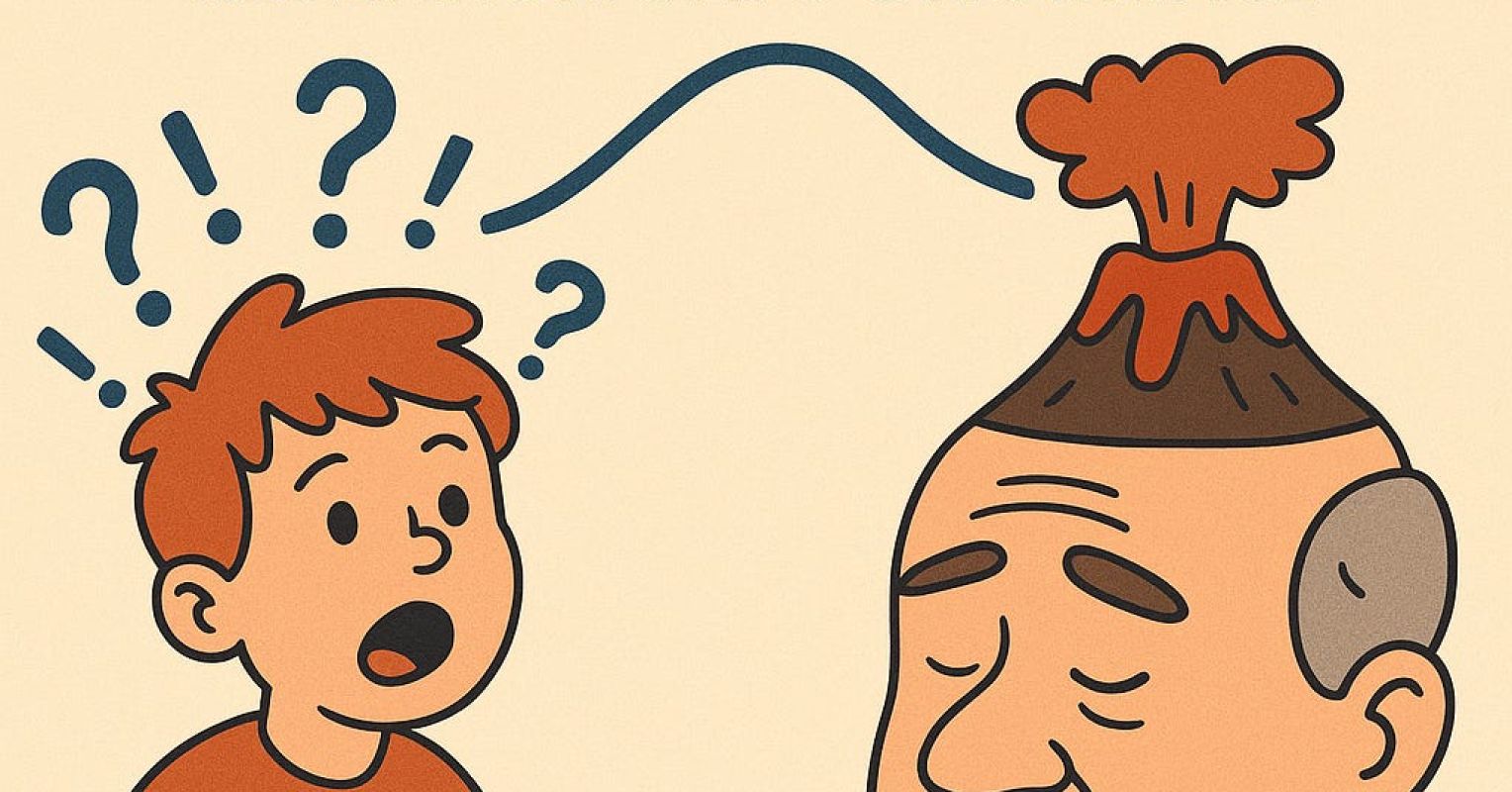
Children and the Age of "Why?": Lessons for Grandparents

Curiosity in grandparents fosters connection, adaptability, and emotional health, enhancing relationships with grandchildren.
#identity
Psychology
fromSilicon Canals
3 days ago

I realized recently that I've spent years becoming whoever the room needed me to be - and now I honestly can't tell the difference between what I actually enjoy and what I've just been pretending to for so long it stuck - Silicon Canals

Constantly adapting to others' expectations can lead to losing touch with one's authentic self and preferences.
Psychology
fromSilicon Canals
1 week ago

Psychology says people who feel like they've been living someone else's life aren't confused or ungrateful - they're often the ones who were so good at adapting in childhood that they never stopped adapting long enough to find out who they actually were - Silicon Canals

Adapting to others' needs in childhood can lead to feeling disconnected and lost in adulthood.
Psychology
fromSilicon Canals
3 days ago

I realized recently that I've spent years becoming whoever the room needed me to be - and now I honestly can't tell the difference between what I actually enjoy and what I've just been pretending to for so long it stuck - Silicon Canals

Constantly adapting to others' expectations can lead to losing touch with one's authentic self and preferences.
Psychology
fromSilicon Canals
1 week ago

Psychology says people who feel like they've been living someone else's life aren't confused or ungrateful - they're often the ones who were so good at adapting in childhood that they never stopped adapting long enough to find out who they actually were - Silicon Canals

Adapting to others' needs in childhood can lead to feeling disconnected and lost in adulthood.
Philosophy
fromPsychology Today
4 days ago

What's the Difference Between Wisdom and Critical Thinking?

Wisdom and critical thinking are distinct, with wisdom arising from experience and offering long-term insights, while critical thinking can foster wisdom over time.
#solitude
Mental health
fromSilicon Canals
5 days ago

Psychology says people who genuinely enjoy being alone aren't missing the need for connection - they've located the one condition under which their full self is available, and that condition happens to require an empty room, and there is nothing wrong with that except that the world was not designed with them in mind and has been making them feel guilty about it ever since - Silicon Canals

Society often mislabels the need for solitude as a deficiency, while those who recharge alone are more emotionally stable and focused.
Mental health
fromSilicon Canals
5 days ago

Psychology says people who genuinely enjoy being alone aren't missing the need for connection - they've located the one condition under which their full self is available, and that condition happens to require an empty room, and there is nothing wrong with that except that the world was not designed with them in mind and has been making them feel guilty about it ever since - Silicon Canals

Society often mislabels the need for solitude as a deficiency, while those who recharge alone are more emotionally stable and focused.
Psychology
fromPsychology Today
3 days ago

Why We Struggle With Change Even When We Want It

Change is inherently difficult, influenced by past experiences and the desire for familiarity, but self-awareness can facilitate lasting transformation.
#happiness
Mindfulness
fromSilicon Canals
3 days ago

Psychology says the happiest people aren't the ones who found their passion - they're the ones who stopped treating their life as a problem that needed solving - Silicon Canals

The relentless pursuit of passion may lead to unhappiness, while embracing diverse interests can foster a richer, more fulfilling life.
fromSilicon Canals
4 days ago
Psychology

Research suggests that people who pursue happiness directly almost never find it - but people who pursue meaning, connection, and acceptance report a quiet contentment that outlasts every peak experience - Silicon Canals

Mindfulness
fromSilicon Canals
3 days ago

Psychology says the happiest people aren't the ones who found their passion - they're the ones who stopped treating their life as a problem that needed solving - Silicon Canals

The relentless pursuit of passion may lead to unhappiness, while embracing diverse interests can foster a richer, more fulfilling life.
Psychology
fromSilicon Canals
4 days ago

Research suggests that people who pursue happiness directly almost never find it - but people who pursue meaning, connection, and acceptance report a quiet contentment that outlasts every peak experience - Silicon Canals

Pursuing happiness directly often leads to disappointment and lower satisfaction, as expectations create a gap between reality and feelings.
Philosophy
fromApaonline
5 days ago

What About Knowledge That No Longer Knows What It Is For?

Knowledge and education have become distorted by managerial frameworks, leading to a superficial understanding of their true purpose and value.
OMG science
fromBig Think
2 weeks ago

Simply looking up inspires scientific exploration

The night sky inspires wonder, but light pollution and satellites hinder our view of the cosmos and its mysteries.
Mindfulness
fromSilicon Canals
6 days ago

Psychology says the people who look back at the end of their lives with the least regret aren't the ones who made the fewest mistakes - they're the ones who were most fully present for the life they were actually living, who didn't spend it waiting for a better version to begin, who loved the people in front of them rather than the idea of people, and who understood, early enough to act on it, that this was always the whole thing and there was never going to be another one - Silicon Canals

Presence, not perfection, leads to a life without regret at the end.
Psychology
fromSilicon Canals
4 days ago

Psychology says the most self-centered people in any room aren't the ones who talk loudest - they're the ones who respond to every story you tell with a story about themselves, so automatically and so consistently that they've long since stopped noticing they do it - Silicon Canals

Self-absorbed individuals often hijack conversations by redirecting focus to their own experiences, showing a lack of empathy for others.
Parenting
fromScary Mommy
2 weeks ago

How To Find Your Kid's Passion & "Spark," According To Reddit

Parents desire their children to discover passions that provide purpose and excitement, fostering engagement with friends and community.
Philosophy
fromApaonline
1 week ago

Let Kids Be Kids? The Ethics of Maximizing Children's Talents

Children are increasingly pushed to maximize their athletic talent from a very young age, often at the expense of social and academic development.
#self-awareness
fromSilicon Canals
6 days ago
Psychology

Most people who overcame years of laziness didn't find motivation - they found a mirror they couldn't look away from - Silicon Canals

Self-awareness is crucial for real change; many people misperceive their own behaviors and motivations.
Psychology
fromSilicon Canals
6 days ago

Most people who overcame years of laziness didn't find motivation - they found a mirror they couldn't look away from - Silicon Canals

Self-awareness is crucial for real change; many people misperceive their own behaviors and motivations.
Productivity
fromPsychology Today
4 weeks ago

6 Signs You're a Smart Person

Intellectual creativity is a distinct form of intelligence often overlooked because society emphasizes artistic creativity, yet it represents equally valuable and powerful cognitive capability.
#trauma
Psychology
fromSilicon Canals
5 days ago

Psychology says the adults who seem the most indifferent aren't cynics - they've simply been disappointed so many times that their nervous system reclassified hope as a threat - Silicon Canals

Indifference may stem from a nervous system response to past trauma, where hope becomes associated with pain and disappointment.
Psychology
fromSilicon Canals
6 days ago

Psychology suggests the most reliable sign that someone had a difficult childhood isn't what they tell you about it - it's how startled they look when you are simply kind to them without a reason, as though kindness without a transaction attached is something the body recognizes as unusual before the mind has finished deciding what to do with it - Silicon Canals

Kindness can trigger confusion in those with a history of trauma due to learned survival responses from past experiences.
Psychology
fromSilicon Canals
2 weeks ago

9 signs your brain is wired for pattern recognition in a way most people never develop, and it almost always traces back to how unpredictable your childhood environment was - Silicon Canals

Heightened pattern recognition often stems from childhood adversity, not genetic gifts, as the brain adapts to unstable environments for survival.
Psychology
fromSilicon Canals
5 days ago

Psychology says the adults who seem the most indifferent aren't cynics - they've simply been disappointed so many times that their nervous system reclassified hope as a threat - Silicon Canals

Indifference may stem from a nervous system response to past trauma, where hope becomes associated with pain and disappointment.
Psychology
fromSilicon Canals
6 days ago

Psychology suggests the most reliable sign that someone had a difficult childhood isn't what they tell you about it - it's how startled they look when you are simply kind to them without a reason, as though kindness without a transaction attached is something the body recognizes as unusual before the mind has finished deciding what to do with it - Silicon Canals

Kindness can trigger confusion in those with a history of trauma due to learned survival responses from past experiences.
Psychology
fromSilicon Canals
2 weeks ago

9 signs your brain is wired for pattern recognition in a way most people never develop, and it almost always traces back to how unpredictable your childhood environment was - Silicon Canals

Heightened pattern recognition often stems from childhood adversity, not genetic gifts, as the brain adapts to unstable environments for survival.
OMG science
fromwww.scientificamerican.com
3 weeks ago

Scientists built a tickle robot to solve one of biology's strangest mysteries

Neuroscientists use Hektor, a tickle robot, to systematically study the neurological and physiological mechanisms of ticklishness by measuring brain activity, facial expressions, heart rate, and other bodily responses.
#intelligence
Psychology
fromSilicon Canals
6 days ago

9 signs you have a genuinely sharp mind (even if you never thought of yourself as particularly intelligent) - Silicon Canals

Intelligence often manifests in quiet observation and attention to detail rather than loud proclamations or traditional measures of success.
fromSilicon Canals
1 month ago
Psychology

Psychology says people who are genuinely intelligent show these 7 signs that have nothing to do with report cards or test scores - Silicon Canals

Psychology
fromSilicon Canals
6 days ago

9 signs you have a genuinely sharp mind (even if you never thought of yourself as particularly intelligent) - Silicon Canals

Intelligence often manifests in quiet observation and attention to detail rather than loud proclamations or traditional measures of success.
fromSilicon Canals
1 month ago
Psychology

Psychology says people who are genuinely intelligent show these 7 signs that have nothing to do with report cards or test scores - Silicon Canals

Psychology
fromSilicon Canals
6 days ago

Psychology suggests people who were never taken seriously as children grow into adults who either compulsively over-explain or go completely silent - and both responses are the same wound wearing different clothes - Silicon Canals

Over-explaining often stems from trauma and anxiety, leading to chronic justification of one's presence in conversations.
Education
fromSilicon Canals
1 month ago

Psychology says people who educated themselves through reading and curiosity instead of formal degrees solve problems in a fundamentally different way - and these 8 cognitive patterns explain why classrooms can't replicate it - Silicon Canals

Self-taught learners achieve innovative solutions by connecting learning directly to problems they want to solve, rather than learning subjects first and seeking applications later.
fromScary Mommy
3 weeks ago
Parenting

Why Experts Say Boredom Is Actually Good for Kids

Unstructured boredom activates the brain's default mode network, fostering creativity, emotional regulation, and self-reflection essential for child development.
Mindfulness
fromPsychology Today
3 weeks ago

Using a Beginner's Mind

Beginner's mind, rooted in Zen practice, enables conscious observation of present moments through widened perception, revealing unique interrelationships and sustaining well-being by treating time as an active verb rather than static noun.
Philosophy
fromPsychology Today
4 weeks ago

May Confusion Dawn As Wisdom

Confusion can be a pathway to wisdom and understanding rather than an obstacle to overcome, as demonstrated through Zen Buddhist practice and contemporary art.
Psychology
fromFast Company
1 week ago

3 habits of self-directed learners, according to brilliant polymaths

Brilliant minds share repeatable habits of directed learning and obsession, which anyone can practice regardless of talent or intelligence.
Psychology
fromPsychology Today
1 week ago

Why Creative People Struggle to Commit to One Path

Multipotentiality reflects cognitive flexibility and creativity, challenging the notion that pursuing multiple interests indicates a lack of focus.
Mindfulness
fromPsychology Today
4 weeks ago

Ideas We Aren't Ready to Understand-Yet

Collect ideas you don't understand but sense are important, as they trigger deeper cognitive processing and eventual insight through incubation.
Psychology
fromSilicon Canals
2 weeks ago

Psychology says people who are intellectually curious but socially selective aren't antisocial - they've simply reached a level of self-awareness where they'd rather be alone than accommodate conversations that require them to shrink their thinking - Silicon Canals

Selective social withdrawal can lead to positive outcomes like creativity, contrasting with the negative perceptions often associated with being antisocial.
Online learning
fromSilicon Canals
1 month ago

People who educated themselves through curiosity instead of classrooms solve problems in a fundamentally different way - and these 8 habits explain why formal education can't replicate it - Silicon Canals

Self-educated individuals develop distinct thinking habits through curiosity-driven learning, treating confusion as exploration rather than failure, enabling superior problem-solving compared to formal education approaches.
Growth hacking
fromPsychology Today
2 months ago

How to Cultivate an Experimenter's Mindset

Treat failures as data; repeatedly test uncertain elements, join experiment communities, and desensitize to non-reward to build resilience and adaptiveness.
UK politics
fromNature
1 month ago

Don't deprioritize curiosity-driven research

Government-directed shifts in research funding risk undermining curiosity-driven, investigator-led science that generates fundamental knowledge and long-term innovation.
Video games
fromPsychology Today
1 month ago

Finding the Playful Self at Play

Play often includes playfulness, but intense, professional, or high-stakes activities can become worklike, though moments of playfulness still emerge.
Psychology
fromPsychology Today
2 weeks ago

Practicing Radical Curiosity: Rethinking Who You Are

Challenging the inner voice and fostering self-compassion are essential for cultivating radical curiosity toward ourselves and others.
fromPsychology Today
1 month ago

The Cave You Didn't Build

Plato's choice of this word is deliberate. He is not describing neutral carriers. He is describing people whose job is manufacturing a convincing reality for an audience that cannot see behind the curtain. Here is what matters clinically: the conjurers are not necessarily villains. They may be devoted parents, conscientious teachers, or well-meaning community leaders.
Philosophy
Relationships
fromBig Think
2 months ago

Science shows curiosity is at the heart of great dates-and lasting love

Structured, escalating reciprocal personal self-disclosure accelerates intimacy and can generate rapid emotional closeness between partners.
Psychology
fromPsychology Today
2 weeks ago

Beyond Suspicion: Why We Doubt Greatness-and What It Says About Us

Mental mastery and team trust are crucial for success in cycling, transcending past performance and skepticism.
Humor
fromPsychology Today
1 month ago

How to Help Your Child Develop a Sense of Humor

A healthy sense of humor boosts confidence, social and relationship skills, relaxation, and health, and adults can teach it by modeling and encouraging age-appropriate humor.
Business
fromFast Company
1 month ago

Yes, everyone can be creative

A culture of creativity can be deliberately built through organizational systems, not an innate gift reserved for a few.
Social justice
fromPsychology Today
1 month ago

Our Mistakes Can Prevent and Help Create New Possibilities

Fragmented information and isolated institutions create systemic dysfunction, causing misguided decisions, polarization, and social and environmental harm.
Education
fromPsychology Today
1 month ago

How to Reach a Superior Level of Curiosity

Higher-level curiosity seeks unknown unknowns through open-ended exploration and first-principles thinking, allowing insights and utility to emerge without fixed goals.
#imagination
Science
fromJernesto
2 months ago

I miss thinking hard.

A persistent tension exists between a Builder drive for rapid, practical creation and a Thinker need for prolonged, solitary struggle to solve difficult problems.
Psychology
fromPsychology Today
3 weeks ago

The Creativity of Science: How We Discover New Things

Psychological research requires creativity to design studies, develop explanations, and provide practical recommendations.
Psychology
fromSilicon Canals
3 weeks ago

If you find yourself constantly researching topics that have zero practical application to your life and falling down Wikipedia rabbit holes at 2am, psychology says you share these 7 cognitive traits of genuinely curious minds - Silicon Canals

Curiosity is a multidimensional psychological trait with distinct facets that predict personality, emotion, and well-being outcomes, with joyous exploration being one key dimension where learning itself provides intrinsic reward.
Psychology
fromPsychology Today
3 weeks ago

The Friction We Need for the Feeling We Want

Effort and overcoming challenges are essential for personal growth and happiness, despite the allure of a frictionless life through technology.
Education
fromPsychology Today
2 months ago

A New Study Questions Everything We Knew About Early Talent

Early specialization predicts early wins but not ultimate elite adult performance; top adult performers typically emerge from broader, slower development.
Psychology
fromSilicon Canals
3 weeks ago

Behavioral science says people who learned about life outside the classroom didn't miss an education - they got a different one, built from necessity and curiosity rather than curriculum, and the thinking it produces is less organized and considerably harder to break - Silicon Canals

Real learning occurs through direct experience and active engagement outside formal education, producing more resilient and adaptable thinkers than classroom instruction alone.
fromPsychology Today
2 months ago

3 Tell-Tale Signs of Invisible Growth

Some of the most meaningful forms of growth an individual can experience happen beneath their conscious awareness. Typically, it registers first as discomfort, ambiguity, or even a sense of regression. When growth is happening at a person's core level, they're likely to underestimate it or misinterpret it entirely. As a psychologist, I often see individuals who assume they're "stuck" precisely when some of the most important internal shifts are underway. This is because the mind rarely announces these changes with clarity.
Mental health
Psychology
fromPsychology Today
3 weeks ago

"Happiness Is Finding a Pencil"

Happiness is not an achievement or goal to pursue, but rather a byproduct of transformative love that emerges unexpectedly in ordinary moments.
Education
fromwww.theguardian.com
2 months ago

My youngest is starting school for the first time. How can I best preserve his relentless curiosity? | Shadi Khan Saif

Curiosity is both innate and nurtured, evident as a child drawn to books and a brother who cultivated a love for reading despite hardship.
Psychology
fromSilicon Canals
4 weeks ago

Psychology says people who remember the exact location of every item in their childhood home - which drawer, which shelf, which cupboard - aren't sentimental, their brain mapped that house the way a body maps a minefield, and the precision that looks like nostalgia is actually surveillance that never turned off - Silicon Canals

Detailed childhood home memories reflect survival-based hypervigilance rather than nostalgia, with brains mapping familiar spaces like tactical terrain to navigate unpredictable or chaotic environments.
Psychology
fromPsychology Today
4 weeks ago

How Does the Brain Know Itself?

Introspection provides direct empirical contact with physical reality through interoception and neural integration, where bodily sensations become emotional and self-aware experiences via the insula and prefrontal cortex.
Psychology
fromPsychology Today
1 month ago

The Importance of Watching the Watchers

The brain's need for explanations drives surveillance, which governments exploit to control populations through information gathering and monitoring.
Philosophy
fromPsychology Today
2 months ago

Is Romantic Curiosity a Virtue?

Romantic dating and shopping are both goal-directed; romantic window-shopping delivers short-term enjoyment from curiosity but rarely leads to long-term relationship outcomes.
Mindfulness
fromPsychology Today
1 month ago

The Quiet Power of Awe

Awe shifts attention away from the self, increases connectedness, broadens perspective, and small moments of attention counter burnout and numbness.
Mindfulness
fromPsychology Today
2 months ago

The Work of Wonder

Wonder is a trainable attentional stance; mindfulness softens habitual certainty, allowing fresh, ordinary moments to yield warmth, connection, and resistance to burnout.
fromPsychology Today
1 month ago

Yes, You Can Increase Your Curiosity. Here's How.

In psychology, it's associated with openness, learning, creativity, and well-being. But in real life-especially under stress -curiosity often feels impractical, slow, or even risky. When emotions run high, curiosity is usually the first thing to go. That's not a character flaw. It's biology. Decades of research show that when people perceive threat-social, emotional, or status-related-the brain shifts into protection mode. Instead of prioritizing exploration and learning, the nervous system reallocates resources toward basic survival.
Psychology

Psychology
fromPsychology Today
2 months ago

To Live Your Best Life, Ask Yourself What's Truly Important

People gain motivation, reduce burnout, and increase life satisfaction by cultivating autonomy and inner drivers within external constraints.
[ Load more ]