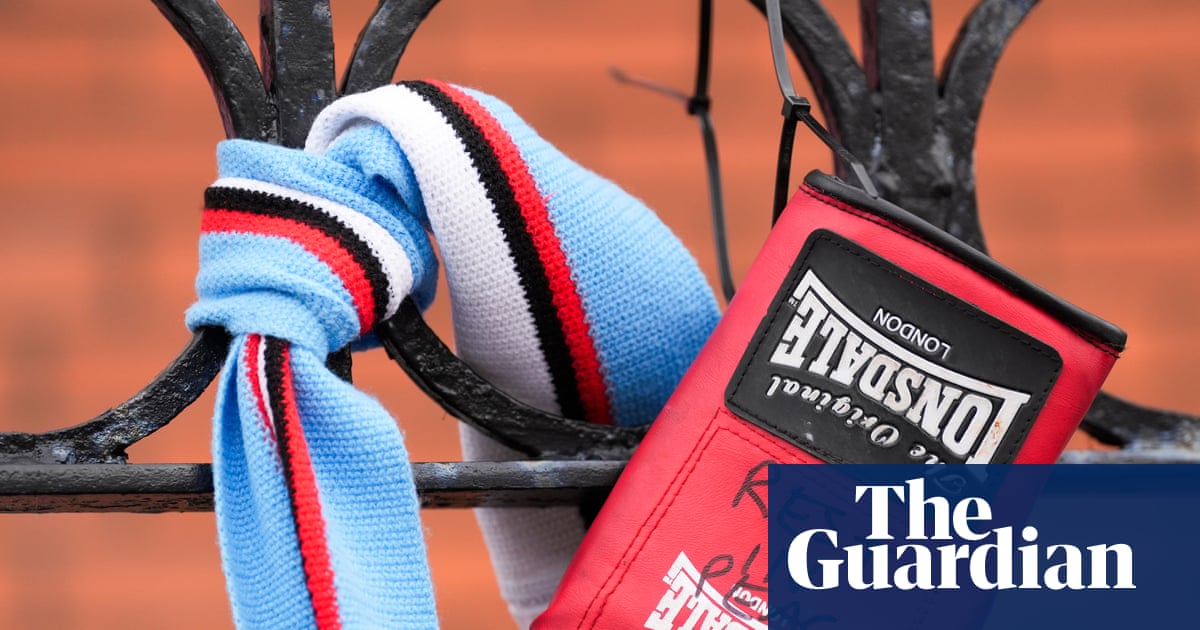
The celebration of life for Margaret Ellen 'Peggy' Murdoch took place at Ronnie Thompson's Funeral Church in Lisburn, Co Antrim, where members of the public, neighbours and carers came together to pay their respects.
The concept album is a response to the brutal murder of Breedlove's father and stepmother at the hands of his stepbrother. The frame—the first song and the last—of the album is about the murders and their aftermath. But this is not a true crime record.
When Dympna Little lost her beloved mother Lily Little to ovarian cancer in December 2024, it was her online community - she posts comedy videos as @dimplestilskin on Instagram and TikTok - who provided unexpected support and understanding of the experience of grief.
We were both in our 60s and had no health problems that were about to kill us any time soon, but our parents had recently died, so end of life issues were on our minds. Plus everyone knows writing a will is the responsible thing to do. We'd talked to lawyers. While I considered my friend a close one, we didn't have many friends in common. I knew he had a brother and sister.
Today I saw images of students leaving their school with their hands raised in the air, hours after cowering in fear and terror in barricaded classrooms. Nine dead and twenty-seven wounded in the tiny Rocky Mountain town of Tumbler Ridge. The mayor, Darryl Krakowka, said, "I have lived here for 18 years. I probably know every one of the victims." And this in Canada, which often seems to us Americans like a bastion of sanity and normalcy in comparison with our madness.
Dr. Bessel van der Kolk writes in 'The Body Keeps the Score' that trauma doesn't just live in our minds - it reshapes how our bodies respond to emotion. Sometimes, when we experience significant loss, our nervous system essentially decides that feeling is too dangerous and shuts down the whole operation.
'They're dead.' In disbelief, my response was unfiltered. 'What?' Followed by the F word. A wave of emotion rushed through me. My chest tightened. My body went cold. I could not immediately find the words to offer condolences, not because I did not feel them deeply, but because inside, my many parts were experiencing a collective shock. When you live with dissociative identity disorder (DID), news like this does not land in one place. It ricochets across all parts within.
People who had never married 'generally fared as well as, if not better than, married persons.' They also found that people who had no children were no different from parents in the quality of their life in their last month.