Software development
fromMedium
23 hours agoAsync Logging Is Not a Silver Bullet - What Actually Limits Performance
Async logging redistributes costs rather than reducing them, impacting performance in different ways depending on implementation.
We will be retiring the beta shortly and will be removing the button to get to it and ceasing support for it. The beta garnered negative feedback from the Stack Overflow community, including observations that it looked more like a general discussion site such as Reddit and was losing the essence of what made it successful: precise questions and community-validated answers.
Every iOS app I've shipped over the last nine years started the same way: a Rails developer with a great web app, users who want it in the App Store, and weeks spent on Xcode, signing certificates, and Swift boilerplate that has nothing to do with the actual product.
New overloads on TarFile.CreateFromDirectory accept a TarEntryFormat parameter, giving direct control over the archive format. Previously, CreateFromDirectory produced Pax archives. The new overloads support all four tar formats—Pax, Ustar, GNU, and V7—for compatibility with specific tools and environments.
A global survey of 2,039 Java developers published today finds 63% reporting that dead and unused code adversely affects their team's productivity, with 22% describing the impact of that technical debt as being severe. Conducted by Dimensional Research on behalf of Azul, a provider of a distribution of OpenJDK, the survey also finds that more than half (56%) now deal with a Common Vulnerability and Exposure (CVE) involving Java on a daily or weekly basis.
Kacper Borucki blogged about parameterizing exception testing, and linked to pytest docs and a StackOverflow answer with similar approaches. The common way to test exceptions is to use pytest.raises as a context manager, and have separate tests for the cases that succeed and those that fail. Instead, this approach lets you unify them. I tweaked it to this, which I think reads nicely: One parameterized test that covers both good and bad outcomes. Nice.
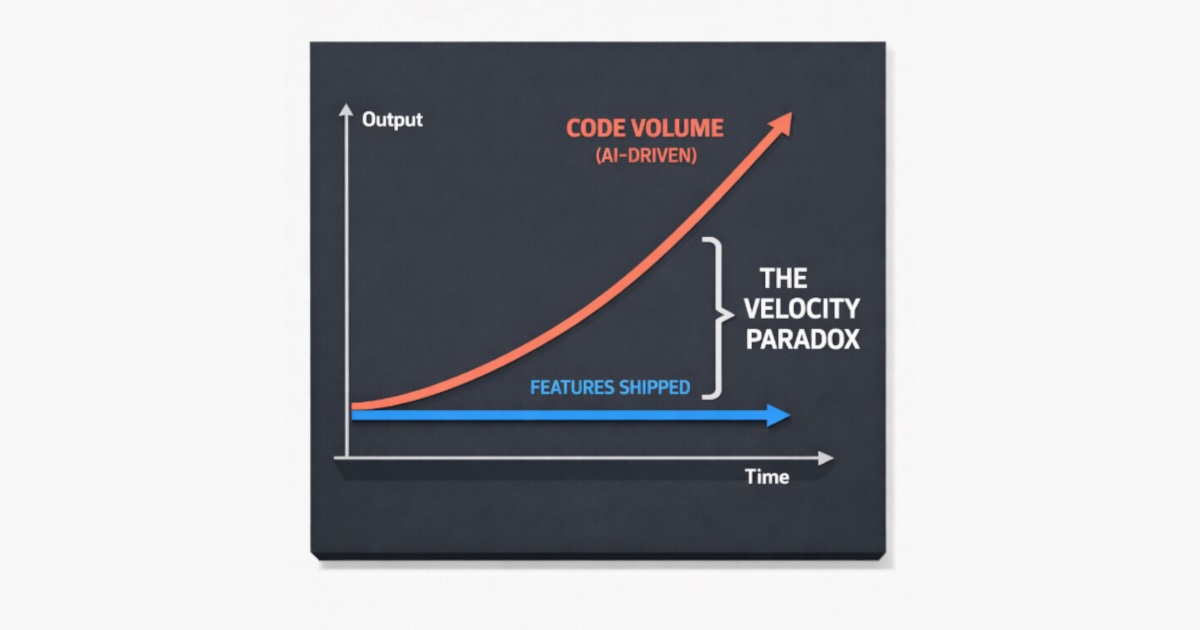
The software industry is collectively hallucinating a familiar fantasy. We visited versions of it in the 2000s with offshoring and again in the 2010s with microservices. Each time, the dream was identical: a silver bullet for developer productivity, a lever managers can pull to make delivery faster, cheaper, and better. Today, that lever is generative AI, and the pitch is seductively simple: If shipping is bottlenecked by writing code, and large language models can write code instantly, then using an LLM means velocity should explode.
The reason for this is Snap - a Linux application packaging format - creates a local Trash folder for each VS Code version, one that's separate from the system-managed Trash, according to a VS Code bug report dating back to November 11, 2024. Not only that, but Snap keeps older versions of VS Code after updates, potentially multiplying the number of local Trash folders and the trashed-but-not-deleted files therein. Emptying the system Trash folder doesn't affect the local instances.
On December 19, 2025, Cursor acquired Graphite for more than $290 million. CEO Michael Truell framed the move simply: code review is taking up a growing share of developer time as the time spent writing code keeps shrinking. The message is clear. AI coding tools have largely solved the generation speed. Now the industry is betting that review is the next constraint to break.