#diagnostic-test
#diagnostic-test
[ follow ]
#ai-in-healthcare #healthcare #clinical-reasoning #ai-chatbots #health-technology #patient-care #early-detection
#ai
Artificial intelligence
fromFuturism
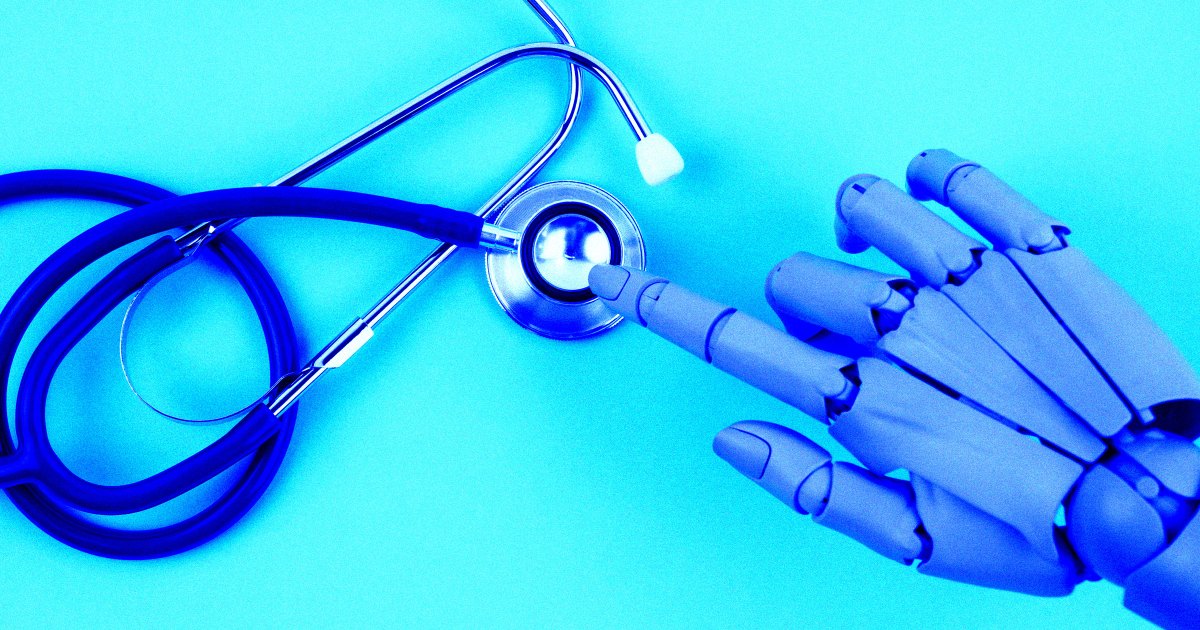
1 day agoMillions of Americans Are Talking to AI Instead of Going to the Doctor, and It's Giving Them Horrendously Flawed Medical Advice
AI chatbots are not reliable for medical advice, with failure rates exceeding 80% for ambiguous symptoms and 40% for straightforward cases.










Marketing tech
fromwww.businessinsider.com
1 week agoMedvi, the AI-powered telehealth company, is fueled by ads from doctors who don't appear to exist
Medvi, an AI telehealth startup, generated $401 million in revenue last year and is projected to reach $1.8 billion this year, leveraging affiliate marketing.
#healthcare-ai
Healthcare
fromwww.mercurynews.com
1 month agoAmazon bets on health care AI with tools for patients, doctors
Amazon Web Services launches Amazon Connect Health, an AI tool that automates medical documentation, billing codes, patient verification, and appointment scheduling to reduce healthcare administrative burden.

Healthcare
fromwww.mercurynews.com
1 month agoAmazon bets on health care AI with tools for patients, doctors
Amazon Web Services launches Amazon Connect Health, an AI tool that automates medical documentation, billing codes, patient verification, and appointment scheduling to reduce healthcare administrative burden.
fromwww.bbc.com
2 months agoTrial launched to 'help spot health risks early'
Public health consultant Dr Ross Keat said supporting people earlier to make small preventative changes would make "a big difference later on". Some 3,500 people in the north of the island within that age bracket are eligible for the checks. The checks will be carried out by two pre-existing nurses that support GP staff and would not replace GP appointments, Keat explained, adding that the cost would be minimal and absorbed by Ramsey Group Practice.
Public health
fromNews Center
1 month agoAdvancing Preventive Care and Cardiovascular Risk Prediction Through Online Tools - News Center
As the Magerstadt Professor of Cardiovascular Epidemiology, Khan studies the epidemiology of risk for heart failure. Using population-based cohorts and large electronic health record data analyses, she performs mechanistic studies that may enhance risk prediction and identify novel therapeutic agents for the prevention and treatment of cardiovascular disease. Khan and her team have developed a tool to predict risk and prevent cardiovascular disease such as heart failure, stroke, arrhythmia, coronary artery disease and many other conditions.
Public health
fromThe New Yorker
1 month agoDoctor Mike's Internet Medicine
If it continues to spread past the demarcation that we usually draw using a skin marker-we say Sharpie, but it's a skin marker-we say that this is spreading. Diagnosis: possible sepsis. Varshavski was not talking to the patient or to nursing staff. He was not even in a hospital. He was speaking into a camera in a two-bedroom apartment on the fifty-sixth floor of a building in Hell's Kitchen, in a makeshift studio where he records videos and his popular podcast.
Medicine
Healthcare
fromHarvard Business Review
1 month agoHealthcare Uses Specialized Language. It Needs Specialized AI, Too.
Healthcare professionals across specialties use inconsistent terminology and communication styles, creating significant translation barriers that impede care coordination and data interoperability.
Healthcare
fromFortune
1 month agoMicrosoft launches Copilot Health, a dedicated space for personal health data and AI-driven insights | Fortune
Microsoft launched Copilot Health, an AI assistant feature that integrates and analyzes health data from wearables, electronic health records, and lab results to provide personalized health insights and provider recommendations.
Public health
fromwww.bbc.com
2 months agoPeriod blood test could offer less invasive alternative to cervical screening
Menstrual blood collected on a sanitary pad can detect cervical cancer signs, offering a potentially accurate, less invasive at-home screening alternative to clinician-collected cervical samples.
Healthcare
fromTechRepublic
1 month agoAmazon Expands Health AI to Its Retail App, Offering Prime Members Free 24/7 Virtual Care
Amazon expands Health AI from its clinic app to Amazon.com and the Amazon app, positioning itself as an AI-powered healthcare entry point integrated with its retail ecosystem.
Medicine
fromwww.theguardian.com
2 months agoSimple blood test can predict which breast cancer treatment will work best, study finds
A blood test measuring circulating tumour DNA predicts breast cancer treatment response before or within four weeks, enabling alternative therapies and avoiding ineffective drugs.
fromFast Company
2 months agoConnected data will rescue healthcare
AI plays an important role-but not by fixing fragmented data on its own. The work of organizing, connecting, and interpreting healthcare information still belongs to people and the systems they build. Where AI helps is after that foundation is in place: by bringing the right information forward at the right time, reducing the effort it takes to find what matters, and supporting better decisions in the moment of care.
Medicine
fromBusiness Matters
2 months agoThe Rise of Telemedicine: How Digital Health is Reshaping Medical Equipment Demand
Between March 2020 and March 2022, over 100 million telemedicine services were delivered to approximately 17 million Australians. The Australian government invested $409 million to make telehealth permanent, whilst the UK announced £600 million for digital health infrastructure in April 2025. Patient adoption is equally impressive: 60% find telemedicine more convenient than in-person appointments, 55% report higher satisfaction with teleconsultations, and 74% of millennials prefer virtual appointments for routine care. These aren't temporary shifts; they represent a fundamental transformation in healthcare delivery.
Healthcare
Healthcare
fromFortune
2 months agoWhen AI meets healthcare, how should payers react? | Fortune
AI can fully automate most transaction-oriented payer jobs, significantly boost knowledge and relationship work productivity, and replace many interpreter and doer roles, transforming payer operations and member services.
[ Load more ]