World politics
fromThe Nation
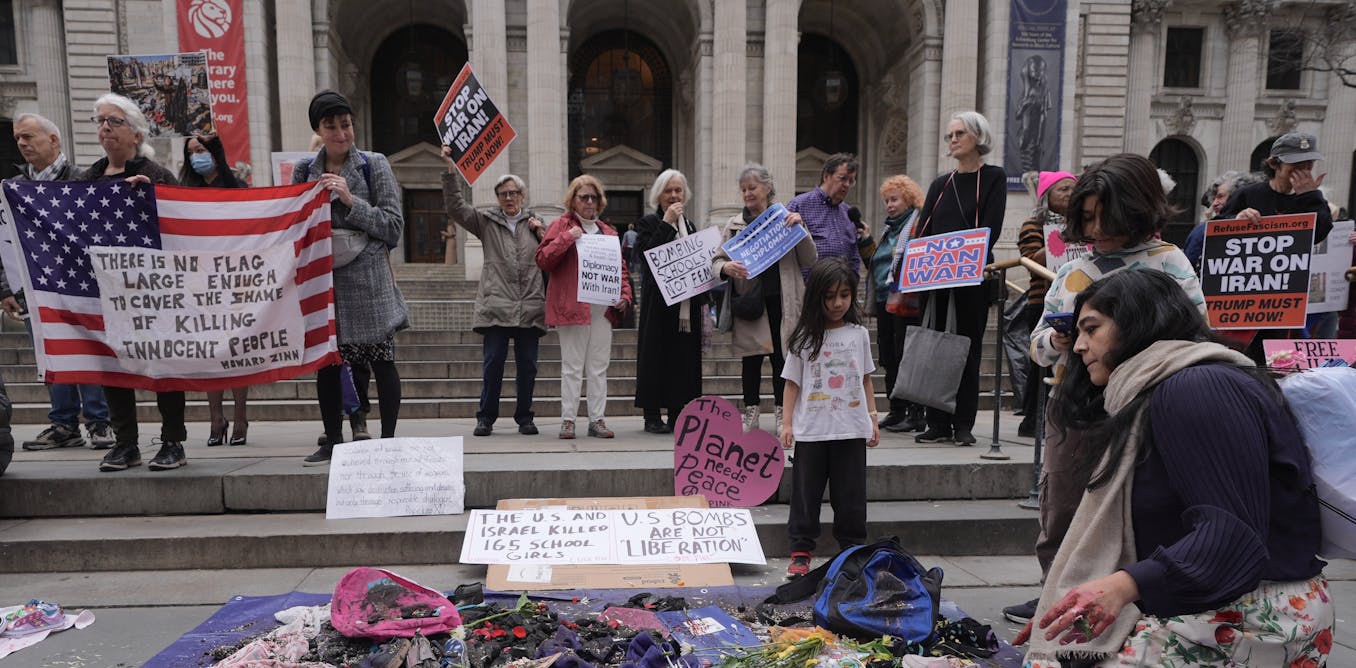
17 hours agoThe Iranian Diaspora Is Fracturing Over Trump's War
The normalization of war and its celebration among some in the Iranian diaspora reflects a troubling redefinition of violence and foreign intervention.
The event was once described by The New York Times as 'a cross between a Jewish summer camp in the Catskills and a progressive jazz concert.' Past incarnations have featured Laurie Anderson, Philip Glass, Lou Reed.
Mamdani opened up about his journey from immigrant child to becoming the city's 112th mayor, calling it a dream realized. Born in Uganda in 1991 and arriving in New York at age 7, he's now the youngest person to hold the office in over a century and the city's first Muslim and African-born mayor.
"This is more than a new collection gallery-it's a bold reframing of how African art is understood and celebrated in American museums," said Anne Pasternak, Shelby White and Leon Levy Director, Brooklyn Museum.
Ali Sbeity painted vibrant portraits and landscapes of his rural hometown in Southern Lebanon, often sharing his works on his Facebook. He participated in numerous local arts exhibitions and created murals for schools in Beirut.
I was sharing earlier with Mo that it means so much to so many young Muslim kids to know that someone on the team we love is fasting the same way. In a country awash in anti-Islamic bigotry where a GOP member of Congress can post Muslims don't belong in American society without a single member of his party condemning his words, representation and visibility remain a necessity.
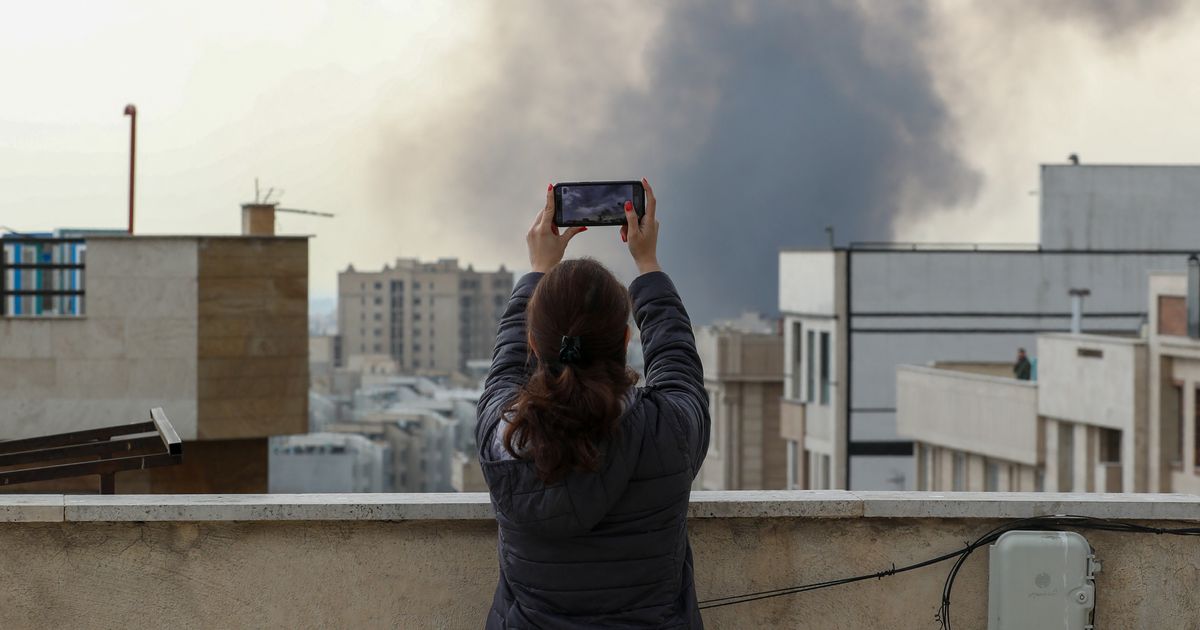
Distance does not soften the terror. It only deepens my helplessness. In moments like this, I realize that geography is not measured in miles, but in attachment. War rearranges distance. These days I find myself returning to "The Conference of the Birds," the 12th-century poem by Attar of Nishapur, seeking meaning through ancient wisdom about spiritual journeys and transformation.
There is a scene in "Morgenkreis | Morning Circle" (2025), a 16-mm film by Berlin-based Palestinian artist Basma al-Sharif, that unfolds at the threshold of a daycare center. A young boy clings to his father, his fists locked into the fabric of his coat, his arms wrapped tightly around him. The father gently tries to pry himself free while a daycare worker crouches nearby, attempting to distract the child and coax him inside. It is an ordinary moment, one that anyone who has ever been a child - or cared for one - recognizes instantly, as well as the gut-wrenching feeling it provokes.
Antisemitism in New York is not an abstract dialogue problem. It is not a misunderstanding that can be resolved through facilitated conversation. It is a civic emergency: assaults on visibly Jewish New Yorkers, threats against synagogues, harassment on public transit, and a permissive ideological environment - especially in elite progressive spaces - that treats Jewish identity as uniquely suspect.
Her team's analysis of the residue samples contained beeswax, plant oils, animal fats, bitumen, and resins from coniferous trees such as pines and larches, as well as vanilla-scented coumarin (found in cinnamon and pea plants) and benzoic acid (common in fragrant resins and gums derived from trees and shrubs). The resulting fragrance combined a "strong pine-like woody scent of the confers," per Huber, mixed in with "a sweeter undertone of the beeswax" and "the strong smoky scent of the bitumen."
"The object of the Museum is to acquire power," announces a crusty old archaeologist in Penelope Fitzgerald's 1977 satire, The Golden Child. It isn't a goal he respects. He wants the museum where he's settled into semiretirement to genuinely devote itself to educating its visitors. Instead, he correctly charges, its curators act like a pack of Gollums, hoarding "the art and treasures of the earth" for their own self-aggrandizement and pleasure.
Emirates: The airline has suspended flights to and from Dubai until 11:59 p.m. UAE time on March 4, due to airspace closures across the region. Limited repatriation flights and freighter flights are departing from Dubai airspace.
Iranian families release footage online commemorating loved ones shot during nationwide antigovernment protests. Tehran, Iran Iran and the United States are presenting clashing views before expected talks as diaspora Iranians rally across the world to demand action after thousands were killed during last month's nationwide protests. Amid reports that a second round of mediated talks may take place over the coming days, Washington has maintained it wants to limit Iran's missile programme and end all its nuclear enrichment.
A young French tennis coach who once lived the American dream describes being detained, shackled and expelled under the Trump administration's tightened border rules. JUANA SUMMERS, HOST: There was a sharp drop in the number of European tourists visiting the U.S. last year compared to 2024. Many said the volatile political climate was the reason. Frightening stories of Europeans getting caught in the Trump administration's reinforced border controls have also dampened desires to cross the Atlantic. NPR's Eleanor Beardsley brings us one French person's experience.
Unlike virtually all other non-European ethnicities, SWANA - or Middle Eastern/North African (MENA), as used in the show - is grouped under "White" on the US census. It's not just the census, though. It's medical forms, college applications, just about anything with a check box for ethnicity. Efforts have been made to change this, with some success. More institutions are adding a separate category on forms - and one might appear on the 2030 census.
"The show is about giving the pen back to the writer, giving the paintbrush back to the artist, during this time of genocide," the Ridikkuluz told Hyperallergic in an interview at the gallery. "And when there's been so much censorship, these are artists that might not have been able to do this anywhere else."
Walking through Ideas of Africa: Portraiture and Political Imaginationat the Museum of Modern Art, I noticed that the exhibition didn't have definite sections or texts, and the wall labels abstained from naming the nationalities of the photographers. It was an invigorating experience to be in a show that eschews geographic boundaries set up by Western nations, as well as rejects a cause-and-effect narrative that centers Western colonialism as a framework for understanding African aesthetic production.