#fast-testing-system
#fast-testing-system
[ follow ]
#ai-in-healthcare



fromHealthcare Brew
2 months agoHealthcare
How health systems are competing with AI search tools for patients
AI-powered search tools and chatbots are reducing web traffic to health providers, threatening traditional online patient acquisition and prompting health systems to change marketing strategies.

fromTheregister
3 weeks agoJunior disobeyed orders, tried untested feature during demo
Lydia noticed the machine's battery was running low and told two other team members. The more senior went to fetch the backup battery, while the junior team member suggested a quicker method that Lydia firmly rejected.
Gadgets
#ai-code-generation


Software development
fromDevOps.com
1 month agoCan QA Reignite its Purpose in the Agentic Code Generation Era? - DevOps.com
AI now generates 41% of all code with 84% of developers adopting it, requiring deterministic execution, isolated environments, and convergent correctness signals for effective agentic QA.
Healthcare
fromHarvard Business Review
1 month agoHealthcare Uses Specialized Language. It Needs Specialized AI, Too.
Healthcare professionals across specialties use inconsistent terminology and communication styles, creating significant translation barriers that impede care coordination and data interoperability.
Medicine
fromwww.scientificamerican.com
4 weeks agoNew early-warning alerts have doctors thinking it may be possible to repair a damaged kidney
Drug-induced acute kidney injury is common in hospitalized patients but often goes unrecognized because it causes no symptoms and damage occurs before creatinine levels rise enough to alert clinicians.
fromwww.scientificamerican.com
1 month agoScientists gave the same sample to seven at-home microbiome tests. The results were dramatically different
Scientists have long known that vast colonies of bacteria, viruses and other microorganisms—a population collectively called the microbiome—live on and inside the human body. But how they influenced our health was long a mystery. In just the past few years, we've learned that myriad factors, from the food that we consume to the amount of time that we spend sleeping to our genes to our home, all affect our microbiome.
Health
fromwww.bbc.com
2 months agoTrial launched to 'help spot health risks early'
Public health consultant Dr Ross Keat said supporting people earlier to make small preventative changes would make "a big difference later on". Some 3,500 people in the north of the island within that age bracket are eligible for the checks. The checks will be carried out by two pre-existing nurses that support GP staff and would not replace GP appointments, Keat explained, adding that the cost would be minimal and absorbed by Ramsey Group Practice.
Public health
DevOps
fromSitePoint Forums | Web Development & Design Community
2 months agoWhat is the best way to differentiate between performance testing and a true reliability test system?
Prioritize fault tolerance before resource optimization; automate long-term reliability tests with staged, parallel, and targeted strategies to preserve CI/CD velocity.
Education
fromeLearning Industry
1 month agoAssessment Consistency At Scale: The Missing Infrastructure In Digital Learning
High-quality assessment design is complex, iterative, and essential for fairness; consistent, comparable, collaboratively-developed assessments reduce workload and ensure valid interpretation.
fromBusiness Matters
2 months agoWhy Tolerance Management Is a Business-Critical Skill in Modern Manufacturing
We are now in a time of manufacturing where precision is more than a technical necessity; it's a business requirement. The more complex, globally dispersed and demanding things get, the less slack remains in the system. Under these circumstances tolerance management has become a decisive competence and affects competitiveness not only in terms of controlling costs, ensuring quality and improving production efficiency but also for long term market success.
Business
Artificial intelligence
fromwww.scientificamerican.com
1 month agoHow one chemist is using AI and robots to automate lab experiments
AI-driven laboratory automation like Coscientist accelerates chemistry by reducing repetitive work, improving accuracy, and enabling experiments previously limited by human error or fatigue.


fromdzone.com
2 months agoManaging Changing Hardware/Peripherals in a Robust POS
Retail point-of-sale systems today offer a wide range of options for peripherals and hardware. Their technical specifications play a major role in selection, and big retailers often choose multiple vendors to reduce a single point of failure. This gives them an advantage to negotiate price or support as well. Technically, these peripherals also require updating with new models and may have new feature sets. This necessitates the redevelopment of point-of-sale applications, increasing development costs.
Information security
fromIndependent
1 month agoCost of medical IT system to hit 61m - and it is still only rolled out in one hospital
The chair of the Oireachtas Health Committee has described a €10m increase in the cost of a national medical laboratory IT system as "an omnishambles". The health service signed a €33m contract for the system known as MedLis with Oracle Health in 2015 and agreed a €17.9m contract extension for it in 2022.
Healthcare
Public health
fromMedium
2 months agoThe preventive healthcare product cycle: how ancient practices become "innovations" every 20 years
Ancient preventive practices resurface as billion-dollar health trends when crisis, enabling technology, legitimation, and storytelling translate them into measurable, automated, culturally acceptable products.
fromArs Technica
1 month agoHave we leapt into commercial genetic testing without understanding it?
Martschenko's argument is largely that genetic research and data have almost always been used thus far as a justification to further entrench extant social inequalities. But we know the solutions to many of the injustices in our world-trying to lift people out of poverty, for example-and we certainly don't need more genetic research to implement them. Trejo's point is largely that more information is generally better than less.
Science
Software development
fromInfoQ
1 month agoHow a Small Enablement Team Supported Adopting a Single Environment for Distributed Testing
Reusing one development environment with versioned deployments and proxy routing, enabled by a small enablement team and cultural buy-in, scales distributed-system testing.
Public health
fromwww.bbc.com
2 months agoPeriod blood test could offer less invasive alternative to cervical screening
Menstrual blood collected on a sanitary pad can detect cervical cancer signs, offering a potentially accurate, less invasive at-home screening alternative to clinician-collected cervical samples.
fromMedium
2 months agoTest smart: how to solve dilemmas as QA?
To find the typical example, just observe an average stand-up meeting. The ones who talk more get all the attention. In her article, software engineer Priyanka Jain tells the story of two colleagues assigned the same task. One posted updates, asked questions, and collaborated loudly. The other stayed silent and shipped clean code. Both delivered. Yet only one was praised as a "great team player."
Software development
Healthcare
fromwww.theguardian.com
1 month agoUnbelievably dangerous': experts sound alarm after ChatGPT Health fails to recognise medical emergencies
ChatGPT Health fails to recognize medical emergencies in over half of cases, potentially endangering users by recommending home care instead of emergency department visits.
fromForbes
2 months agoWhy AI Chatbots Are Essential For Modern Medical Practices
The world of medical practice management is changing faster than ever, driven by two simultaneous forces: escalating patient expectations and crushing administrative complexity. In my years working with healthcare organizations, I've seen these challenges evolve from nuisances into crises. Research by Bain & Company found that 65% of healthcare consumers want more convenient experiences, and 70% want more responsiveness from providers. They want instant answers to routine questions, immediate scheduling access and minimal friction.
Healthcare
fromInfoQ
2 months agoGetting Feedback from Test-Driven Development and Testing in Production
Hast mentioned that they trust their unit tests and integration tests individually, and all of them together as a whole. They have no end-to-end tests: We achieved this by using good separation of concerns, modularity, abstraction, low coupling, and high cohesion. These mechanisms go hand in hand with TDD and pair programming. The result is a better domain-driven design with high code quality. Previously, they had more HTTP application integration tests that tested the whole app, but they have moved away from this (or just have some happy cases) to more focused tests that have shorter feedback loops, Hast mentioned.
Software development
Medicine
fromwww.theguardian.com
2 months agoGut check: are at-home microbiome tests a way to hack your health' or simply a waste? | Antiviral
At-home gut microbiome tests can detect microbial markers but often lack consistent interpretation, limiting usefulness for most people unless clinically ordered and properly interpreted.
Medicine
fromwww.theguardian.com
2 months agoSimple blood test can predict which breast cancer treatment will work best, study finds
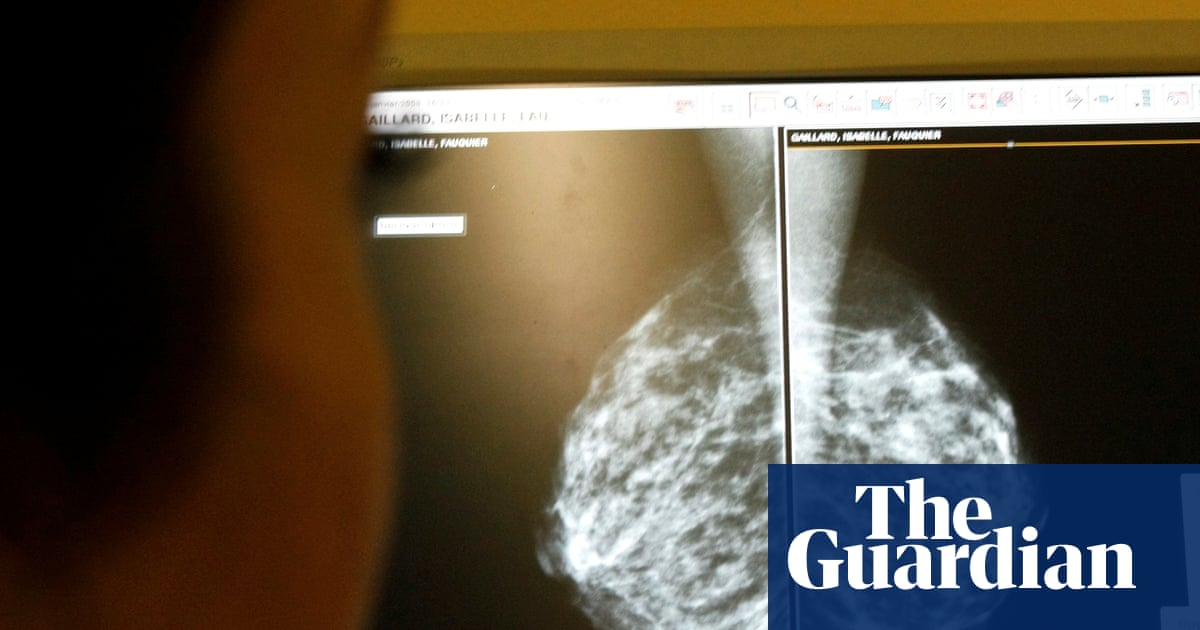
A blood test measuring circulating tumour DNA predicts breast cancer treatment response before or within four weeks, enabling alternative therapies and avoiding ineffective drugs.
[ Load more ]