#gravedigging
#gravedigging
[ follow ]

London politics
fromwww.theguardian.com
4 weeks agoGraves in England and Wales could be reused after 100 years
The Law Commission proposes modernizing England and Wales burial laws by allowing grave reuse after 100 years, reopening closed burial grounds, and establishing national standards for the first time in over 170 years.
fromThe Local France
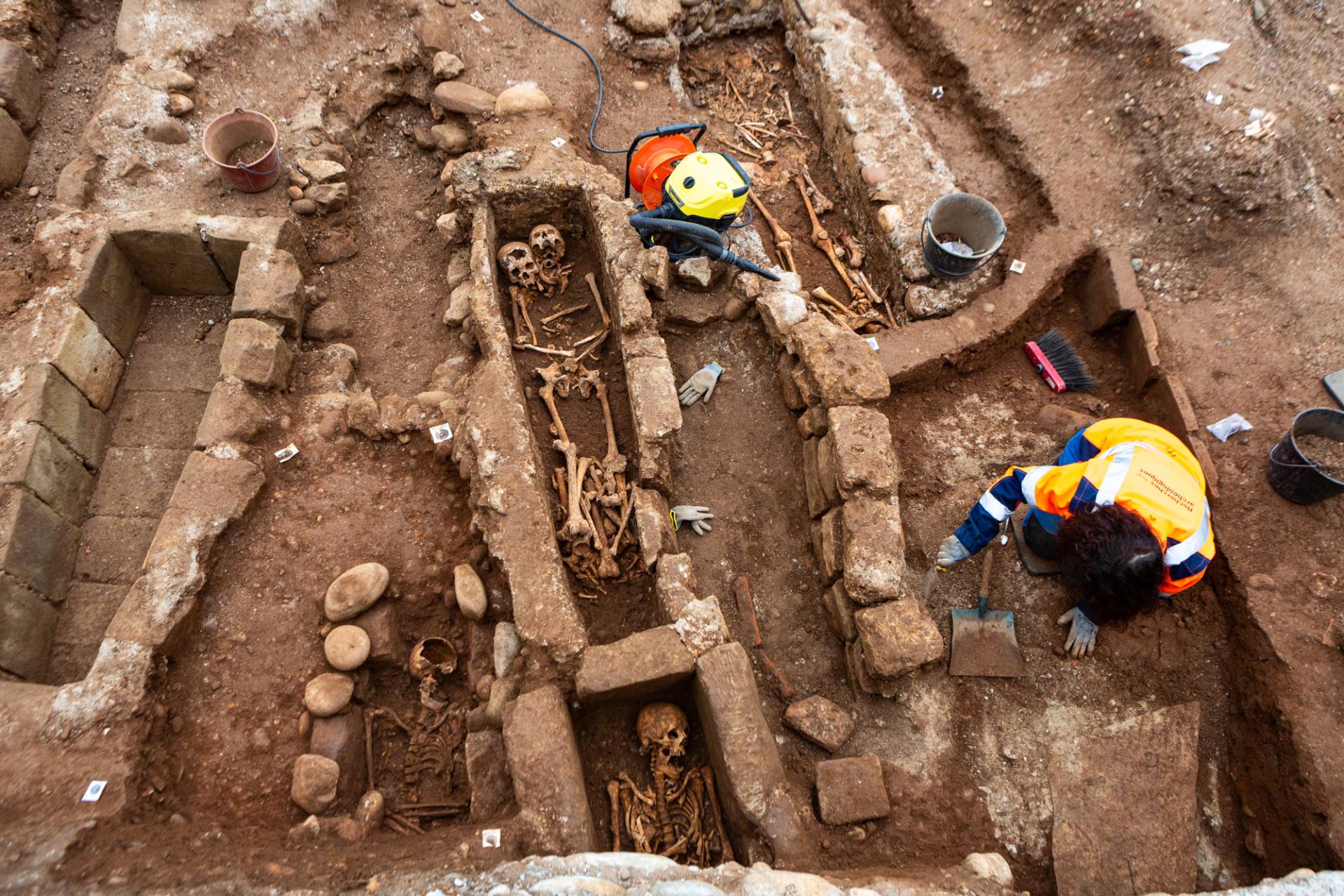
3 weeks agoMysterious ancient skeletons discovered sitting upright in France
Similar to four others unearthed nearby earlier this month, it is sitting upright at the bottom of a one-metre-wide pit. The skeleton's hands are resting in its lap. Like the others, its back is against the eastern wall, its face directed westward.
France news
fromMedievalists.net
2 weeks agoWho Lies in Winchester's Medieval Mortuary Chests? - Medievalists.net
This project demonstrates the combined power of science, the study of human remains and historical research to discover new information about the six mortuary chests and their occupants which would not have been available to us a generation ago.
History
fromwww.theguardian.com
3 weeks agoAncient skeleton discovered sitting upright in France
Five tombs of Gauls buried in a seated position have been discovered in central Dijon. Similar to four others unearthed nearby earlier this month, it is sitting upright at the bottom of a one-metre-wide pit. The skeleton's hands are resting in its lap. Like the others, its back is against the eastern wall, its gaze directed westward.
France news
Arts
fromwww.theguardian.com
4 weeks agoAlmost human': life-size replicas of the dead help mend broken hearts in India
A Kolkata workshop creates lifesize replicas of deceased loved ones using clay, fiberglass, and silicon, helping families process grief by keeping realistic figures of the dead in their homes.
Public health
fromwww.theguardian.com
1 month agoA death scholar on why we need to stop being naive about dying: I always hear, Can't you just put me into a nice meadow?'
Australia will experience peak death around 2040 as baby boomers age, doubling annual death rates and straining healthcare systems, while end-of-life control and autonomy become increasingly valued among those with resources.
Miscellaneous
fromdesignboom | architecture & design magazine
1 month agoregula tschumi on funerary culture as a living visual language in southern ghana
Ga-Adangme figurative coffins function as embedded cultural expressions reflecting belief systems, lineage, social hierarchy, and family identity through ritual objects and commemorative practices.
fromwww.cbc.ca
1 month agoToronto family stung by cemetery theft warns others to be careful with family heirlooms | CBC News
I was actually shocked. Mori said it felt like a total violation of my parents. The niche is sacred. On Nov. 17, 2025, the same day the Mori family reported the missing items from Highland Memory Gardens in North York, Halton police held a news conference detailing a string of thefts at eight cemeteries across the Toronto, Halton and Niagara region.
Canada news
Environment
fromMail Online
1 month ago'Boil in a bag' funerals come to Britain: Scotland approves technique
Scotland introduces alkaline hydrolysis, an eco-friendly funeral method that dissolves bodies into sterile liquid flushed down drains, marking the first UK adoption since cremation's 1885 introduction.
fromwww.thehistoryblog.com
1 month agoSamnite burials of children with bronze warrior belts found
The excavation ultimately unearthed 34 burials, 15 of them belonging to children between two and ten years old when they died. The graves are clustered in groups, probably reflecting family nuclei. Most the grave types are earthen pits covered with roof tiles angled against each other.
History
fromwww.thehistoryblog.com
1 month agoCoffins of Amun's singers, sealed papyri found at Luxor
The coffins are elaborately painted in vivid polychrome. They were stacked in layers and carefully arranged so the 22 coffins fit into the constricted space. They were placed in 10 horizontal rows and the lids separated from the body of the coffin to maximize the limited space. There are no personal names on most of the coffins, but there are titles. The most common title found in the coffin is Singer of Amun or Chantress of Amun.
History
fromThe Art Newspaper - International art news and events
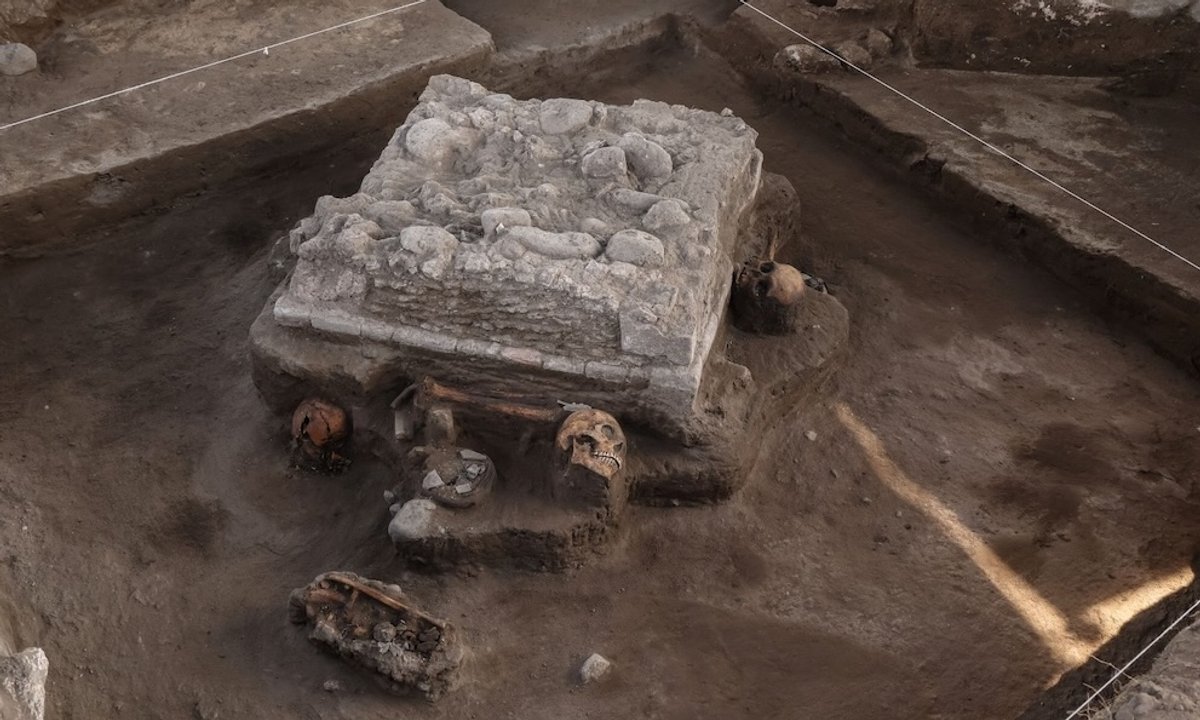
2 months agoOrnate 1,400-year-old Zapotec tomb discovered in Mexico
"At Monte Albán alone, more than 200 tombs of varying size and decoration reflect social, political and economic differences among the ancient Zapotecs," Javier Urcid, an anthropology professor at Brandeis University in Massachusetts, tells The Art Newspaper. "Built beneath residences, tombs were reused over generations-with additional burials and occasional changes to offerings or decoration. The inscribed genealogies verified membership in family lineages."
Science

fromHyperallergic
2 months agoRequest for Proposals: Operator for the Harlem African Burial Ground Cultural Education Center
For two centuries, from the mid-1600s to the mid-1800s, free and enslaved New Yorkers of African descent were buried at the Harlem African Burial Ground. Over time, the history of this site was lost - erased by the subsequent redevelopment of the land. Today, the Harlem African Burial Ground project is a community-driven vision to honor and memorialize this historic site with a new outdoor memorial and indoor cultural education center, while also addressing affordable housing and jobs needs in the East Harlem community.
Arts
Design
fromdesignboom | architecture & design magazine
2 months agorammed earth makes up wrot studio memorial proposal for new york city public cemetery
Rammed-earth burial mound with steel elements memorializes COVID victims on Hart Island, embracing material decay, temporal change, and marking mass graves.
fromMedievalists.net
1 month agoViking-Age Woman Buried with Her Dog in Norway - Medievalists.net
Excavations carried out in 2025 by the Arctic University Museum of Norway revealed that the artefacts came from a boat burial. The grave contained the skeleton of a woman placed inside a boat measuring about 5.5 metres in length. She had been buried together with a dog, suggesting the animal may have been an important companion in life.
History
fromwww.thehistoryblog.com
1 month agoCenturion's tombstone reused in someone else's grave
Both of the cyst graves feature funerary markers reused as building material. One of them contains the partially preserved tombstone of Legio I Italica centurion Gaius Valerius Verecundus was engraved with a wreath of which only traces remain and an inscription that describes him as having been heavily pressed by fate.
History
fromwww.thehistoryblog.com
2 months agoMonumental Republican tombs found in Rome suburb
An monumental early Republican-era funerary complex has been discovered in a suburb of Rome. The excavation of the Via di Pietralata east of Rome also uncovered a stretch of an ancient road, a small cult building and two monumental basins dating back to the 3rd and 2nd centuries B.C. Remains from this early in the Republican era are scarce in the Eternal City, which make these finds very archaeologically significant.
History
[ Load more ]