#hard-drive
#hard-drive
[ follow ]
#ai #ai-infrastructure #data-centers #cloud-computing #technology #ai-demand #hyperscalers #intel #energy-efficiency







#datacentres
London startup
fromComputerWeekly.com
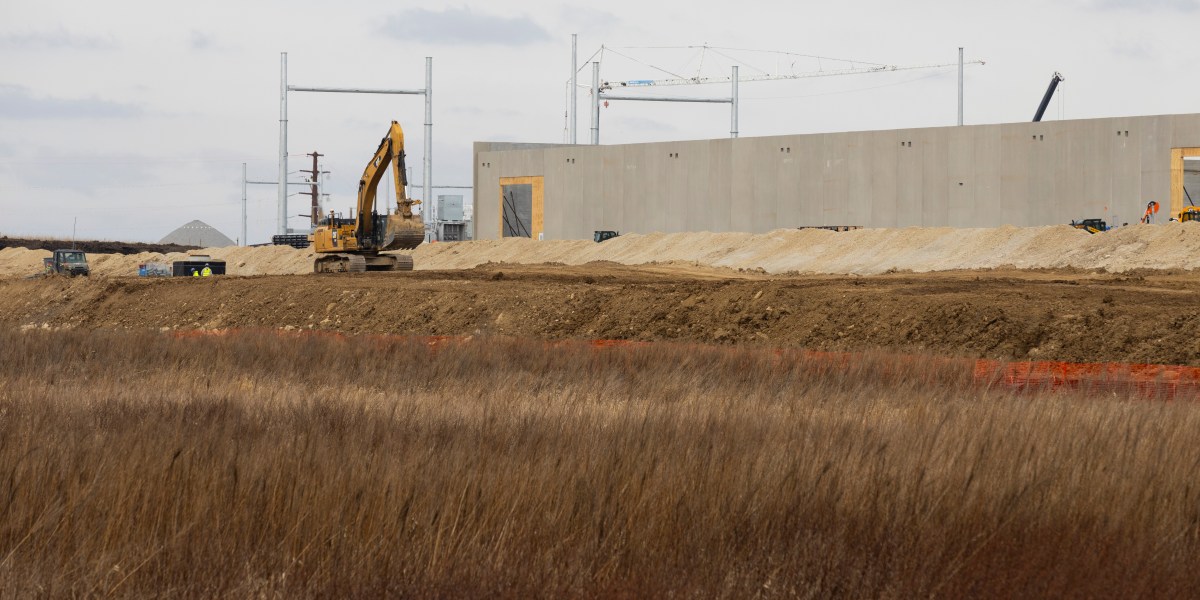
5 days agoDatacentre developers tout benefits to local communities, but do they deliver? | Computer Weekly
Datacentre developments are causing challenges for local businesses, raising concerns about energy consumption and community impact despite potential local benefits.
fromTechzine Global
1 month agoNetApp launches EF50 and EF80 for AI and HPC workloads
As businesses contend with ever-increasing data volumes and performance-intensive applications such as AI model training, AI inferencing and high-performance computing, they need infrastructure that delivers speed, scalability and efficiency without added complexity.
DevOps
fromKotaku
2 months agoWhile Samsung and Crucial SSDs Hold Steady, Kingston's Portable Drive Hits a New Low - Kotaku
The market is filled with external storage solutions designed to free up space by offloading larger files. The prices mainly depend on the capacity and performance. Some start at just $50, while higher-capacity options often sit well over $200. If you want plenty of storage without compromising on the speeds, the Kingston XS2000 2TB high-performance SSD is one of the top options out there.
E-Commerce
DevOps
fromTechzine Global
1 month agoEverpure brings ActiveCluster to file environments
Everpure expands its Enterprise Data Cloud platform with ActiveCluster for file environments, enabling seamless data movement between systems while maintaining availability and protecting unstructured data critical for AI applications.
Gadgets
from24/7 Wall St.
1 month agoWestern Digital vs Seagate After the Sell-Off: One Storage Rival Is a Clear Winner
Western Digital offers superior growth potential with 40% year-over-year revenue guidance, while Seagate provides higher dividend income at 0.81% yield, making the choice dependent on whether investors prioritize growth or income.
fromTechzine Global
1 month agoMicrosoft Silica stores data for 10,000 years in special kitchen glass
Microsoft has achieved a breakthrough with Project Silica. The technology for long-term data storage now works with borosilicate glass. This is the same material used for cookware and oven doors. The method can store data for up to 10,000 years. Long-term storage of digital information remains a challenge for data centers and archives. Magnetic tapes and hard drives degrade within a few decades, making them less suitable for storing data for future generations.
Science
from24/7 Wall St.
2 months agoSanDisk and Western Digital are the Real AI Kings of 2026
As investors turned their back on software (notably, the seat-based software-as-a-service companies), they're turned towards hardware in a big-time way. You wouldn't know it by looking at those flat shares of Nvidia ( NASDAQ:NVDA), but the iShares Semiconductor ETF ( NASDAQ:SOXX) is up around 13% year to date, with few signs of slowing down. The winners within semis have been broad, but the undisputed kings of the 2026 semiconductor surge belongs to the memory and storage stocks.
Business
fromZDNET
2 months agoThis thumb-sized accessory gave my old PC an instant speed boost (and twice the storage)
In the not-so-distant past, the solution for boosting the speed of an aging, sluggish PC was to add more RAM or upgrade the processor. Now, the way to sail over that speed bump is to get a new storage drive, and there's no better storage upgrade for performance than fitting your system with an M.2 drive. Also: What is MoCA 2.5? How this low-cost networking option can seriously improve your internet There is no shortage of excellent M.2 drives out there, but if you're looking for high-end performance and stability when the going gets tough, the is well worth a look.
Gadgets
fromZDNET
2 months agoThis SSD enclosure has become one of my most-used laptop accessories - here's why
With this setup, the Samsung SSD achieved read speeds of roughly 4,000 MB/s and write speeds of about 1,300 MB/s. Those are great numbers. Accessing files felt instantaneous. It took no time at all to open the movie I stored inside the drive. The read speed also shows that the enclosure isn't restricting the drive. It's making full use of the Thunderbolt connection. Writing large files is equally impressive, letting users save big files fast.
Gadgets
Gadgets
fromKotaku
2 months agoWD 8TB External Hard Drive Drops Back to $0.02 per GB, Now Cheaper Than 6TB Storage Capacity - Kotaku
8TB Western Digital Elements desktop external drive provides compact, plug‑and‑play USB storage for Windows with faster transfer speeds, ideal for large media collections and backups.
[ Load more ]