#intel-celeron-n4500
#intel-celeron-n4500
[ follow ]

fromTheregister
1 week agoThe end of Linux i486 support looks nigh
"I *really* don't think i486 class hardware is relevant any more," Torvalds said in 2022, noting that while some people may still operate 486 systems they aren't relevant from a kernel development standpoint. "At some point, people have them as museum pieces. They might as well run museum kernels."
Software development



#intel-processors
Tech industry
fromThe Verge
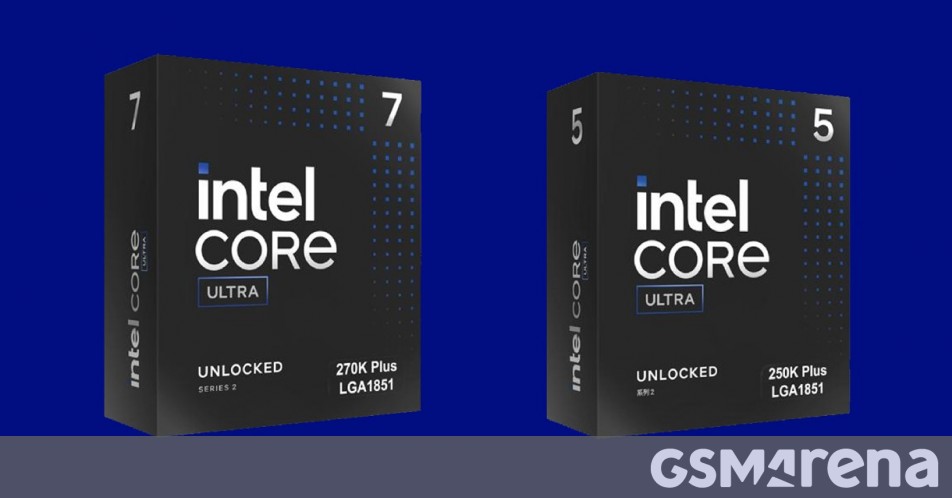
1 month agoIntel announces Core Ultra 270K Plus and 250K Plus, its 'fastest gaming desktop processors ever'
Intel launches Core Ultra 7 270K Plus and 250K Plus processors on March 26th, claiming superior gaming performance over previous flagship chips with competitive pricing and strong multithreaded capabilities.
Tech industry
from24/7 Wall St.
1 month agoAMD Looks to Displace Intel With World's First Copilot+ Desktop Chips
The AI PC market will grow at 30% annually from 2025 to 2034, reaching $967 billion, driven by on-device AI demand, with AMD's Ryzen AI 400 Series challenging Intel's x86 dominance through superior AI performance capabilities.

fromTheregister
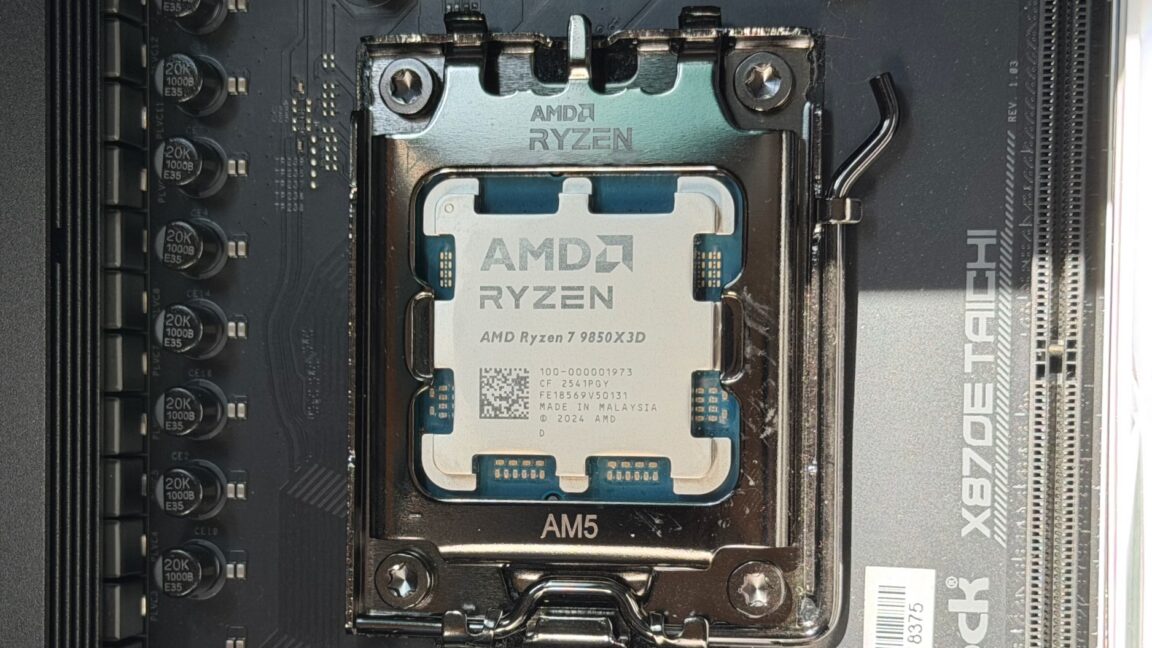
2 months agoIntel greets memory apocalypse with Xeon workstation CPUs
The Xeon 600 lineup spans the gamut between 12 and 86 performance cores (no cut-down efficiency cores here), with support for between four and eight channels of DDR5 and 80 to 128 lanes of PCIe 5.0 connectivity. Compared to its aging W-3500-series chips, Intel is claiming a 9 percent uplift in single threaded workloads and up to 61 percent higher performance in multithreaded jobs, thanks in no small part to an additional 22 processor cores this generation.
Tech industry
Gadgets
fromArs Technica
1 month agoAMD will bring its "Ryzen AI" processors to standard desktop PCs for the first time
AMD's Ryzen AI 400-series desktop processors are repackaged laptop chips with up to 8 CPU cores and Radeon 860M GPUs, targeting business desktops rather than gaming due to high DDR5 memory costs.

fromGSMArena.com
1 month agoPoco X8 Pro runs Geekbench, it's powered by a new chipset
The Poco X8 Pro and Poco X8 Pro Max are definitely both coming soon, since we've already seen them getting certified by various authorities across the globe. Today, the Poco X8 Pro has been spotted in the Geekbench online database, because a prototype has run the benchmark. As you can see from the screenshot below, it managed a single-core score of 1,708 and a multi-core score of 6,297.
Mobile UX
fromZDNET
2 months agoHow much RAM does your Linux PC actually need in 2026? An expert's sweet spot
Modern Linux is powerful, flexible, stable, and secure. With the exception of some of the more lightweight Linux distributions, it's also far more resource-dependent (just like all modern operating systems). Also: 5 things to consider before leaping from one Linux distribution to another Consider this: The minimum system requirements for Ubuntu Desktop today include just 4GB of RAM. I've run Ubuntu on a virtual machine with only 3GB of RAM.
Gadgets
fromGSMArena.com
1 month agoiQOO Z11x runs Geekbench revealing the MediaTek chip powering it
The iQOO Z11x is most likely powered by the MediaTek Dimensity 7400 SoC, based on the listing's details. This was paired with 8GB of RAM in the prototype which ran the benchmark. The device will launch running Android 16 with OriginOS 6 on top.
Gadgets
fromThe Verge
2 months agoLeak: Nvidia is about to challenge 'Intel Inside' with as many as eight Arm laptops
They won't have an Nvidia graphics chip next to an Intel CPU, but rather an Nvidia N1 system-on-chip at the helm - and overnight, a Lenovo leak revealed that the company has built six laptops on the upcoming N1 and N1X processors, including a 15-inch gaming machine. Dataminer Huang514613 posted those names to X, including 14 and 16-inch models of the Ideapad Slim 5, two variants of the 15-inch Yoga Pro 7, and a Yoga 9 transforming 2-in-1.
Gadgets
fromZDNET
2 months agoI tested Samsung's first laptop with Intel's Panther Lake chip - it's a sleeper hit for Windows users
What is identical to the previous generation is the display. Up top, the Galaxy Book6 Ultra has a 16-inch, AMOLED 3K touchscreen. It has the same peak HDR brightness of 1,000 nits, the same adaptive 120Hz refresh rate, and the Corning Gorilla Glass with DXC for added durability. This isn't a knock against Samsung; the company clearly recognized the display was one of the Galaxy Book5 Pro's best features, and brought it back.
Gadgets


fromGSMArena.com
2 months agoNothing Phone (4a) runs Geekbench, reveals the chipset powering it
The Nothing Phone (4a) has run the Geekbench AI benchmark today. The phone has the model number A069, runs Android 16, and the prototype running the benchmark has 12GB of RAM, though we assume there will be lower amounts of memory offered as well.
Gadgets
[ Load more ]