#legal-motion
#legal-motion
[ follow ]
#intellectual-property

Intellectual property law
fromIPWatchdog.com | Patents & Intellectual Property Law
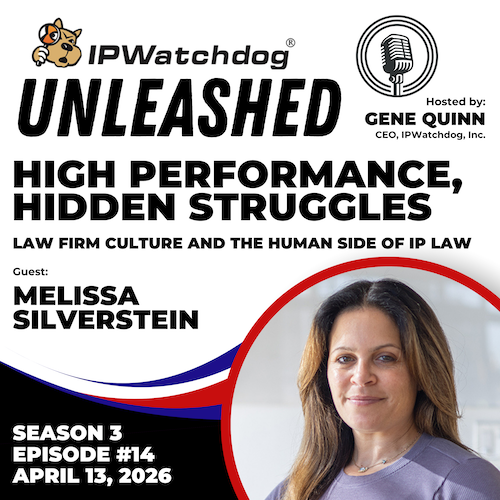
23 hours agoHigh Performance, Hidden Struggles: Law Firm Culture and the Human Side of IP Law / IPWatchdog Unleashed
Intellectual property strategy is shifting from accumulation to optimization, focusing on business value and addressing mental health challenges in the legal profession.


#legal-ethics
Law
fromAbove the Law
2 days agoLegal Ethics Roundup: Billing 34.5 Hours In A Day, New ABA Recusal Opinion, Shortcomings In SCOTUS Ethics Rules, Pro Se AI Sanctions, Extra Time For Bar Exam, Purging Immigration Judges & More - Above the Law
Lawyers must disclose information that could lead to a judge's disqualification, balancing this with client confidentiality obligations.

Law
fromAbove the Law
2 days agoLegal Ethics Roundup: Billing 34.5 Hours In A Day, New ABA Recusal Opinion, Shortcomings In SCOTUS Ethics Rules, Pro Se AI Sanctions, Extra Time For Bar Exam, Purging Immigration Judges & More - Above the Law
Lawyers must disclose information that could lead to a judge's disqualification, balancing this with client confidentiality obligations.
Philosophy
fromAbove the Law
4 weeks agoYou Can't Salvage A Bad Judge By Calling Them Postmodern - Above the Law
Postmodern analysis offers useful concepts for understanding contemporary disenchantment with traditional meaning systems, exemplified by judicial figures like Lawrence VanDyke who adopt unconventional approaches to legal writing.
US politics
fromAbove the Law
4 weeks agoMorning Docket: 03.18.26 - Above the Law
Chief Justice Roberts calls for ending personal attacks on judges, while questions arise about presidential official acts; meanwhile, legal developments span judicial conduct, cryptocurrency regulation, Section 230 reform, and national security concerns.


US politics
fromAbove the Law
1 month agoMorning Docket: 03.06.26 - Above the Law
Nearly 200 former federal judges challenge the binding authority of unexplained Supreme Court shadow docket orders, while AI legal tools face regulatory scrutiny and the Trump administration designates Anthropic a supply chain risk over refused autonomous weapons development.


fromAbove the Law
2 months agoWriting Like A Lawyer Without Sounding Like A Lawyer - Above the Law
Here's the good news: writing isn't a talent. It's a skill. And skills respond to the same cure as every other skill: reps. Not glamorous reps. Not the kind that gets applause. The kind you do in small rooms, when no one is watching, when you're a little uncomfortable, when you want to quit halfway through because the sentence you just wrote feels like wet cardboard. That's the work.
Writing
fromIPWatchdog.com | Patents & Intellectual Property Law
1 month agoWhen Lawyers Need Help: Supporting Colleagues While Protecting Clients
The legal profession rewards endurance, precision and control. It also quietly normalizes stress, isolation and overextension. For patent practitioners and other IP lawyers, the pressures are uniquely acute: compressed prosecution deadlines, high-stakes litigation exposure, often unrealistic client-driven budget constraints, regulatory whiplash at the U.S. Patent and Trademark Office (USPTO), and increasingly complex technologies layered with global filing and prosecution strategy.
Intellectual property law
Law
fromAbove the Law
4 weeks agoMorning Docket: 03.17.26 - Above the Law
Recent legal developments reveal systemic challenges including prosecutorial staffing concerns, AI misuse in legal matters, judicial oversight of executive actions, and emerging liability issues around AI-generated harmful content.
Law
fromAbove the Law
1 month agoMorning Docket: 03.10.26 - Above the Law
Major legal developments include Anthropic's Defense Department lawsuit, judicial rulings on illegal appointees, law firm mergers, antitrust settlements, AI legal services expansion, Supreme Court shadow docket debates, and ChatGPT litigation over legal advice.
fromAbove the Law
2 months agoRunning Your Cases - Above the Law
They don't drive it. They don't manage it. They don't control it. They let it control them. And then one day, they look up and realize discovery closed last week, the client is asking why nobody has taken the key depo, the adjuster wants a status report "by the end of the day," and the partner is asking the question that makes your stomach drop: "Where are we on this file?"
Law
Law
fromAbove the Law
2 months agoThreading The Needle: How To Win The Case That Can't Be Won (At Least Not The Obvious Way) - Above the Law
Win messy cases by accepting client imperfection, avoiding absolutism, and focusing ruthlessly on the single pivotal issue that defines where responsibility ends.


fromAbove the Law
2 months agoThe Moment Legal Found Out What 'Ready' Really Means - Above the Law
A year or so ago, most legal departments were still testing. AI pilots. Workflow trials. Small process experiments. Everyone was learning cautiously. The stakes were relatively low, and the work was labeled "innovation," which made imperfection forgivable. Then something shifted. Those same pilots became part of day-to-day delivery, and the business started relying on them. Sometimes intentionally, because early results looked good.
Law
Law
fromAbove the Law
2 months agoMorning Docket: 02.09.26 - Above the Law
Numerous contentious developments: Fifth Circuit allowing indefinite detention of suspected undocumented migrants, high-profile appearances, campus censorship, market regulation, AI legal-advice concerns, and infrastructure litigation.
[ Load more ]