#military-data-sharing
#military-data-sharing
[ follow ]
#cybersecurity #military-technology #drones #autonomous-weapons #nato #ai #pentagon #russia #drone-warfare #anthropic
#ai


Artificial intelligence
fromTNW | Artificial-Intelligence
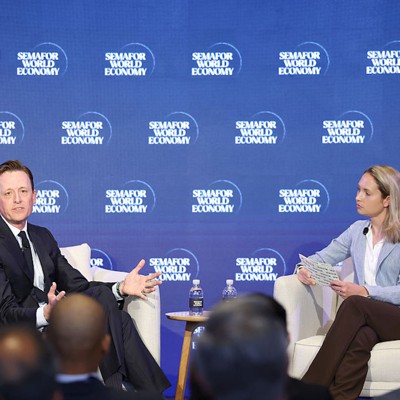
19 hours agoAnthropic's Amodei meets Wiles and Bessent at the White House over Mythos access and Pentagon standoff
Anthropic CEO Dario Amodei met with White House officials to discuss access to the AI model Mythos amid a standoff with the Pentagon.



fromFuturism
1 day agoPentagon Disturbed as Its Fleet of Drones Is Left Bobbing in the Ocean When Elon Musk's Starlink Fails
The outage left millions of Starlink customers in the dark back in August of 2025, dealing a blow to the company's image as an always-on satellite internet provider.
Tech industry

fromSpiegel
3 days ago(S+) Defense in Orbit: Germany Goes Big in the Military Space Race
The German military also uses this airborne communications hub, which allows command staff and soldiers deployed abroad to communicate across continents. The information they share is classified, strictly confidential.
Germany news


Europe news
fromwww.businessinsider.com
5 days agoThe West is preparing for cheap drone attacks, but many businesses and civilians can only watch, not stop them
Civilian and corporate organizations struggle to counter small drone threats due to legal restrictions, leading to increased demand for drone detection devices.
#ai-governance
Artificial intelligence
fromFortune
1 day agoAI cybersecurity capabilities require urgent international cooperation, AI godfather Bengio says | Fortune
Yoshua Bengio emphasizes the urgent need for international cooperation in addressing AI's risks, particularly with the release of Anthropic's Mythos model.
Artificial intelligence
fromFortune
3 days agoA retired general's warning: America can't fight the AI arms race on tech it doesn't control | Fortune
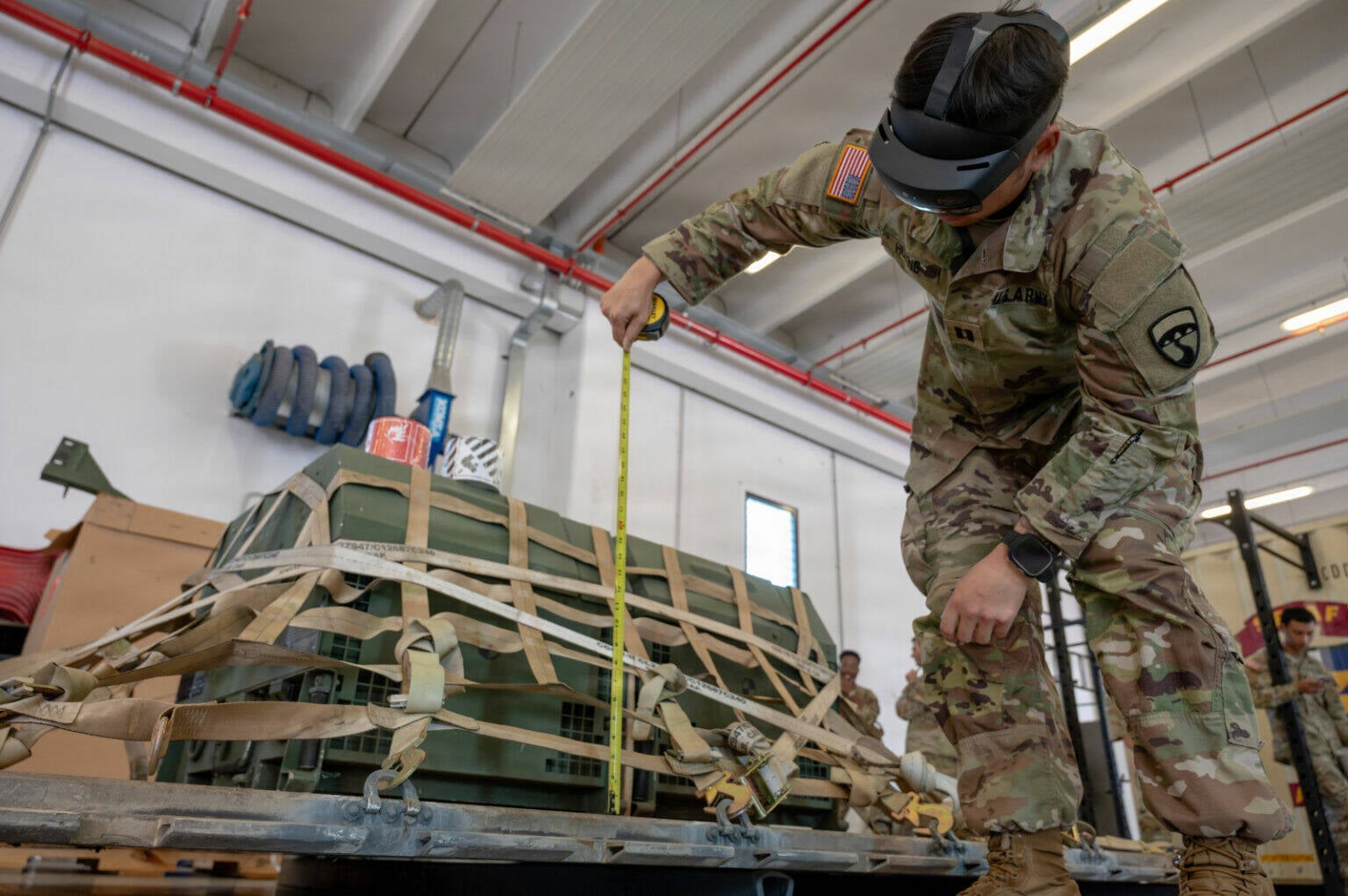
The U.S. faces a critical AI arms race affecting military power and national security, highlighted by the Anthropic-Pentagon standoff over AI usage control.
Russo-Ukrainian War
fromwww.businessinsider.com
4 days agoUkraine's Patriot crews are breaking from the norm, fighting Russian threats with fewer missiles
Ukrainian soldiers are using fewer Patriot interceptors against Russian missiles due to strained stockpiles, launching only one per threat instead of the standard two to four.
Miscellaneous
fromBusiness Insider
1 month agoNATO allies are linking their defenses together to better hunt and kill drones on its eastern edge
NATO and the US are developing an integrated counter-drone network along Russia's border using rapid 90-day testing cycles to detect, track, and neutralize aerial threats including Shahed-type drones.
fromwww.dw.com
1 month ago'Vulnerable' satellites guide the world and its wars
Signals from Global Navigation Satellite Systems are quite vulnerable. They are exceptionally weak, meaning that any radio noise near their frequency, accidental or malicious, can interfere with reception. I am confident that there are people in every government who understand the problem. The challenge is getting leadership to both understand and act to reduce the risk.
fromTheregister
1 month agoPentagon praises Palantir tech for battlefield strike speed
So we've gone from identifying the target to now coming up with a course of action, to now actioning that target, all from one system. This is revolutionary. We were having this done in about eight or nine systems where humans were literally moving detections left and right in order to get to our desired end state, in this case closing a kill chain.
World news
fromSilicon Canals
1 week agoWhen militaries share data centers with banks: how Gulf strikes exposed a structural flaw in global cloud infrastructure - Silicon Canals
When civilian banks, logistics platforms, and payment processors share physical data center infrastructure with military AI systems, those facilities become legitimate military targets under international humanitarian law - and the civilian services housed inside lose their legal protection.
Information security



fromDataBreaches.Net
1 month agoTop NATO allies believe cyberattacks on hospitals are an act of war. They're still struggling to fight back. - DataBreaches.Net
NATO countries' restrained response to hybrid attacks is at odds with public opinion, new polling shows: Broad swaths of the public in key allied countries say actions such as cyberattacks on hospitals should be considered acts of war. The POLITICO Poll, conducted in the United States, Canada, France, Germany and the United Kingdom, showed a majority of people agreed that a cyberattack that shuts down hospitals or power grids constitutes an act of war. Canadians felt the strongest about the issue, with 73 percent agreeing.
Privacy technologies
US politics
fromThe Cipher Brief
2 months agoConfidence, Interoperability, and the Limits of U.S. Decision Systems
The United States lacks decision-shaping architecture to reliably produce calibrated strategic judgment, causing institutional overconfidence and vulnerability in cognitive and Gray Zone conflicts.
fromwww.bbc.com
1 month agoUK agrees drone defence plan with four EU allies
Britain is to develop new air defence weapons alongside the EU's four biggest military powers, deepening ties with the European defence sector. The project will invite manufacturers in the UK, Germany, France, Italy and Poland to submit plans to build low-cost missiles and autonomous drones. The allies are pledging a speedy process to build the weapons together, inspired by Ukraine's development of cheap drones to counter attacks from Russia.
UK politics
fromWIRED
1 month agoPalantir Demos Show How the Military Could Use AI Chatbots to Generate War Plans
When the user asks "What enemy military unit is in the region?" the AIP Assistant guesses that it's "likely an armor attack battalion based on the pattern of the equipment." This prompts the analyst to request a MQ-9 Reaper drone to survey the scene. They then ask the AIP Assistant to "generate 3 courses of action to target this enemy equipment," and within moments, the assistant suggests attacking the unit with either an "air asset," a "long range artillery," or a "tactical team."
Artificial intelligence
fromBusiness Insider
1 month agoThere's a new US Army office 'getting in the dirt' with soldiers and trying to quickly turn their ideas into real battlefield tech
Number one is speed takes priority over perfection. We can iterate to get to operational capability. And the second is that early soldier feedback is critical in order to make sure we're getting the right technology for the future fight, and then we want to be able to prove the demand signal before we spend big dollars on programs.
US news
fromwww.theguardian.com
2 months agoState-sponsored hackers targeting defence sector employees, Google says
The report catalogues a relentless barrage of cyber operations, most by state-sponsored groups, against EU and US industrial supply chains. It suggests the range of targets for these hackers has grown to encompass the broader industrial base of the US and Europe from German aerospace firms to UK carmakers. State-linked hackers have long targeted the global defence industry, but Luke McNamara, an analyst for Google's threat intelligence group, said they had seen more personalised and direct to individual targeting of employees.
Information security
Information security
fromSilicon Canals
2 months agoITC Secure and IronNet Unite to Form Collective Defence, a New Force in Critical Infrastructure Protection Against Hybrid Warfare - Silicon Canals
Collective Defence combines ITC Secure and IronNet to protect critical infrastructure from state-sponsored and hybrid threats using AI-driven cybersecurity and collaborative threat sharing.
Information security
fromComputerWeekly.com
1 month agoWestern cyber alliances risk fragmenting in new world order | Computer Weekly
Geopolitical fragmentation in 2025 drove cyber shifts toward coercion, disrupted alliances and intelligence sharing, decentralised resilient cybercrime, and intensified US–China AI competition.
Artificial intelligence
fromBusiness Insider
2 months agoUS Army leaders say soldiers are drowning in so much battlefield data that AI is needed to make sense of it all
The US Army is developing AI to process and contextualize overwhelming battlefield sensor data faster and more reliably than humans; it is in beta testing.
fromwww.aljazeera.com
1 month agoOpenAI strikes deal with Pentagon to use tech in classified network'
Altman said the Pentagon agreed with his company's principles that OpenAI's technology would not be used for domestic mass surveillance or for autonomous weapon systems, affirming that humans would take responsibility for the use of force.
Artificial intelligence
fromNextgov.com
2 months agoDOD's AI acceleration strategy
According to the Secretary of Defense Pete Hegseth's memorandum on the Strategy, this AI-first status is to be achieved through four broad aims: Incentivizing internal DOD experimentation with AI models. Identifying and eliminating bureaucratic obstacles in the way of model integration. Focusing the U.S.'s military investment to shore up the U.S.'s "asymmetric advantages" in areas including AI computing, model innovation, entrepreneurial dynamism, capital markets, and operational data.
Artificial intelligence
fromBusiness Insider
2 months agoUS Army hopes AI can slash troops' paperwork burden
The US Army's biggest AI gamble may not be on autonomous weapons, but instead whether Silicon Valley software can tackle the service's most tedious and, more often than not, grueling administrative jobs. Think less uncrewed aircraft and more behind-the-scenes tasks like recruiting, equipment maintenance, and endless gear inventories. Through a mix of new tools, redesigned workflows, and data integration, logisticians
Artificial intelligence
Artificial intelligence
fromEngadget
1 month agoOpenAI strikes a deal with the Defense Department to deploy its AI models
OpenAI reached a Defense Department agreement to deploy its AI models while maintaining safety guardrails against mass surveillance and autonomous weapons, after the government rejected Anthropic for refusing to remove similar protections.
Artificial intelligence
fromTechCrunch
1 month agoOpenAI shares more details about its agreement with the Pentagon | TechCrunch
OpenAI secured a Department of Defense deal for classified AI deployment after Anthropic's negotiations failed, citing multi-layered safety safeguards including retained discretion over safety systems and cleared personnel oversight.
[ Load more ]