#musician-artists
#musician-artists
[ follow ]
#music #music-industry #grammy-awards #new-music #social-media #jazz #creativity #indie-rock #music-releases



fromQueerty
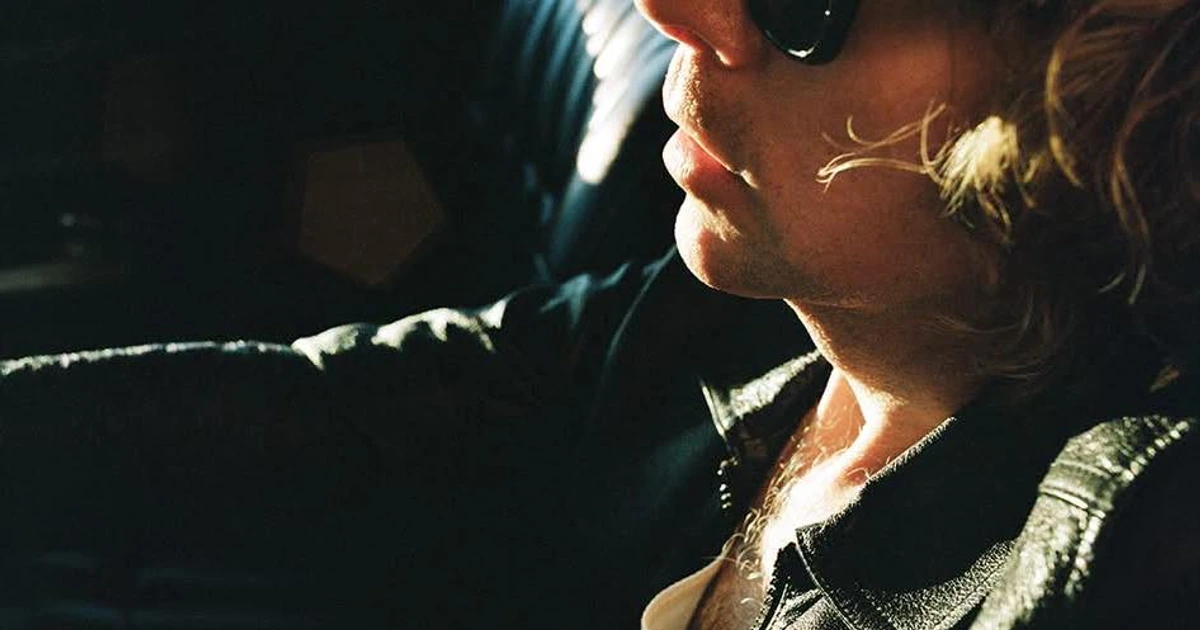
1 day agoChad King on coping with MS through music, his new EP & the ubiquity of Grammy-winning song "Say Something" - Queerty
Chad King, diagnosed with multiple sclerosis, has not let the disease hinder his music career. He continues to create and perform, showcasing resilience and determination.
LGBT
fromRolling Stone
2 days agoIt Started as a Festival. Now Coachella Means Cash for Creators
Coachella began as an 'anti-Woodstock,' a trial run for the idea that a festival could give concertgoers a smooth, curated experience. Now the symbiotic relationship between brands and influencers is part of the very structural makeup of Coachella.
Silicon Valley food
fromArtnet News
5 days agoPainting Has Entered Its Performance Era | Artnet News
Much of Instagram's video content is organized around transformation-the virtual magic of the before-and-after and clips that show cause and effect. A person makes pasta from scratch in 20 seconds via edits that compress time-intensive labor.
Arts
fromFuturism
5 days agoBerklee College of Music Students Furious That It's Offering an AI "Songwriting" Class
The petition accuses the school of promoting OpenAI's ChatGPT, which 'steal the art of [tens of thousands] of artists and rot the essence of the industry and have devastating consequences on the environment all to create facsimiles of real human art.'
Higher education
fromwww.theguardian.com
6 days agoR&B today is like Brazilian football the creativity, the skill': Odeal, the genre's hottest UK star
Odeal's music sits loosely within R&B, also drawing on Afrobeats, neo-soul and contemporary pop. Across his catalogue, love is rarely conclusive. Instead, songs live in emotional grey areas.
London music
fromGSMArena.com
3 weeks agoSpotify's SongDNA lets you explore the writers, producers, and collaborators behind a song
When you get it, you'll see a SongDNA card 'on supported tracks'. If you tap this, you can explore the writers, producers, and collaborators behind a song, see samples and interpolations that shaped its sound, and browse the covers it inspired.
Mobile UX
fromConsequence
1 week agoJoe Bonamassa and George Benson on B.B. King's Blues Summit 100, Blues vs Jazz, and Life on the Road: Podcast
Bonamassa explains the origin of the sprawling tribute, saying, 'It was brought to my attention... that B.B. King would be turning 100... and nobody was planning on doing much. I said we need to do something.'
Music production
fromSPIN
1 month agoWhitney Johnson, Lia Kohl, and Macie Stewart Go Beyond the Chamber - SPIN
All but one of the song titles on Body Sound, the debut album from experimental string trio Whitney Johnson, Lia Kohl, and Macie Stewart, line up nicely-a few words, usually two, usually nouns, separated by a vertical line. The straight line in the middle means different things in different disciplines. In computing, it's called a 'pipe' and serves as a conduit. In poetry, it denotes a pause or break. In music, it marks the beginning and end of measures.
Music
fromThe Atlantic
1 month agoPlay It Again, Claude
By the early 1900s, player pianos had evolved to more fully reproduce a human performance, including subtle dynamics like tempo changes and the introduction of a damper pedal. The human role went from deskilled to fully deprecated as electric motors replaced foot-powered bellows. With the Seeburg Lilliputian Model L, the only job left for humans who wanted to play the piano in the 1920s was to put in a coin.
History
fromDefector
1 month agoR&B Wants To Make Pop Music Fun Again | Defector
R&B in the 21st century has been in a constant state of flux, tugged between safe traditionalism and blurry attempts at progression. For the last decade-plus that "progression" has seen R&B music become more indebted to trap records and the moody atmospherics of alternative bands like Radiohead, Coldplay, or My Bloody Valentine.
Music
Social justice
fromLos Angeles Times
2 months agoAs ICE raids American cities, artists fight back before the Grammys with 'More teeth ... more rage'
Minneapolis rapper Nur-D (Matthew Allen) was assaulted and chemically sprayed by ICE during a protest, exemplifying artists mobilizing against ICE violence.
Music production
fromItsnicethat
1 month agoThis music video captures the spirit of jazz drumming with musical glyphs and a nod to synesthesia
A visual film explores jazz music by assigning shapes to different drum sounds, creating a synesthetic experience where music transforms into colors and graphics.
fromDesign Milk
2 months agoEverglow is a "Sketchbook" for Musicians on the Go
Designed by Korean up-and-comer Woojin Yang, Everglow is a handheld mini-keyboard that fits into any bag. The "musical sketchbook" of sorts allows artists to quickly jot down ideas when they're not in front of their instruments or computers. The sleekly-designed device comes with a generative AI-based sound system that allows them to iterate and develop a song on the spot, not just transcribe the initial tune.
Music

fromwww.nytimes.com
2 months agoVideo: Who Needs A.I. Music When We Have Bruno Mars?
Before the holiday, we were talking a lot about A.I. music. And then when I was listening to the new Bruno Mars song, all I could think about was A.I. It's called I Just Might. It is a rich and lustrous homage to the soul pop of the early 1970s. Obviously, you're thinking about the Jackson 5. It's gloss. It's note-perfect.
Music
fromwww.npr.org
2 months agoWith his first Grammy nomination, Destin Conrad embraces personal evolution
Destin Conrad dropped his second studio album, a jazz project titled wHIMSY. Both albums climbed the charts, and Conrad snagged a Grammy nomination for best progressive R&B album for Love on Digital his first as a solo artist. In an interview with All Things Considered, Conrad said he sometimes wondered if people wouldn't take him seriously as a musical artist because of his history on the former video-sharing app Vine, where Conrad shared quirky jokes and clips of himself singing samples
Music
fromTechRepublic
2 months agoGrammys' New AI Guidelines Seek Authenticity But Uncertainty Remains - TechRepublic
The Recording Academy just made a move that's splitting the music world down the middle. Their stance on AI-generated music promises to protect human creativity-but the guidelines? They've opened more questions than they've answered. The declaration sounds straightforward: only music with "significant human creative contribution" qualifies for Grammy consideration. Dig into the details, though, and you'll find a policy so riddled with ambiguity that artists, producers, and industry insiders are left guessing where the boundaries actually lie.
Music
fromEntrepreneur
1 month agoAI Is Changing Music Production - But It Can't Fill Creative Gaps
We tend to think AI music tools are just gimmicks for social media creators, or that they're limited to basic beats. But it's hard to dismiss them when companies like Google, Meta and Stability AI are pouring resources into generative audio models that can produce full compositions in seconds.
Music production
fromConde Nast Traveler
2 months agoDespite All Odds, Beirut's Jazz Scene Persists
I noticed the swelling of the double bass first, quickly followed by the fluttering of brushed cymbals. A saxophone pushing against the edges of a melody swiftly married the notes together, chords drifting haphazardly before reaching a slow, pulsing groove. The jazz quartet performed in front of a liquor cabinet lined with whisky bottles; low-hanging lights teetered overhead, throwing shapes on the monochromatic marble-tiled floor. Outside, a leafy veranda was filled with diners, the music drifting through flung-open doors and windows.
Music
fromwww.esquire.com
2 months ago5 Best Songs of 2026 (So Far)
The only song here that really matters. Written just hours after the murder of Alex Pretti in Minneapolis and released a few days later, Springsteen names names (looking at you, Stephen Miller and Kristi Noem) and speaks bold, specific truth. With a title that recalls his own impactful Streets of Philadelphia, a melody reminiscent of Bob Dylan, and an urgency not felt since Neil Young's Ohio, it may not be groundbreaking musically, but Streets of Minneapolis is exactly what we need right now.
Music
[ Load more ]