#nsf-grants
#nsf-grants
[ follow ]
#research-funding #brain-drain #science-policy #higher-education #women-in-science #artificial-intelligence

Intellectual property law
fromInside Higher Ed | Higher Education News, Events and Jobs
1 day agoLawmakers Question Publish-or-Perish Culture of Research
Federal lawmakers are addressing research fraud and integrity issues in scientific publishing, highlighting the flawed incentive structures in the industry.
Science
fromInside Higher Ed | Higher Education News, Events and Jobs
1 week agoStudent-Built Instruments Head to Space
Undergraduate research from College of Charleston is contributing instruments to the International Space Station, marking a significant achievement for the students and the institution.

European startups
fromenglish.elpais.com
3 weeks agoWelcome, American scientists: Europe, a haven for researchers struggling under Trump
Safe Place for Science initiative successfully attracted U.S. researchers to Europe amid restrictive policies, receiving over 900 applications shortly after its launch.
fromNature
2 weeks agoNow is the time for scientific societies to guide global research
Modern scientific societies are increasingly vulnerable due to their dependence on membership fees and journal subscriptions, which are being challenged by the rise of virtual networking and open-access publishing.
Science
fromwww.scientificamerican.com
3 weeks agoWhat happens when AI starts checking mathematicians' work
Computer programs that check mathematical arguments have existed for decades, but translating a human-written proof into the strict programming language of a computer is extremely time-consuming, often taking months or even years.
OMG science
US politics
fromInside Higher Ed | Higher Education News, Events and Jobs
1 month agoFederal Grant Makers May Lose Job Protections: 5 Things to Know
A new federal employee category with reduced job protections and easier firing procedures took effect, potentially affecting federal grant-making employees and raising concerns about research funding politicization.
Non-profit organizations
fromNature
1 month agoNIH pivots away from agency-directed science
The NIH is shifting from solicited grants addressing agency-identified priorities to unsolicited grants driven by individual researchers' interests, reducing administrative costs but potentially limiting large collaborative projects and understudied research areas.


#women-in-science
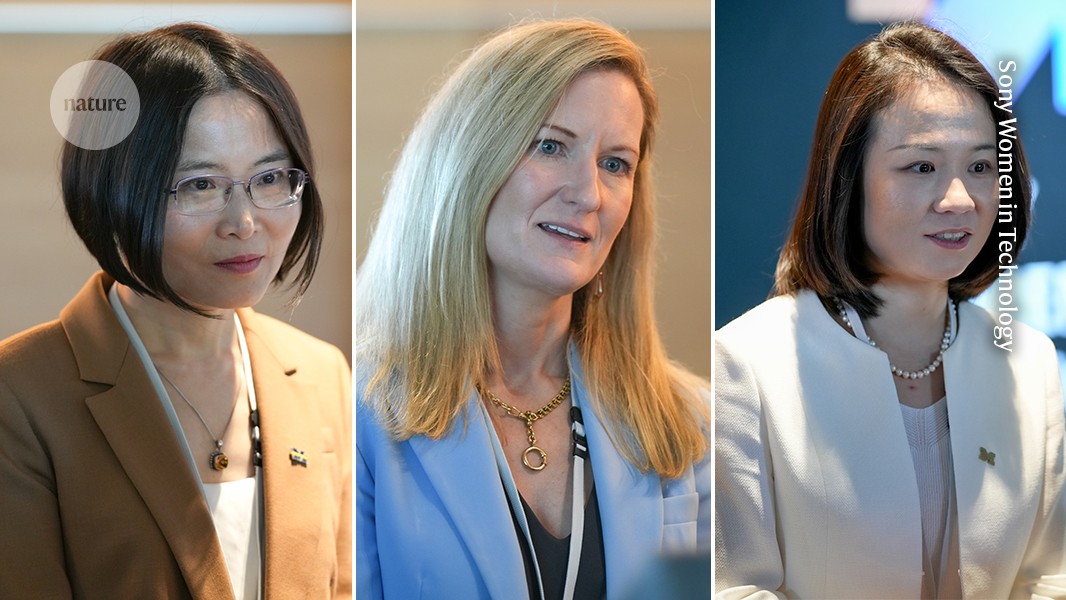
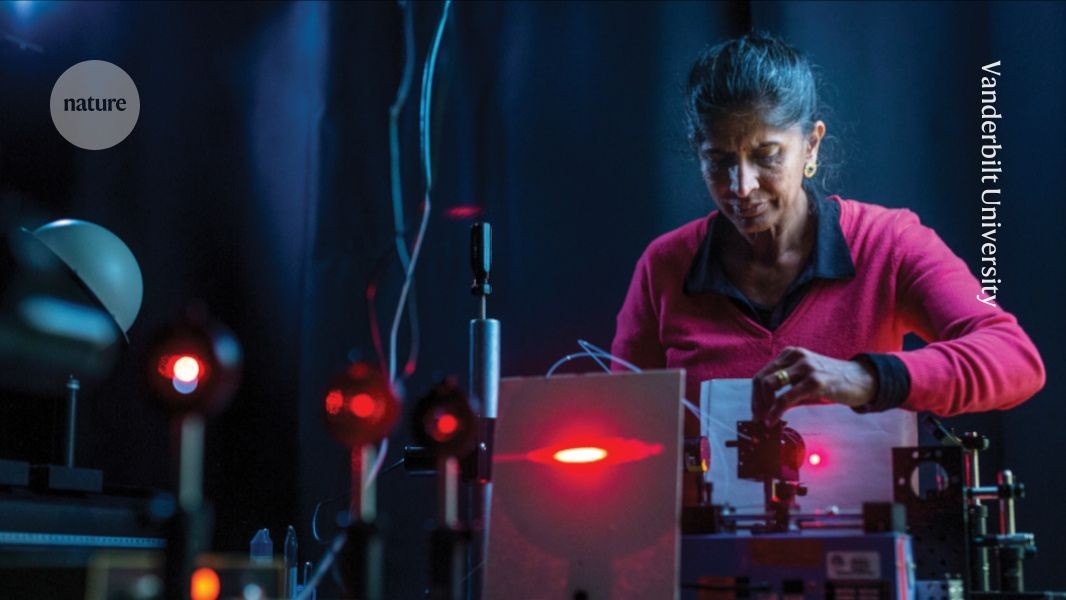
Women in technology
fromNature
1 month ago'No one quite like her': meet the female colleagues who inspire these award-winning women in science
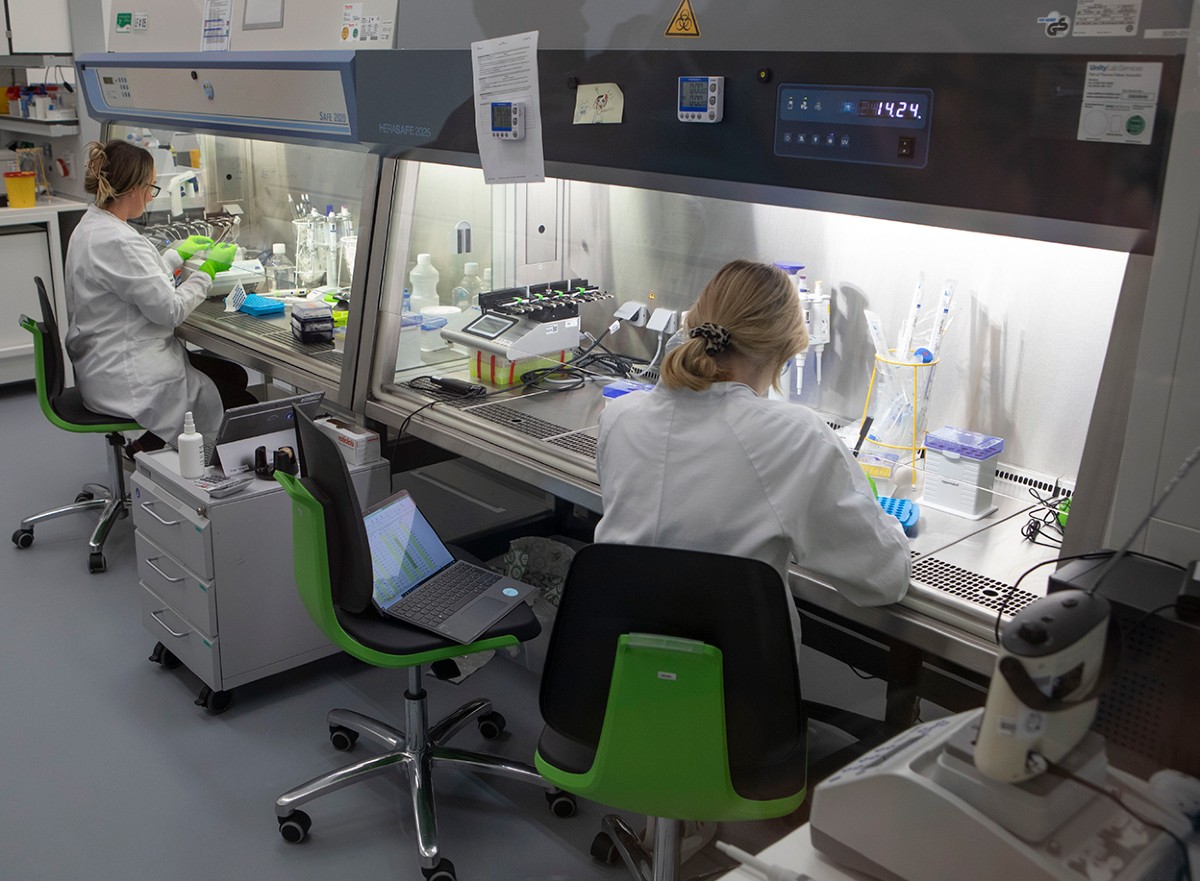
Modern scientific research thrives through collaboration, with Nature celebrating women scientists who advance cutting-edge science while supporting colleagues through kindness, generosity, and perseverance.
Science
fromNextgov.com
1 month agoEnergy opens applications for $293 million in research funding
The Department of Energy is allocating $293 million to fund interdisciplinary teams using artificial intelligence to solve critical challenges in advanced manufacturing, biotechnology, critical materials, nuclear energy, and quantum information science.
fromNature
2 months agoAI help in grant proposals tied to higher funding odds at NIH
Scientists are increasingly turning to artificial-intelligence systems for help drafting the grant proposals that fund their careers, but preliminary data indicate that these tools might be pulling the focus of research towards safe, less-innovative ideas. These data provide evidence that AI-assisted proposals submitted to the US National Institutes of Health (NIH) are consistently less distinct from previous research than ones written without the use of AI - and are also slightly more likely to be funded.
Artificial intelligence
Science
fromNature
1 month agoChina pledges billion-dollar spending boost for science
China plans to increase R&D expenditure by at least 7% annually over five years and boost its science and technology budget by 10% to 426 billion yuan, aiming to shift R&D leadership from state enterprises to private companies.
fromTruthout
2 months agoTrump Admin Has Made Future of Federal Funding for Cancer Research Uncertain
Brugge and her research team have analyzed the cell structure of more than 100 samples. Using high-powered microscopes and complex computer algorithms, they diagram each stage in the development of breast cancer: from the first sign of cell mutation to the formation of tiny clusters, well before they are large enough to be considered tumors. Their quest is to prevent breast cancer, a disease that afflicts roughly 1 in 8 U.S. women over their lifetimes, as well as some men.
Cancer
fromState of the Planet
2 months agoCelebrating the 2026 International Day of Women and Girls in Science
Every February 11, the United Nations-designated International Day of Women and Girls in Science reminds us of the myriad obstacles women and girls around the world face within the STEM disciplines and the ways they continue to overcome challenges and stand out in their fields. "Today, women make up less than one third of the world's researchers," says Alexis Abramson, dean of the Columbia Climate School. "Closing this gender gap is not only a matter of fairness but is essential to further the innovation and impact of the work."
Women
fromTheregister
2 months agoTurns out AI agents are good for something: science
"We didn't do any LLMs. There is significant interest in that. There are lots of people trying those ideas out, but I think they're still in the exploratory phase," Desai told El Reg. As it turned out, the researchers didn't need them. "We used a simpler model called a variational auto encoder (VAE). This model was established in 2013. It's one of the early generative models," Desai said.
US politics
fromNextgov.com
2 months agoTech Bills of the Week: Expanding AI education via NSF; Commerce public awareness campaign; and more
Congressional proposals seek to expand AI education access, launch a national AI public-awareness campaign, and require age verification protections for chatbot users.
OMG science
fromArs Technica
1 month agoResearch roundup: Six cool science stories we almost missed
Scientists revived Edison's nickel-iron battery design using protein scaffolding and graphene oxide, creating an aerogel structure for improved renewable energy storage with extended range and longevity.
Science
fromNature
1 month agoPhysics at risk: UK science leader on what's wrong with the latest funding cuts
UK Research and Innovation suspended grant reviews and cut funding in particle physics, astronomy, and nuclear physics to prioritize economically-focused research, prompting concerns from the physics community about inadequate government planning.

fromNextgov.com
2 months agoLawmaker worries NSF program loophole enables Chinese institutions to access US-backed computing resources
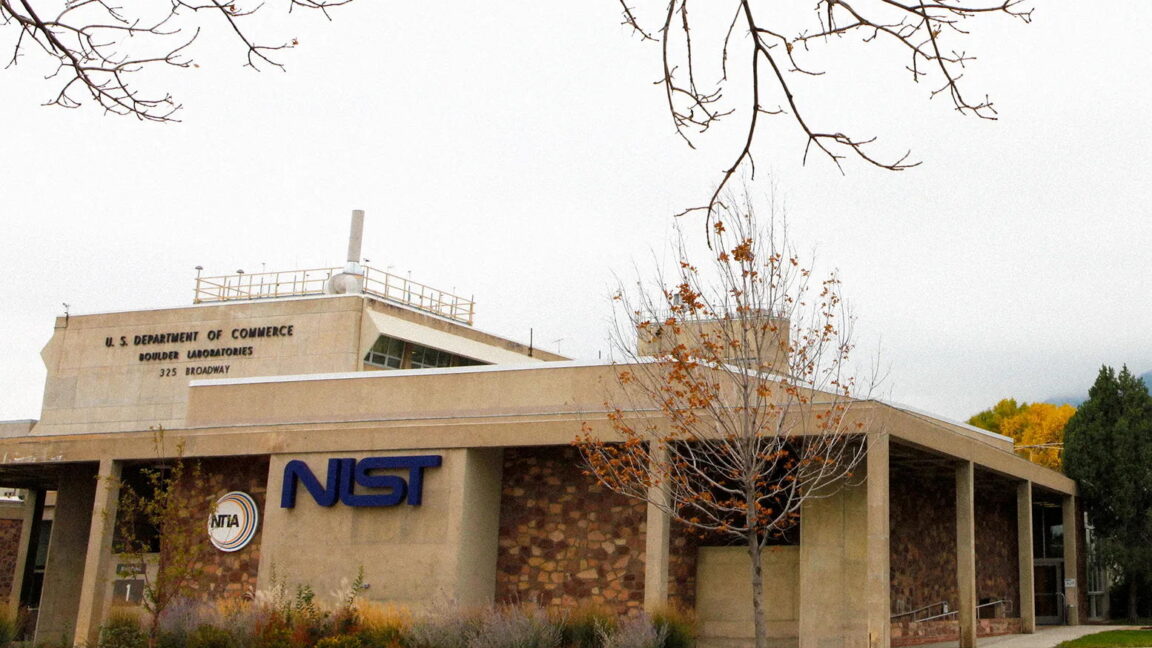
Rep. John Moolenaar, R-Mich., sent a letter Thursday to NSF interim director Brian Stone asking the agency to revoke China-linked entities' access to the Advanced Cyberinfrastructure Coordination Ecosystem: Services & Support - or ACCESS - program, according to a copy of the missive first seen by Nextgov/FCW. ACCESS is a free, nationwide collection of supercomputing systems made available to academics and other researchers. It's frequently used across U.S. institutions and national labs to assist with national security and economic research.
US politics
fromCornell Chronicle
1 month agoNYCST grants boost New York state space tech industry | Cornell Chronicle
As global competition in space accelerates, New York is mobilizing its premier research institutions through NYCST to address workforce shortages, close capability gaps and mature the critical technologies our nation needs. For decades, our state has been a home to innovative aerospace companies. Through NYCST, we are now aligning that heritage with our top-tier research institutions to ensure that industry can develop and scale up breakthrough technologies right here in New York.
Science
Higher education
fromInside Higher Ed | Higher Education News, Events and Jobs
2 months agoGreat Grants Need Far Away Deadlines
Unreasonably tight grant timelines and limited grant-writing capacity disadvantage community colleges, reducing their ability to compete for Workforce Pell and civil discourse funding.
fromInside Higher Ed | Higher Education News, Events and Jobs
1 month agoNSF Plans to Boost Staffing, Halve Grant Solicitations
The fewer solicitations you have, the less time grant applicants have to figure out which of our pigeonholes they fit into. In the past, a solicitation might have been for an individual program, which means it's attached to an individual program officer and a specific dollar amount. Now, instead of going to one program officer's area, the NSF will use technology to better route applications to wherever within the agency they can best be reviewed.
Science
Higher education
fromInside Higher Ed | Higher Education News, Events and Jobs
2 months agoThe Bigger Picture Beyond the UCSD Math Report (opinion)
UCSD's high remedial math counts reflect unique policies—mandatory calculus and long prerequisite sequences—making its data a poor basis for broader policy conclusions.
fromTheregister
3 months agoCongress saves NASA budget, kills Mars sample mission
US Congress has rejected plans to slash NASA's science budget, restoring most funding with one notable exception: Mars Sample Return remains cancelled. A joint explanatory statement was released earlier this month, and lawmakers have passed the bill. The legislation, passed with 82 senators voting for it, 15 against, and three abstaining, reverses an earlier proposal that would have cut NASA's overall budget by nearly 25 percent and halved science spending - potentially shutting down many active missions.
US politics
fromNature
2 months agoCalling all scientists: Support your Iranian colleagues
Iranian researchers are in a difficult situation. Those in Iran face low wages, high inflation, sociopolitical instability, resource mismanagement, oppression by the authorities and long-standing international sanctions. High prices hinder conference attendance, as do difficulties obtaining visas. Unstable Internet connections, frequent power outages and lack of access to scholarly sources jeopardize collaborations. Scholars also have to contend with isolation, and sometimes biases, from the international community. And for those who work abroad, travelling to and from Iran is risky, even with visas and double citizenship.
Higher education
Science
fromCornell Chronicle
2 months agoThree early-career professors win NSF development awards | Cornell Chronicle
NSF CAREER awards fund Cornell early-career faculty to study microplastics’ environmental transport and toxic interactions and to develop human-like robot learning, with required education components.
fromNature
1 month agoNanoscience is latest discipline to embrace large-scale replication efforts
Calling nanoscientists: your field needs you to try to replicate a landmark finding that quantum dots can act as biosensors inside living cells. As part of the first large-scale effort in the physical sciences to tackle the reproducibility crisis, researchers in France and the Netherlands are offering funds and resources in exchange for a few months of work. "We are trying to use
Science
[ Load more ]