UX design
fromMedium
21 hours agoOh, but there's one more thing
Designers must address real project challenges while navigating the evolving role of AI in the creative process.
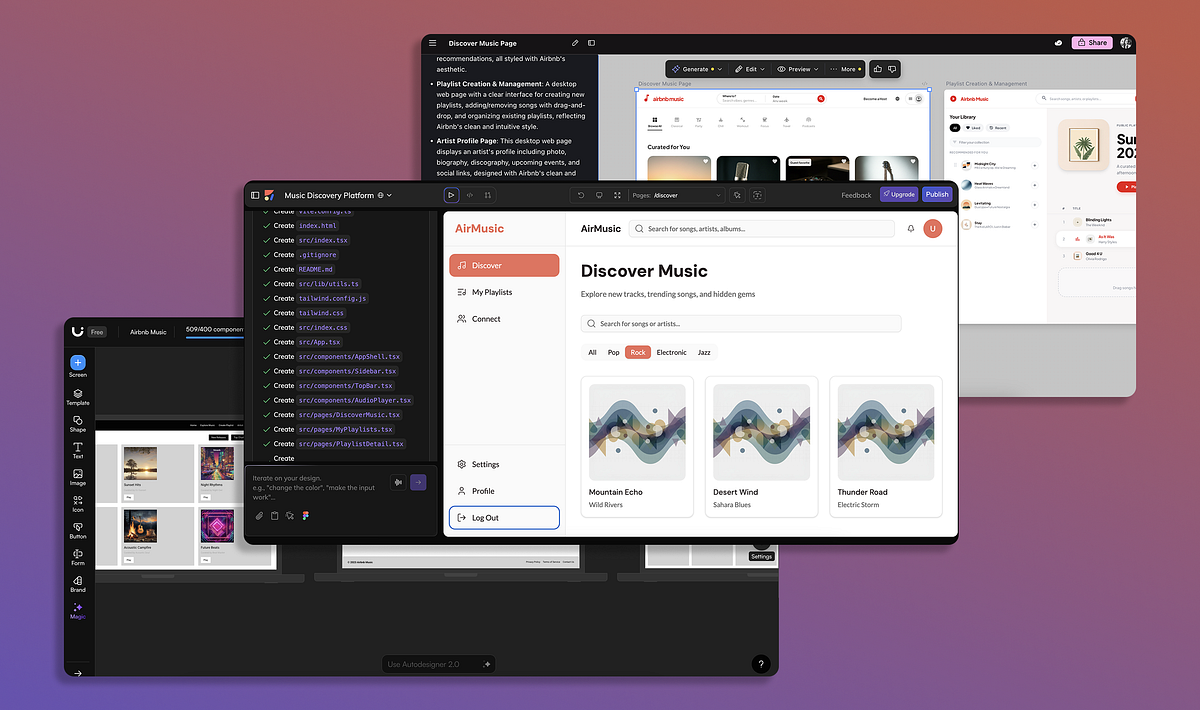
All empires eventually fall, and it seems the creative software industry has collectively decided that Adobe's time has come. The Creative Cloud provider's suite of design tools have been considered the industry standard for decades.
Santa Cruz de Tenerife is one of the most idyllic cities in the Canary Islands. At its heart stands the jewel - the Auditorio. It's a place where talent from both worlds, New and Old, comes together. A theatre, opera, dance, and music heaven.
Here's the sad truth about sports score apps: Most of them aren't all that interested in actually telling you the score. After all, where's the money in providing straightforward information like that? The modern sports score app has to do more. It must bombard you with banner ads and betting odds, implore you to create an account and opt into notifications, sell you some tickets, and show some videos to keep engagement up. The scores themselves are an afterthought.
Today we are at the cusp of revolutions in artificial intelligence, autonomous vehicles, renewable energy, and biotechnology. Each brings extraordinary promise, but each introduces more complexity, more interdependence, and more latent pathways to failure. This elevates prudence to be critical. Good design recognizes what cannot be foreseen. It acknowledges the limits of prediction and control. It builds not merely for performance, but for recovery.
In Andor, I got chills when Mon Mothma warns the senate of a chilling truth: When we let noise, conformity, or fear dominate, we lose sight of what matters. We risk allowing the loudest voices, often the safest, the most predictable, to drown out individuality, identity, and truth. To me, this line... This line echoes a growing tension I feel in content design.
Linear-style UIs look simple, but the theming system has to do real work. Here's how to meet WCAG 2.2 contrast requirements across light, dark, and high-contrast modes whether you're using a UI library or rolling your own tokens.
Something's been slowly shifting in the design zeitgeist. I've been watching my feed on X and the vibe has changed. More and more, I see designers sharing finished experiments or prototypes they coded themselves, rather than static Figma files. Moving from working on a canvas to talking to an LLM. The conversation isn't "here's a design I made" anymore... it's "here's something I shipped this afternoon."