#rural-brazil
#rural-brazil
[ follow ]
#agriculture #indigenous-rights #biodiversity #climate-change #environmental-justice #sustainability

fromwww.theguardian.com
2 days agoThree disasters in three years: Brazil's deadly floods show women are the first to die' when extreme weather hits
The mudslide in Petropolis in February 2022 killed 233 people, and displaced many more. Over the past decade, climate-related disasters have displaced 250 million people globally, equivalent to 70,000 people forced from their homes every day.
Environment
Non-profit organizations
fromNonprofit Quarterly | Civic News. Empowering Nonprofits. Advancing Justice.
4 days agoEarth Day Is for the Planet. What About the People Protecting It? | Nonprofit Quarterly | Civic News. Empowering Nonprofits. Advancing Justice.
Conservationists face moral injury from witnessing environmental harm without adequate support, highlighting the psychological toll of their commitment to protecting the planet.
Agriculture
fromNonprofit Quarterly | Civic News. Empowering Nonprofits. Advancing Justice.
4 days agoA Vision of Food Justice, Collective Care, and Safety | Nonprofit Quarterly | Civic News. Empowering Nonprofits. Advancing Justice.
Food and medicine are interconnected, yet food policy often separates them, impacting access and equity in food justice.



Social justice
fromwww.theguardian.com
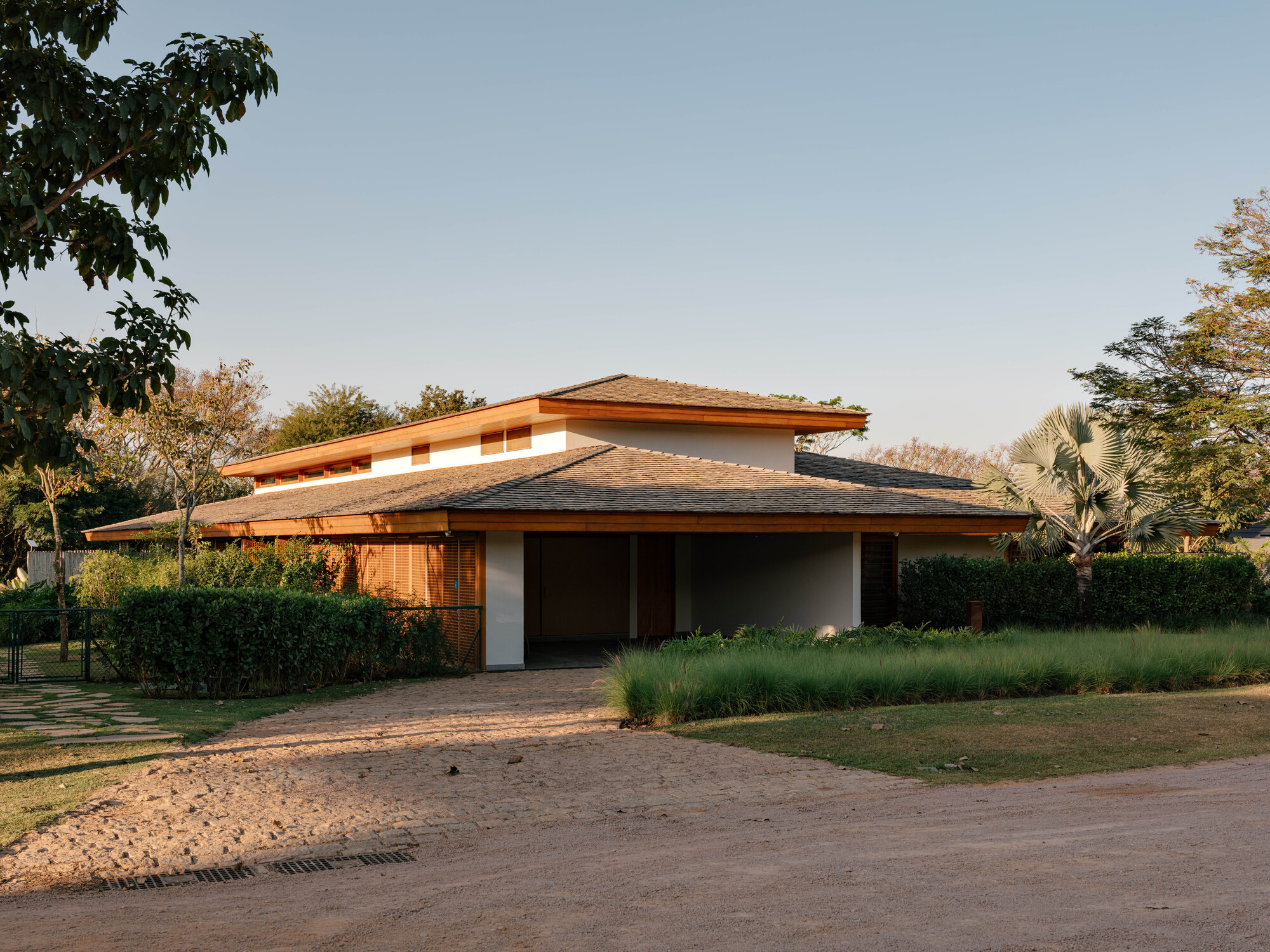
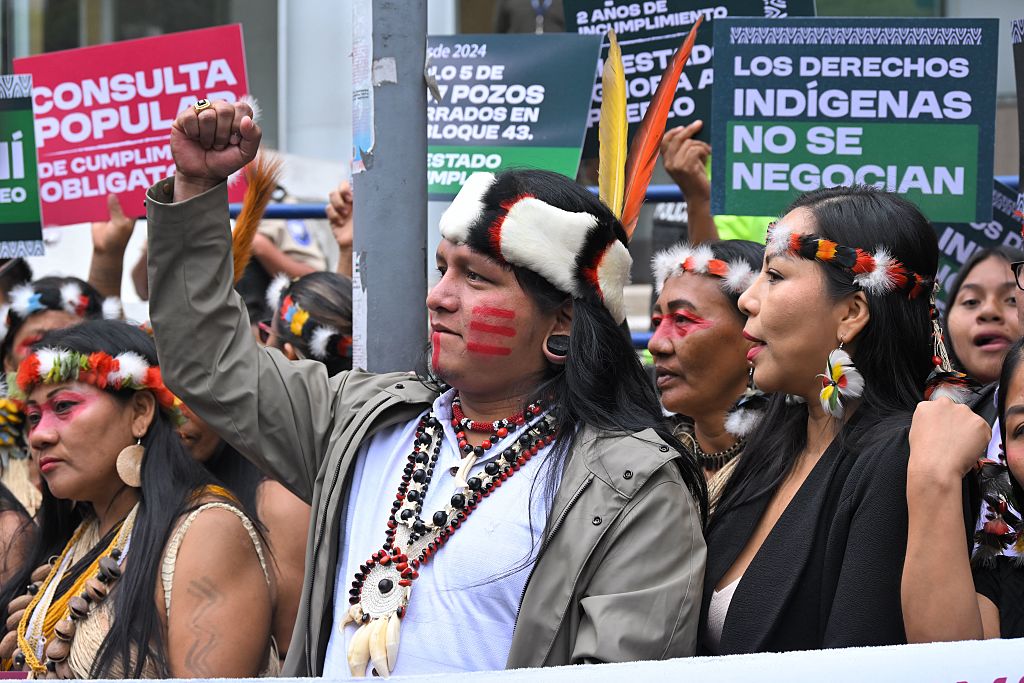
1 week agoWe took clothes, a blanket and a dog': the people displaced by a dam 50 years ago, but still fighting for justice
The Itaipu hydroelectric dam construction displaced the Ava-Guarani people, disrupting their territory and culture, with ongoing struggles for justice and recognition.


fromRealagriculture
1 month agoBiofuels, Brazil, and the cost of war: Suderman outlines key forces shaping grain markets
"I think it surprised me how easily people are swayed by headlines," says Suderman, noting that wartime information flows are often strategic and conflicting. "You have to learn in a wartime to take everything with a grain of salt in the context of what you observe."
World politics
Environment
fromwww.theguardian.com
3 weeks agoIf they pollute our rivers, what will become of us?': the town divided between hope and fear in Brazil's Amazon oil rush
Oiapoque, Brazil, is poised for development through oil production, raising concerns about environmental impacts and Indigenous rights amid a global energy transition.
fromDaily Coffee News by Roast Magazine
1 month agoStudy: Social Enterprises Beat Corporate Sustainability in Farmer Well-Being
The study frames each of the models as 'emerging strategies' that can either complement or serve as alternatives to well-known sustainability certification schemes such as Organic, Fairtrade or Rainforest Alliance.
Online Community Development
fromwww.theguardian.com
1 month agoA robust future? Why Brazil's bitter' coffee is thriving as the climate crisis hits global crops
When the Paiter Surui community expelled the last invaders of their land in 1981, they faced a divisive decision. Should they keep the coffee plantations left by the colonisers? Some destroyed them because of the death and violence contact with the non-Indigenous world had caused. Others felt sorry for the trees and couldn't kill them.
Coffee
fromwww.theguardian.com
1 month agoIt creates a sense of belonging': Brazil bets on hiking trails for conservation
The idea that hiking trails are a tool for conservation is based on a simple premise: people protect what they know. That requires making conservation areas accessible. There's no point telling people you only protect what you know, if you don't give them the tools to know. The trail is this tool. People who hike, people who camp, these people often become defenders of the environment.
Travel
fromDaily Coffee News by Roast Magazine
3 months agoBrazilian Researchers Promote Targeted Application of Bees for Coffee
A small, stingless bee may be able to raise coffee yields while fitting into real-world pest control programs, according to a new study from Brazil. In a field study on full-sun arabica farms, researchers reported a 67% higher fruit yield on coffee branches closer to colonies of the native stingless bee Scaptotrigona depilis, compared with branches farther away. The study was recently published in Frontiers in Bee Science.
Coffee
fromwww.theguardian.com
1 month agoThe river won': how campaigners in Brazilian Amazon stopped privatisation of waterway
The river won, the forest won, the memory of our ancestors won, said the campaigners in Santarem when it was clear their actions had forced the Brazilian government into a U-turn on plans to privatise one of the world's most beautiful waterways and expand its role as a soy canal.
Environment
fromwww.dw.com
2 months agoBrazil's soy industry gives deforestation a green light
A moratorium that has protected vital rainforest since 2009 is on shaky ground as several players from Brazil's soy industry say they are pulling out. Specifically, the Brazilian industry association ABIOVE, whose members include global companies such as Cofco International, Bunge, Amaggi and JBS, have said they will no longer refrain from growing soy on deforested land. Environmentalists fear this could fuel a new wave of Amazon logging.
Environment
fromwww.theguardian.com
2 months agoPostcard-pretty and filled with pollution: how Brazil's fishers are reviving Rio de Janeiro's famous bay
Raw sewage and solid waste flow into the bay from surrounding cities, home to more than 8 million people. Cargo ships and oil platforms chug in and out of commercial ports, while dozens of abandoned vessels lie rotting in the water. But at the head of the bay, between the cities of Itaborai and Mage, the environment feels different. The air is purer, the waters are empty but for small fishing canoes, and flocks of birds soar overhead.
Environment
Environment
fromwww.theguardian.com
2 months agoPure apocalypse': a photographer's journey through the Pantanal wildfires
A documentary photographer documents catastrophic Pantanal and Amazon fires, chronicling environmental destruction, wildlife loss, and ongoing return visits to record the aftermath.
[ Load more ]