#semiconductor-supply-chain

[ follow ]
Artificial intelligence
fromSilicon Canals
20 hours ago

Saudi Arabia launches $100B tech fund to diversify beyond oil revenues - Silicon Canals

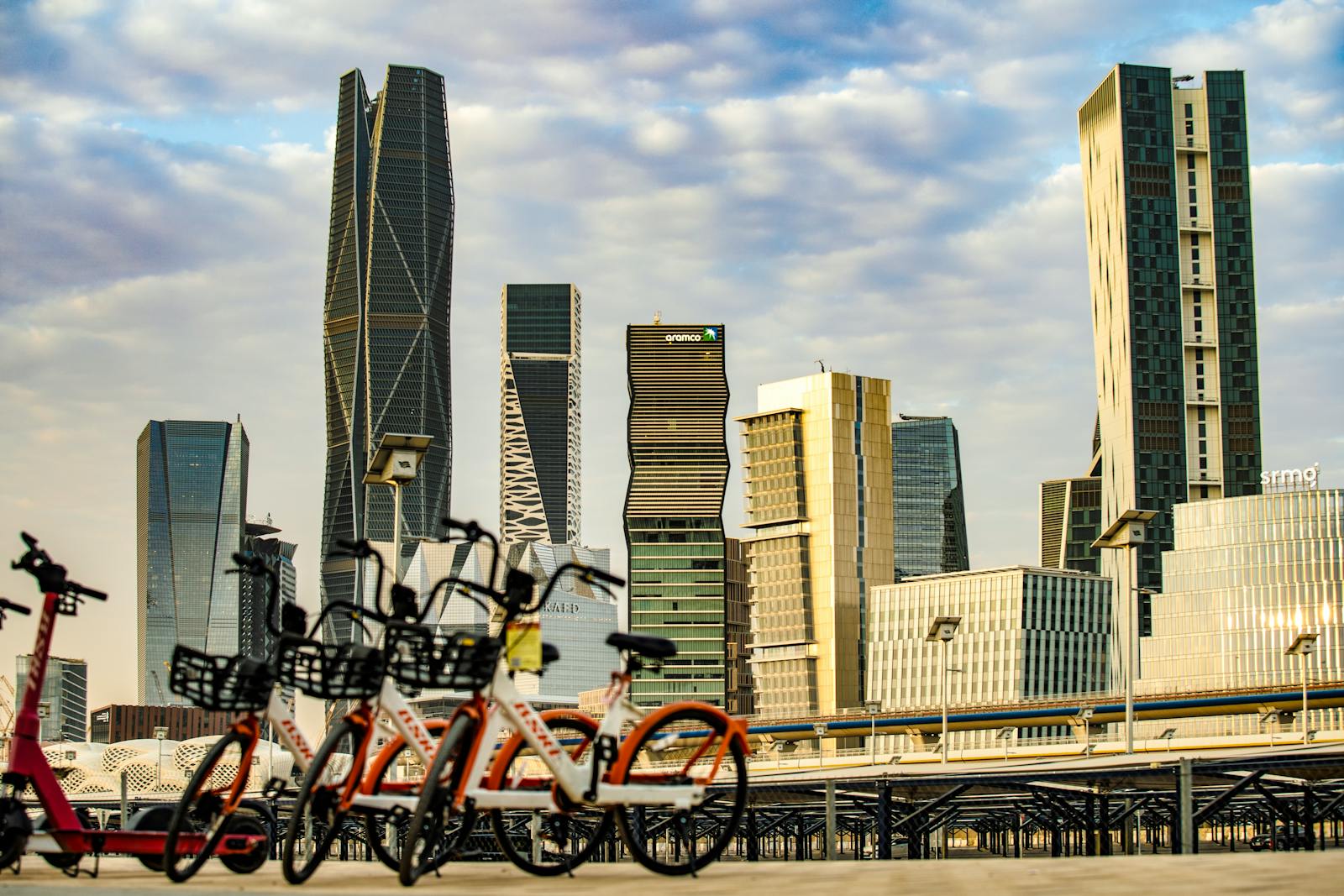
Saudi Arabia launched a $100 billion technology investment fund through Humain to establish itself as a global AI and advanced computing hub, signaling major geopolitical shifts in technology capital allocation.
Artificial intelligence
fromSilicon Canals
1 day ago

Saudi Arabia launches $100 billion AI infrastructure fund to rival US and China - Silicon Canals

Saudi Arabia launched a $100 billion AI infrastructure fund called HUMAIN to establish itself as a major global AI power alongside the US and China.
Tech industry
fromBusiness Insider
1 week ago

A Japanese toilet maker and seasoning giant are unlikely winners of the AI boom

Japan's AI-driven chip demand boosts unlikely suppliers like Toto and Ajinomoto by increasing orders for electrostatic chucks and insulating semiconductor materials.
fromFortune
1 week ago

Rampant AI demand for memory is fueling a growing chip crisis | Fortune

Since the start of 2026, Tesla Inc., Apple Inc. and a dozen other major corporations have signaled that the shortage of DRAM, or dynamic random access memory - the fundamental building block of almost all technology - will constrain production. Cook warned it will compress iPhone margins. Micron Technology Inc. called the bottleneck "unprecedented." Musk got to the intractable nature o f the problem when he declared Tesla is going to have to build its own memory fabrication plant.
Artificial intelligence
Tech industry
from24/7 Wall St.
1 month ago

5 AI Chip Stocks Most Exposed to Trump's New 25% Tariff

A 25% U.S. tariff on Taiwan-made AI chips threatens chipmakers based on manufacturing location, supply-chain concentration, and revenue exposure, with TSMC most vulnerable.
from24/7 Wall St.
1 month ago

Here's Why Taiwan Semiconductor Manufacturing Holds the Keys to AI's Explosive Growth

Alphabet ( NASDAQ:GOOG )( NASDAQ:GOOGL ) has reportedly reduced its 2026 production target for Tensor Processing Units from around 4 million to 3 million units. According to a report by Korea Economic Daily, this adjustment stems from limited access to Taiwan Semiconductor's CoWoS advanced packaging capacity, which Nvidia ( NASDAQ:NVDA ) secured through priority allocations. CoWoS integrates processors with high-bandwidth memory on a silicon interposer, essential for high-performance AI accelerators. Without sufficient capacity, finished chips cannot deploy at scale. Other outlets have reported on production caps previously.
Artificial intelligence
#russian-naphtha
fromFast Company
2 months ago

Why Revathi Advaithi of Flex is Modern CEO of the Year

Advaithi didn't set out to ride the artificial intelligence (AI) boom. After becoming CEO of Flex (formerly known as Flextronics) in 2019, she zeroed in on the contract manufacturing company's power-focused business, which makes components that manage, regulate, and distribute power for advanced semiconductors and systems. Advaithi understood that business segment well from her years working at Eaton, the power management company.
Business
#nexperia
Miscellaneous
fromwww.theguardian.com
3 months ago

China voices extreme disappointment' with Dutch minister at centre of car chip row

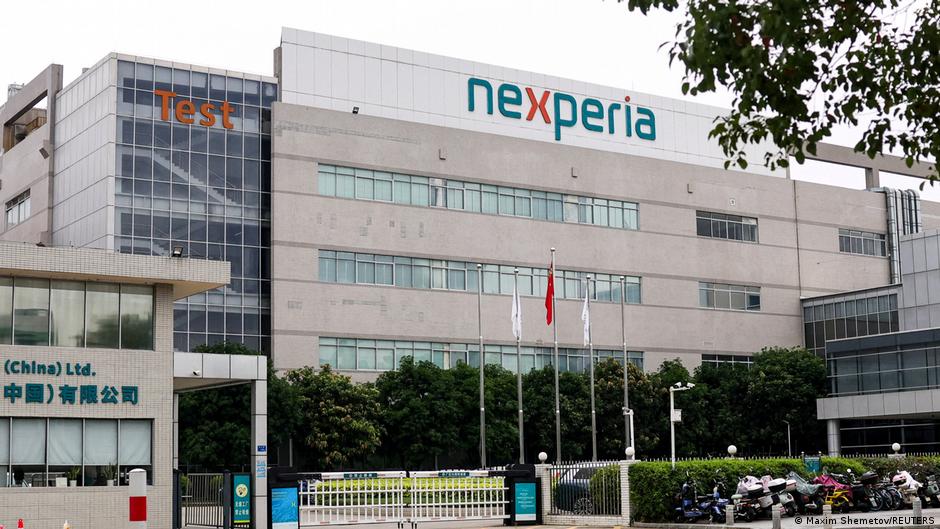
China expressed extreme disappointment with Dutch minister Karremans after the Netherlands took supervisory control of Nexperia, prompting Beijing to ban Nexperia chip exports.
World news
fromTheregister
3 months ago

China lifts rare earth export bans, halts US tech probes

China lifted rare-earth export restrictions and pledged to end semiconductor investigations; measures to resume Nexperia chip exports; Singapore seized assets linked to alleged scam.
World politics
fromThe Cipher Brief
4 months ago

The Hidden Leverage of Digital Chokepoints

Undersea cables, satellites, and semiconductor supply chains form vital but fragile global infrastructure vulnerable to targeted disruption and gray-zone coercion.
fromwww.theguardian.com
4 months ago

Taiwan now biggest importer of Russian naphtha despite being Ukraine ally

Taiwan has become the world's biggest importer of Russian naphtha, a petroleum derivative used to make chemicals needed for the semiconductor industry, despite the fact that it has joined other sanctions against Russia and considers itself an ally of Ukraine. In the first half of 2025, Taiwan imported $1.3bn worth of Russian naphtha, and average monthly imports reached a level nearly six times higher than the 2022 average, according to a report published on Wednesday.
World politics
Artificial intelligence
fromwww.nytimes.com
5 months ago

Video: Opinion | A.I.'s Environmental Impact Will Threaten Its Own Supply Chain

A.I.'s growth consumes vast energy, water and rare minerals, scarring landscapes and creating supply-chain vulnerabilities that threaten its own infrastructure.
fromTheregister
5 months ago

China wants to monopolize world polysilicon supply - report

China is moving to dominate the global market for polysilicon, a key material used in chips, by flooding the industry with cheap, subsidised product to drive producers in other countries out of business. This is according to a report by the Information Technology and Innovation Foundation (ITIF), a think tank based in Washington D.C. It warns that Beijing is providing "significant support" to its own polysilicon industry in an effort to establish loca businesses as the dominant global suppliers.

World news
Business
from24/7 Wall St.
6 months ago

Billionaire Stanley Druckenmiller Went on a Shopping Spree. Here Are 3 of His Biggest Buys

Stanley Druckenmiller initiated 20 new stock positions in Q2 via Duquesne Family Office, with Entegris among his largest high-conviction semiconductor picks.
US politics
from24/7 Wall St.
6 months ago

Trump May Soon Invest in This 1 AI Stock Down Over 60%

The U.S. government may convert CHIPS Act grants into roughly a 10% ownership stake in Intel, potentially becoming the largest shareholder to secure semiconductor supply chains.
E-Commerce
fromIT Pro
7 months ago

Climate change could disrupt copper production - and that spells bad news for global chip supplies

Climate change threatens semiconductor supply chains due to water shortages affecting copper supplies crucial for production.
[ Load more ]