#wto-trips-compliance
#wto-trips-compliance
[ follow ]
#intellectual-property #federal-circuit #patent-law #uspto #drug-pricing #patent-infringement #ptab #patents #wipo
fromwww.dw.com
1 week agoWTO talks end in stalemate over e-commerce
"We worked hard," WTO Director-General Ngozi Okonjo-Iweala said, adding that the US and Brazil in particular "need more time" to work out their differences over the agreement to impose levies on cross-border online orders.
World politics
Intellectual property law
fromIPWatchdog.com | Patents & Intellectual Property Law
2 days agoDOJ Again Pushes Back Against Antitrust Claims Filed Over Allegations of SEP Abuse, False RAND Promises
The DOJ states that failing to negotiate on RAND terms does not alone indicate exclusionary behavior in antitrust cases.
Intellectual property law
fromIPWatchdog.com | Patents & Intellectual Property Law
8 years agoRenegotiate NAFTA to Make it the Gold Standard in IP Protection
Renegotiating NAFTA presents an opportunity to enhance protections for intellectual property rights, crucial for U.S. economic growth and job preservation.
#patent-law
Intellectual property law
fromGlobal IP & Technology Law Blog
5 days agoA New Path for Patent Owners in Ex Parte Reexams - But What About the Rules?
Patent owners can now respond to ex parte reexamination requests before the SNQ determination, despite existing rules that typically prohibit such responses.
Intellectual property law
fromIPWatchdog.com | Patents & Intellectual Property Law
1 week agoOther Barks & Bites for Friday, April 3: Trump EO Sets 100% Tariffs on Patent Pharmaceutical Imports; Squires Vacates TikTok IPRs Under Tianma Microelectronics; and Kallay Voices DOJ's Preference for FRAND Obligations
President Trump signed an executive order imposing 100% tariffs on imported patented pharmaceuticals and ingredients from 17 drugmakers.
fromMail Online
1 month agoOutrage as cancer-fighting drug in US patent echoes hidden CIA file
According to the patent, a specific crystalline form of the drug known as polymorph C may be more effective than other versions because it is absorbed more efficiently by the body. The patent also notes that laboratory studies showed the drug reduced tumor growth and helped mice with brain tumors live longer, prompting early clinical trials to test whether the treatment is safe and effective in humans.
Cancer
Intellectual property law
fromIPWatchdog.com | Patents & Intellectual Property Law
4 years agoMossoff Policy Memo for Hudson Institute Calls for Transparency from I-MAK on Data Used in Drug Pricing Debate
Discrepancies exist between patent data reported by I-MAK and official sources, raising concerns about the reliability of data in pharmaceutical patent debates.
#ptab
Intellectual property law
fromIPWatchdog.com | Patents & Intellectual Property Law
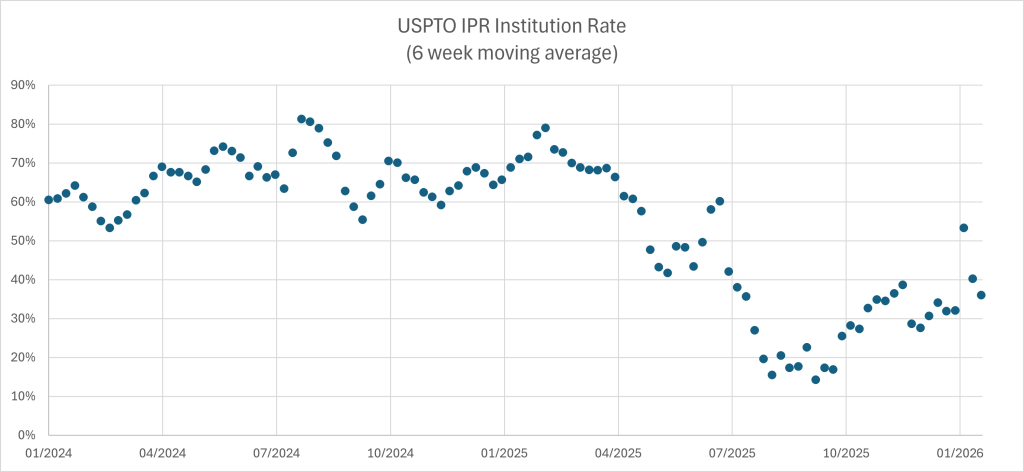
1 week agoThe USPTO is Trying-But the Most Abusive Practices to Kill Patents Are Still in Play
Aggressive procedural strategies in PTAB practice exploit reexamination to bypass IPR estoppel, creating significant loopholes in patent litigation.
fromIPWatchdog.com | Patents & Intellectual Property Law
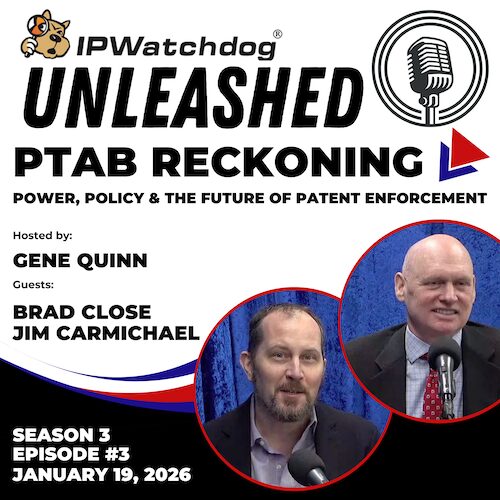
1 week agoWIPO in Focus: Beyond Treaties, Toward a Market-Driven IP System | IPWatchdog Unleashed
WIPO is not merely a distant UN bureaucracy; it is a dynamic, fee-driven organization that has been undergoing significant operational and cultural transformation in recent years.
Intellectual property law
Healthcare
fromFast Company
1 month agoResponsible compounding could close the innovation gap
Compounding can responsibly accelerate patient access to needed therapies when grounded in rigorous data, filling genuine clinical gaps while pursuing FDA approval, particularly in underserved areas like women's health.
Intellectual property law
fromIPWatchdog.com | Patents & Intellectual Property Law
2 weeks agoU.S. Government Says SCOTUS Should Skip Pharma Companies' Challenge to Medicare Negotiation Program
The Medicare Drug Price Negotiation Program does not constitute a physical taking under the Takings Clause, allowing companies to retain property rights.
Intellectual property law
fromIPWatchdog.com | Patents & Intellectual Property Law
2 weeks agoIPWatchdog LIVE Panel Asks Whether Patent Licensing Still Works - The Answer Is Complicated
The voluntary patent licensing ecosystem is broken, leading to disincentivized licensing and increased exposure for patent owners.
#intellectual-property
Intellectual property law
fromIPWatchdog.com | Patents & Intellectual Property Law
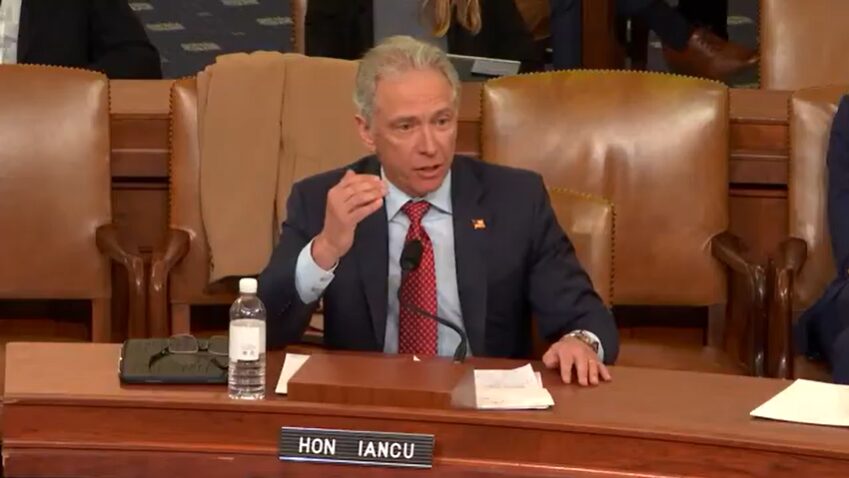
2 weeks agoIPWatchdog LIVE 2026: Judge Newman and Michel Present Awards, Panelists Outline Uphill Battle for Global IP and Drug Patents
The global IP landscape requires improvements for greater certainty and predictability, as emphasized by Judge Pauline Newman.
Intellectual property law
fromIPWatchdog.com | Patents & Intellectual Property Law
2 weeks agoIPWatchdog LIVE 2026: Judge Newman and Michel Present Awards, Panelists Outline Uphill Battle for Global IP and Drug Patents
The global IP landscape requires improvements for greater certainty and predictability, as emphasized by Judge Pauline Newman.
Intellectual property law
frompatentlyo.com
4 weeks agoGuest Post: Protectionist PTO Memo is on a Collision Course with TRIPS
USPTO Director's new policy considers U.S. manufacturing status when deciding whether to institute IPR and PGR proceedings, potentially conflicting with WTO TRIPS obligations requiring nondiscriminatory patent treatment.
fromNextgov.com
2 months agoTrust, trade and the new data diplomacy
Data has become the defining currency of global power. The nations and organizations that can manage, protect, and share it responsibly will shape the future of economic resilience and international cooperation. In an era where artificial intelligence and digital interdependence connect every market and mission, the ability to build and maintain trust in data is now a central pillar of both commerce and diplomacy.
World news
US politics
fromNextgov.com
1 month agoTech bills of the week: AI science challenge; protecting copyright content; and more
A bill would direct the National Science Foundation to run prize competitions to advance AI research across multiple policy areas, including a mandated cancer-detection challenge.
Intellectual property law
fromGlobal IP & Technology Law Blog
4 weeks agoIPR and PGR Institution Decisions - America First?
USPTO Director Squires established new criteria for IPR and PGR petitions prioritizing US manufacturing ties, patent owner technology investment in the US, and petitioner size to determine petition viability.
Intellectual property law
fromIPWatchdog.com | Patents & Intellectual Property Law
1 month agoA Response to Opposition of the 'Stealing Isn't Innovation' Campaign
The Human Artistry Campaign advocates for licensing copyrighted works to train AI models, while tech industry responses lack precision and credibility despite claiming otherwise.
Intellectual property law
fromIPWatchdog.com | Patents & Intellectual Property Law
4 years agoSenator Tillis Letter to Ambassador Tai: TRIPS Waiver (Copyright)
Senator Tillis opposes expanding the TRIPS waiver to include copyright protections, arguing it would harm American creators and businesses without advancing COVID-19 pandemic response efforts.
Intellectual property law
fromIPWatchdog.com | Patents & Intellectual Property Law
1 month agoWhat Shrinking Patent Budgets Say About the Patent System/ IPWatchdog Unleashed
Shrinking patent budgets combined with rising expectations reveal that companies have lost faith in the patent system's value and strength.
Intellectual property law
fromIPWatchdog.com | Patents & Intellectual Property Law
1 month agoUSTR Report May Stem Trade Partners' Weak-Patent Agenda
China, the EU, and the UK are rewriting standard-essential patent rules to reduce royalty rates and limit injunctive relief, weakening U.S. innovators' patent protections globally.
Intellectual property law
fromIPWatchdog.com | Patents & Intellectual Property Law
1 month agoOther Barks & Bites for Friday, March 6: WIPO Issues PCT Filing Study; CAFC Affirms Use of Unaccused Devices in Royalty Determination; USTR Notorious Markets List Highlights Live Sports Piracy
The Federal Circuit ruled that noninfringing features can be considered in reasonable royalty determinations, allowing damages experts to include unaccused virtual machines in royalty base calculations when causally connected to accused features.
Intellectual property law
fromIPWatchdog.com | Patents & Intellectual Property Law
1 month agoWhen Policy Narratives Override the Facts: A Response to Recent Commentary on My PTAB Case
A PTAB case was mischaracterized in policy debate; the case involved obviousness rejections based on hindsight bias, not discovery of missed prior art, fundamentally changing the policy implications.
Intellectual property law
fromIPWatchdog.com | Patents & Intellectual Property Law
9 years agoConservative Ideology Will Rebuild the Patent System
Conservative political forces are positioning to reform the patent system by challenging the constitutionality of the America Invents Act and eliminating Chevron deference to reduce administrative agency power.
fromIPWatchdog.com | Patents & Intellectual Property Law
1 month agoOpinion: The ITC Has Lost Sight of the Public Interest
The U.S. International Trade Commission (ITC)-an agency with the extraordinary power to block imports and, in turn, influence the direction of American technology policy-has drifted out of that balance. To align with the Trump Administration's intellectual property priorities and pro-investment agenda, the ITC is in urgent need of reform.
Intellectual property law
Intellectual property law
fromIPWatchdog.com | Patents & Intellectual Property Law
1 month agoDOJ and USPTO File Statement Backing Injunctions for NPEs
The USPTO and DOJ argue that restricting injunctive relief for patent owners, including non-practicing entities, undermines innovation incentives and should not be categorically denied.
Intellectual property law
fromPatently-O
1 month agoExtolling the Virtues: 'Space-Efficient' Preamble Fails to Limit
The Federal Circuit reversed an indefiniteness ruling while affirming dismissal of breach-of-contract claims in NimbeLink Corp. v. Digi International Inc., with the patent issue centering on whether claim preambles impose substantive limitations.
fromIPWatchdog.com | Patents & Intellectual Property Law
6 years agoOther Barks & Bites for Friday, May 10: Congress and Trump Crack Down on Pharma, Amici File Briefs in Acorda, and USPTO to Modify Patent Term Adjustment Procedures
This week in Other Barks & Bites, IPWatchdog's IP news roundup: the House of Representatives passes drug patent legislation, while antitrust legislation targeting patent-related activities is introduced into the Senate and the Trump administration mandates pricing information for pharmaceutical ads; the Patent Trial and Appeal Board (PTAB) issues a pair of precedential decisions on cases with multiple petitions; the USPTO issues marijuana-related trademark guidelines and a notice on modifying patent term adjustment practices;
Intellectual property law
Intellectual property law
fromIPWatchdog.com | Patents & Intellectual Property Law
2 months agoOther Barks & Bites for Friday, February 6: Counterfeit Study Shows 41% Fail Product Safety Standards; USPTO De-Designates PTAB Precedentials on RPI Amendments
41% of counterfeit apparel and footwear tested failed U.S. safety standards for hazardous chemicals, indicating significant consumer health risks and regulatory gaps.
#patents
fromIPWatchdog.com | Patents & Intellectual Property Law
1 month agoIntellectual property law
Other Barks & Bites for Friday, February 13: CAFC Says NHK-Fintiv is General Policy Statement; Second Circuit Adopts Rule on Waiver of DMCA Safe Harbor; and Daren Tang Nominated for Second Term as WIPO Director
fromIPWatchdog.com | Patents & Intellectual Property Law
1 month agoIntellectual property law
Other Barks & Bites for Friday, February 13: CAFC Says NHK-Fintiv is General Policy Statement; Second Circuit Adopts Rule on Waiver of DMCA Safe Harbor; and Daren Tang Nominated for Second Term as WIPO Director
Intellectual property law
fromIPWatchdog.com | Patents & Intellectual Property Law
2 months agoIdentifying Trade Secrets Under the DTSA: The Critical Requirement of 'Reasonable Particularity'
Plaintiffs must identify alleged trade secrets with reasonable particularity under the DTSA or risk dismissal for failure to meet pleading standards.
Intellectual property law
fromIPWatchdog.com | Patents & Intellectual Property Law
1 year agoWhy Companies Should Still Build a Patent Portfolio
Building and maintaining a strong patent portfolio remains valuable despite litigation pressures such as IPRs, Section 101 attacks, apportionment limits on damages, and eBay injunctions.
fromElectronic Frontier Foundation
2 months agoCopyright Should Not Enable Monopoly
There's a crisis of creativity in mainstream American culture. We have fewer and fewer studios and record labels fewer and fewer platforms online that serve independent artists and creators. At its core, copyright is a monopoly right on creative output and expression. It's intended to allow people who make things to make a living through those things, to incentivize creativity. To square the circle that is "exclusive control over expression" and "free speech," we have fair use.
Intellectual property law
Intellectual property law
fromIPWatchdog.com | Patents & Intellectual Property Law
4 years agoDOJ Issues Revised Draft Joint Policy Statement on Remedies for SEPs Subject to FRAND
The DOJ, USPTO, and NIST seek public comment on a draft SEP remedies policy balancing injunctive relief and FRAND commitments without finalizing changes.
Intellectual property law
fromIPWatchdog.com | Patents & Intellectual Property Law
2 months agoHow Temu Works With Brands to Protect Intellectual Property Rights
Temu's Brand Guardian Initiative enables brands to upload IP assets and accelerates detection and removal of counterfeit listings, improving marketplace safety and IP protection.
fromIPWatchdog.com | Patents & Intellectual Property Law
11 years agoThe Broken Patent-Eligibility Test of Alice and Mayo: Why We Urgently Need to Return to Principles of Diehr and Chakrabarty*
For those in the patent law world who may have been hiding under a rock, we have been flooded recently with lower court rulings on patent-eligibility under 35 U.S.C. § 101 after Alice Corp. v. CLS Bank International. Like a tsunami, these lower court rulings are uniformly sweeping away any patent in its wake as being directed to merely an "abstract idea" that doesn't provide "something more."
Intellectual property law
fromIPWatchdog.com | Patents & Intellectual Property Law
2 months agoEUIPO-OECD Joint Study Details Close Link Between Global Counterfeit Trade and Abusive Labor Practices
Yesterday, the European Union Intellectual Property Office (EUIPO) and the Organisation for Economic Co-operation and Development (OECD) published the results of a joint study detailing the close connection between illicit trade in counterfeits and labor exploitation. The joint study shows clear, repeated associations between the intensity of counterfeit trade and abusive labor conditions, strongly suggesting that such conditions structurally enable the production and distribution of counterfeits.
Intellectual property law
fromIntellectual Property Law Blog
2 months agoPTAB Overly Relied on Statements of Doubt in Determining Conception and Reduction to Practice in Interference Proceedings
Regents of the University of California ("Regents") and Broad Institute were engaged in a patent interference proceeding involving the adaptation of CRISPR systems to edit eukaryotic DNA. Both parties were engaged in extensive testing related to editing eukaryotic DNA during the time of the invention, and both filed multiple patent applications that became the subjects of the patent interference proceedings.
Intellectual property law
fromAbove the Law
2 months agoFrom Cost Center To Value Engine: Patent Management In The AI Era - Above the Law
In a recent Tradespace and Above the Law survey, two-thirds of companies that draft patents in-house described IP as a value driver, while 71 percent of companies that outsource drafting viewed IP as a cost. When drafting and prosecution move inside, IP teams work closer to engineers and product leaders. This proximity improves invention quality, strengthens claim strategy, and aligns patent decisions with product direction, market timing, and business priorities.
Intellectual property law
[ Load more ]