#affluency
#affluency
[ follow ]
#wealth-inequality #luxury-real-estate #income-inequality #billionaires #k-shaped-economy #real-estate



fromLondon Business News | Londonlovesbusiness.com
19 hours agoUltra-wealthy line up major portfolio shifts as Iran shock drives global reset - London Business News | Londonlovesbusiness.com
"This is a system shock," says Nigel Green, CEO of deVere Group. "You have a material energy supply disruption and a structural shift toward fragmentation."
World news

fromConde Nast Traveler
4 days agoHow to Fly Private Like Your Really Rich Friend Who Hates Spending Money
Semi-private flights, also known as fly-sharing or charter-by-the-seat services, are realistically the cheapest way to fly private, as they allow you to pay for one seat rather than the entire aircraft.
Travel
Psychology
fromSilicon Canals
4 days agoResearch suggests people who grew up with very little and later accumulated real wealth don't feel wealthy - they feel temporarily safe, and there's a difference - Silicon Canals
Scarcity significantly reduces cognitive performance, impacting decision-making and mental bandwidth, regardless of actual intelligence.
#housing-market
SF real estate
fromFortune
3 days agoThe 'affordability economy' has created a housing market nobody predicted: Prices collapsing in the Sun Belt, soaring in the Rust Belt | Fortune
U.S. housing market is experiencing a significant decline in prices after a post-pandemic boom, with projections for continued decreases.

Mental health
fromSilicon Canals
5 days agoI grew up lower middle class and the thing nobody explains is how the financial anxiety doesn't leave when the money arrives. You can have six months of savings and still feel the phantom weight of an empty account because your nervous system was calibrated in a house where the math never quite worked and it stored that frequency permanently - Silicon Canals
Chronic stress from childhood financial instability affects adult behavior and emotional responses to money.
London
fromLondon Business News | Londonlovesbusiness.com
5 days agoWhat London professionals are doing differently with their money in 2026 - London Business News | Londonlovesbusiness.com
Londoners are rethinking their financial strategies due to rising costs and inflation, shifting focus from saving to growing their wealth.
#billionaires
NYC real estate
fromFortune
2 weeks agoNew York is home to 154 billionaires. Together they're worth $975.7 billion-and some of them are even making $2 million an hour | Fortune
New York's billionaires have a collective wealth of $975.7 billion, with significant growth contrasting stagnant wages for workers.

#wall-street


US Elections
fromFortune
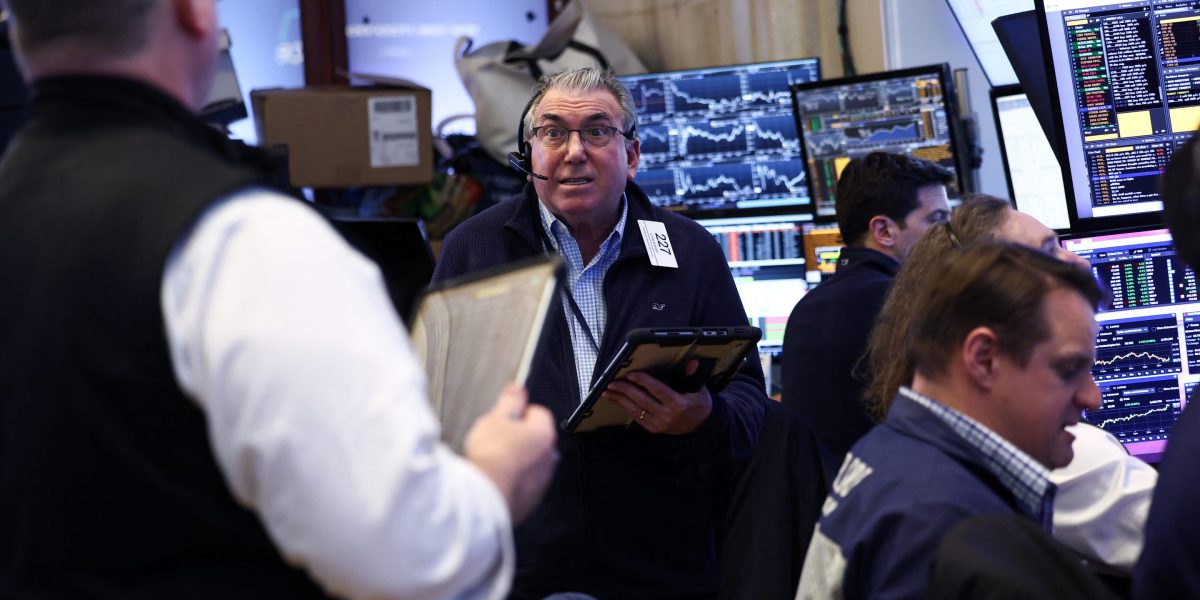
5 days agoThe world's 500 richest people made more than a quarter trillion yesterday as volatile markets react to fragile Iran war ceasefire | Fortune
Wall Street traders experienced a significant surge, with billionaires gaining $265 billion after President Trump eased tensions with a ceasefire agreement.
#housing-crisis
NYC real estate
fromFortune
6 days agoHousing is so expensive, even a $87 billion Wall Street bank is giving workers $6.5K in cash to get on the property ladder | Fortune
Many American workers have abandoned homeownership dreams due to a housing crisis, prompting BNY to offer financial assistance for first-time homebuyers.
fromFuturism
2 days agoBillionaire Says Insider Trading Should Be Fully Legalized
"I'm in favor of not having any rules against insider trading. I would like all the information out there as soon as it's available. Because look, as a society, we are better off knowing as soon as possible anything that is knowable."
Business
Right-wing politics
fromFortune
3 weeks agoEconomists agree: You're not crazy for feeling like the rich get richer, and the poor are doing worse. Welcome to the 'K-shaped economy' | Fortune
The K recovery illustrates a growing economic divide where the wealthy prosper while the poor struggle, echoing historical patterns of inequality.
fromFortune
3 weeks agoThe K-shaped economy has left many six-figure earners 'on thin ice' as housing costs, lifestyle creep, and the job market put them at risk | Fortune
"The wealthy who are at financial risk are high earners whose lack of budgeting and profligate spending has them overleveraged and exposed. While they appear to be doing well from the outside, they are only a step away from real financial trouble."
Business

fromFortune
2 months agoChildren of parents with expensive mega mansions get offered the best jobs-and new research has revealed why | Fortune
Around the turn of the 21st century, the U.K. witnessed a dramatic surge in housing prices: the costs rose from four times peoples' annual earnings in 1995, to eight times by 2010. Homeowners subsequently enjoyed a wealth windfall, and it resulted in their kids receiving more housing wealth and higher-paying jobs, according to recent research from the Institute for Fiscal Studies. Lower-income renters, on the other hand, were faced with new affordability challenges.
UK news
fromSilicon Canals
2 months agoI grew up lower-middle-class and didn't realize these 9 habits were unusual until I made wealthy friends - Silicon Canals
Growing up outside Manchester, I thought everyone kept their tea bags to use twice. It wasn't until I was at university, sitting in a friend's kitchen in London, that I realized this wasn't normal. My friend watched in horror as I carefully squeezed out my used tea bag and placed it on a saucer for later. "What are you doing?" he asked, genuinely confused.
Social justice
fromSilicon Canals
2 months agoThe daily habit 76% of millionaires have in common-it's not what you think - Silicon Canals
According to Thomas C. Corley's research, 76% of millionaires exercised for at least 30 minutes a day, four days a week. Yeah, exercise. Not exactly the secret formula you were expecting, right? Why movement matters more than you think I used to think successful people were too busy for the gym. Turns out, I had it backwards. They're successful partly because they make time for it.
Wellness




Psychology
fromSilicon Canals
1 month agoThe difference between people who grew up with money and people who grew up without it shows most clearly in what they check first when they open a menu - Silicon Canals
Childhood financial circumstances create lasting behavioral patterns in decision-making, visible in how people scan restaurant menus—price-first versus description-first—revealing a scarcity mindset that persists regardless of current wealth.
fromSilicon Canals
1 month ago8 lower-middle-class families never throw away that wealthy people replace without thinking - Silicon Canals
Growing up outside Manchester, I learned early that there's a stark difference between having money and knowing how to make things last. My dad worked factory shifts while my mum juggled retail hours, and our house ran on an unspoken rule: if something still worked, you didn't replace it. Last month, I visited a friend in Belgravia who was renovating his kitchen. As we chatted over coffee, workers hauled out perfectly functional appliances that looked barely used.
UK news
Psychology
fromSilicon Canals
2 months ago8 things people think make them look rich that actually scream financial insecurity - Silicon Canals
Loud displays of wealth and constant brand signaling often indicate financial insecurity, while genuinely wealthy people typically live modestly and avoid ostentatious signaling.
Psychology
fromSilicon Canals
2 months agoThe art of stealth wealth: 9 habits of people who are rich but never let it show - Silicon Canals
Many genuinely wealthy people intentionally avoid visible status signals, prioritizing low-profile lifestyles and spending that reduces stress rather than impresses others.
fromElite Traveler
1 month agoProperty Experts Weigh In on the Evolution of Billionaires' Rows
The street's ultra-luxury towers - from the first generation of supertalls west of Sixth Avenue that shaped the skyline, to mixed-use developments eastward 'driving the next phase of growth' - offer a dense concentration of cultural and lifestyle capital, paired with direct access to Central Park.
Real estate
fromFortune
1 month agoAre you a 'hidden millionaire?' | Fortune
Like snow falling quietly overnight, wealth has a way of sneaking up: steadily increasing salaries, 401(k) contributions, stock options, rising home equity, inheritances. It accumulates while you're busy living. If your financial identity hasn't kept pace-understandably shaped more these days by inflating prices, competing tugs on your discretionary dollars, and that familiar feeling of " I'd be comfortable if I made more"-you're not alone.
Real estate
fromtherealdeal.com
1 month agoManhattan racks up ultra-rich renters
Earlier this week, former Howard Hughes CEO David Weinreb agreed to rent his West Chelsea penthouse for $177,500 a month, an eye-popping figure that followed a $95,000-a-month lease at a Naftali Group building on the Upper East Side in December. Data on trophy rentals is tough to pin down, but this is likely among the most expensive leases ever inked in New York City. The two hefty leases came as inventory for Manhattan's trophy rentals—which appraiser Jonathan Miller defines as the top 1 percent of the market, with rates starting at $25,000 a month—was down more than 40 percent year-over-year in January, as new leases climbed (albeit, at a more modest pace).
Real estate
fromSilicon Canals
2 months ago8 spending habits that keep you looking rich but actually broke, according to financial advisors - Silicon Canals
Ever notice how the people with the flashiest lifestyles often have the emptiest bank accounts? It's a strange paradox: those who look the wealthiest are sometimes the ones struggling most to make rent. I learned this lesson the hard way after being laid off during media industry cuts. Those four months of freelancing taught me something crucial about money that I wish I'd understood earlier.
Business
fromSilicon Canals
1 month ago9 things people with old money never have in their homes that new money can't stop buying - Silicon Canals
The space felt calm, almost understated, yet undeniably sophisticated. Later that week, I attended a housewarming in a newly built mansion, and the contrast hit me like a wall of designer logos.
Real estate
Real estate
fromFortune
2 months agoWe may be looking at the housing affordability crisis all wrong. Higher earners are driving home prices, not lack of supply, researchers say | Fortune
Housing affordability is driven more by income and demand dynamics—especially population-driven demand—than by housing supply constraints.
[ Load more ]