#babylonian-archaeology

[ follow ]
Arts
fromHyperallergic
10 hours ago

Dice Are 6,000 Years Older Than Previously Believed, Study Says

More than 600 two-sided dice crafted by Native Americans have been identified, dating back over 12,000 years, predating known dice from the Bronze Age.
#ancient-mesopotamia
History
fromWorld History Encyclopedia
1 month ago

Nineveh: The Great Cultural Center That Became the "City of Sin"

Nineveh was one of antiquity's greatest cities and the world's largest urban center, renowned for culture and prosperity, though biblical narratives cast it negatively as a city of sin.
History
fromWorld History Encyclopedia
2 months ago

Why did Uruk outshine Eridu to become Mesopotamia's powerhouse?

Uruk was a major ancient Mesopotamian city credited as the birthplace of writing and many early cultural and architectural innovations.
#mesopotamia
History
fromWorld History Encyclopedia
2 months ago

Mesopotamian Inventions: Creating the Future

Ancient Mesopotamia, especially Sumer during the Early Dynastic and Uruk periods, originated numerous fundamental technological, cultural, and scientific inventions still influential today.
History
fromWorld History Encyclopedia
2 months ago

Trade in Ancient Mesopotamia: How Commerce Encouraged Civilization

Mesopotamian trade grew from local Ubaid exchanges to extensive long-distance commerce by the Early Dynastic period, driving writing, transport, and urban development.
Arts
fromHyperallergic
1 week ago

UK Museums Hold Over 260,000 Human Remains, Report Finds

UK museums hold over 263,000 human remains, with significant collections from former British colonies, raising ethical concerns.
History
fromWorld History Encyclopedia
1 week ago

Truths Wrapped in Fiction: Mesopotamian Naru Literature: Originality in Writing Ancient Bestsellers

Originality in ancient literary works was less valued than in modern times, with authors often assuming identities of famous figures.
#ancient-egypt
Science
fromNature
1 month ago

How pollutants and poo paint a picture of past civilizations

Environmental archaeologists extract mud cores from swamps to analyze molecular biomarkers like coprostanol, revealing ancient human population trends and behaviors.
History
fromWorld History Encyclopedia
1 week ago

Mesopotamian Naru Literature: The World's First Historical Fiction

Naru Literature featured historical figures in fictional narratives, shaping perceptions of history and humanity's relationship with the divine.
Books
fromNature
1 month ago

Brain mysteries and Bronze Age diplomacy: Books in brief

Lionel Penrose's mid-twentieth century research connected genetic abnormalities to hand creases, establishing the hand as a significant diagnostic tool across multiple medical disciplines.
#archaeology
fromNature
2 months ago
Science

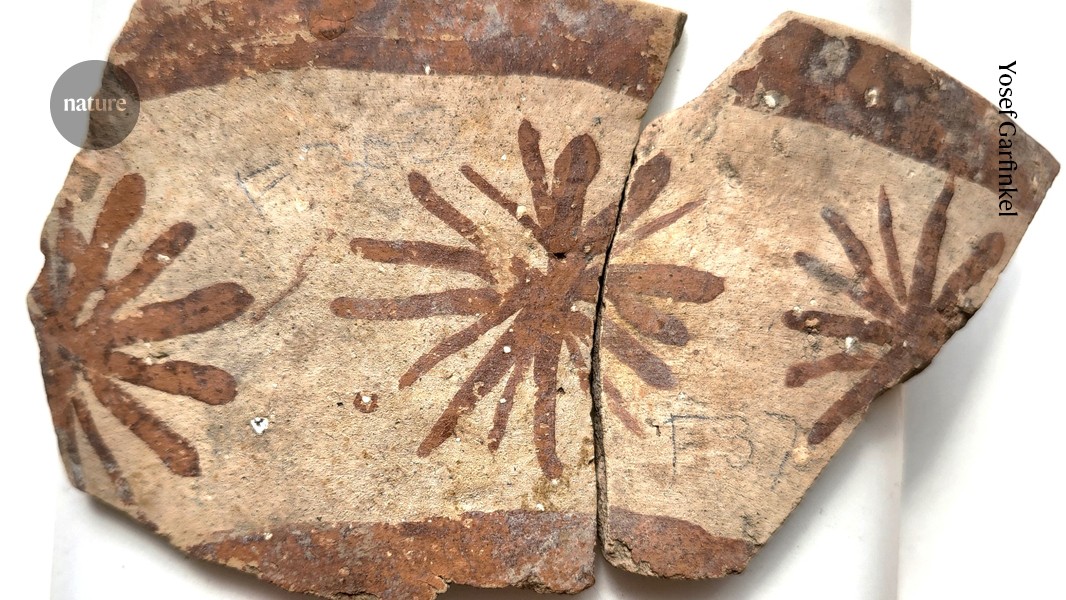
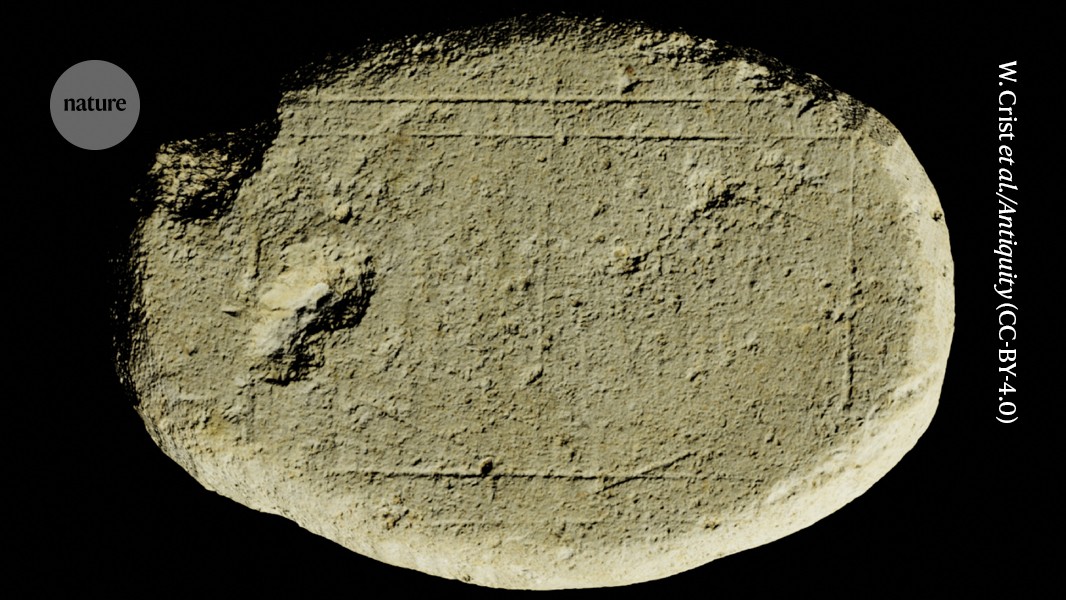
Daily briefing: Symbols on ancient pottery could be earliest evidence of mathematics

fromwww.theguardian.com
1 month ago
Science

Archaeology against the clock: the race to salvage fragments of early Brisbane

Young archaeology students in Brisbane are cataloguing 19th-century ceramic fragments, reflecting growing salvage archaeology activity amid urban development and heritage preservation.
fromMail Online
1 month ago
Science

Historic discovery older than Egypt's Great Pyramid rewrites history

12,000-year-old sewn animal hides and crafted items from Oregon caves show advanced Ice Age North American textile and tool skills.
fromNature
2 months ago
Science

Daily briefing: Symbols on ancient pottery could be earliest evidence of mathematics

History
fromWorld History Encyclopedia
2 weeks ago

Ten Great Ancient Mesopotamian Women: Monarchs, Generals, and Scribes

Women in ancient Mesopotamia held significant roles, including generals and scribes, and some even ruled, despite a patriarchal society.
#sargon-of-akkad
#mesopotamian-literature
fromWorld History Encyclopedia
4 weeks ago

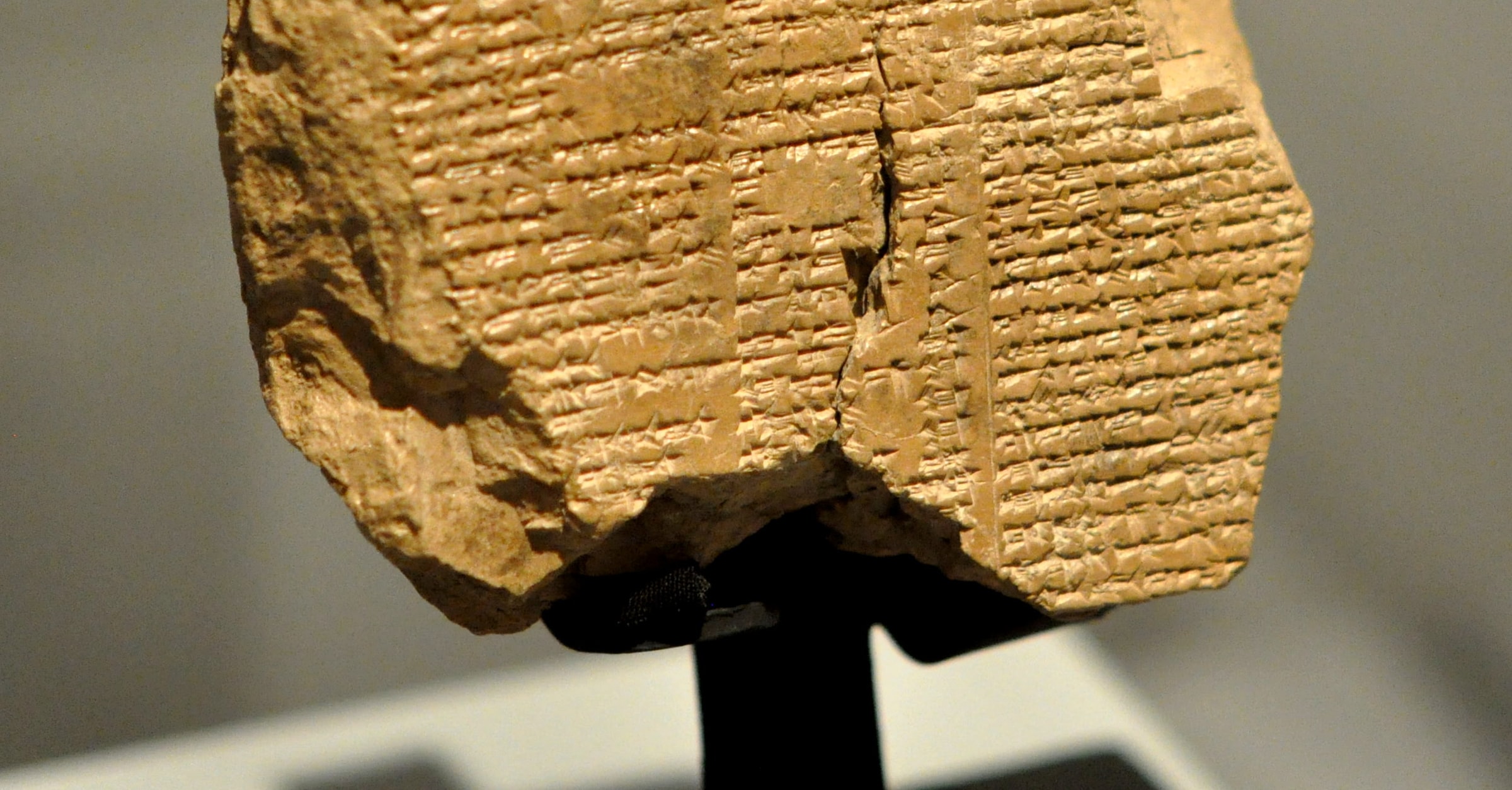
Cuneiform: From trade lists to epic tales of gods

Cuneiform is a system of writing first developed by the ancient Sumerians of Mesopotamia circa 3600/3500 BCE. It is considered the most significant among the many cultural contributions of the Sumerians and the greatest among those of the Sumerian city of Uruk, which further developed and advanced cuneiform circa 3200 BCE and allowed for the creation of literature.
History
History
fromWorld History Encyclopedia
4 weeks ago

From Clay to Culture: The Power of Written Language

Cuneiform, invented in Sumer around 3500 BCE, was the first script, enabling civilizations to record human thought and preserve all aspects of human experience through written communication.
UK news
fromwww.bbc.com
2 months ago

Sifting through the Roman rubbish of 'the London lasagne'

London's archaeology reveals layered remains from prehistory to Victorian times, including rare Roman frescoes, a mausoleum, a luxurious villa, and early theatres.
Medicine
fromwww.npr.org
1 month ago

That ain't perfume! Ancient bottle contained feces, likely used for medicine

Chemical analysis of ancient Roman vessels confirmed a two-millennium-old medicinal recipe by Galen combining human feces and fragrant materials.
US politics
fromwww.independent.co.uk
2 months ago

Inside the hunt for British Museum's missing treasures

The Independent funds on-the-ground, paywall-free investigative reporting while a six-person British Museum team celebrates breakthroughs in tracing missing Greek and Roman treasures with a golden bell.
History
fromWorld History Encyclopedia
4 weeks ago

What Defines a Civilization?

Civilization requires a writing system, government, food surplus, labor division, and urbanization, with Mesopotamia recognized as the birthplace of civilization due to its early city construction around 5400 BCE.
fromMail Online
2 months ago

Long-lost Egyptian scroll fuels debate over real-life biblical giants

An ancient Egyptian papyrus held by the British Museum has been cited as possible evidence supporting some of the Bible's most controversial claims about giants. The 3,300-year-old document, known as Anastasi I, has been in the museum's collection since 1839 and has recently resurfaced on the Associates for Biblical Research, renewing interest in its possible links to biblical accounts. The papyrus describes encounters with the Shosu people, said to stand 'four cubits or five cubits' tall, up to eight feet in height.
Books
fromwww.thehistoryblog.com
4 weeks ago

Samnite burials of children with bronze warrior belts found

The excavation ultimately unearthed 34 burials, 15 of them belonging to children between two and ten years old when they died. The graves are clustered in groups, probably reflecting family nuclei. Most the grave types are earthen pits covered with roof tiles angled against each other.
History
Science
fromFuturism
2 months ago

Scientists Investigating 2,000-Year-Old Artifact That Appears to Be a Battery

A reconstructed Baghdad battery configuration could have produced about 1.4 volts, comparable to a modern AA battery, using a porous clay separator and an electrolyte.
US politics
fromEmptywheel
2 months ago

Third Cave's a Charm

Republicans will block expiration of Bush tax cuts; Democrats could see a $3.6 trillion tax increase in 2012 if Obama does not act.
Books
fromBig Think
1 month ago

The deep history of AI began 3,000 years ago

Organizing a library into coherent structure transforms chaotic information into an enduring, shareable 'mind' that extends and amplifies human thought.
Arts
fromHyperallergic
1 month ago

Did the British Museum Remove Palestine From Its Displays?

The British Museum amended some Middle East gallery labels to use ancient regional terms like 'Canaan' while continuing to use 'Palestine' in many displays.
History
fromWorld History Encyclopedia
1 month ago

Akkad and the Akkadian Empire: The First Multinational Empire in the World

The Akkadian Empire, founded by Sargon the Great around 2350 BCE, was the first multinational political entity that unified Mesopotamia and established governmental, administrative, and military systems adopted by subsequent civilizations.
History
fromWorld History Encyclopedia
1 month ago

12 Great Cities of Ancient Mesopotamia: The Rise and Fall of the Earliest Cities in the World

Twelve major Mesopotamian cities including Nineveh, Uruk, Babylon, and Ur became legendary through Greek writings and yielded significant archaeological discoveries, each connected to a patron deity whose prestige determined the city's fate.
Science
fromNature
2 months ago

Daily briefing: Scientists delve into the smells of history

Researchers recreate historical smells and use imaging, AI, and biomedical advances to probe heritage, ancient human timelines, medical rescue devices, and rare-disease genetics.
Arts
fromArtnet News
2 months ago

Who Is Zahi Hawass, the Controversial Face of Modern Egyptology?

Zahi Hawass is a charismatic, media-savvy Egyptian archaeologist who led major projects, popularized discoveries, and champions further excavations including a likely undisturbed Nefertiti tomb.
fromOpen Culture
1 month ago

Seven Wonders of the Ancient World: From the Walls of Babylon to the Sewers of Rome

Seven were the strings of the lyre (unless there happened to be eight or nine), seven were the gates of Thebes, and seven were the "wandering stars" in the night sky (if you count the sun and moon). The identity of the wonders was less important than the length of their list, and indeed, additions and changes were proposed since the beginning.
History
Science
fromwww.scientificamerican.com
2 months ago

Archeologists Just Found a 2,000-Year-Old Battle Trumpet That May Be Linked to Queen Boudica

A roughly 2,000-year-old Iron Age carnyx was discovered in West Norfolk, likely linked to Celtic resistance against Rome and possibly to Boudica's Iceni.
fromMail Online
1 month ago

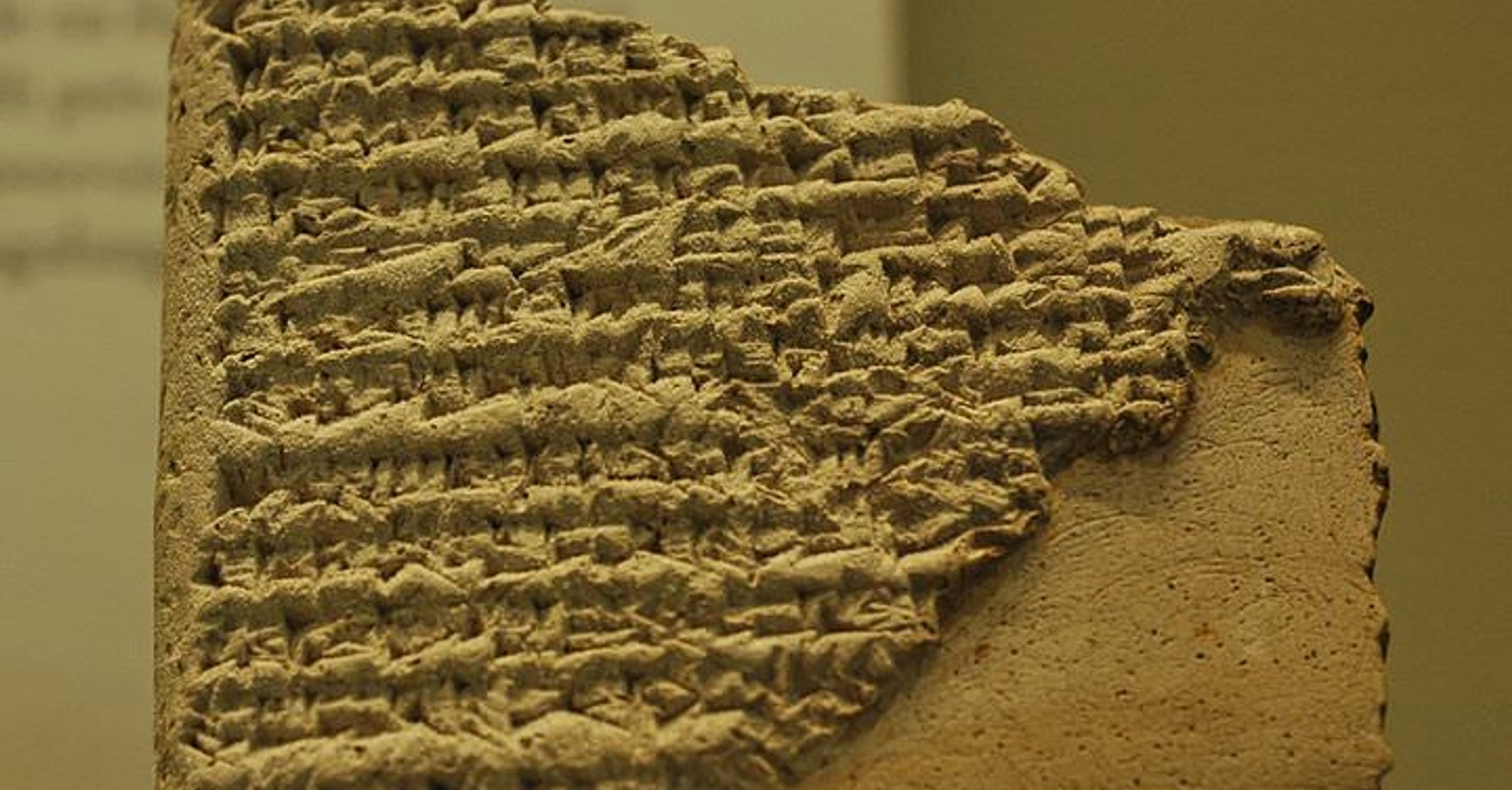
Ancient time capsule found in Iraq corroborates the Bible

King Nebuchadnezzar II himself 'speaks' in the text, proudly describing how he restored an old, crumbling stepped temple tower in the city of Kish that was dedicated to the Mesopotamian god and goddess of war, Zababa and Ishtar. He explained that earlier kings had built and fixed the ziggurat before, but it had fallen into disrepair again from age and rain.
History
History
fromMedievalists.net
1 month ago

East Roman Archaeology: Goals and Challenges, with Marica Cassis - Medievalists.net

Archaeology reveals material evidence of daily life, settlement patterns, and economic systems in the East Roman world that textual sources cannot provide, while facing challenges in establishing itself as a distinct field separate from classical and Islamic archaeology.
History
fromWorld History Encyclopedia
1 month ago

Mesopotamian Education: Creating the First Written Works in History

The Sumerians established formal scribal schools (edubba) after inventing writing, training students in cuneiform, Sumerian and Akkadian, and a broad range of scholarly subjects.
History
fromWorld History Encyclopedia
2 months ago

Ur: the center of the Sumerian Renaissance

Ur was an influential Sumerian port city and ancient trade center in southern Mesopotamia with notable archaeological finds and contested biblical associations.
History
fromWorld History Encyclopedia
1 month ago

Scribes in Ancient Mesopotamia: The Beginning of History

Ancient Mesopotamian scribes mastered cuneiform and broad knowledge to record transactions, administer society, and preserve history across civilizations.
History
fromWorld History Encyclopedia
2 months ago

Mesopotamian Art and Architecture: The Birth of Art and Architecture in the Ancient World

Mesopotamian art and architecture began over 7,000 years ago, evolving from northern sites into Sumerian innovations and sustained through multiple ancient Mesopotamian periods.
#sumer
History
fromWorld History Encyclopedia
2 months ago

Mesopotamian Government: Helping and Serving the Gods

Ancient Mesopotamian government treated rulers and officials as divinely chosen stewards modeled on family roles, with kings handling civic administration and priests overseeing temple affairs.
#ancient-mathematics
fromWorld History Encyclopedia
2 months ago

Festivals in Ancient Mesopotamia: Courting the Goodwill of the Gods

as the gods were understood as the true monarchs and the king as simply their steward. In order to maintain his authority, the king needed to court the goodwill of the gods, and although they made their approval clear through military victories, bountiful harvests, and prosperous trade, events such as the Akitu festival provided an annual opportunity for the divine to continue its relationship with the ruling house or withdraw its favor.
History
fromWorld History Encyclopedia
2 months ago

Cities, writing, and governments: Early Dynastic Mesopotamia's revolutionary advances

It should be noted, however, that the advances of Mesopotamia's Early Dynastic period differed from Egypt's in significant ways, notably in that Mesopotamia - even under the rule of Sargon or later empires - was never the cohesive ethnic or political entity Egypt was, and the kinds of cultural development cited for this era were not as uniform as they were in Egypt.
History
fromWorld History Encyclopedia
1 month ago

Mesopotamian Science and Technology: Scientific Method in the Ancient Near East

The foundation of future Mesopotamian advances in scientific/technological progress was laid by the Sumerians, who first explored the practice of the scientific hypothesis, engaged in technological innovation, created the written word, developed mathematics, astronomy, and astrology, and even fashioned the concept of time itself. Some of the most important inventions of the Sumerians were: the wheel the sail the corbeled arch/true arch irrigation and farming implements maps mathematics time and clocks astronomy and astrology medicinal drugs and surgery
History
fromMedievalists.net
2 months ago

The Classical Near East, with Kevin van Bladel - Medievalists.net

A conversation with Kevin van Bladel on his proposal regarding "The Classical Near East," a constellation of fields defined by the classical literary traditions of medieval Near Eastern cultures, including Byzantium.
History
History
fromWorld History Encyclopedia
2 months ago

Medicine in Ancient Mesopotamia: A Gift of the Gods to Their People

Gula, the Sumerian goddess of healing, guided Mesopotamian physicians whose specialized, long-trained practice combined divine attribution of illness with practical medical roles.
History
fromWorld History Encyclopedia
1 month ago

The Family in Ancient Mesopotamia: Providing for Each Other Through Life and Past Death

Family was the essential unit providing social stability, continuity of traditions, and forming the basis for palace and temple hierarchies in ancient Mesopotamia.
#roman-archaeology
fromMail Online
2 months ago

Mysterious symbols spanning the globe hint at a lost civilization

His investigation began after identifying recurring giant T-shapes, three-level indents, and step pyramids carved into ancient stones worldwide. 'These specific symbols that are built in different size proportions, and the symbols are found in ancient stones around the world, are not supposed to exist; no cultures are supposed to have any cross-platform,' LaCroix explained. The symbols appear in locations ranging from Turkey's Van region to South America and Cambodia.
History
fromWorld History Encyclopedia
1 month ago

Fashion & Dress in Ancient Mesopotamia: From Basic to Accessorized in the Ancient World

Fashion and dress in Mesopotamia - clothing, footwear, and accessories - were not only functional but defined one's social status and developed from a simple loincloth in the Ubaid period (circa 6500-4000 BCE) to brightly colored robes and dresses by the time of the Sassanian Empire (224-651). Styles changed, but the essential form and function remained the same. As in any civilization, the upper class and nobility wore more expensive clothes of higher quality.
History
History
fromOpen Culture
1 month ago

The Dead Sea Scrolls: Discover the Secrets of the Bible's Oldest and Strangest Texts

Dead Sea Scrolls include the oldest known biblical manuscripts, diverse texts (biblical, apocryphal, sectarian, unknown) that complicated but did not completely upend understanding of Christianity.
History
fromwww.thehistoryblog.com
2 months ago

Bronze Age tombs with luxury imported goods found in Cyprus

Two 14th-century BCE chamber tombs in Larnaca contained locally made and widely imported luxury goods, demonstrating extensive long-distance trade networks.
History
fromwww.ianvisits.co.uk
2 months ago

Archaeologists uncover Victorian children's schoolwork in east London

Victorian East Londoners, including children, left material traces—school slates, marbles—and the dockside community accessed imported luxuries such as Chateau Margaux wine seals.
[ Load more ]